ABSTRACT
Ti-6Al-4V titanium alloy is widely utilized in aerospace components, such as torque tubes and turbine blades, due to its outstanding strength-to-weight ratio and corrosion resistance. However, controlling surface roughness during machining is challenging because the alloy's low thermal conductivity and high chemical reactivity result in unpredictable variations in Ra. Traditional contact-based measurement methods are not only time-consuming but also incompatible with in-process monitoring, creating a disconnect between production and quality control. This study introduces a CNN-LSTM hybrid model for predicting surface roughness in Ti-6Al-4V shape machining, utilizing multi-sensor CNC data. The model effectively captures spatial correlations among nine sensors and temporal dependencies in sequential operations. We implement a stratified time-series split validation that maintains chronological order while ensuring a representative distribution of Ra values, reflecting realistic deployment conditions. Data were collected from machining tests on features of a torque tube part, comprising 4,154 samples with Ra values ranging from 0.57 to 0.74 μm. The CNN-LSTM model achieved R² = 0.8512, RMSE = 0.0199 μm, and MAE = 0.0096 μm, outperforming Random Forest, XGBoost, and standalone neural networks. These results demonstrate the feasibility of non-contact, in-process surface roughness prediction in aerospace manufacturing, facilitating proactive quality control without interrupting operations.
-
KEYWORDS: Titanium alloy, Surface roughness, CNN-LSTM, Aerospace components, Quality prediction
-
KEYWORDS: 티타늄 합금, 표면 거칠기, 합성곱-장단기메모리 신경망, 항공 부품, 품질 예측
1. 서론
Ti-6Al-4V 합금은 높은 비강도와 우수한 내식성으로 인해 항공우주 산업에서 엔진 부품 및 구조재의 핵심 소재로 광범위하게 사용되고 있다[
1,
2]. 항공 부품에서 표면 조도는 단순한 외관 품질을 넘어 부품의 피로 수명과 구조적 건전성을 결정하는 핵심 품질 지표로 작용한다[
3,
4]. 특히 표면 거칠기가 증가하면 응력 집중 지점이 형성되어 피로 균열의 시작점으로 작용하며, 이는 고온·고압 환경에서 작동하는 항공기 부품의 조기 파손으로 이어져 치명적인 안전 문제를 야기할 수 있다. Ti-6Al-4V 합금의 낮은 열전도도와 높은 화학 반응성은 가공 중 절삭 영역에 열이 집중되어 공구 마모를 가속화하고 표면 품질 저하를 초래한다[
5,
6]. 특히 항공기 토크 튜브와 같은 복잡한 3차원 형상 가공에서는 공구 경로에 따라 절삭 깊이, 이송 속도, 공구 접촉 각도가 연속적으로 변화하여 표면 조도의 예측과 제어가 직선 가공에 비해 훨씬 어려워진다. 현재 산업 현장에서는 가공 완료 후 표면 조도 측정을 통한 전수 검사로 불량을 판별하지만, 불량 발견 시 재가공에 따른 비용 증가와 납기 지연이 발생하므로 가공 중 실시간으로 표면 조도를 예측하는 기술의 개발이 필요하다.
가공 중 CNC 장비에서 수집되는 센서 데이터를 활용한 표면 조도 예측 연구는 사후 검사의 한계를 극복할 수 있는 해결책으로 제시되어 왔다[
7,
8]. Random Forest, XGBoost와 같은 앙상블 머신러닝 기법은 상대적으로 빠른 학습 속도와 높은 예측 안정성을 제공하여 제조 현장에서 활발히 연구되어 왔다[
9,
10]. 그러나 이들 기법은 각 데이터 포인트를 독립적으로 처리하기 때문에 시계열 데이터에 내재된 시간적 의존성과 연속적인 패턴 변화를 충분히 반영하지 못한다는 근본적인 한계가 있다. 형상 가공에서는 공구 경로에 따라 절삭력, 진동, 스핀들 부하 등의 센서 신호가 연속적으로 변화하며, 이전 시점의 가공 이력이 공구 마모 상태를 통해 현재 표면 조도에 누적적으로 영향을 미친다. 따라서 시간적 패턴을 효과적으로 모델링할 수 있는 딥러닝 기반 접근법이 요구된다. CNN-LSTM 하이브리드 구조는 합성곱 신경망을 통해 다채널 센서 데이터의 공간적 특징과 국부적 패턴을 추출하고, 장단기 메모리 네트워크를 통해 시계열 의존성을 학습함으로써 제조 공정의 복잡한 동적 특성을 효과적으로 모델링할 수 있다[
11-
15]. 이 구조는 기계 상태 모니터링, 공구 수명 예측 및 표면 품질 모니터링 등 다채널 시계열 센서 데이터를 활용하는 다양한 제조 공정에서 효과적인 특징 추출 및 시계열 의존성 학습 성능을 보인 바 있다[
11-
16]. 또한 일반적으로 사용되는 무작위 교차 검증 방식은 미래 시점의 정보가 과거 예측에 영향을 미치는 데이터 누수 문제를 발생시켜 모델의 실제 예측 성능을 왜곡하는 결과를 초래할 수 있기 때문에[
17-
19], 시계열 데이터 기반 예측 모델의 신뢰성을 확보하기 위해서는 훈련 데이터와 검증 데이터 간의 시간적 순서를 보존하는 검증 방법론이 필수적이다.
본 연구에서는 Ti-6Al-4V 합금으로 제작된 항공기 토크 튜브의 형상 가공 공정에 대하여 CNN-LSTM 하이브리드 구조를 적용한 표면 조도 예측 모델을 개발하였다. 시계열 데이터의 시간적 순서를 보존하면서 표면 조도 분포의 균형을 유지하는 검증 방법을 적용하여 데이터 누수를 방지하고 모델의 실제 예측 성능을 객관적으로 평가하였다. Random Forest, XGBoost, 인공신경망 등 기존 머신러닝 방법과의 비교를 통해 제안 모델의 시계열 패턴 학습 성능을 검증하였으며, 이를 통해 항공 부품 가공 공정에서의 실시간 품질 예측 가능성을 확인하였다.
2. 연구 방법
2.1 실험 환경 및 데이터
본 연구에서는 Ti-6Al-4V 합금으로 제작되는 항공 엔진 부품용 토크 튜브의 일부 형상을 추출하여 가공 실험을 수행하고 CNN-LSTM 모델의 예측 성능을 검증하였다. 형상 가공은 5축 CNC 머시닝센터 DNM 200/5AX를 사용하여 수행되었으며, 외경 황삭 및 정삭 공정을 포함하는 2.5D 형상에 대한 절삭가공이 수행되었다.
Table 1은 형상 가공에 적용된 절삭 조건을 나타낸다. 외경 황삭과 정삭 공정 모두 동일한 가공 조건(스핀들 회전 속도 994 rpm, 이송 속도 457 mm/min, 절삭 깊이 0.3 mm)을 적용하였으며, 직경 16 mm 엔드밀을 사용하였다. 이는 실제 산업체에서 사용하는 조건을 바탕으로 설정하였으며, 반경 방향 절입 깊이(ae, stepover)는 공구 직경의 30%에 해당하는 4.8 mm로 하고 축 방향 절입 깊이(ap)는 0.3 mm를 적용하여 총 4.8 mm 의 깊이를 가공하였다.
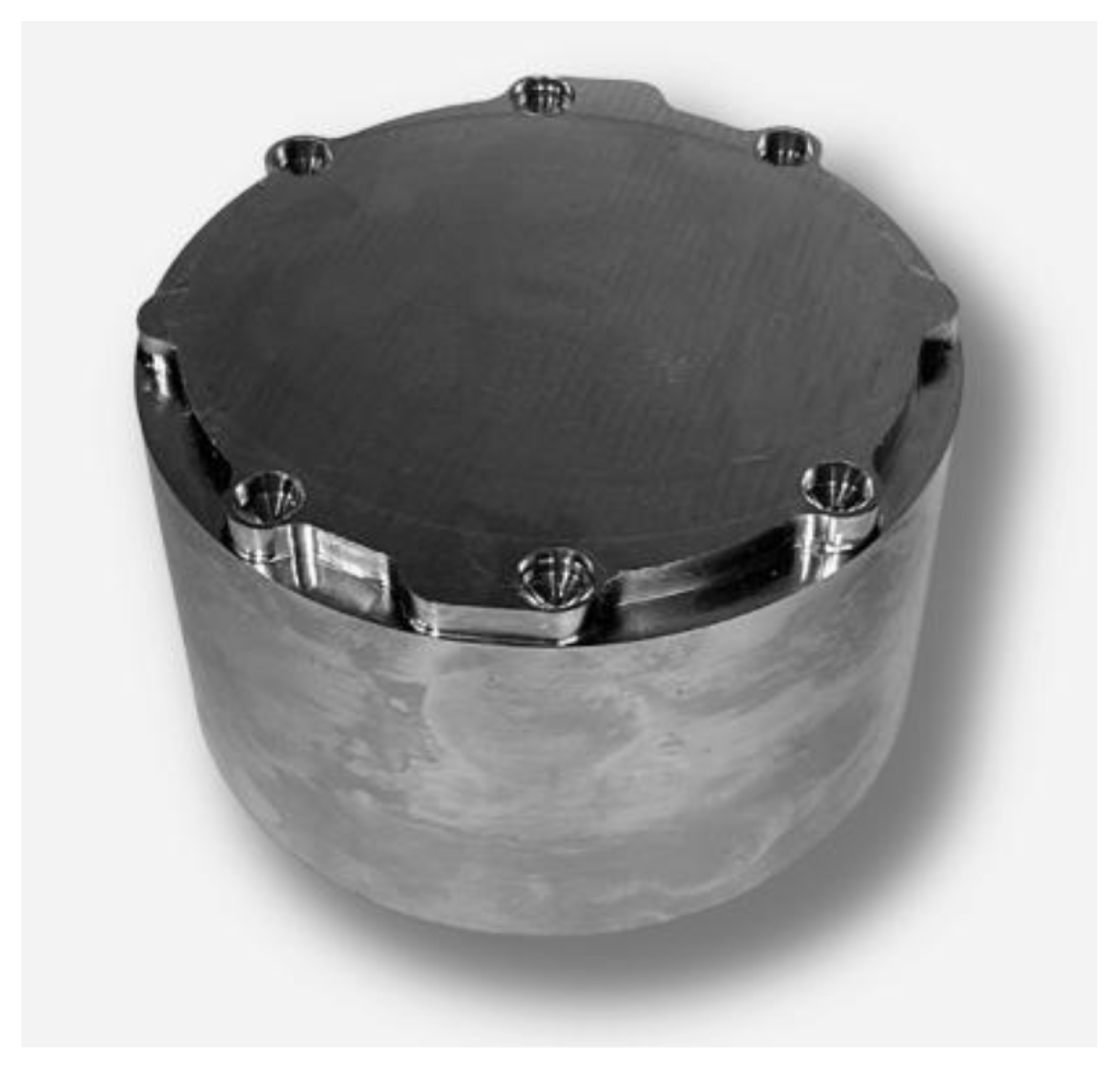
Fig. 1은 형상 가공이 완료된 토크 튜브 테스트 파트를 나타낸다.
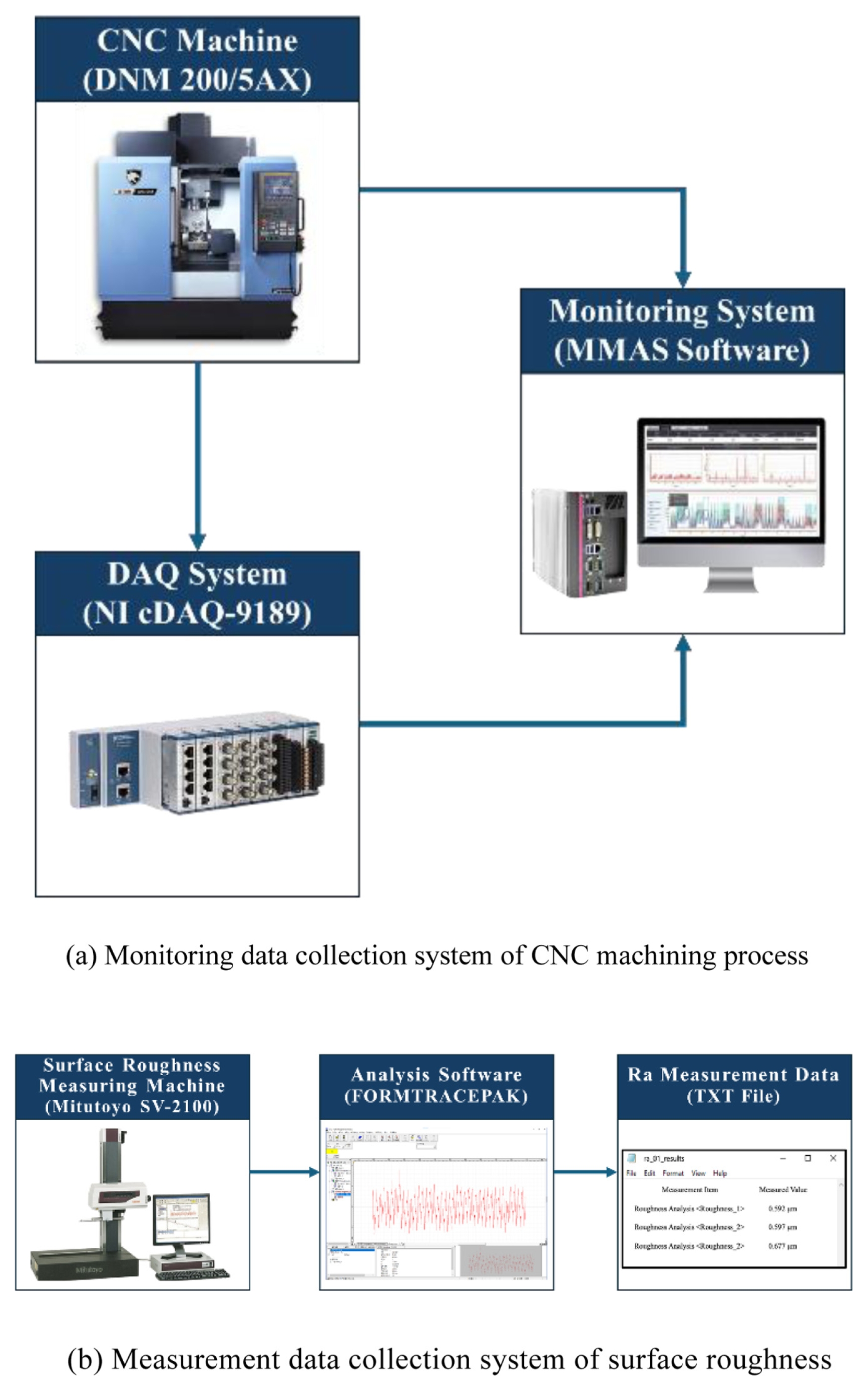
Fig. 2(a)는 가공 중 모니터링 데이터 수집을 위한 실험 장치 구성을 나타낸다. CNC 및 DAQ 시스템을 통해 위치, 부하, 이송 속도, 스핀들 회전 속도, 음향 센서 등 총 55종의 절삭 공정 모니터링 데이터가 수집되었다. 이 중에서 표면 조도 예측과 직접적인 연관성을 고려하여, 가공 중 절삭 상태와 공정 변화를 대표할 수 있는 입력 변수를 선별하여 데이터 학습에 활용하였다. 최종적으로는 X, Y, Z 부하, 실제 이송 속도, 스핀들 회전 속도, 스핀들 부하, 지령 이송 속도, 지령 스핀들 회전 속도, 스핀들 온도를 포함한 총 9개의 모니터링 데이터가 모델 입력으로 사용되었으며, 해당 데이터는 MMAS 소프트웨어를 통해 수집, 저장 및 관리되었다. 형상 가공 공정에서는 공구 경로에 따라 절삭 상태가 연속적으로 변화하므로, 시간에 따른 다채널 센서 신호의 변화 패턴은 표면 조도 예측에 중요한 정보를 제공할 수 있다.
가공 완료 후 표면 조도 측정은 Mitutoyo SURFTEST SV-2100을 사용하여 수행되었으며, 주요 평가 지표로 Ra(산술 평균 거칠기)를 측정하였다.
Fig. 2(b)는 표면 조도 측정을 위한 실험 장치를 나타낸다. 표면 조도 측정은 반복적으로 배치된 홈 형상의 바닥면 및 측면을 기준으로 총 16개 측정 구간에서 수행하였다. 각 측정 구간에서는 Ra 값을 3회 반복 측정한 후 평균값을 산출하였으며, 이를 구간별 대표 표면 조도 값으로 사용하였다. 이러한 반복 측정 및 평균값 산출 절차를 통해 측정 위치와 측정 방향에 따라 발생할 수 있는 국부적인 측정 편차의 영향을 완화하였다. 측정된 구간별 대표 Ra 값은 Mitutoyo FORMTRACEPAK 표면 조도 분석 소프트웨어를 통해 처리되어 텍스트 파일 형식으로 저장되었으며, 이후 가공 데이터의 시간 구간에 매핑하여 최종 데이터셋을 구성하였다. 최종적으로 구성된 데 이터셋은 총 4,154개의 샘플로 이루어져 있으며, 각 샘플은 9개 채널의 모니터링 데이터와 이에 대응하는 표면 조도 값으로 구성된다. 표면 조도는 0.57에서 0.74 μm 범위의 값을 가지며, 형상 가공 공정의 다양한 절삭 상태에 따른 표면 품질 변화를 포함한다. 본 데이터셋은 공구 파손이나 명확한 가공 불량과 같은 이상 상태를 의도적으로 포함한 데이터셋은 아니며, 동일한 기본 절삭 조건 하에서 정상 형상 가공 중 공구 경로와 형상 구간 변화에 따라 발생한 절삭 상태 및 표면 조도 변화를 포함한다.
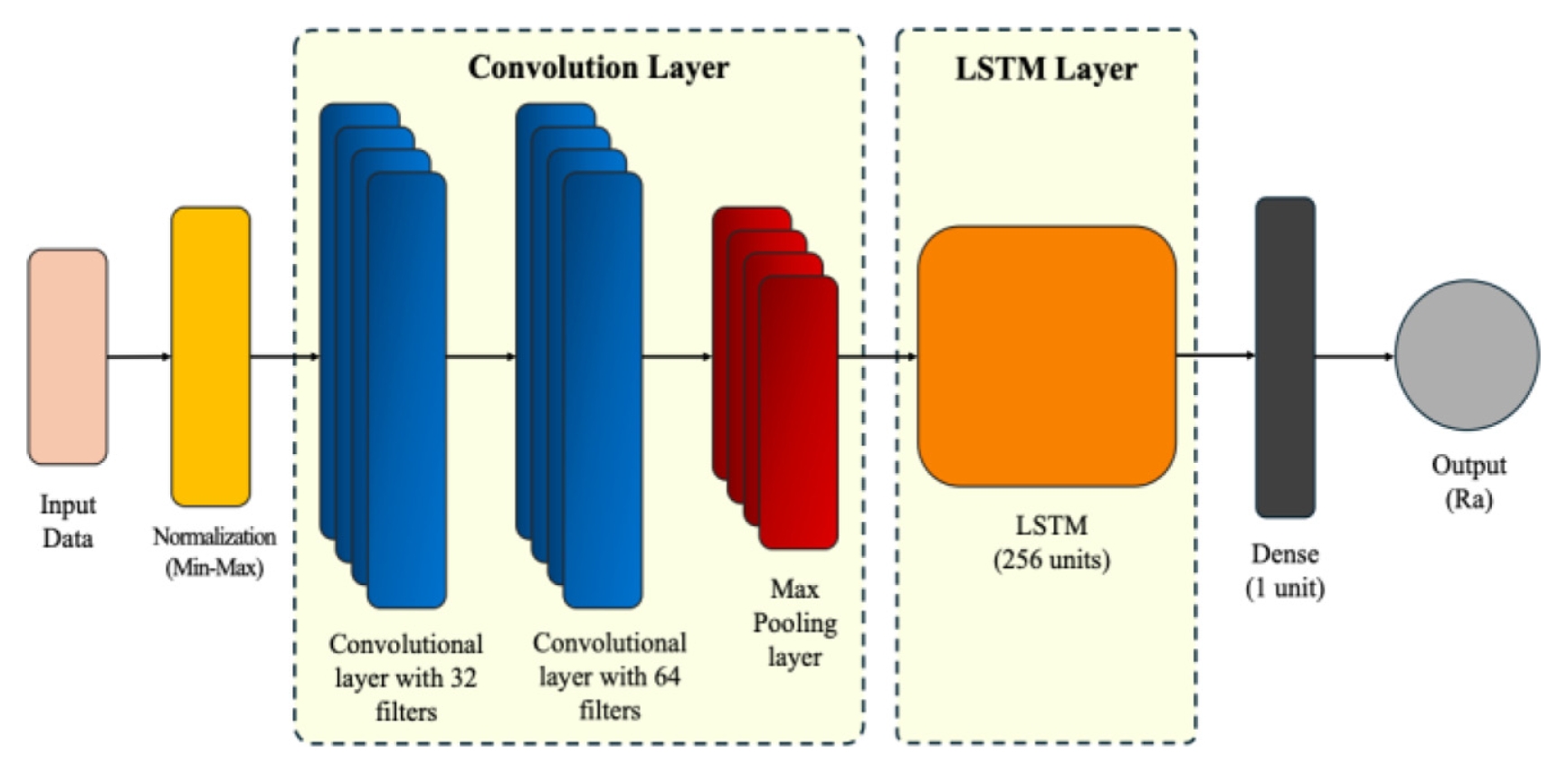
본 연구에서는 다채널 센서 데이터의 공간적 특징과 시계열 의존성을 동시에 학습하기 위해 CNN-LSTM 하이브리드 구조를 적용하였다.
Fig. 3은 제안된 모델의 전체 구조를 나타내며,
Table 2에 주요 하이퍼파라미터 설정을 요약하였다. 입력 데이터는 Min-Max 정규화를 통해 0과 1 사이의 값으로 스케일링하여 사용되었다. CNC 장비에서 수집된 원시 시계열 데이터를 모델 입력으로 사용하였으며, 입력 신호에 대한 노이즈 민감도는 Section 3.3의 노이즈 조건 실험을 통해 평가하였다.
CNN 모듈은 두 개의 1차원 합성곱 레이어(필터 수 32, 64)와 ReLU 활성화 함수, MaxPooling 레이어로 구성되어 다채널 센서 신호로부터 채널 간 상관관계 및 지역적 특징을 추출한다. 이후 LSTM 모듈은 256개의 은닉 유닛을 사용하여 시계열 의존성을 학습함으로써, 이전 시점의 가공 이력이 현재 표면 조도에 미치는 영향을 모델링한다. 최종 출력은 D e nse 레이어를 통해 표면 조도 지표인 Ra 값을 예측한다. 모델 학습에는 Adam 옵티마이저와 평균 제곱 오차(MSE) 손실 함수를 사용하였으며, 과적합 방지를 위해 Dropout 비율을 0.3으로 설정하였다. 학습률은 0.0008, 배치 크기는 32로 설정하였고, 검증 손실을 기준으로 10 에폭 동안 성능 개선이 없는 경우 조기 종료를 적용하여 최적의 모델 가중치를 저장하였다.
2.3 검증 방법론
시계열 데이터 기반 예측 모델의 신뢰성을 확보하기 위해서는 훈련 데이터와 테스트 데이터 간의 시간적 순서를 보존한 검증 방식이 필수적이다. 일반적인 무작위 분할 방식은 미래 시점의 데이터가 훈련에 포함되는 데이터 누수 문제를 유발할 수 있으며, 이는 모델의 일반화 성능을 과대평가하는 결과로 이어질 수 있다. 특히 절삭가공 공정에서는 공구 마모, 열 변형 등의 요인이 시간에 따라 누적되므로, 시간적 순서를 고려하지 않은 검증은 실제 공정 적용 가능성을 적절히 반영하지 못한다.
본 연구에서는 이러한 문제를 방지하기 위해 전체 데이터를 시간 순서에 따라 훈련 데이터(80%)와 테스트 데이터(20%)로 분할하였으며, 각 분할에서 표면 조도 값의 분포가 균등하게 유지되도록 층화 추출을 적용하였다. 이러한 검증 전략을 통해 특정 표면 조도 구간에 데이터가 편중되는 현상을 방지하고, 형상 가공 전 구간에 걸친 표면 조도 예측 성능을 공정하게 평가할 수 있도록 하였다. CNN-LSTM 모델의 예측 성능은 기존 머신러닝 및 딥러닝 모델과의 비교 실험을 통해 객관적으로 검증하였으며, 모든 모델은 동일한 훈련 및 테스트 데이터셋을 사용하여 학습 및 평가되었다. 성능 평가는 결정계수(R2), 평균 제곱근 오차(RMSE), 평균 절대 오차(MAE)를 기준으로 수행하였다.
3. 실험 결과 및 고찰
3.1 예측 모델 성능 분석
제안된 CNN-LSTM 모델의 표면 조도 예측 성능을 평가하기 위해 R
2, RMSE, MAE를 성능 지표로 사용하였다. R
2는 모델이 실제 데이터의 분산을 얼마나 설명하는지를 나타내는 지표로, 1에 가까울수록 예측 성능이 우수함을 의미한다. RMSE는 큰 오차에 민감하게 반응하는 지표이며, MAE는 전체 오차의 평균적인 크기를 나타낸다. 본 연구에서는 전체 데이터셋 4,154개 샘플 중 시간 적 순서를 보존하여 분할한 테스트 데이터 822개 샘플에 대해 예측 성능을 평가하였으며, 그 결과는
Table 3에 제시하였다.
CNN-LSTM 모델은 R2 0.8512를 달성하여 전체 분산의 약 85%를 설명하였다. 이는 제안된 모델이 표면 조도에 영향을 미치는 주요 요인들의 변동을 효과적으로 반영하고 있음을 의미한다. RMSE는 0.0199 μm로 표면 조도 측정 범위(0.57-0.74 μm) 대비 약 11.7%의 상대 오차를 나타냈으며, MAE는 0.0096 μm로 평균적으로 0.01 μm 이내의 낮은 절대 오차를 보였다. MAE 값이 RMSE 대비 상대적으로 작은 것은 일부 샘플에서 큰 오차가 발생하지 않고 전반적으로 균일한 예측 성능을 유지하고 있음을 나타낸다. 측정된 Ra 값의 전체 범위는 0.57-0.74 μm로 비교적 좁은 범위를 가지며, MAE 0.0096 μm는 전체 Ra 변동 범위 대비 약 5.6% 수준의 오차에 해당한다. 이는 형상 가공 공정에서 표면 조도 변화 추세를 예측하고 공정 중 품질 이상을 사전에 인지하기 위한 목적에서는 유의미한 수준의 예측 정확도로 판단된다.
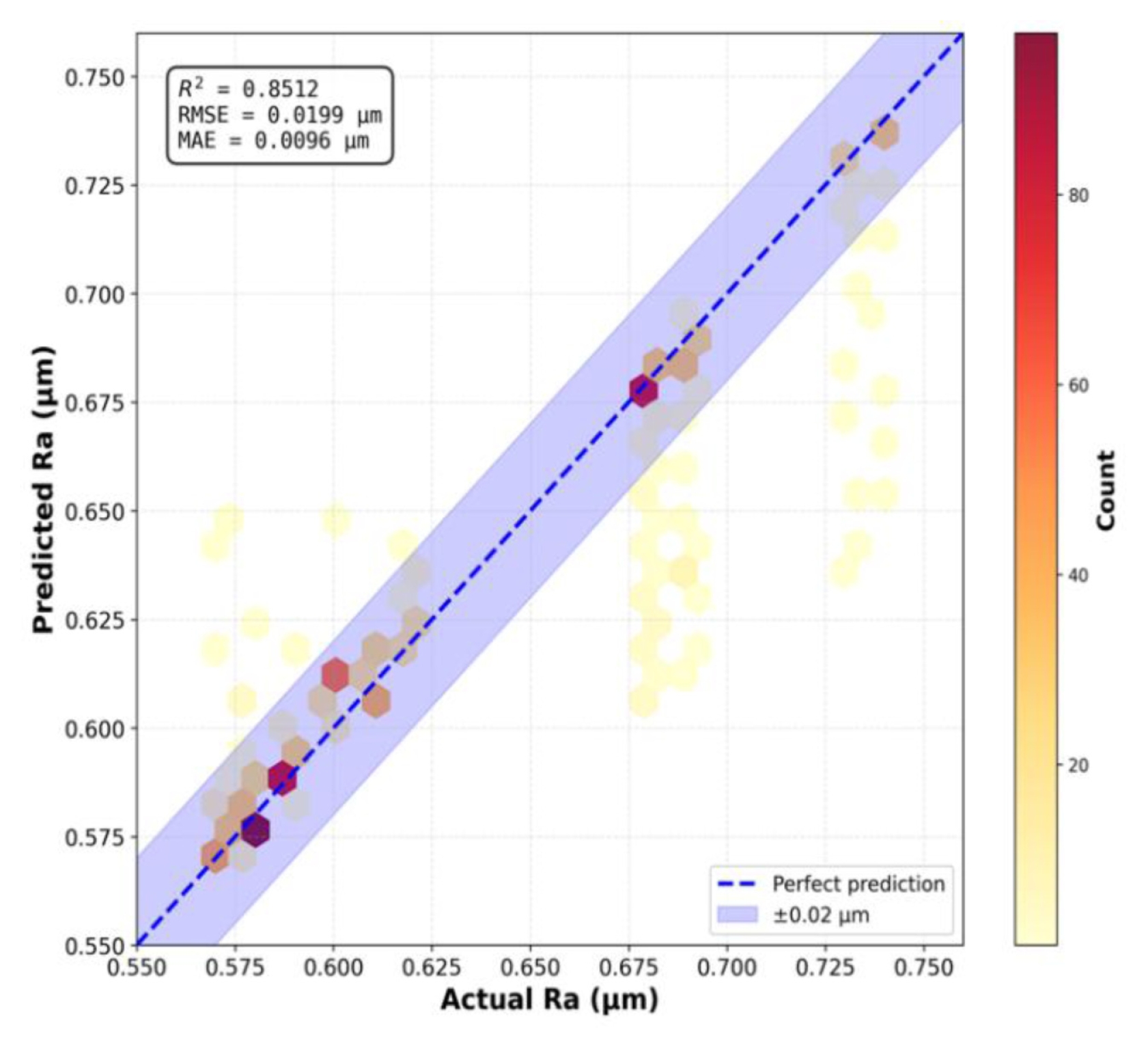
Fig. 4는 실제 표면 조도 값과 모델 예측 값을 비교한 산점도이다. 가로축은 실제 측정된 Ra 값을, 세로축은 모델이 예측한 Ra 값을 의미하며, 대각선은 완전 예측선을 의미한다. 대부분의 예측 값은 완전 예측선 주변 ±0.02 μm 이내에 분포하여, 표면 조도 전 범위에 걸쳐 일관된 예측 성능을 보였다. 특히 Ra 0.57-0.62 μm 구간과 0.68-0.74 μm 구간에서 데이터가 높은 밀도로 집중되어 있으며, 해당 구간에서도 안정적인 예측 정확도를 유지하였다. 이는 학습 데이터가 충분히 분포된 구간에서 모델이 표면 조도 특성을 효과적으로 학습하였음을 보여준다. 특정 Ra 구간에 데이터가 집중된 현상은 형상 가공 공정에서 동일 공구와 유사한 절삭 조건이 반복적으로 적용되는 구간이 존재하기 때문으로 판단된다. 외경 형상 및 라운드부 가공에서는 공구 경로와 절삭 상태가 비교적 일정하게 유지되는 구간이 반복되어 유사한 표면 조도 값이 형성되었으며, 이에 따라 일부 Ra 범위에 데이터가 군집되는 경향이 나타났다.
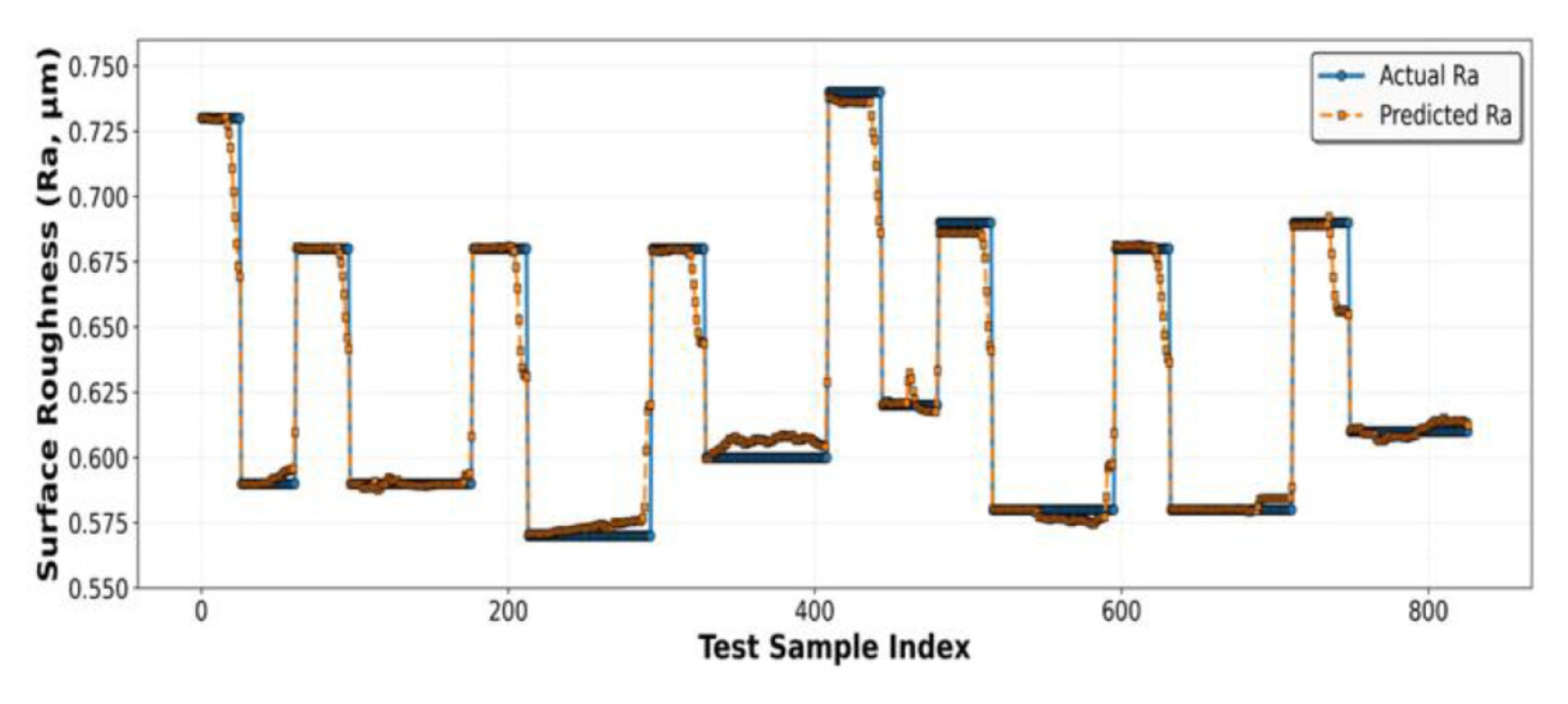
Fig. 5는 테스트 데이터 822개 샘플에 대한 시계열 예측 결과를 나타낸다. 가로축은 테스트 샘플의 시간적 순서를, 세로축은 표면 조도 Ra 값을 나타내며, 파란색 실선은 실제 측정값, 주황색 점선은 모델 예측 값을 나타낸다. 제안된 모델은 가공 과정에서 발생하는 표면 조도의 급격한 변화를 효과적으로 추적하였으며, Ra 값이 계단식으로 변화하는 구간에서도 실제 값을 효과적으로 추종하였다. 이는 CNN 구조를 통한 다채널 센서 신호의 공간적 특징 추출과 LSTM 구조를 통한 시간적 의존성 학습이 동시에 수행되어 형상 가공 공정의 동적 특성을 효과적으로 모델링하였음을 나타낸다.
3.2 예측 모델 간 성능 비교
제안된 모델의 예측 성능을 평가하기 위해 기존 머신러닝 및 딥러닝 기법과 비교 실험을 수행하였다. 비교 대상 모델로는 트리 기반 앙상블 모델(Random Forest, XGBoost, LightGBM, CatBoost), 순환 신경망 기반 모델(LSTM, GRU, BiLSTM), 그리고 어텐션 기반 모델(Transformer)를 포함하여 총 8개 모델을 선정하였다. 트리 기반 모델은 시계열 특성을 반영하기 위해 슬라이딩 윈도우 기법을 적용하여 입력 특징을 구성하였으며, 딥러닝 모델은 동일한 시퀀스 길이와 입력 구조를 사용하였다. 모든 모델은 동일한 훈련 및 테스트 데이터셋을 사용하여 공정한 비교가 이루어지도록 하였으며, 비교 결과는
Table 4와 같다.
CNN-LSTM 모델은 R2 0.8512로 비교 모델 중 가장 높은 예측 성능을 보였으며, MAE 역시 0.0096 μm로 가장 낮은 평균 절대 오차를 나타냈다. 트리 기반 모델 중에서는 CatBoost가 R2 0.8044로 가장 우수한 성능을 기록하였으나, 제안된 모델 대비 약 0.05 낮은 설명력을 보였다. Transformer 모델은 R2 0.7998로 트리 기반 모델과 유사한 수준의 성능을 나타냈으며, BiLSTM, GRU, LSTM은 각각 R2 0.7837, 0.7757, 0.7638로 상대적으로 낮은 성능을 기록하였다.
이러한 결과는 제안된 하이브리드 구조가 다채널 센서 신호의 특성을 보다 효과적으로 반영하고 있음을 의미한다. 단일 LSTM 계열 모델은 각 채널을 독립적으로 처리하는 경향이 있어 채널 간 상호작용을 충분히 반영하지 못하는 반면, CNNLSTM 구조는 합성곱 연산을 통해 인접 채널 간의 국부적 상관관계를 먼저 학습한 후 시계열 의존성을 모델링함으로써 형상 가공 공정의 복합적인 특성을 효과적으로 표현할 수 있다. Transformer 모델은 장기 의존성 학습 측면에서 강점을 가지나, 본 연구 데이터 규모(총 4,154개 샘플)가 어텐션 기반 모델의 학습에 충분하지 않아 성능 향상이 제한된 것으로 판단된다. 트리 기반 모델 역시 시계열 정보를 슬라이딩 윈도우 형태로 변환하여 사용함에 따라 연속적인 시간 흐름을 직접적으로 학습하는 데 한계가 있었으며, 이로 인해 딥러닝 기반 하이브리드 모델 대비 상대적으로 낮은 예측 성능을 보였다. 종합적으로 볼 때, CNN-LSTM 모델은 다채널 센서 신호의 공간적 특징과 시간적 의존성을 동시에 학습함으로써 형상 가공 공정에서의 표면 조도 변화를 가장 효과적으로 예측할 수 있음을 확인하였다.
3.3 예측 모델 안정성 검증
CNN-LSTM 모델의 실용성을 검증하기 위해 입력 신호 노이즈에 대한 민감도와 학습 결과의 일관성을 중심으로 모델 안정성을 평가하였다. 실제 제조 현장에서는 센서 노이즈가 불가피하게 발생하므로, 입력 신호의 품질 변화에 따른 예측 성능 변화를 분석하였다. 또한 딥러닝 모델은 초기 가중치에 따라 학습 결과가 달라질 수 있으므로, 서로 다른 랜덤 시드 조건에서의 성능 편차를 비교하여 학습 결과의 재현성을 함께 검증하였다.
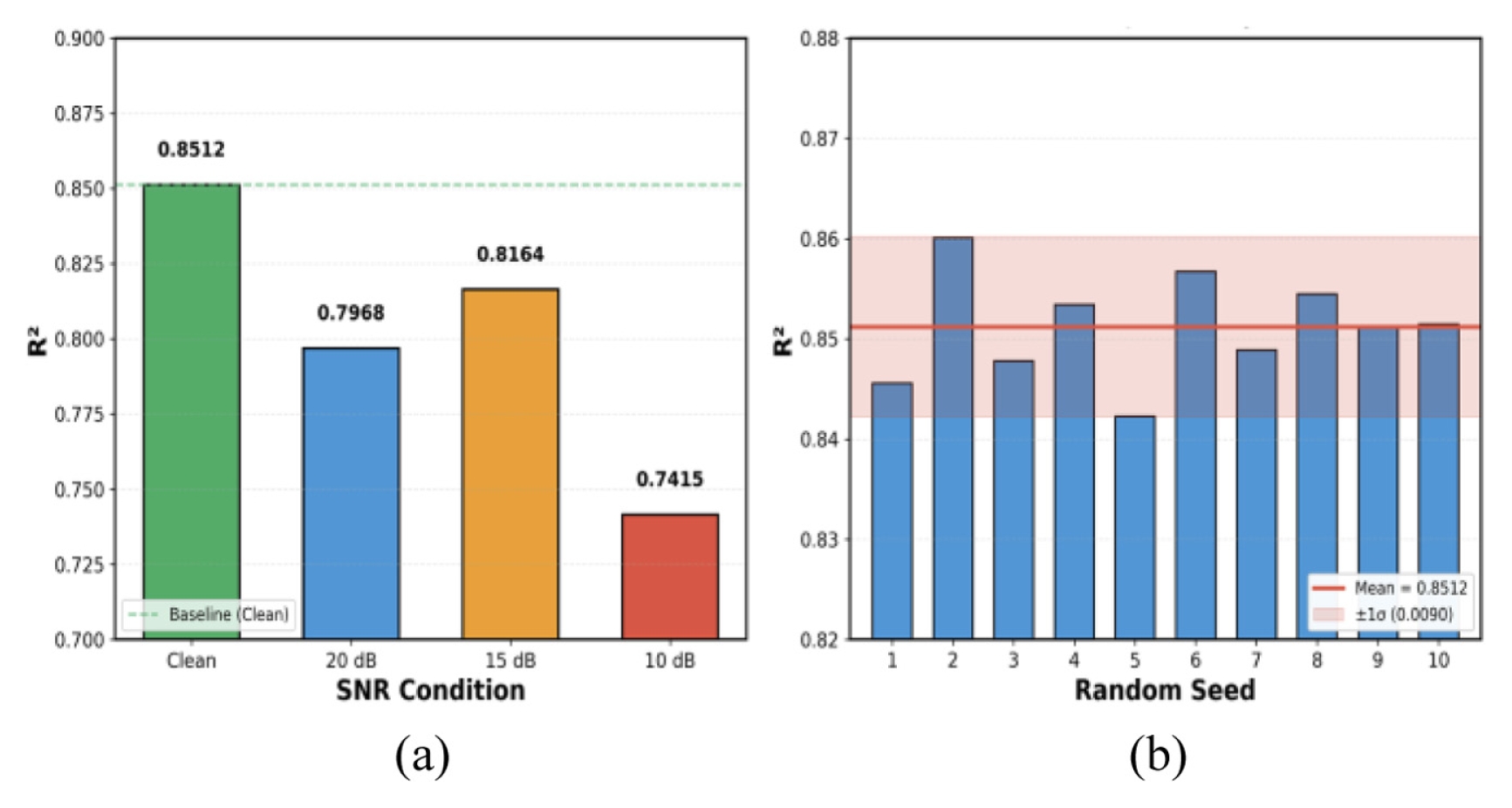
Table 5와
Fig. 6(a)는 입력 센서 신호에 가우시안 노이즈를 추가한 조건에서의 모델 성능을 나타낸다. SNR 20 dB 조건에서 R
2는 0.7968로 원본 대비 약 6.4% 감소하였으며, SNR 10 dB 의 강한 노이즈 환경에서도 R
2 0.7415를 유지하여 전체 성능의 약 87% 수준의 예측 성능을 확보하였다. 이는 CNN 구조가 다채널 센서 신호로부터 국부적 패턴을 효과적으로 추출함으로써, 노이즈 환경에서도 비교적 안정적인 특징 표현을 학습한 결과로 해석된다.
Table 6과
Fig. 6(b)는 10개의 서로 다른 랜덤 시드 조건에서 모델을 반복 학습한 결과를 나타낸다. R
2의 평균은 0.8512, 표준편차는 0.0090으로 학습 결과의 편차가 약 1% 수준에 불과하였으며, 최솟값 0.8423과 최댓값 0.8601의 범위 내에서 일관된 예측 성능을 보였다. 이는 초기 가중치 설정에 대한 민감도가 낮고 학습 결과의 재현성이 우수함을 의미하며, 제안된 CNN-LSTM 모델이 실제 제조 환경에서 안정적으로 적용될 수 있음을 시사한다.
4. 결론
본 연구에서는 항공 부품용 Ti-6Al-4V 합금 토크 튜브의 형상 가공 공정을 대상으로, 다채널 CNC 센서 데이터를 기반으로 한 CNN-LSTM 표면 조도 예측 모델을 개발하였다. Ti-6Al-4V 합금은 높은 비강도와 우수한 내식성으로 항공기 엔진 및 구조재에 널리 활용되나, 낮은 열전도도로 인해 절삭 영역에 열이 집중되고 공정 변동성이 커 표면 조도 관리가 어려운 소재이다. 특히 토크 튜브와 같은 형상 가공에서는 공구 경로 변화에 따라 절삭 깊이, 이송 속도, 공구 접촉각이 연속적으로 변하며, 가공 이력의 누적 효과가 표면 조도 변화에 직접적인 영향을 미친다.
형상 가공 공정의 특성을 반영하기 위해 가공 중 수집되는 다채널 공정 모니터링 데이터를 통합적으로 활용하고, CNNLSTM 하이브리드 구조를 적용한 표면 조도 예측 모델을 구성하였다. CNN은 다채널 모니터링 데이터로부터 채널 간 공간적 상관관계를 추출하고, LSTM은 가공 진행에 따른 공정 상태 변화를 학습하도록 설계되었다. 실험은 5축 CNC 머시닝센터를 이용한 외경 황삭 및 정삭 가공 조건에서 수행되었으며, X, Y, Z 부하, 이송 속도, 스핀들 속도 및 부하, 스핀들 온도 등 총 9개 채널의 센서 데이터를 기반으로 모델 학습과 검증을 진행하였다.
실험 결과, CNN-LSTM 모델은 822개 테스트 샘플에 대해 R2 0.8512, RMSE 0.0199 μm, MAE 0.0096 μm의 예측 성능을 달성하여 Random Forest, XGBoost, 단일 LSTM 및 Transformer 기반 모델 대비 가장 우수한 성능을 보였다. SNR 10 dB 수준의 노이즈 환경에서도 R2 0.7415를 유지하였으며, 서로 다른 랜덤 시드 조건에서 반복 실험을 수행한 결과 표준편차 0.0090의 안정적인 재현성을 나타냈다. 이는 공정 노이즈와 센서 변동성이 존재하는 실제 제조 환경에서도 신뢰 가능한 표면 조도 예측이 가능함을 의미한다.
본 연구를 통해 항공 부품 형상 가공 공정에서 다채널 CNC 센서 데이터와 딥러닝 모델을 결합한 비접촉식 표면 조도 예측의 적용 가능성을 확인하였다. 다만 단일 소재와 제한된 가공 조건을 대상으로 실험이 수행되었다는 한계가 존재하며, 향후 다양한 난삭재 및 가공 조건으로의 확장을 통해 모델의 범용성을 검증할 필요가 있다. 제안된 표면 조도 예측 모델은 실시간 공정 품질 모니터링 시스템으로의 확장이 가능하며, 가공 중 표면 품질 이상을 조기에 인지하고 선제적으로 대응할 수 있는 기반 기술로 활용될 수 있을 것으로 기대된다.
FOOTNOTES
-
ACKNOWLEDGEMENT
본 연구는 산업통상자원부의 기계장비산업기술개발 사업의 지원으로 수행되었음(No. 20023466).
이 논문은 과학기술정보통신부의 재원으로 정보통신기획평가원의 지역지능화혁신인재양성사업의 지원을 받아 수행된 연구임(IITP-2025-RS-2024-00436773).
본 연구는 교육부의 재원으로 한국연구재단의 지원을 받아 수행된 지자체-대학 협력기반 지역혁신 사업의 결과임(No. 2021RIS-003).
Fig. 1Torque tube test part through machining experiment
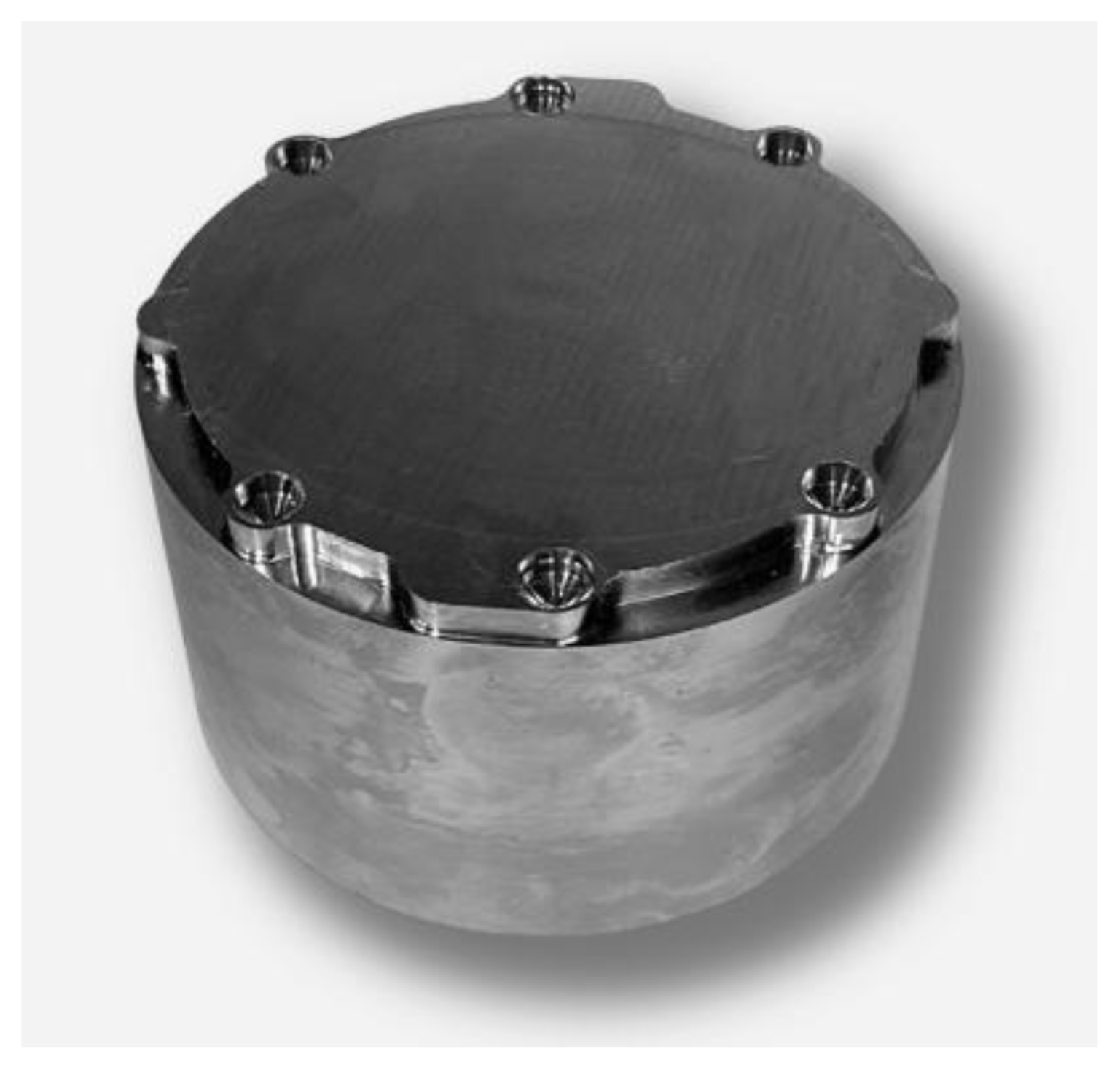
Fig. 2Experimental setups for CNC machining and surface roughness measurement data collection
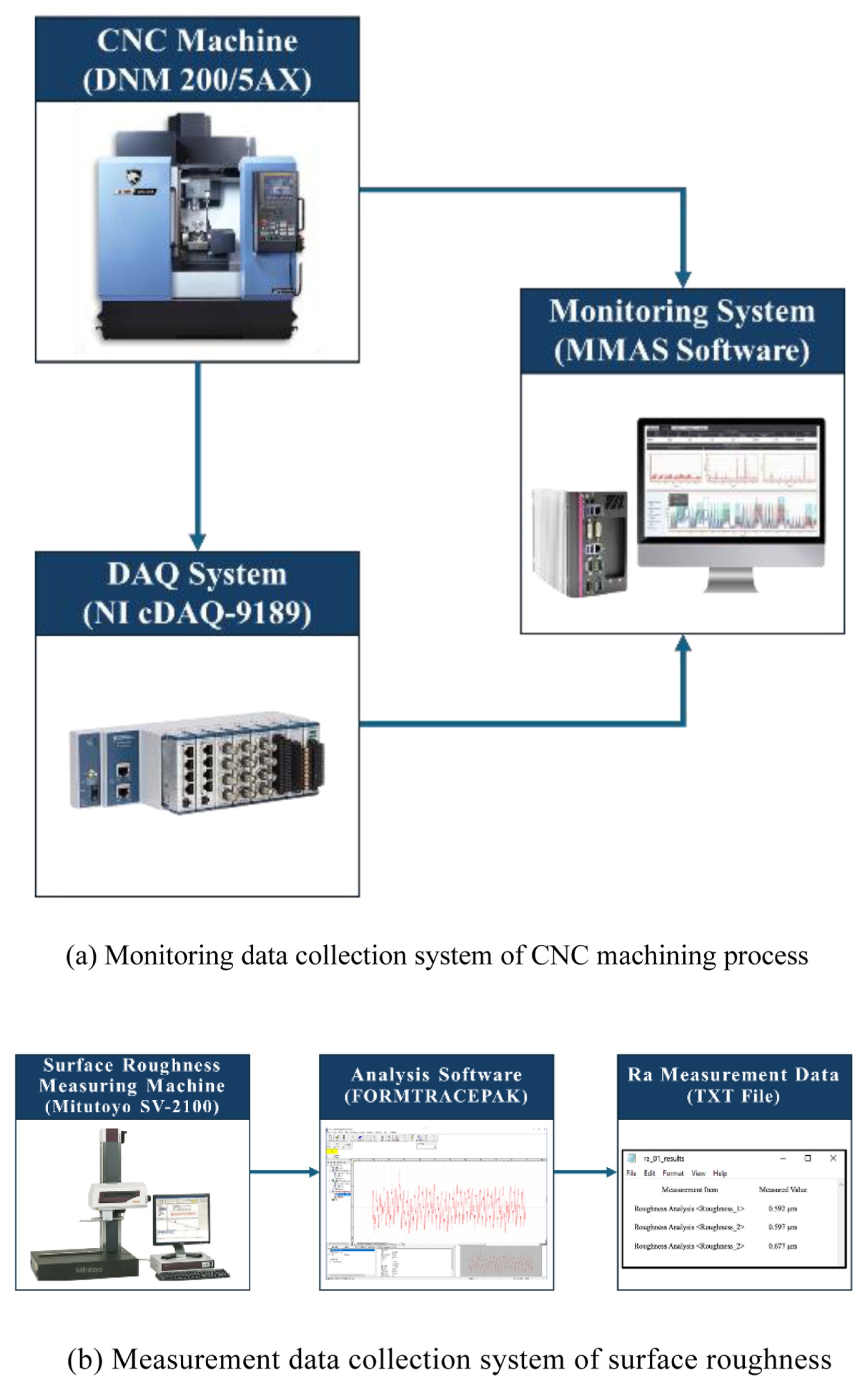
Fig. 3CNN-LSTM architecture for surface roughness prediction
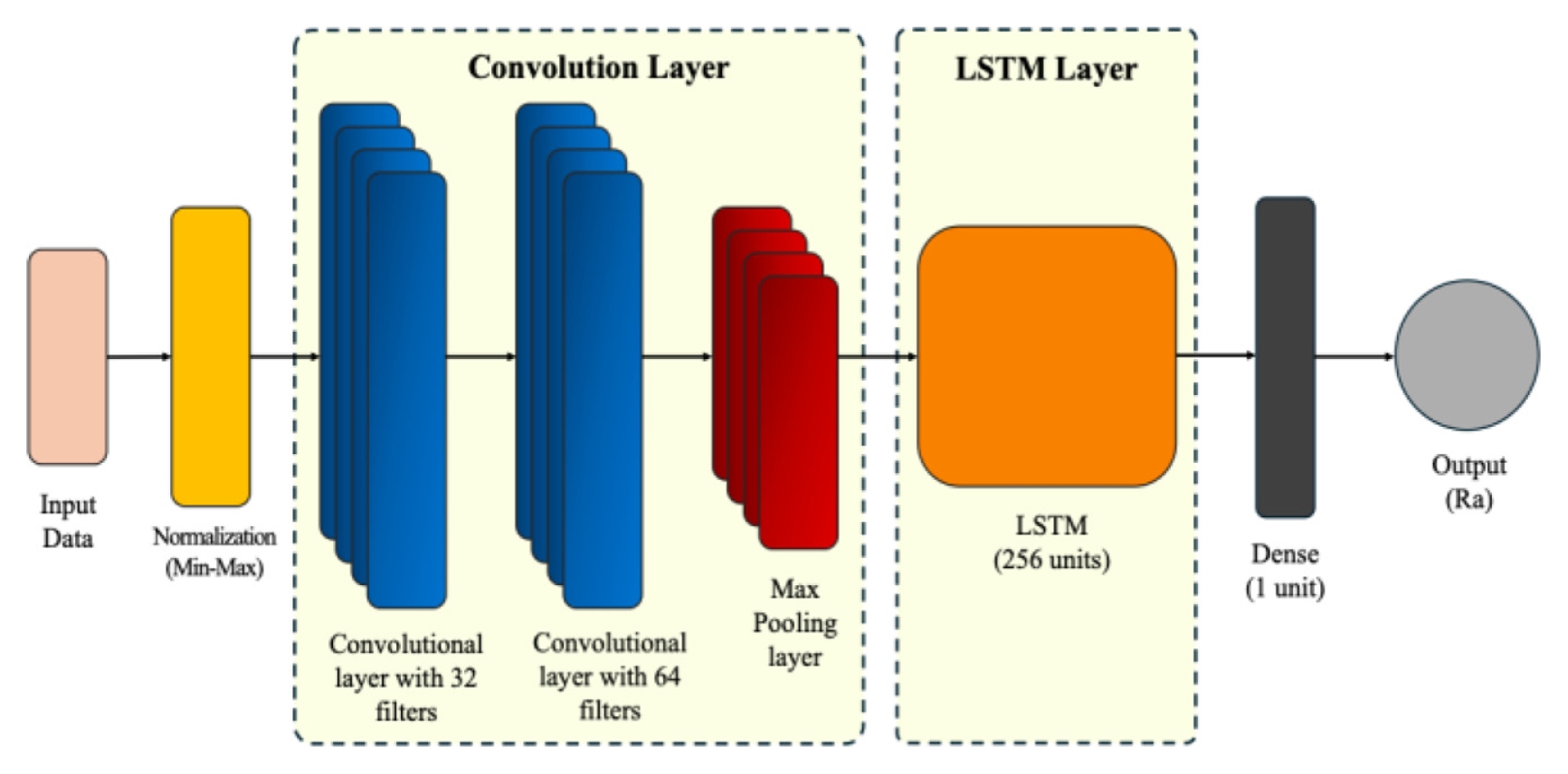
Fig. 4Comparison of actual and predicted surface roughness
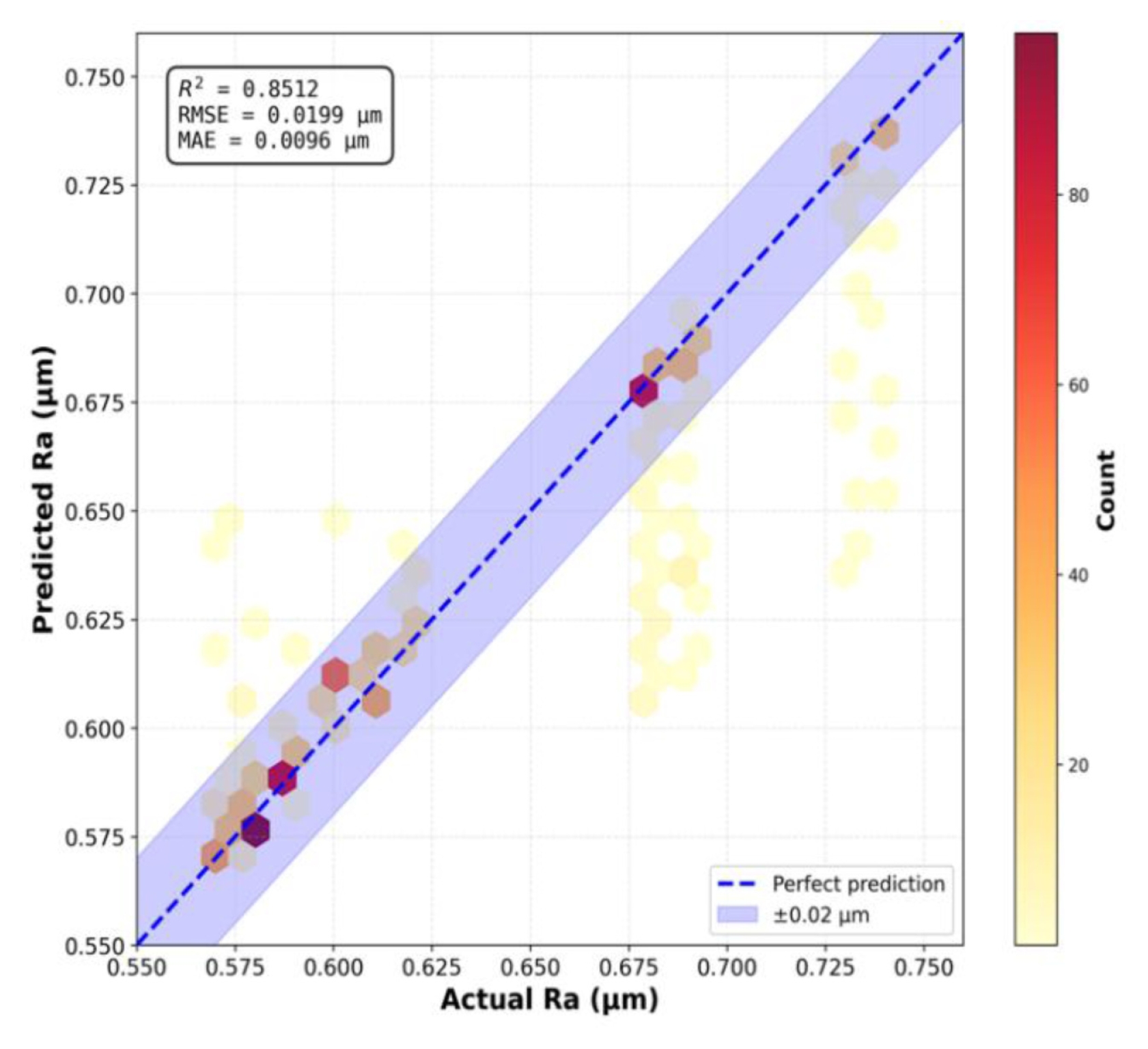
Fig. 5Time-series prediction results on the test dataset
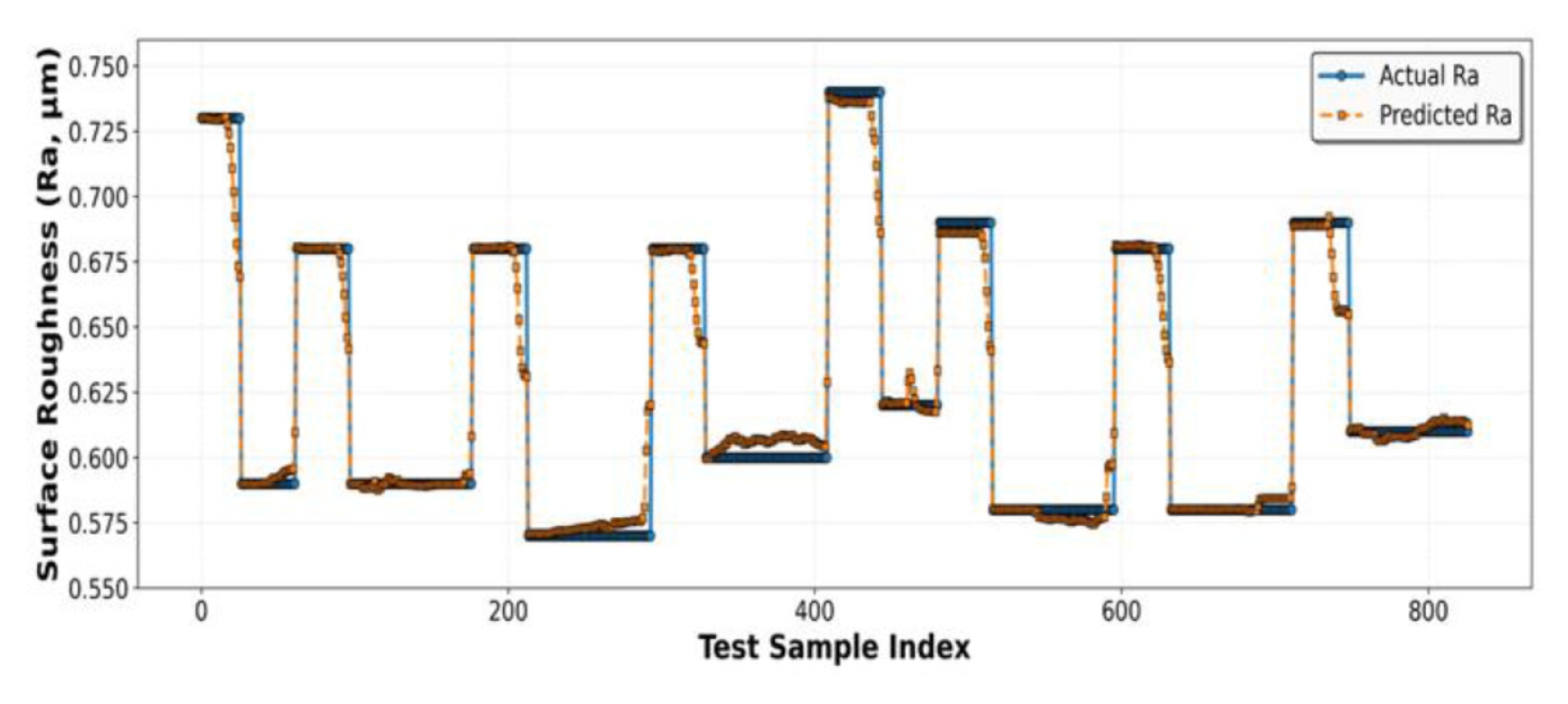
Fig. 6Model stability under noise perturbation and different random seeds
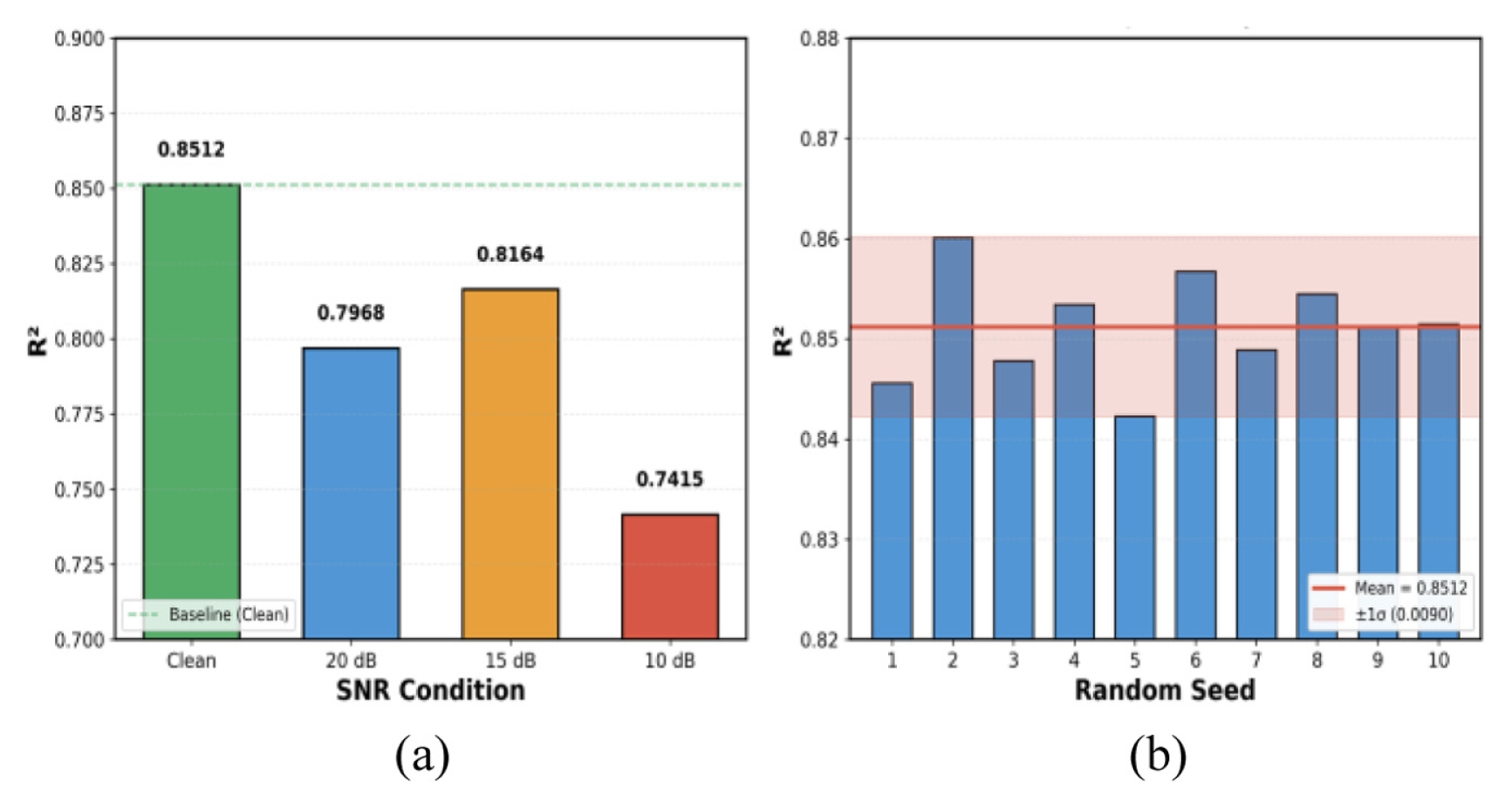
Table 1Machining conditions for scallop end milling
Table 1
|
Working step |
Scallop machining (Rough) |
Scallop machining (Finish) |
|
Spindle speed [rpm] |
994 |
994 |
|
Feed rate [mm/min] |
457 |
457 |
|
Tool |
T01, Endmill Ø16 |
T01, Endmill Ø16 |
|
Cutting depth [mm] |
0.3 |
0.3 |
Table 2Hyperparameter settings for the CNN-LSTM model
Table 2
|
Hyperparameter |
value |
|
Sequence length |
72 |
|
CNN filters |
32, 64 |
|
Kernel size |
3 |
|
Activation function |
ReLU |
|
LSTM Hidden units |
256 |
|
Dropout rate |
0.3 |
|
Learning rate |
0.0008 |
|
Batch size |
32 |
Table 3Performance of the CNN-LSTM model on the test dataset
Table 3
|
Metric |
Value |
|
R2
|
0.8512 |
|
RMSE [μm] |
0.0199 |
|
MAE [μm] |
0.0096 |
|
Test samples |
822 |
Table 4Performance comparison of prediction models
Table 4
|
Model |
R2
|
RMSE [μm] |
MAE [μm] |
|
CNN-LSTM |
0.8512 |
0.0199 |
0.0096 |
|
CatBoost |
0.8044 |
0.0179 |
0.0125 |
|
Transformer |
0.7998 |
0.0223 |
0.0161 |
|
BiLSTM |
0.7837 |
0.0231 |
0.0150 |
|
GRU |
0.7757 |
0.0236 |
0.0146 |
|
LSTM |
0.7638 |
0.0241 |
0.0148 |
|
LightGBM |
0.7621 |
0.0197 |
0.0128 |
|
Random Forest |
0.7555 |
0.0200 |
0.0128 |
|
XGBoost |
0.7382 |
0.0206 |
0.0132 |
Table 5Model performance under different noise conditions
Table 5
|
Statistic |
R2
|
|
Mean |
0.8512 |
|
Std |
0.0090 |
|
Min |
0.8423 |
|
Max |
0.8601 |
Table 6Stability of model performance across different random seeds (n = 10)
Table 6
|
Condition |
R2
|
RMSE [μm] |
MAE [μm] |
|
Clean |
0.8512 |
0.0199 |
0.0096 |
|
SNR 20 dB |
0.7968 |
0.0232 |
0.0117 |
|
SNR 15 dB |
0.8164 |
0.0221 |
0.0111 |
|
SNR 10 dB |
0.7415 |
0.0262 |
0.0133 |
REFERENCES
- 1. Liu, Z., He, B., Lyu, T., Zou, Y., (2021), A review on additive manufacturing of titanium alloys for aerospace applications: directed energy deposition and beyond Ti-6Al-4V, JOM, 73(6), 1804-1818.
- 2. Veiga, C., Davim, J. P., Loureiro, A. J. R., (2012), Properties and applications of titanium alloys: a brief review, Reviews on Advanced Materials Science, 32(2), 133-148.
- 3. Fotovvati, B., Namdari, N., Dehghanghadikolaei, A., (2019), Fatigue performance of selective laser melted Ti-6Al-4V components: state of the art, Materials Research Express, 6(1), 012002..
- 4. Molaei, R., Fatemi, A., (2018), Fatigue design with additive manufactured metals: issues to consider and perspective for future research, Procedia Engineering, 213, 5-16.
- 5. Zhang, C., Zou, D., Mazur, M., Mo, J. P. T., Li, G., Ding, S., (2023), The state of the art in machining additively manufactured titanium alloy Ti-6Al-4V, Materials, 16(7), 2583.
- 6. Khatri, A., Jahan, M. P., (2018), Investigating tool wear mechanisms in machining of Ti-6Al-4V in flood coolant, dry and MQL conditions, Procedia Manufacturing, 26, 718-726.
- 7. Ko, J. H., Yin, C., (2026), A review of artificial intelligence application for machining surface quality prediction: from key factors to model development, Journal of Intelligent Manufacturing, 37, 775-798.
- 8. Karkalos, N. E., Galanis, N. I., Markopoulos, A. P., (2016), Surface roughness prediction for the milling of Ti–6Al–4V ELI alloy with the use of statistical and soft computing techniques, Measurement, 90, 25-35.
- 9. Wu, D., Jennings, C., Terpenny, J., Gao, R. X., Kumara, S., (2017), A comparative study on machine learning algorithms for smart manufacturing: tool wear prediction using random forests, Journal of Manufacturing Science and Engineering, 139(7), 071018..
- 10. Alajmi, M. S., Almeshal, A. M., (2020), Predicting the tool wear of a drilling process using novel machine learning XGBoost-SDA, Materials, 13(21), 4952.
- 11. Zhao, R., Yan, R., Wang, J., Mao, K., (2017), Learning to monitor machine health with convolutional bi-directional LSTM networks, Sensors, 17(2), 273.
- 12. Zhao, R., Yan, R., Chen, Z., Mao, K., Wang, P., Gao, R. X., (2019), Deep learning and its applications to machine health monitoring, Mechanical Systems and Signal Processing, 115, 213-237.
- 13. Tercan, H., Meisen, T., (2022), Machine learning and deep learning based predictive quality in manufacturing: a systematic review, Journal of Intelligent Manufacturing, 33(7), 1879-1905.
- 14. Zeng, S., Pi, D., (2023), Milling surface roughness prediction based on physics-informed machine learning, Sensors, 23(10), 4969.
- 15. Shehzad, A., Rui, X. T., Ding, Y. Y., Zhang, J. S., Chang, Y., Lu, H. J., Chen, Y. H., (2024), Deep-learning-assisted online surface roughness monitoring in ultraprecision fly cutting, Science China Technological Sciences, 67(5), 1482-1497.
- 16. Lin, W. J., Lo, C. H., Young, H. T., Hung, C. L., (2019), Evaluation of deep learning neural networks for surface roughness prediction using vibration signal analysis, Applied Sciences, 9(7), 1462.
- 17. Cerqueira, V., Torgo, L., Mozetič, I., (2020), Evaluating time series forecasting models: an empirical study on performance estimation methods, Machine Learning, 109(11), 1997-2028.
- 18. Bergmeir, C., Hyndman, R. J., (2020), A note on the validity of cross-validation for evaluating autoregressive time series prediction, Computational Statistics & Data Analysis, 120, 70-83.
- 19. Yang, X., Li, J., Jiang, X., (2024), Research on information leakage in time series prediction based on empirical mode decomposition, Scientific Reports, 14, 28362.
Biography
- Su In Choi
M.S. candidate in the Department of Industrial Data Engineering, Hanyang University. Her research interest is time-series anomaly detection.
- Joo Sung Yoon
Associate Professor in the School of Mechanical Engineering, Kyungnam University. His research interest is smart machine tool system and intelligent machining process.