ABSTRACT
Trunk balance is essential for physical stability, but traditional assessment tools, such as force plates and 3D motion capture systems, can be inaccessible or unsafe for patients unable to stand. This study introduces a seated trunk balance training and assessment system that combines a tilting chair with an Inertial Measurement Unit (IMU). The system features a kinematic design that transmits the user's trunk movements to the chair's seat, allowing for quantitative measurement without the need for body-mounted sensors. A pilot study was conducted to evaluate technical feasibility by comparing a seat-mounted sensor (CS-IMU) with a reference sensor (T12-IMU) attached to the T12 vertebra. Assessment items included Range of Motion (RoM), rotation accuracy, and agility. Results indicated a very high correlation for lateral bending (r = 0.958) and rotation phase angle (r = 0.990), while flexion/extension showed a moderate correlation (r = 0.691). Additionally, agility tasks demonstrated consistent results in the lateral direction (r = 0.806). These findings suggest that the proposed system can effectively quantify multi-dimensional trunk movements in a seated position, making it a valuable tool for high-risk populations, such as patients recovering from acute stroke or spinal cord injuries.
-
KEYWORDS: Trunk balance training and assessment, Inertial measurement unit, Tilting chair, Sitting balance, Rehabilitation exercise
-
KEYWORDS: 체간 균형훈련평가, 관성측정장치, 틸팅 의자, 앉은 자세 균형, 재활운동
1. 서론
체간(Trunk)은 신체 중심부의 안정성을 담당하는 핵심 신체 부위이며, 상·하지 운동의 기반이 되는 근위부 안정화(Proximal Stabilization) 기능을 수행한다[
1]. 체간 균형 능력의 저하는 보행 불안정, 낙상 위험 증가, 만성 요통 악화 등 다양한 2차 기능 장애와 밀접하게 연관되어 있으며[
2], 뇌졸중 후 재활, 척수 손상, 근골격계 질환자의 기능 회복 지표로도 광범위하게 활용된다[
3,
4]. 특히 장시간 앉아 있는 현대인의 생활 습관은 체간 심부 근육의 약화와 비대칭적 자세 패턴을 유발하며, 이는 요통 및 척추 불안정의 주요 위험 인자로 지목되고 있다[
5]. 이러한 체간 균형 평가를 위한 기존 임상 도구로는 Trunk Impairment Scale (TIS), Sitting Balance Scale (SBS), 힘판(Force Plate) 기반 자세동요 분석 등이 사용되어 왔다[
6-
8]. 그러나 TIS·SBS와 같은 관찰 기반 척도는 측정자 간 신뢰도 문제와 정량화의 한계가 있고, 힘판 기반 시스템은 고가 장비와 별도의 검사 공간이 요구되어 일상 환경에서의 반복 측정이 어렵다. 3차원 동작분석 시스템(3D Motion Capture)은 정밀도가 높으나 마커 부착 및 전문 인력이 필요하다는 접근성 제약이 있어, 임상 현장 외에서의 활용에는 어려움이 있다[
9]. 특히 체간 균형 평가 대상의 상당수는 독립적 기립 및 보행이 어렵거나 불가능한 환자군인 뇌졸중 급성기, 척수 손상, 고령의 낙상 고위험군, 수술 직후 재활 환자 등이 해당되며, 이들에게 기립 자세를 전제로 하는 힘판 검사나 동적 자세검사는 낙상 위험, 체중 부하 제한, 근력 부족 등으로 인해 시행 자체가 불가능하거나 안전하지 않은 경우가 많다[
3,
4,
10]. 그럼에도 불구하고 기존의 착석 체간 균형 평가 도구(TIS, SBS 등)는 수기 관찰 기반으로 정량적 수치 제공에 한계가 있으며, 앉은 상태에서 가동범위, 회전, 민첩성 등 다차원 운동 지표를 객관적으로 측정할 수 있는 디바이스 기반 평가 시스템은 아직 상용화 수준에 이르지 못하고 있다[
11]. 이러한 한계에 따라 앉은 자세를 유지한 채 별도의 준비 없이 체간 균형을 정량 평가할 수 있는 의자 결합형 측정 시스템에 대한 필요성이 요구되고 있다. 앉은 상태에서 체간의 움직임에 대한 정량화된 평가를 위해 관성측정장치(Inertial Measurement Unit, IMU)가 활용될 수 있다. MEMS (Micro-electro-mechanical Systems)기술의 향상에 따라 IMU 센서의 소형화 및 저가화가 가능해져서 다양한 장치들과의 결합이 가능한 가능성이 확인되고 있다[
12]. IMU 센서는 3축 가속도계 및 자이로스코프를 결합하여 Roll·Pitch·Yaw 방향의 각도 변화를 실시간으로 측정 가능하며, Bluetooth Low Energy (BLE) 통신 기술과 결합하면 무선 원격 모니터링이 가능하다는 장점이 있다[
13,
14]. 여러 선행연구에서는 요추 및 흉추 부위에 IMU를 직접 부착하여 착석 자세, 보행, 재활 동작 중 체간 기울기를 정량화한 결과를 도출하고 있으나, 실제 의자에 부착된 좌판의 기울기를 측정하여 IMU 센서의 신체 부착없이 체간의 움직임을 정량화하는 장치에 대한 개발 및 검증 연구는 미흡하다[
15-
17]. 틸팅 의자(Tilting Chair)는 좌판이 전후·좌우 방향으로 자유롭게 기울어지는 구조로, 착석 중 사용자의 체간 자세 변화가 좌판 기울기로 직접 전달된다는 기구학적 특성을 지닌다[
18,
19]. 이 특성을 이용하면 좌판 하단에 IMU 센서를 부착하는 것만으로 신체에 직접 센서를 부착하지 않고도 체간 움직임을 간접 측정할 수 있다.
이에 본 연구에서는 틸팅 의자 좌판 하단에 결합 가능한 소형 IMU 센서 모듈 및 BLE 기반 모바일 측정 앱을 설계 및 구현하고, 개발 시스템의 동작 검증을 위한 개념증명(Proof of Concept, POC) 수준의 파일럿 스터디를 수행하였다. 파일럿 스터디에서는 의자 좌판 하단 부착센서와 체간 직접 부착 센서를 동시 측정하여 가동범위, 회전, 민첩성 3개 지표의 동시 타당도를 내부 검증하였다. 본 연구의 목적은 임상 적용 전 단계에서 시스템의 기술적 타당성을 확인하고, 향후 대규모 임상 검증 연구를 위한 방법론적 기반을 마련하는 데 있다.
2. 방법
2.1 틸팅 좌판 의자 설계 및 제작
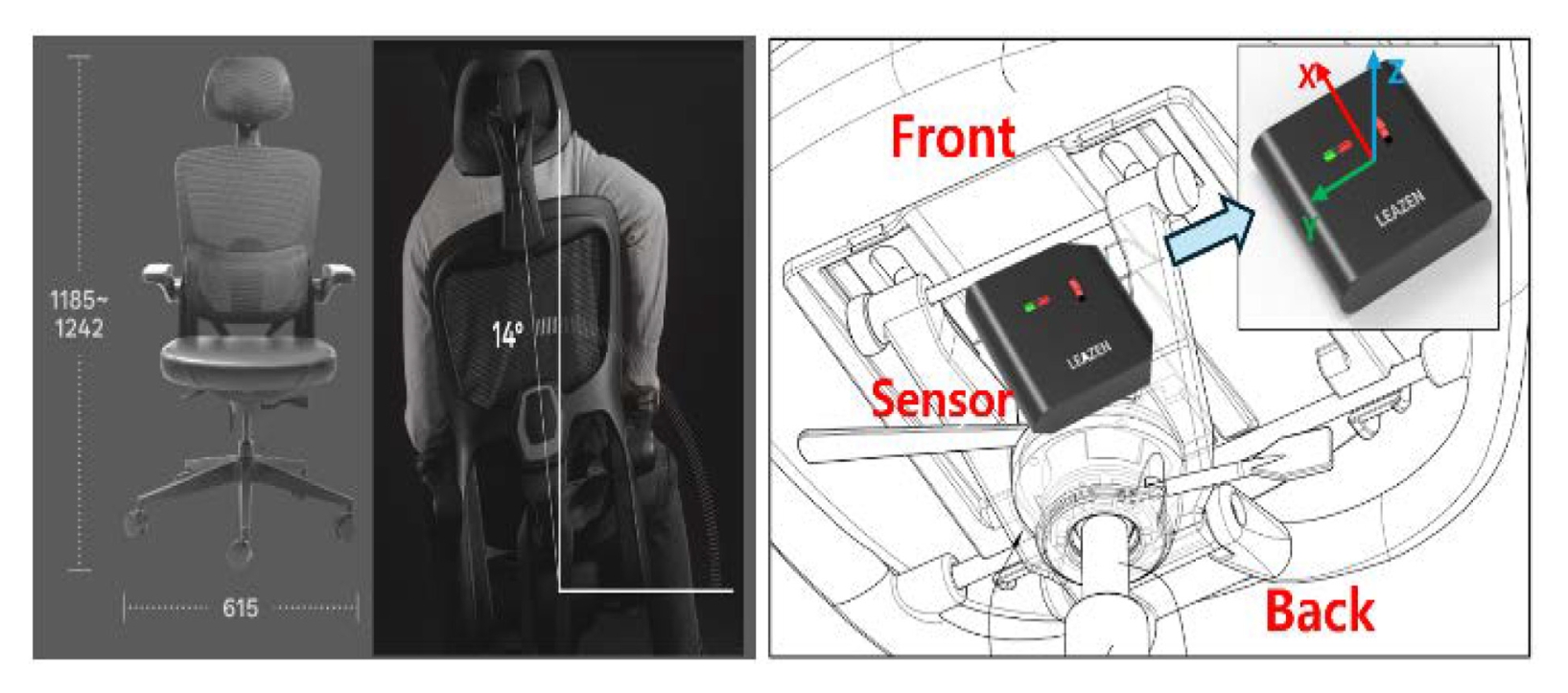
사용자의 체간 움직임을 좌판 틸팅으로 직접 전달하는 기구학적 구조를 구현하였다. 좌판은 연결 모듈의 길이방향(수직축)을 기준으로 최대 전후방향 30°, 좌우방향 20°(오차 ±5°) 범위 내에서 자유롭게 틸팅되며, 외력 제거 시 탄성 틸팅 모듈의 복원력에 의해 자동으로 수평 초기 위치로 복귀한다.
Fig. 1은 의자 전체 구성 및 탄성 틸팅 모듈이 결합된 좌판 하단의 구조이다.
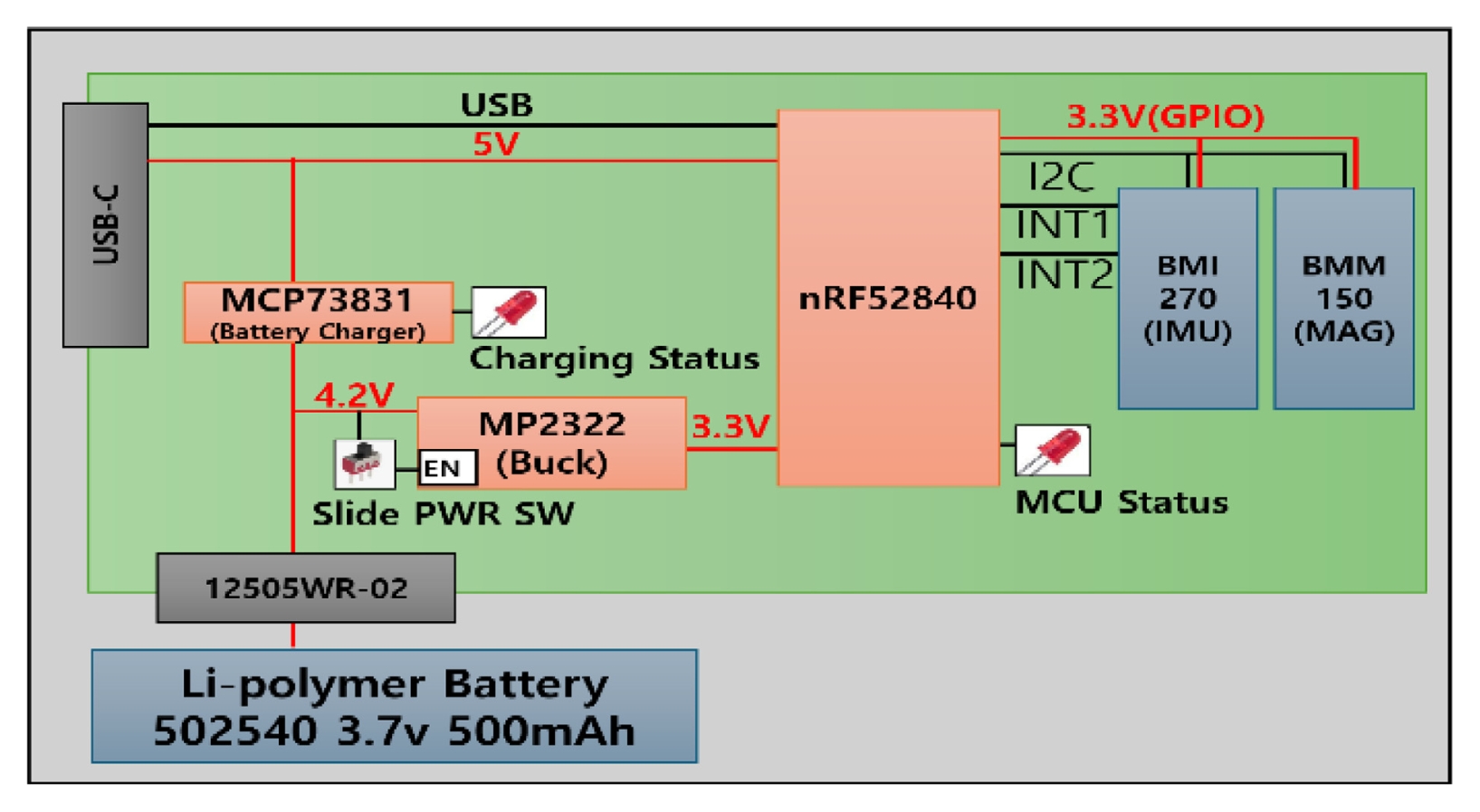
센서 모듈은 PCB 아트워크 및 SMT (Surface Mount Technology) 공정을 통해 제작되었다. 주요 회로 구성은 다음과 같다.
1) BMI270은 SPI 인터페이스를 통해 nRF52840에 연결되며, 인터럽트 핀(INT1, INT2)을 통한 이벤트 기반 데이터 취득이 가능하다.
2) BMM150은 I²C 인터페이스를 사용하며, 3축 지자기 데이터를 제공하여 절대 방위각 추정에 활용된다.
3)전원 회로는 USB-C 커넥터를 통한 5 V 입력을 받아 MCP73831T 충전 IC에서 리튬 배터리를 충전하며, LDO 레귤레이터를 통해 3.3 V 센서 전원(VDD_SEN)을 공급한다.
ESD 보호를 위해 PRTR5V0U2X를 USB 라인에 적용하였다. 센서 모듈의 블록 다이어그램은
Fig. 2와 같다.
펌웨어는 Nordic SDK를 기반으로 개발되었으며, AHRS (Attitude and Heading Reference System) 알고리즘으로 Madgwick 필터를 구현하여 Roll·Pitch·Yaw 3축 각도를 산출한다. BLE 커스텀 서비스를 통해 20 ms 주기(50 Hz)로 각도 데이터를 전송하며, 전송 데이터 포맷은 IEEE 754 단정밀도 부동소수점 4바이트 × 2채널(Roll, Pitch)로 구성된다.
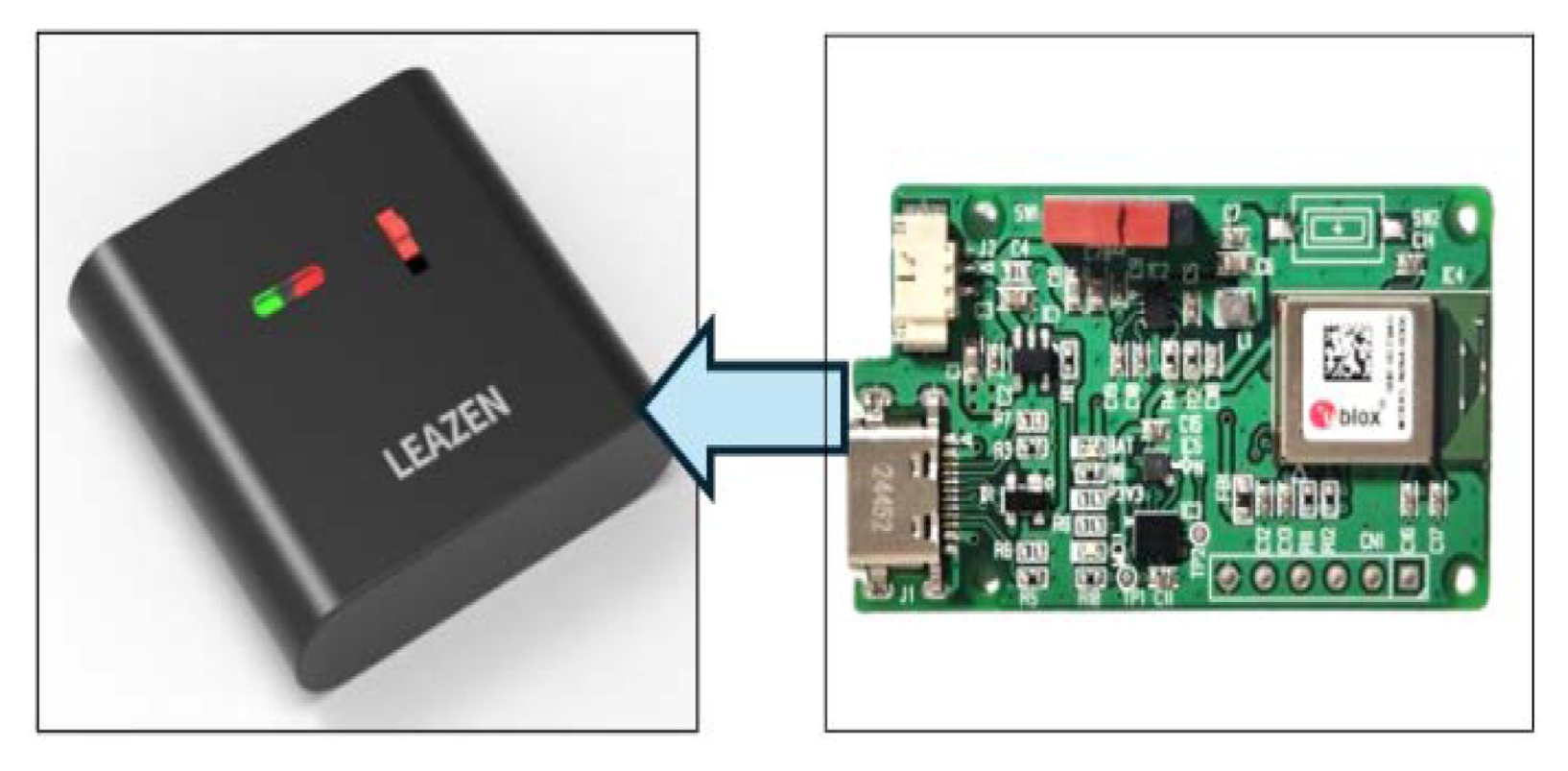
회로 검증은 EVT (Engineering Verification Test) 및 DVT (Design Verification Test) 두 단계에 걸쳐 수행되었다. EVT 단계에서는 전원 회로 안정성 및 IMU 통신 초기화를 검증하였으며, DVT 단계에서는 슬라이드 스위치(SW1) 핀 스왑, LED 저항값 변경 및 BMM150 CS 핀 GND 연결 등의 설계 수정 사항을 반영하여 최종 PCB를 확정하였다. 최종적으로 3D 프린팅을 통해 케이스를 제작하였고, 최종 제작한 CS-IMU (Chair-seat IMU)는 균형평가를 위해 틸팅 의자의 좌판 하단 중심부에 장착된다(
Fig. 3).
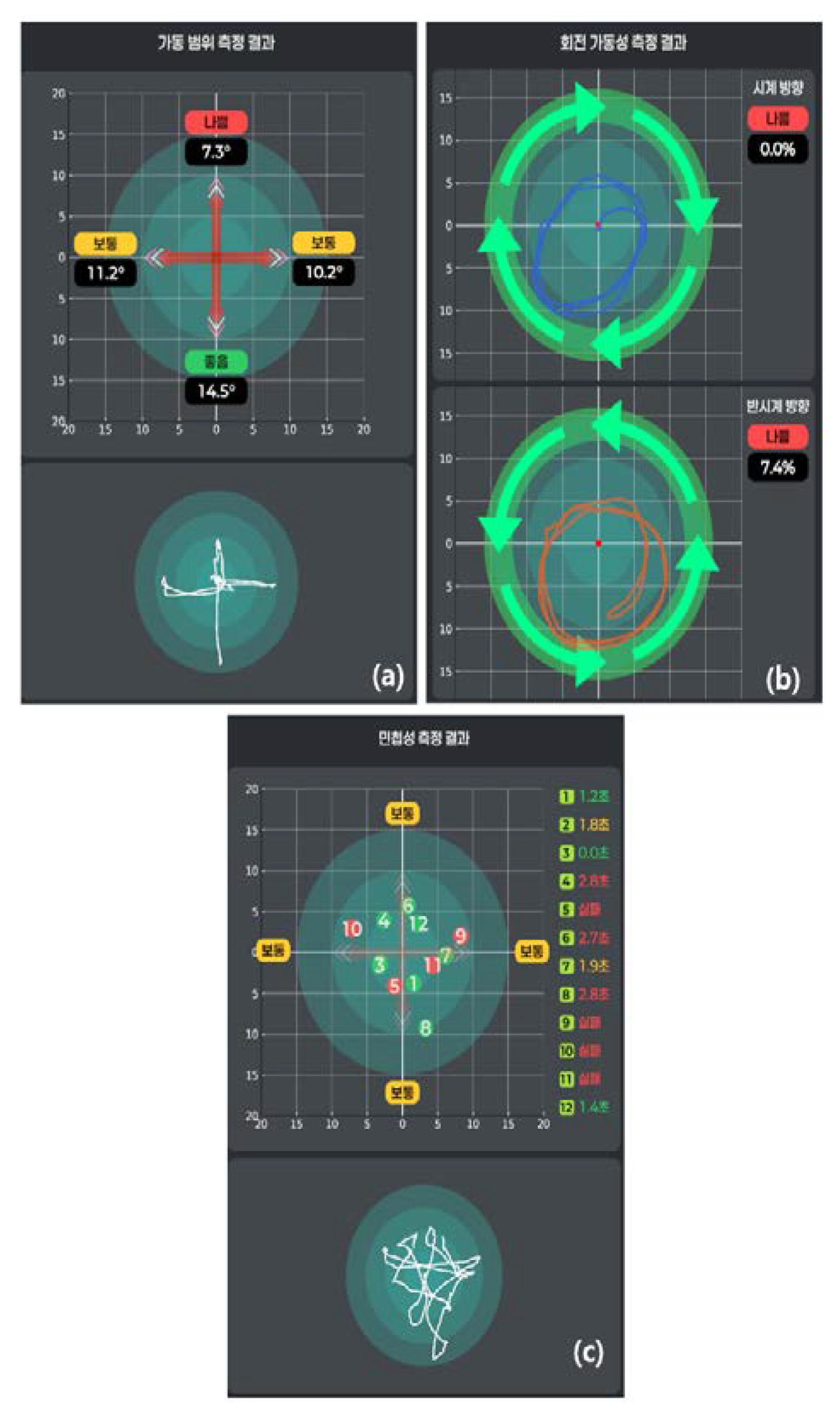
모바일 앱은 Unity 엔진을 기반으로 개발되었으며 Android APK/AAB 및 iOS Xcode 프로젝트 형태로 제공된다. 앱으로 구현한 체간 균형평가 항목은
Table 1 및
Fig. 4와 같다.
본 파일럿 실험은 개발 시스템의 개념증명(Proof of Concept, PoC) 목적으로 수행되었으며, 목적에 따라 임상 IRB 심의 없이 내부 개발자를 대상으로 실시하였다. 본 파일럿 스터디의 목적은 통계적 유의성 확인이 아닌 시스템 기능 동작 확인, 체간 움직임에 대한 정량적 데이터 확인 및 측정 절차의 실현 가능성 검토에 있으며, 향후 IRB 승인 하에 진행될 본격적인 임상 타당도 연구의 방법론 수립을 위한 예비 자료로 활용하기 위해 수행되었다.
의자에 앉은 상태에서 체간의 움직임, 특히 전방 굴곡(Flexion), 후방 신전(Extension), 측굴(Lateral Bending) 및 회전(Rotation)을 정밀하게 평가하기 위해 상용화된 IMU(관성측정장치)인 Xsens DOT (Xsens Technologies)센서를 사용하였 다. 부착위치는 흉추와 요추가 나뉘는 지점으로 체간 회전이 가장 활발히 일어나는 구간을 분석하는 기준점인 제12흉추(T12)로 하였다. 측정은
Table 1에 제시된 측정항목 순서대로 수행하였다.
본 연구에서는 신체 분절의 움직임을 쿼터니언(Quaternion) 각도 기반으로 정량화하기 위해 의자 좌판(CS)과 제12흉추(T12)에 IMU 센서를 부착하였으며, 각 센서의 3차원 방향(Orientation) 및 회전 좌표계는 다음과 같이 정의하였다. 좌판에 부착된 CS-IMU는 x축(Roll) 회전을 기준으로 우측 측굴을 양(+), 좌측 측굴을 음(-)으로 정의하였고, y축(Pitch) 회전을 기준으로 전방 굴곡을 양(+), 후방 신전을 음(-)으로 설정하였다. 제12흉추에 부착된 T12-IMU (Xsens DOT)는 물리적 측정 방향을 고려하여 센서를 90도 수직으로 세워 부착하였다. 이에 따라 센서의 로컬 좌표계는 x축이 상(+)/하(-), y축이 좌(+)/우(-)를 향하도록 정렬되었다. 이러한 센서 방향을 바탕으로 T12-IMU의 전후 굴곡 및 신전 움직임은 y축(Pitch)을 기준으로 전방 굴곡을 양(+), 후방 신전을 음(-)으로 정의하였으며, 좌우 측굴 움직임은 z축(전후축) 회전을 기준으로 좌측 측굴을 양(+), 우측 측굴을 음(-)으로 정의하여 데이터를 수집하였다. 측정 중 CS-IMU는 저전력 블루투스(BLE) 통신을 통해 모바일 앱으로 실시간 각도 데이터를 전송하였으며, 앱 내 알고리즘을 통해 각 지표를 실시간으로 산출하였다. 측정 세션이 완료된 후에는 모바일 앱 플랫폼인 Firebase (Firebase Inc.)를 통해 세션별 원시 데이터를 CSV 형식으로 추출하여 분석에 활용하였다. 반면, T12-IMU는 전용 앱을 통해 독립적으로 각도 데이터를 기록하였다. 최종적으로 두 센서의 각도 값에 대한 상관분석을 실시하였다.
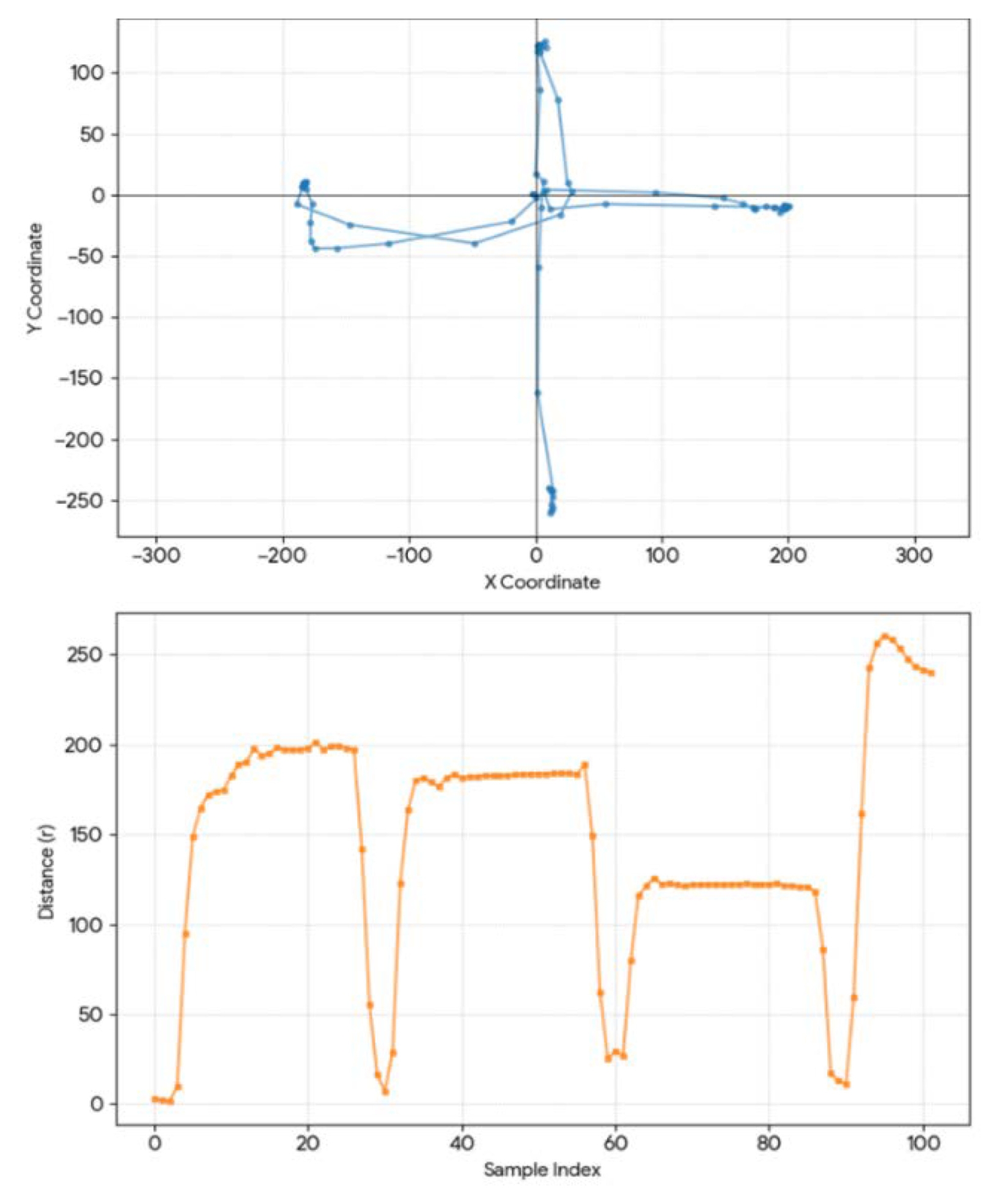
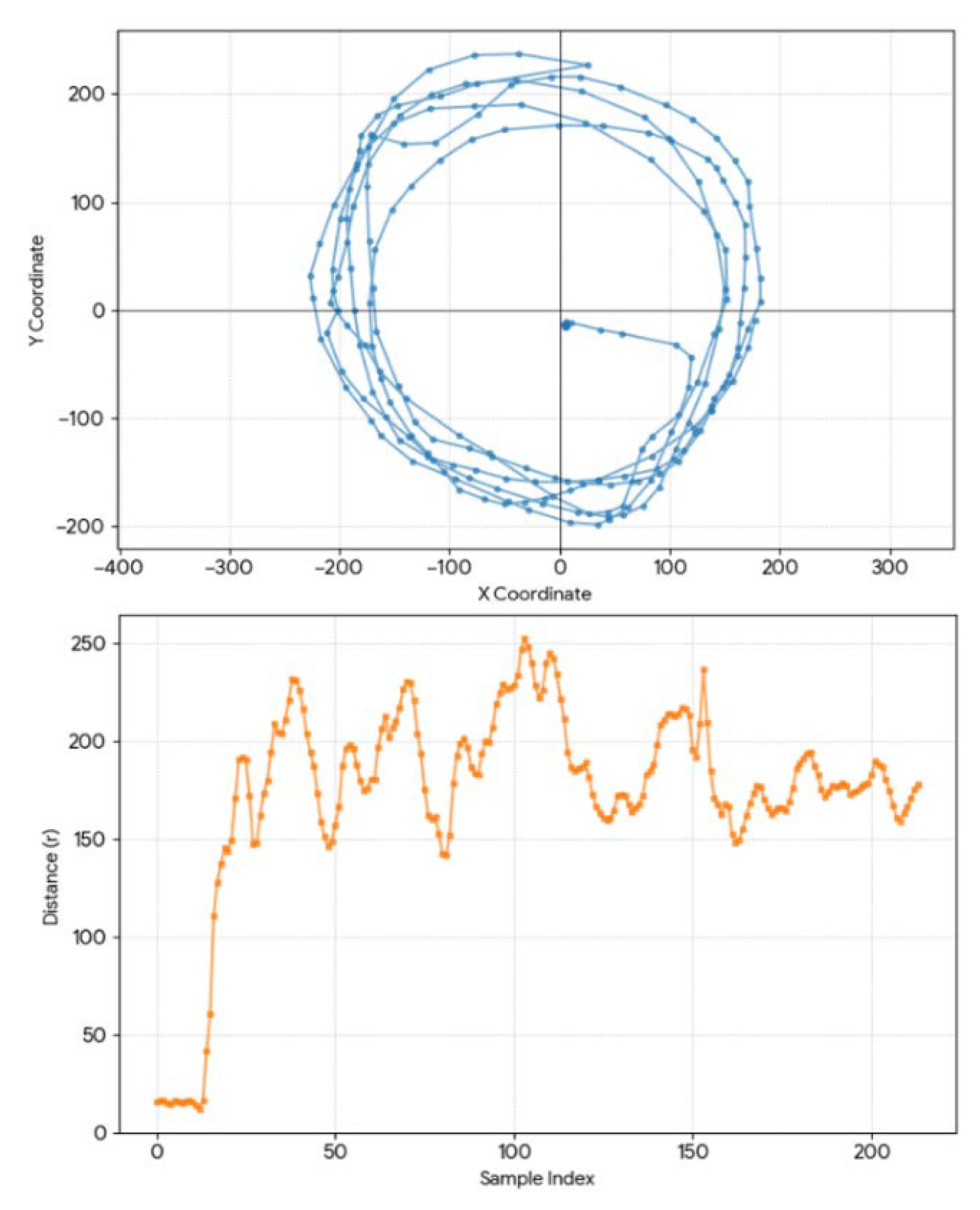
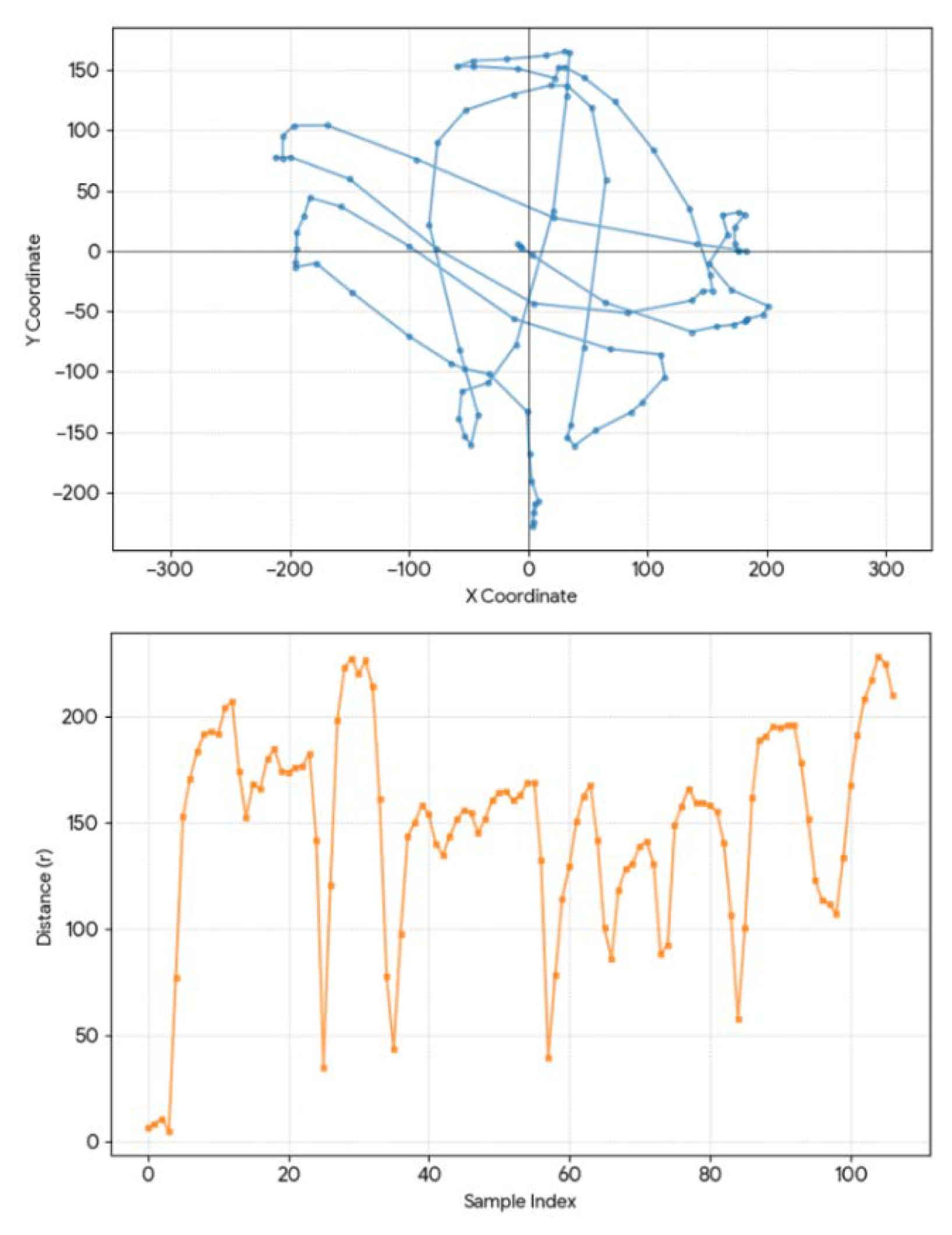
수집된 두 센서 간의 상관관계 분석을 위해 총 세 가지 항목을 측정 및 비교하였다. 첫 번째 측정 항목인 가동범위(Range of Motion, RoM)는 굴곡, 신전, 측굴에 해당하는 값을 정규화(Normalization)하여 비교하였다. 두 번째 측정 항목인 회선 운동(Rotation)은 평면 상의 운동 궤적에 대한 위상각(Phase Angle)을 산출하여 비교하였다. 세 번째 측정 항목인 체간 속도(Agility)는 4사분면 내에 위치한 12개의 타겟으로 빠르게 이동하는 수행 과정에서 측정된 두 축의 데이터를 비교 분석하였다. CS-IMU로부터 측정된 가동범위, 회선 운동, 체간 속도 항목에 대한 X-Y 2차원 좌표계에서 센서의 합성 각변위 크기(Resultant Angular Displacement, Distance r)는
Figs. 5-
7과 같고, 이는 T12-IMU와 직접적인 비교를 위해 각도로 변환하였다.
3. 결과
3.1 가동범위 측정값 간의 상관관계
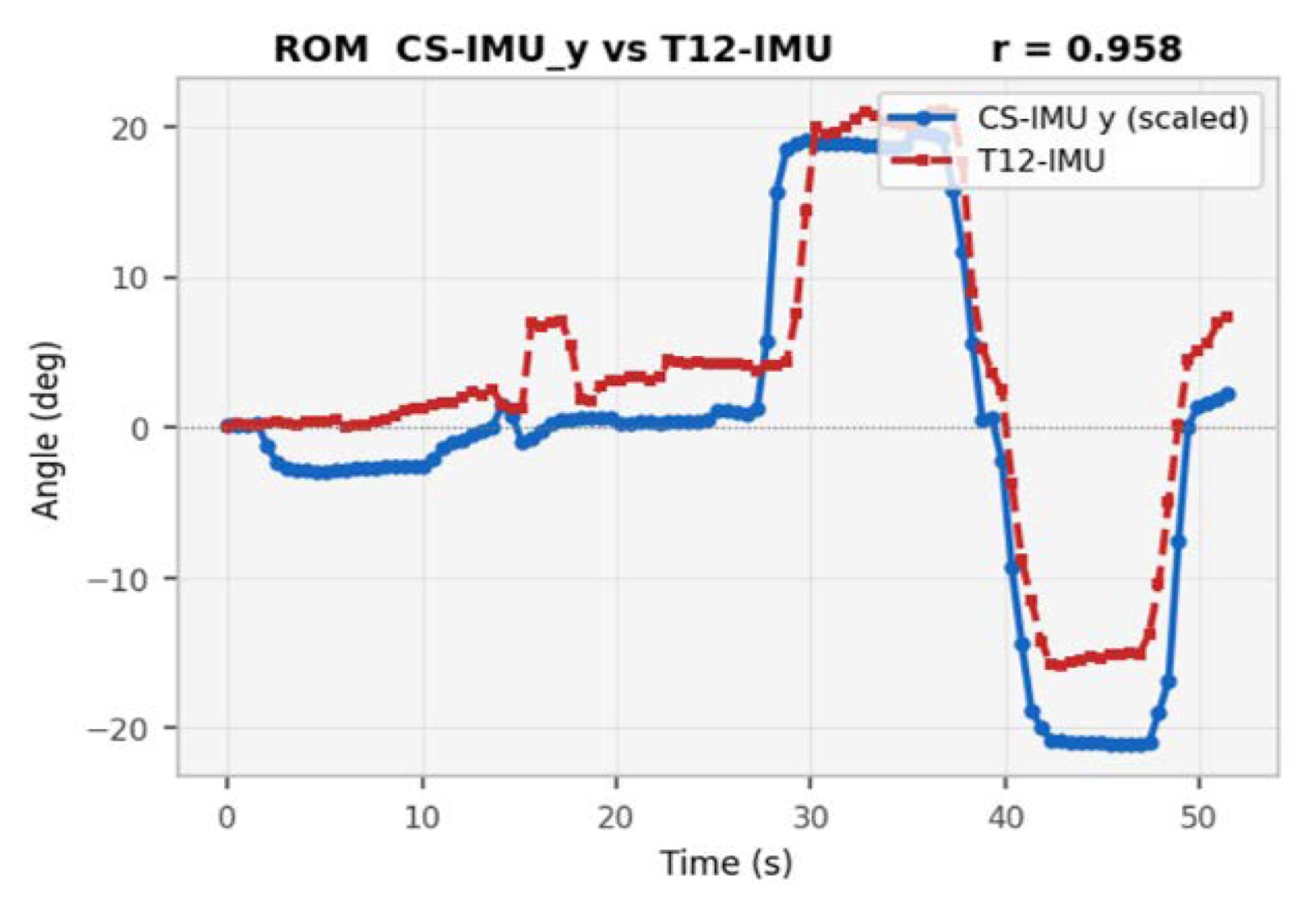
좌판 및 T12에 부착하여 동시 측정한 센서의 좌/우 측굴 각도 값 간의 상관계수는 r = 0.958로 매우 높은 선형 일치도를 보였다(
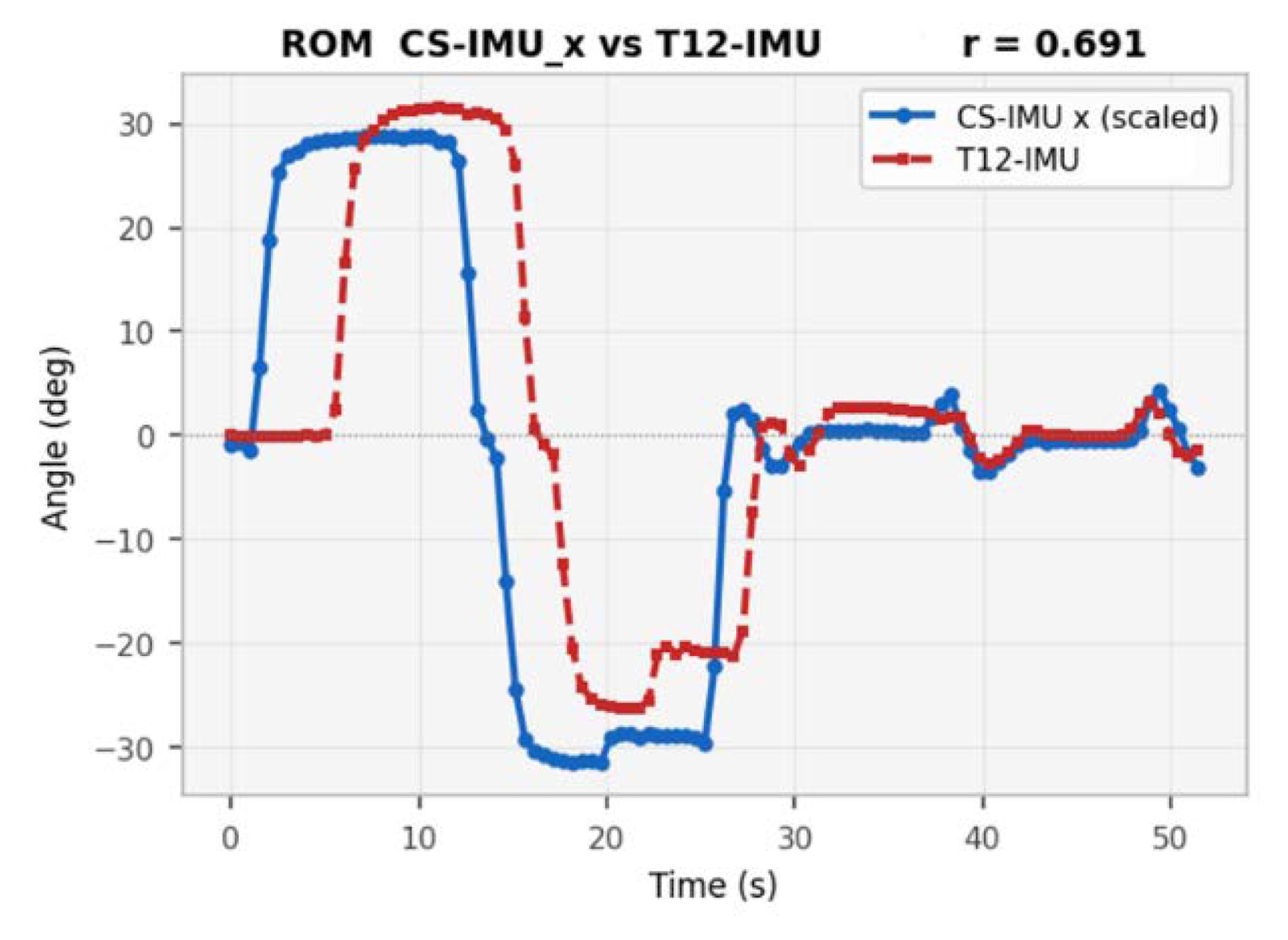
Fig. 8). 전방굴곡/후방신전의 상관계수는 r = 0.691로 중간수준의 선형일치도를 보였다(
Fig. 9).
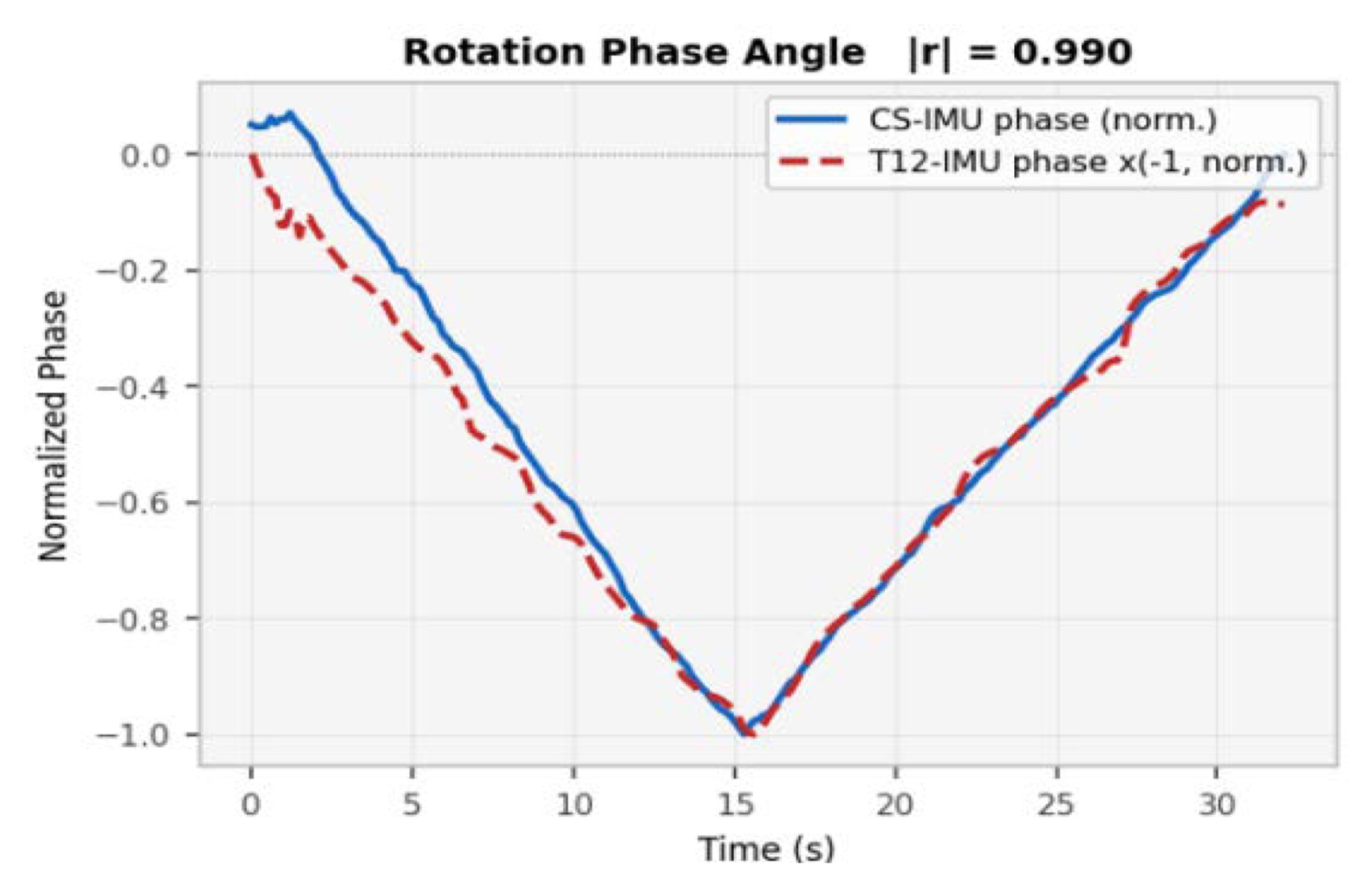
두 센서의 평면 운동 궤적의 위상각을 비교한 결과 시계열 간의 상관계수는 r = -0.990으로 높은 선형일치도를 보였다(
Fig. 10).
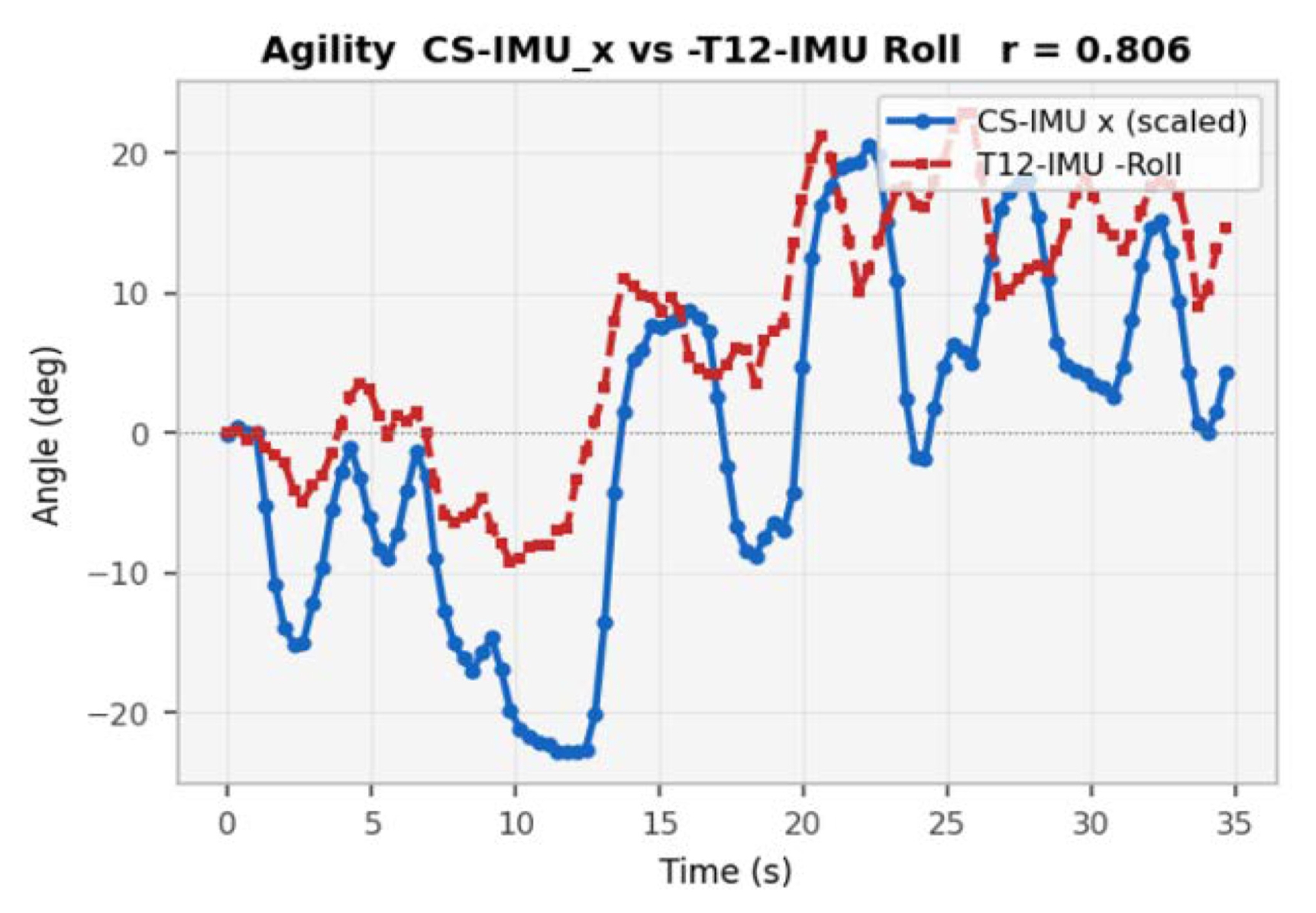
4사분면 내 12개 타겟으로 빠른 이동 수행 시 두 센서로부터 측정된 각도 값을 비교한 결과 좌/우 측굴 각도 값 간의 상관계수는 r = 0.806으로 매우 높은 선형 일치도를 보였다(
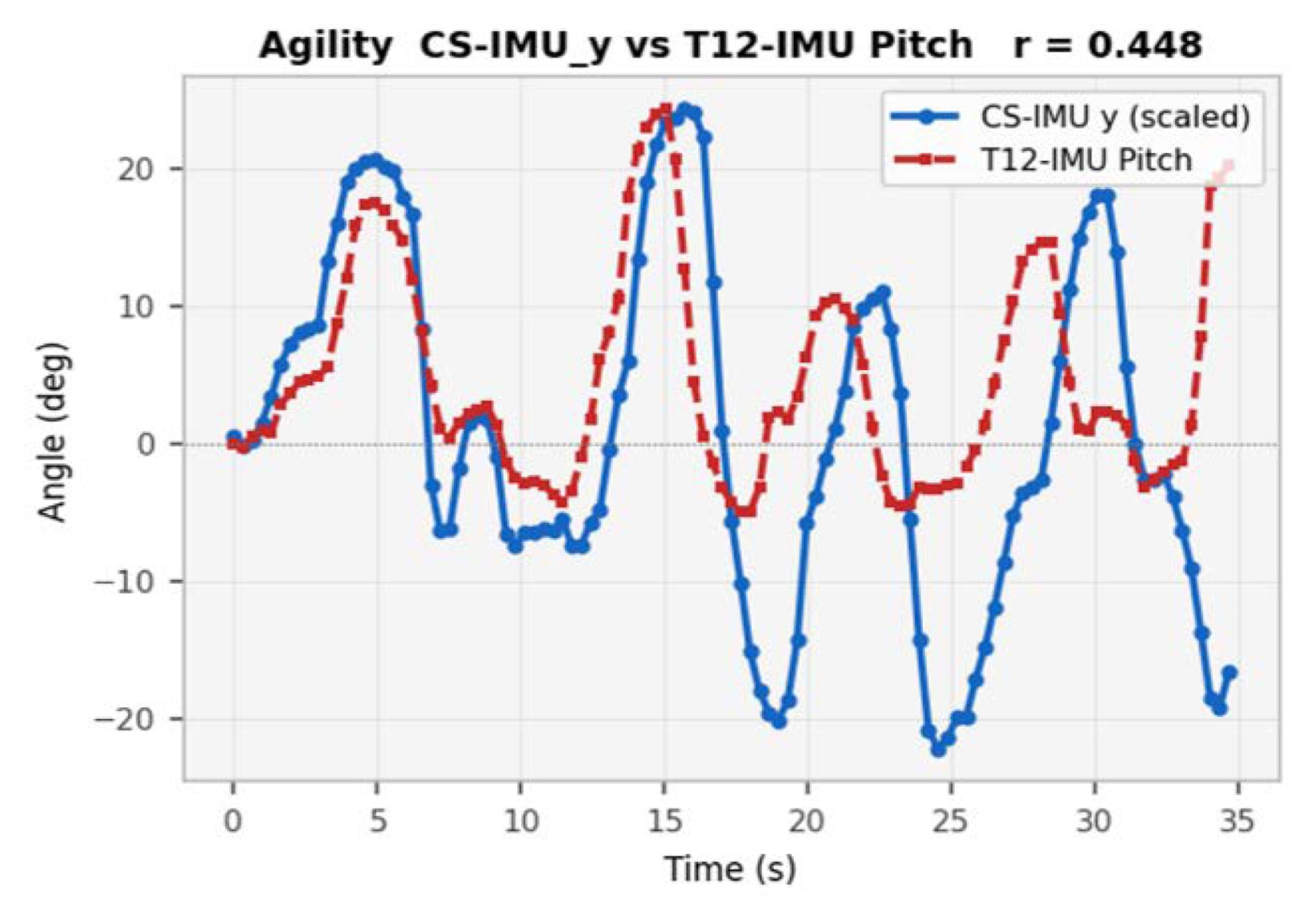
Fig. 11). 전방굴곡/후방신전의 상관계수는 r = 0.448로 중간수준의 선형 일치도를 보였다(
Fig. 12).
4. 고찰
본 연구에서는 틸팅 의자 결합 관성센서 기반 체간 균형평가 시스템을 설계 및 구현하고, 내부 개발자를 대상으로 한 PoC 파일럿 측정을 통해 시스템의 기술적 구현 가능성을 확인하였다.
본 시스템의 틸팅 의자는 사용자의 체간 움직임을 좌판 틸팅으로 직접 전달하는 기구학적 구조가 구현되었고, 탄성 틸팅 모듈의 복원력으로 자동으로 수평 초기 위치로 복귀하는 것이 특징이다. 좌판이 임의 방향으로 틸팅될 때 복원 부재의 해당 방향 부위가 압축되어 복원력이 발생하며, 틸팅 각도 증가에 따라 복원력이 비선형적으로 증가한다. 이를 통해 사용자가 착석 중 과도하게 기울어지는 것을 억제하면서도 체간 움직임을 충분히 전달할 수 있다.
본 시스템의 검증을 위해 개발된 CS-IMU와 상용 IMU (Xsens DOT, Xsens Technologies B.V., 네덜란드)를 동시 사용하여 측정 데이터를 수집하였고, 이 때 체간에 부착한 위치는 T12이다. T12는 흉요추 이행부(Thoracolumbar Junction)로써 체간 운동 평가에서 임상적으로 널리 사용되는 기준 위치이다[
20]. 흉추 후만(Kyphosis)과 요추 전만(Lordosis)이 전환되는 역학적 Pivot Point로서 굴곡·신전·측굴 시 최대 각변위가 발생하며, 흉요추 이행부의 운동은 상부 체간(Thoracic)과 하부 체간(Lumbar)의 통합적 움직임을 반영한다[
21]. 따라서 T12는 골반 경사에 종속되어 하부 체간만을 반영하는 천추(S1-S2)와 달리, 체간 전체의 기능적 운동 능력을 포괄적으로 측정할 수 있는 위치로 평가된다[
22]. 본 연구에서 T12-IMU를 기준 센서로 선택한 것은 이러한 해부학적 근거에 기반한다. 실제 틸팅의자 좌판과 T12에 부착한 센서 값을 비교하여 직접 센서를 부착하지 않고도 의자 좌판의 기울기 변화만으로 체간의 다차원 운동을 정량화할 수 있는지를 확인하기 위해 총 3가지 체간 움직임 및 균형 측정 훈련 프로토콜이 설계된 절차에 따라 오류 없이 완료하였고, 각 Task별 체간 분절 운동에 대한 정량적 데이터를 획득하였으며 실제 체간의 움직임과 의자 좌판 움직임 간의 상관성을 확인하였을 때, 첫 번째 Task인 가동범위에서 측굴의 상관계수는 r = 0.958로 매우 높은 선형 일치도를 보였다. 이는 의자 좌판을 통해 전달되는 체간의 측굴 운동이 제12 흉추 부착 IMU의 Pitch 변화와 거의 동일한 시계열 패턴을 나타냄을 의미한다. 또한 CS-IMU x축과 T12-IMU 전방굴곡/후방신전의 상관계수는 r = 0.691로 중간 수준의 상관을 보였으며, 이는 의자 좌판의 전후 방향 기울기가 천추 부위의 굴곡·신전 운동에 일부 변환되어 반영됨을 의미한다.
두 번째 Task인 회선운동에서는 두 센서의 평면 궤적 위상각을 비교하였다. 위상각 시계열 간 Pearson 상관계수는 r = -0.990으로 사실상 완벽한 역상관을 나타냈다. 이는 두 센서가 동일한 원형 회선운동 패턴을 포착하되 장착 방향 차이로 인해 위상이 반전됨을 의미하며, 운동 패턴 자체의 일치도는 매우 높음을 확인하였다. 두 축의 범위 차이가 0.19° (35.13° vs 35.32°)에 불과하며, 회선운동 궤적이 평면상에 원형으로 형성됨을 확인하였다.
세 번째 Task인 체간 속도에서 두 센서의 측굴의 상관계수는 r = 0.806으로 강한 상관을 보였다. 다만 그 크기에는 다소 차이가 있었다. 이는 Agility Task에서 측굴 움직임의 형태는 잘 반영되나, 그 크기는 차이가 있음을 의미한다 후방신전은 상관계수 r = 0.448로 그 형태와 크기 모두 차이가 있음을 알 수 있다. 특히 후방신전의 크기에서 큰 차이가 있음을 알 수 있는데 이는 체간의 움직임 중 빠른 움직임을 유도하는 Agility Task의 후방 신전이 일어날 때 등과 의자 등판 간 유격 또는 완전 고정되지 않은 착석 상태에 따른 오차로 사료된다.
본 연구에서 개발한 체간 균형훈련평가 시스템은 임상적 적용 관점에서 고려하였을 때, 착석 능력은 보유하나 기립이 불가능한 환자군인 뇌졸중, 근감소증, 노인 낙상 고위험군에게 특히 유용할 것으로 기대된다. 이는 기존의 착석 체간 균형 평가 도구(TIS, SBS 등)가 관찰자 의존적 순위 척도임에 따른 제한점을 해소하기 위해 각도 단위의 연속형 정량 데이터를 제공함으로써 미세한 기능 변화의 추적과 훈련 피드백이 가능하기 때문이며, 착석한 상태 그대로 측정이 진행되므로 낙상 위험 없이 고위험군에게도 안전하게 적용할 수 있다.
본 파일럿 연구의 제한점은 다음과 같다. 첫째, 단일 건강 성인 참여자의 단회 측정으로, 결과의 통계적 일반화가 불가능하다. 향후 IRB 승인 하에 건강한 성인 다수를 대상으로 측정 신뢰도(ICC)와 측정 표준 오차(SEM)를 검증하고, 이후 뇌졸중·척수 손상·노인 등 임상 대상군을 포함한 본격적인 타당도 연구로 확장하고자 한다. 둘째, CS-IMU의 Firebase 저장 주파수(RoM 2.0 Hz, Rotation 6.8 Hz, Agility 3.1 Hz)가 T12-IMU (60 Hz)에 비해 현저히 낮아, 빠른 동작 구간(특히 Agility)에서 세부 운동 정보가 손실된다. 50 Hz 저장 주기 구현은 BLE 전송 주파수(50 Hz) 대비 Firebase 패킷 처리 최적화를 통해 기술적으로 해결 가능할 것으로 예상된다. 셋째, T12-IMU 장착 방향의 표준화가 미흡하여 축 해석의 불확실성이 있다. 향후 센서 중립 자세 캘리브레이션과 함께 장착 방향 표준화 지그(Jig)를 활용한 재현성 검증이 필요하다. 넷째, 의자 기구 설계에 따라 굴곡·신전 전달 효율이 측굴에 비해 낮게 나타났으므로(r 0.691 vs 0.958), 전후 방향 틸팅 자유도 및 탄성 계수 최적화를 통한 기구학적 개선을 적용할 계획이다.
5. 결론
본 연구에서는 틸팅 의자 결합 관성센서 기반 체간 균형평가 시스템을 설계 및 구현하였다. IMU 기반 소형 센서 모듈을 제작하였으며, BLE 무선 전송 및 실시간 Roll 및 Pitch 각도 산출 기능이 정상 동작함을 확인하였다. 또한 파일럿 실험을 통해 IMU 센서의 신체 부착없이 좌판 하단 부착만으로 T12에 해당하는 체간의 움직임을 정량화하는 장치에 대한 개발가능성을 확인할 수 있다. 이는 착석 능력은 보유하나 기립이 불가능한 환자군인 뇌졸중 급성기, 척수 손상, 노인 낙상 고위험군에게 특히 유용할 것으로 기대된다.
FOOTNOTES
-
ACKNOWLEDGEMENT
This research was supported by a grant of the Korea Health Technology R&D Project through the Korea Health Industry Development Institute (KHIDI), funded by the Ministry of Health & Welfare, Republic of Korea (Grant Number: RS-2020-KH088006).
Fig. 1Concept of trunk balance assessment system
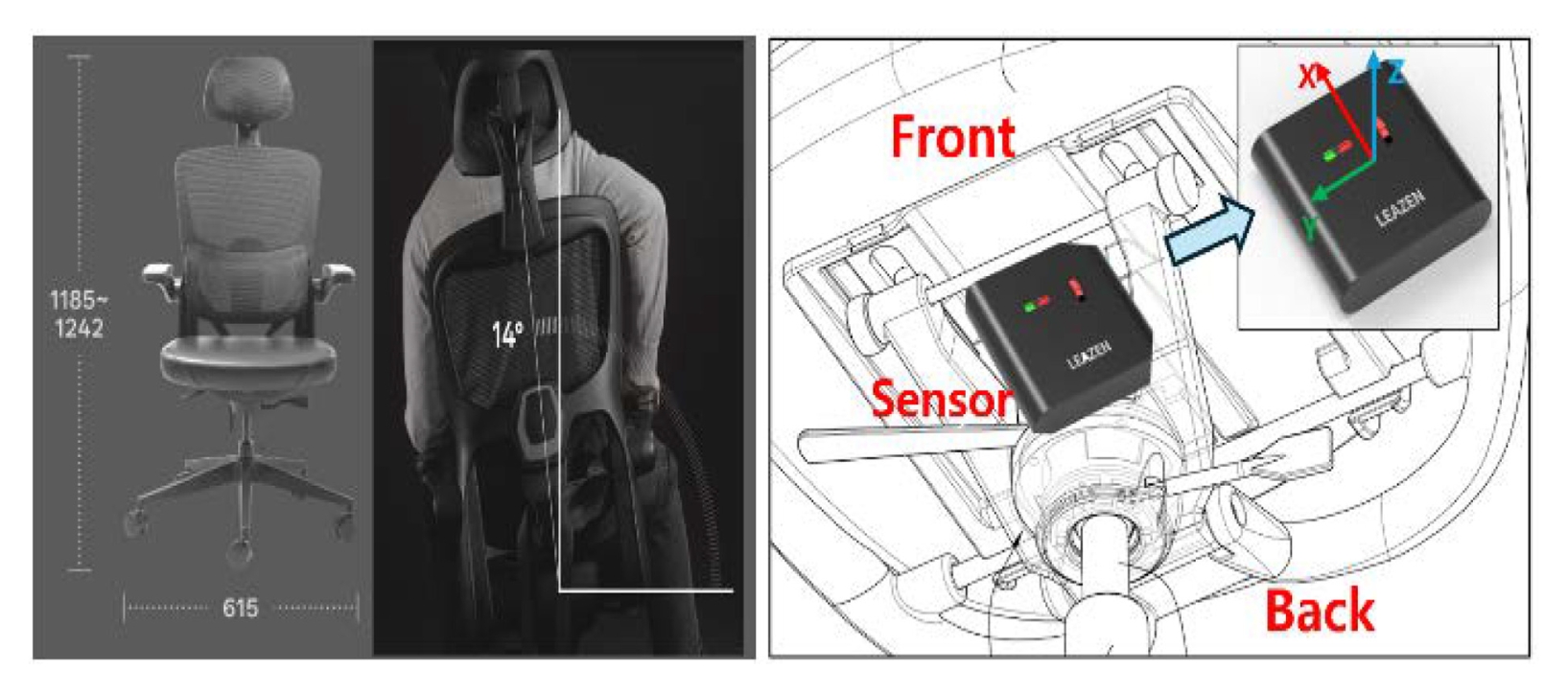
Fig. 2Block diagram of IMU sensor module
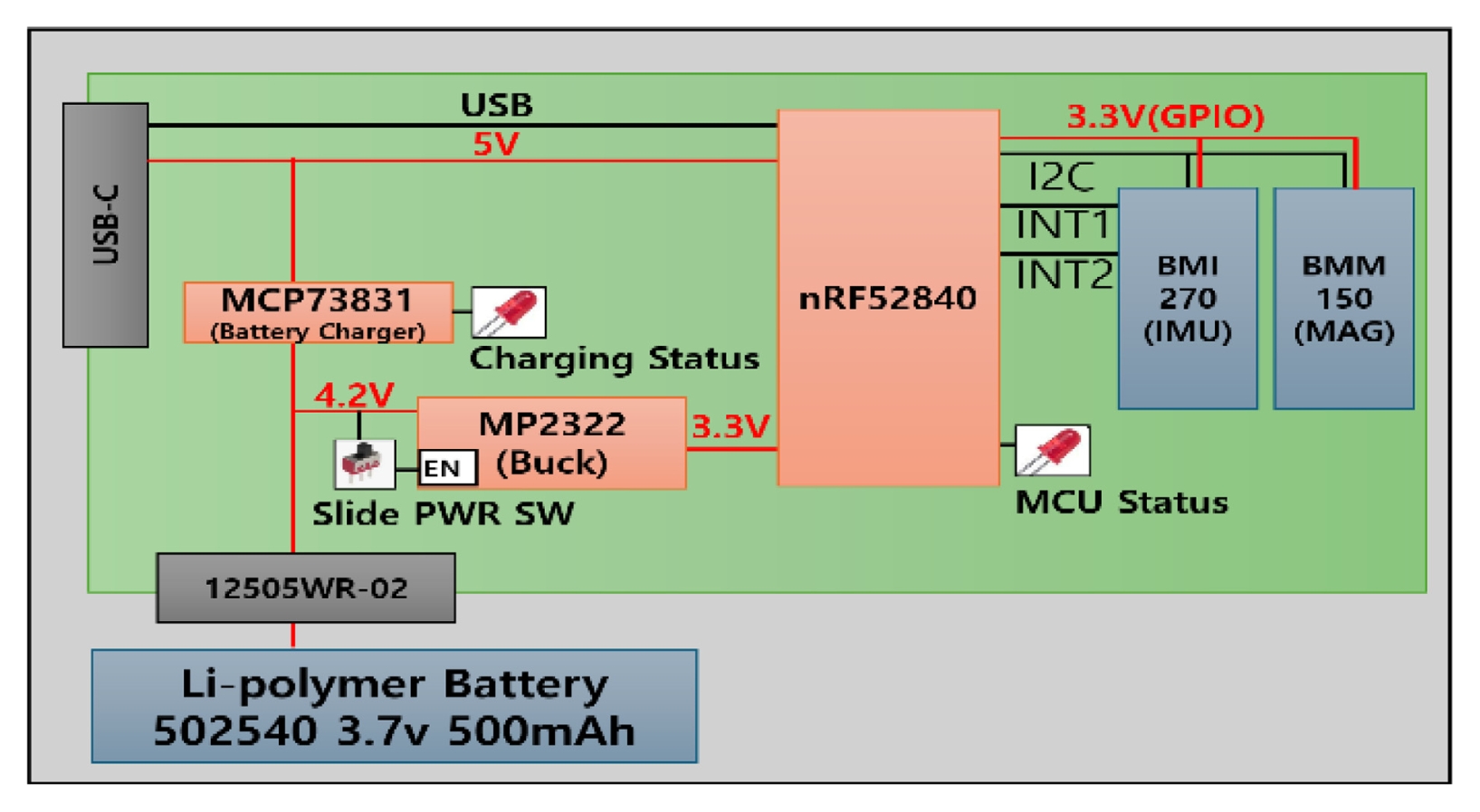
Fig. 3Final product of IMU sensor module
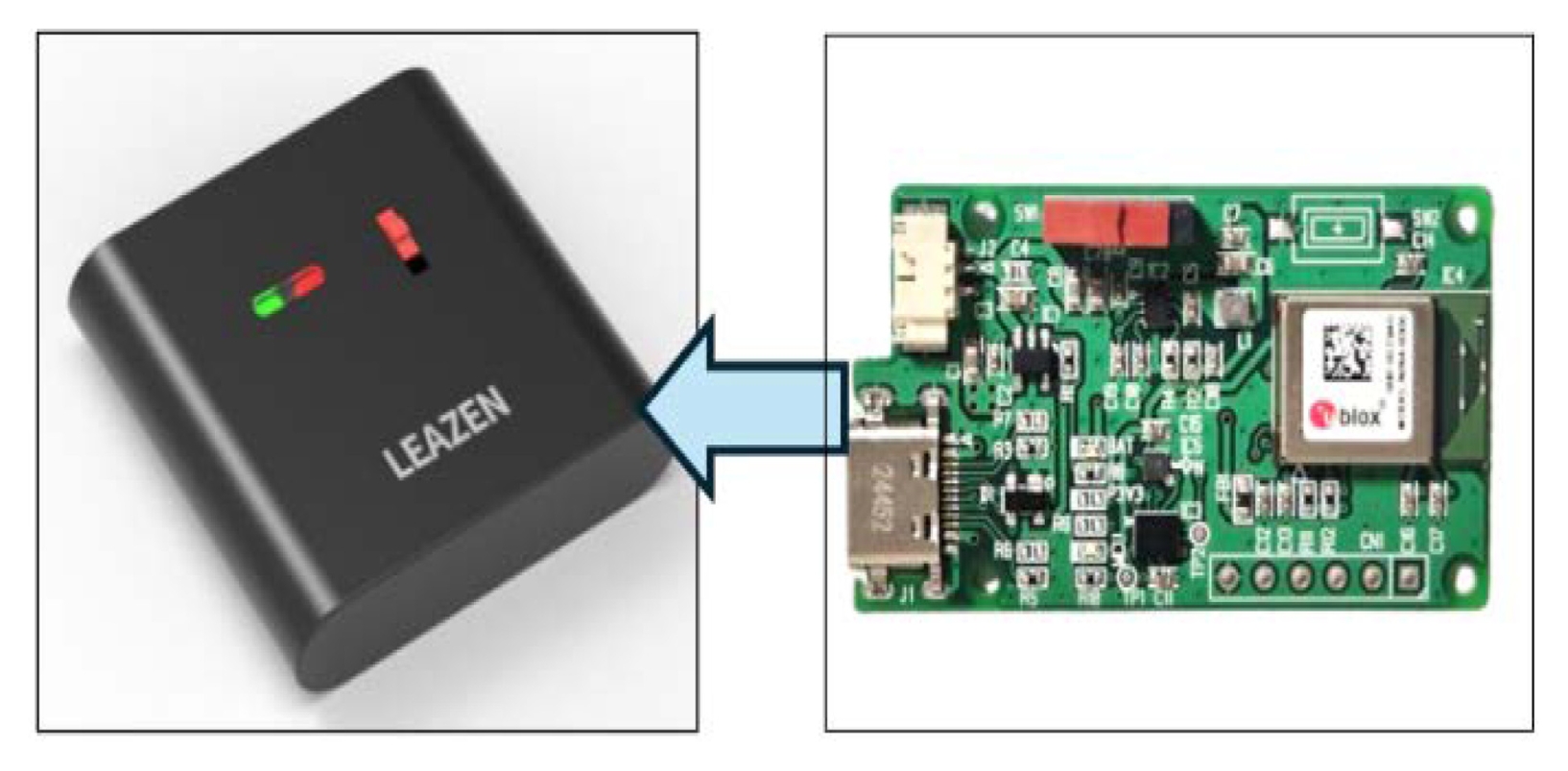
Fig. 4Mobile application interface. (a) ROM, (b) Rotation accuracy, and (c) Trunk motion speed
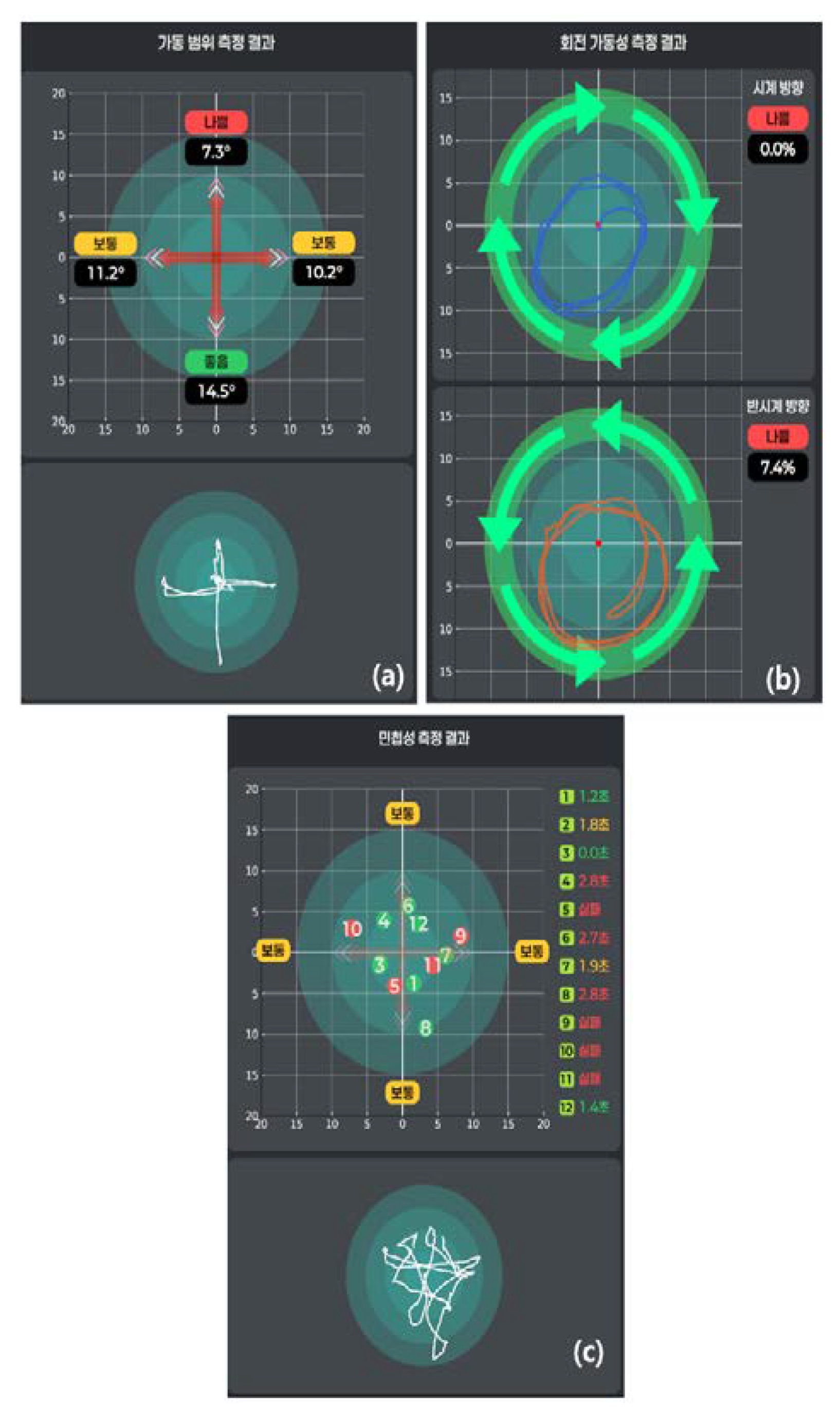
Fig. 5Raw sensor data of CS-IMU for range task (top: twodimension trajectory, bottom: the sample-wise variation in resultant angular displacement)
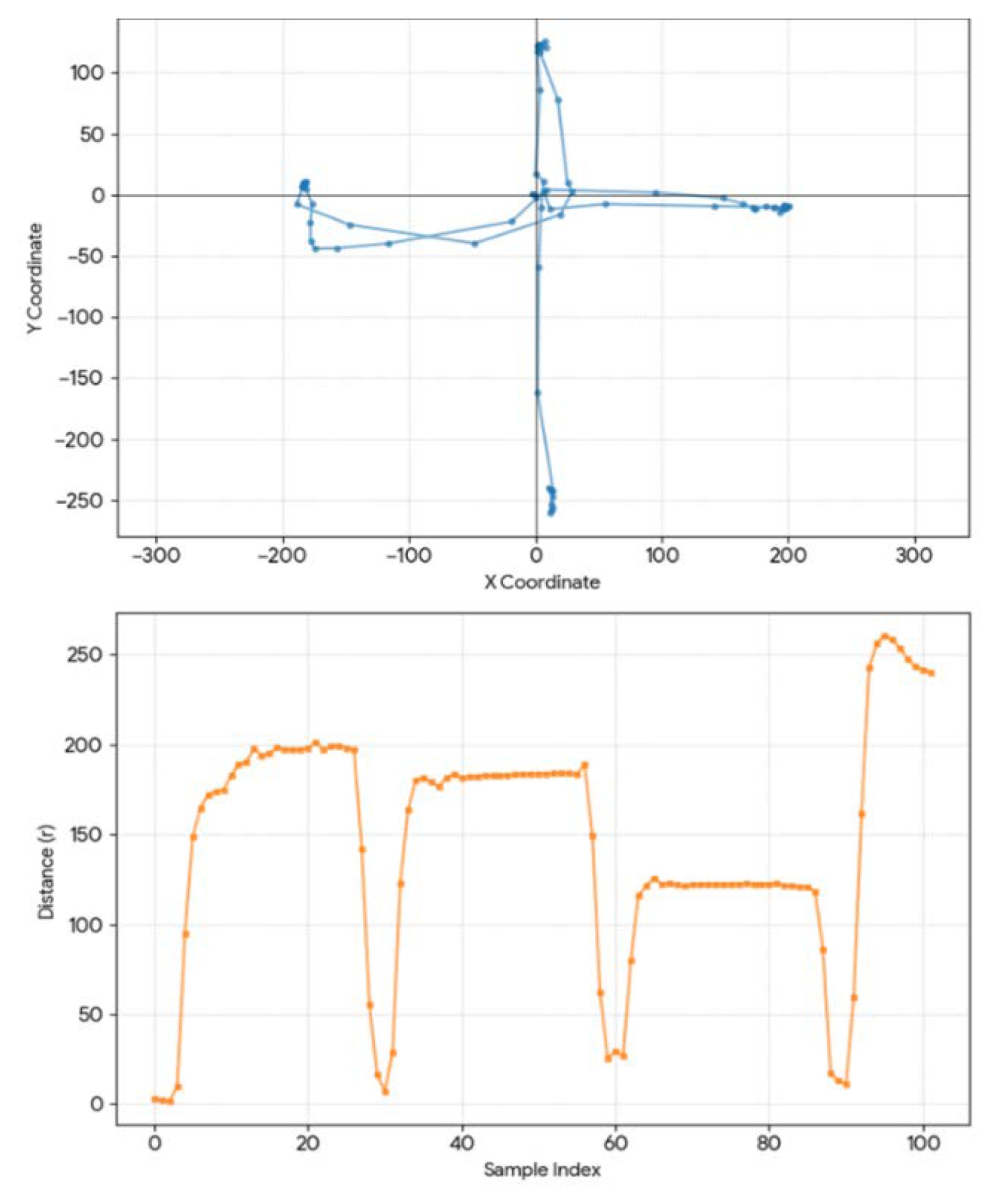
Fig. 6Raw sensor data of CS-IMU for rotation task (top: twodimension trajectory, bottom: the sample-wise variation in resultant angular displacement)
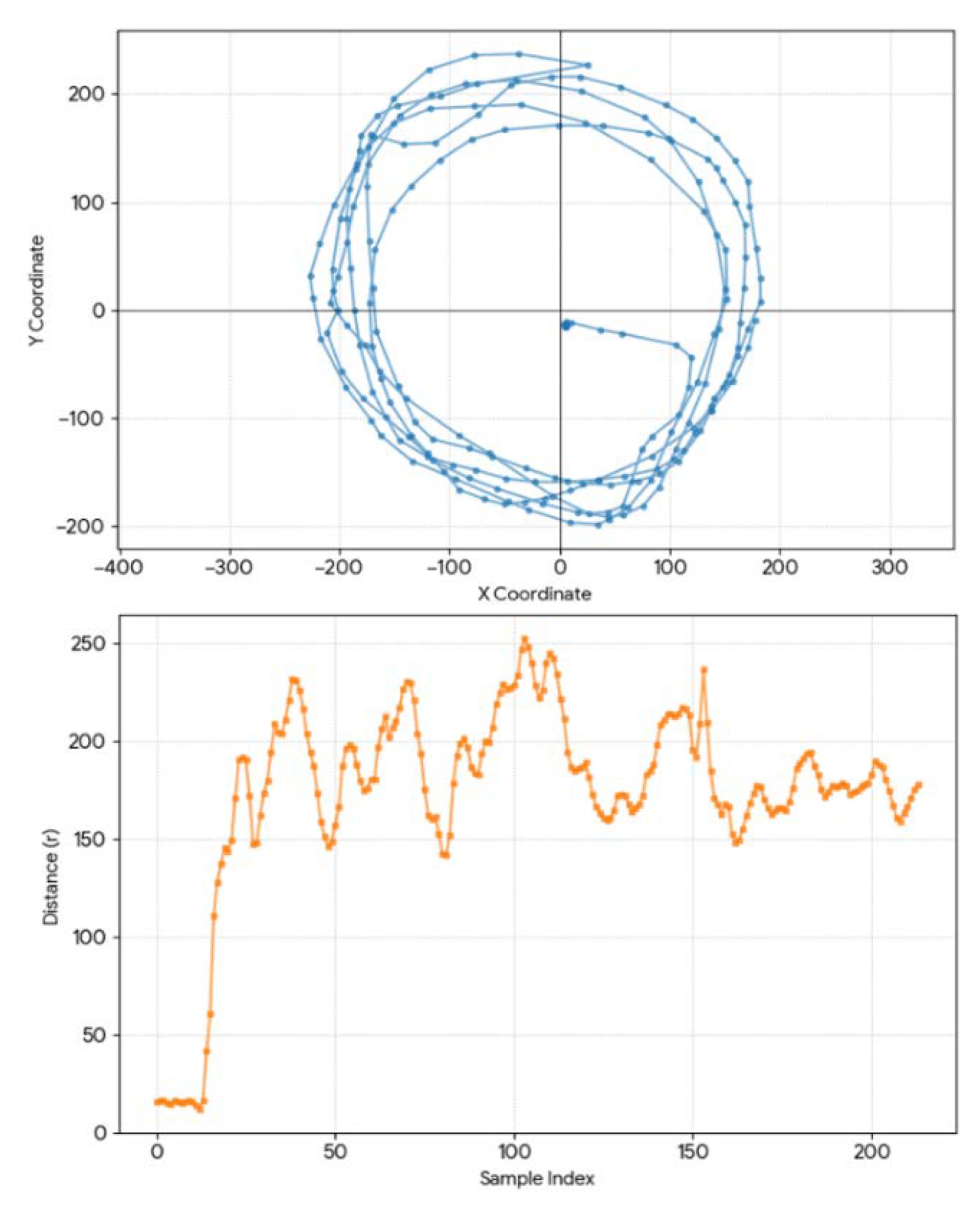
Fig. 7Raw sensor data of CS-IMU for agility task (top: twodimension trajectory, bottom: the sample-wise variation in resultant angular displacement)
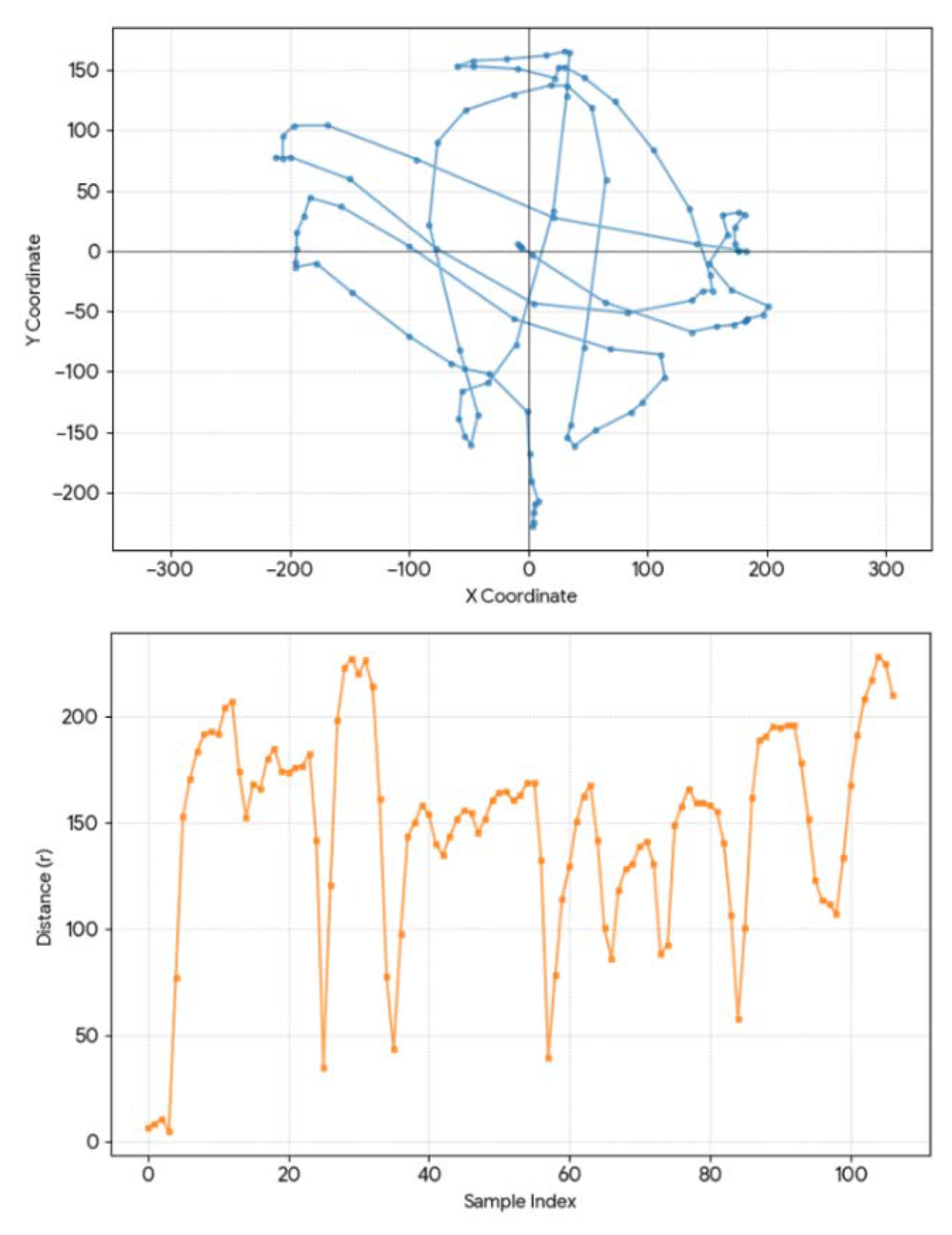
Fig. 8Correlation between two sensors during lateral bending
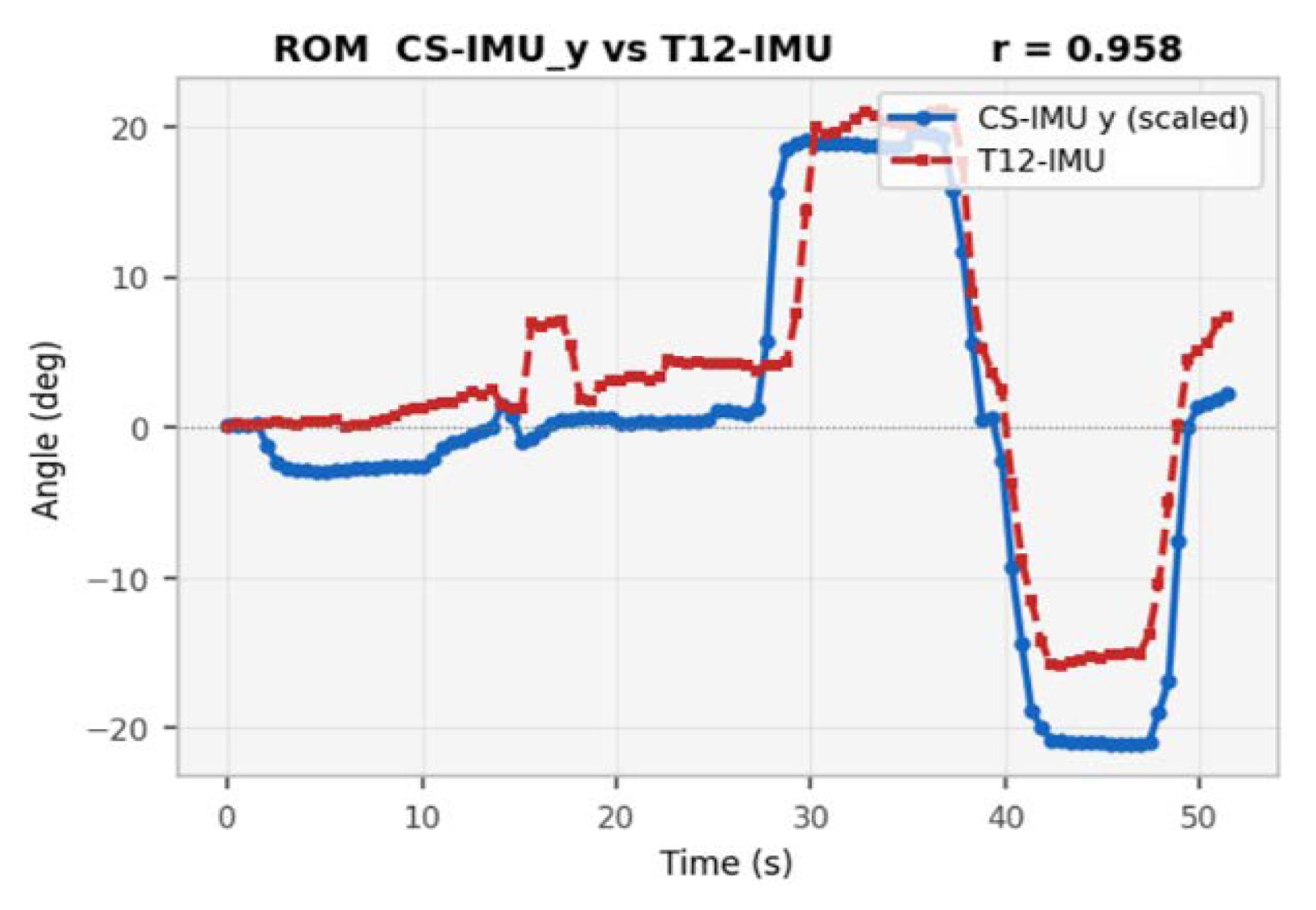
Fig. 9Correlation between two sensors during flexion/extension
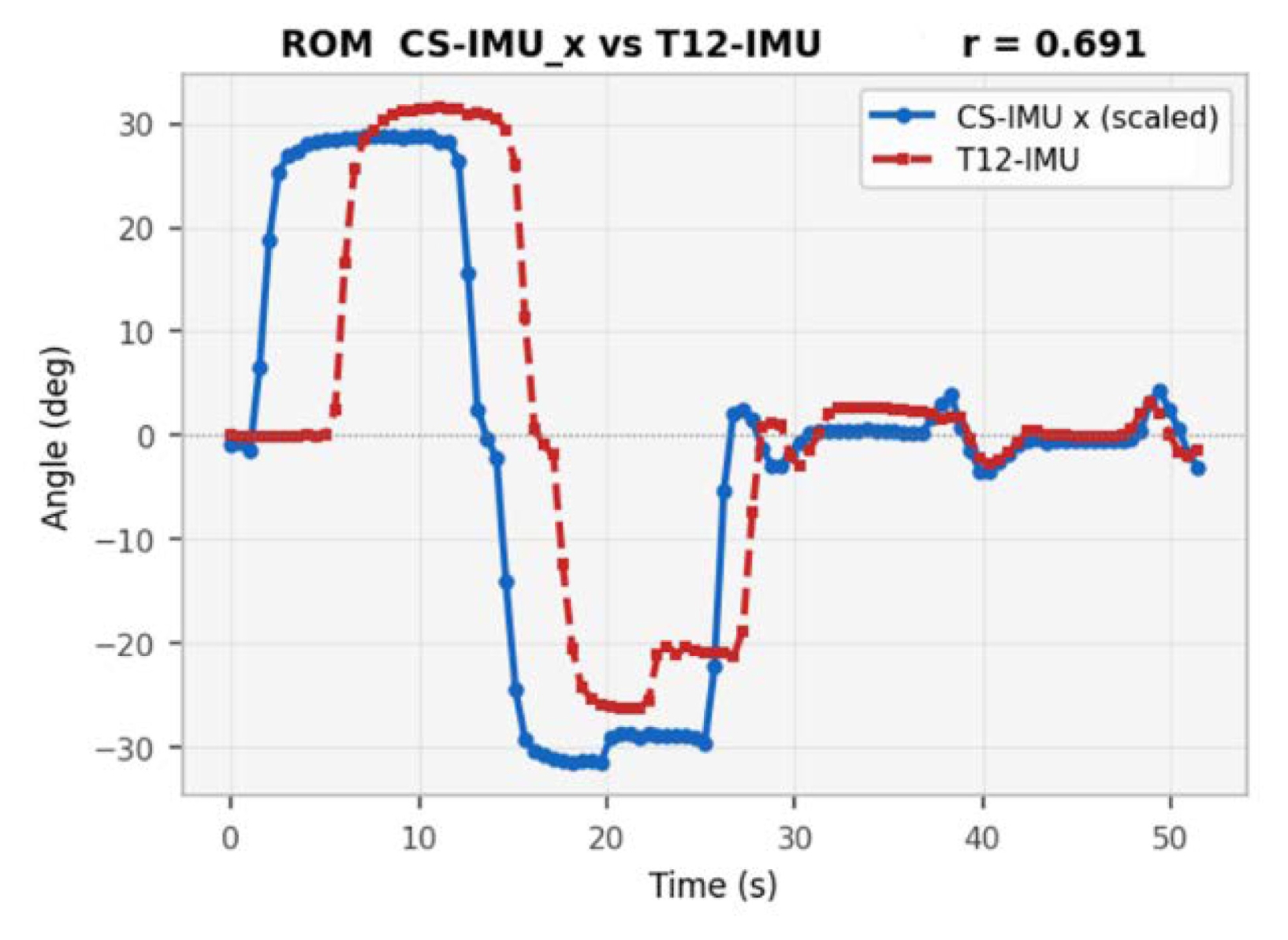
Fig. 10Correlation between two sensors during rotation
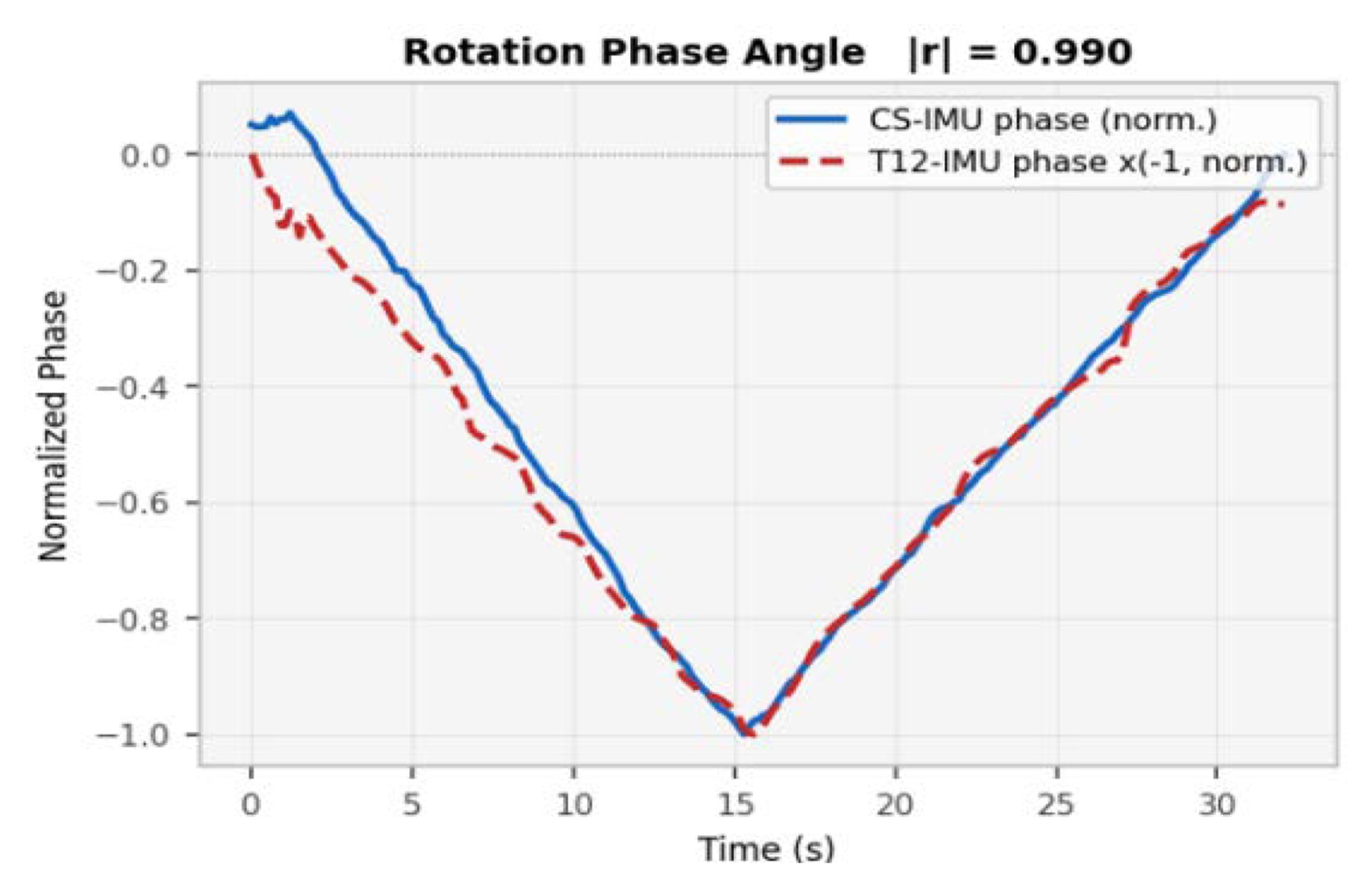
Fig. 11Correlation between two sensors during agility (lateral bending)
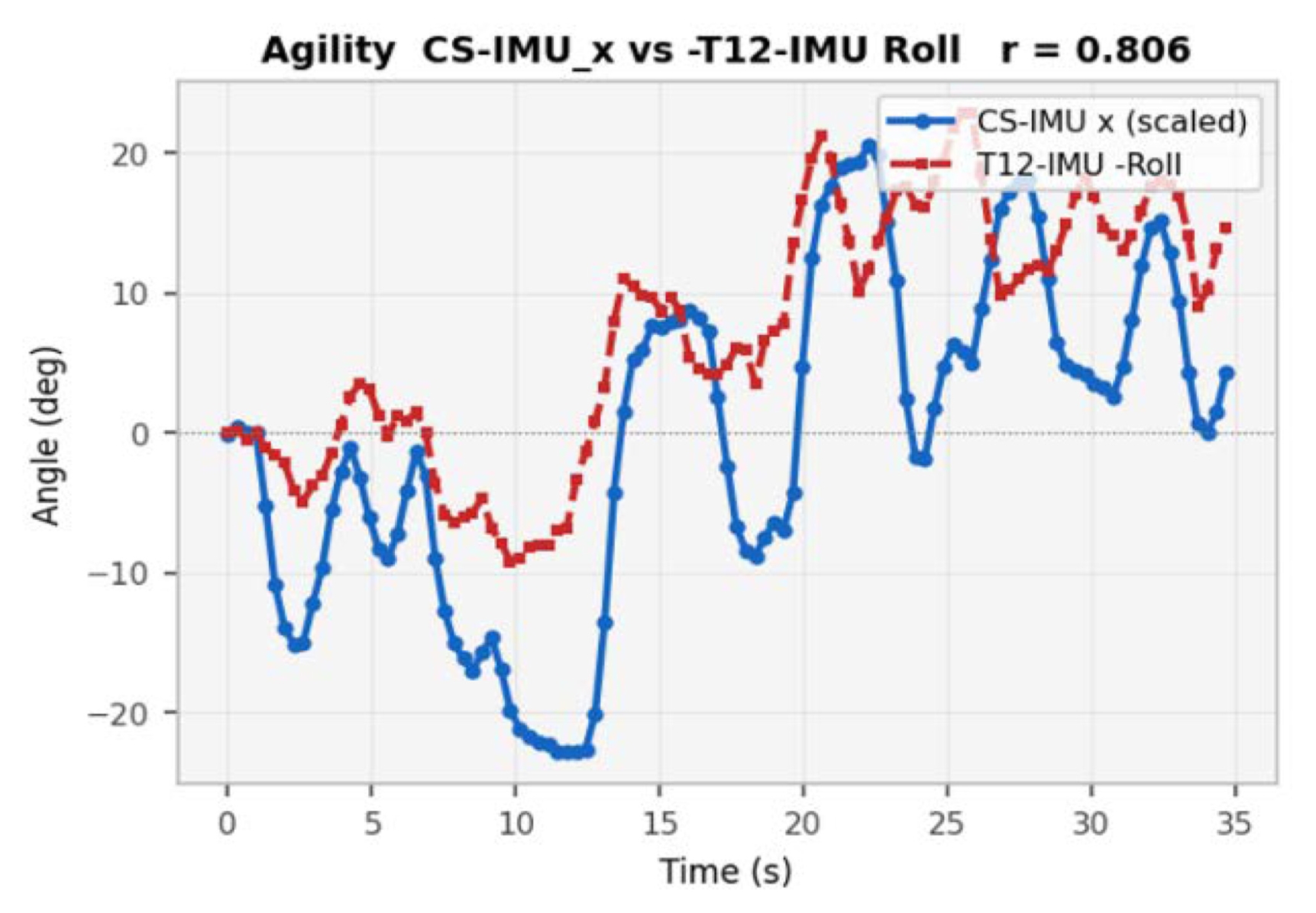
Fig. 12Correlation between two sensors during agility (flexion/extension)
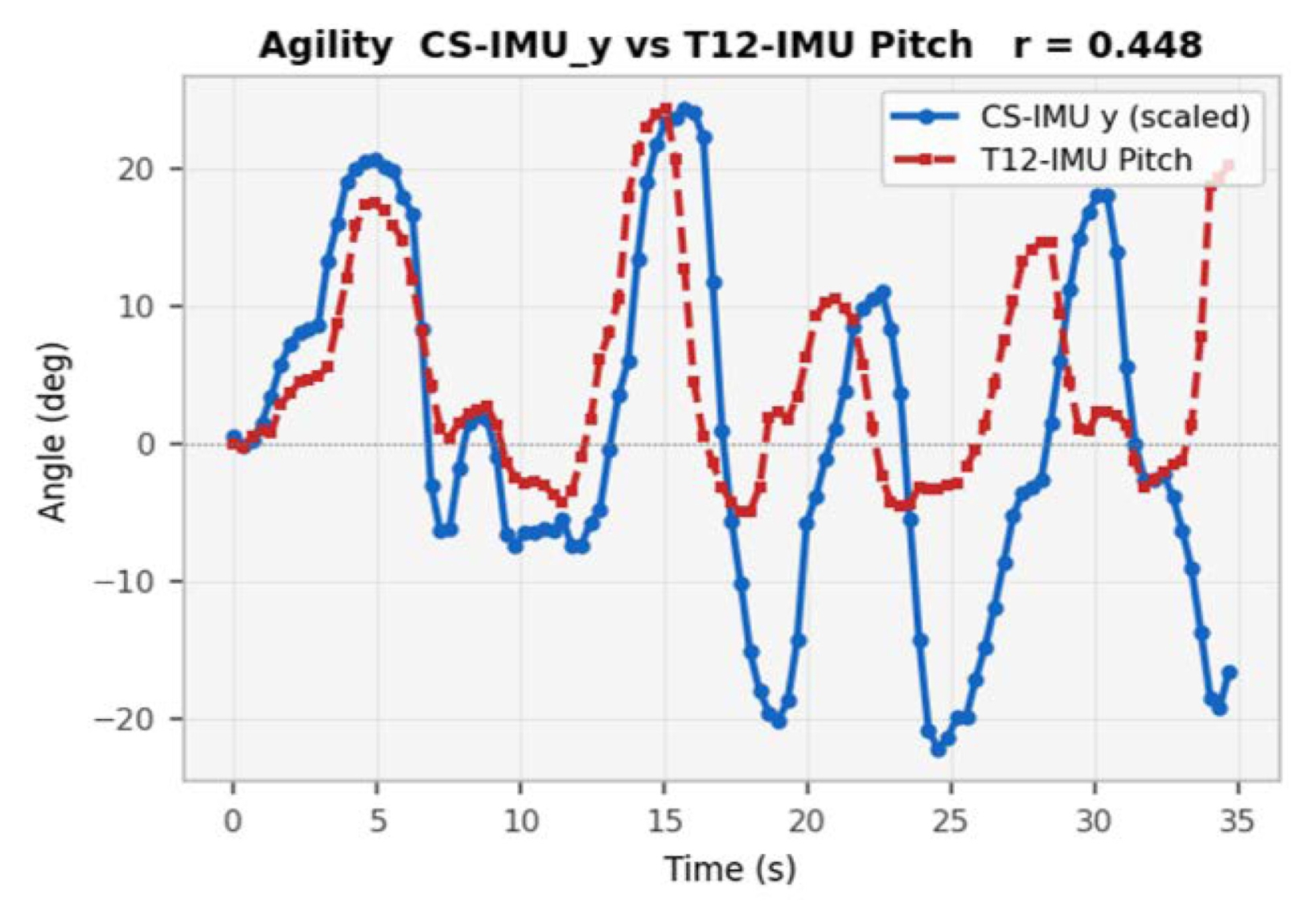
Table 1
Table 1
|
Assessment item |
Description |
|
Range |
left and right (lateral flexion), forward (flexion), backward (extension), (Measure the maximum tilt angle) |
|
Rotation |
clockwise/counter-clockwise circular trajectory tracking (Calculation of trajectory overlap ratio (%)) |
|
Agility |
4 quadrants × 3 locations each = a total of 12 target coordinates presented randomly and sequentially at 3-second intervals. (Output time to reach and number of successes) |
REFERENCES
- 1. Panjabi, M. M., (1992), The stabilizing system of the spine. Part I. Function, dysfunction, adaptation, and enhancement, Journal of Spinal Disorders, 5(4), 383-389.
- 2. Tyson, S. F., Hanley, M., Chillala, J., Selley, A., Tallis, R. C., (2006), Balance disability after stroke, Physical Therapy, 86(1), 30-38.
- 3. Franchignoni, F., Tesio, L., Ricupero, C., Martino, M., (1997), Trunk control test as an early predictor of stroke rehabilitation outcome, Stroke, 28(7), 1382-1385.
- 4. Thijs, L., Voets, E., Denissen, S., Mehrholz, J., Elsner, B., Lemmens, R., Verheyden, G. S., (2023), Trunk training following stroke, Cochrane Database of Systematic Reviews, 3, CD013712..
- 5. Jung, K., Jung, J., In, T., Cho, H., (2020), Effects of prolonged sitting with slumped posture on trunk muscular fatigue in adolescents with and without chronic lower back pain, Medicina, 57(1), 3.
- 6. Verheyden, G., Nieuwboer, A., Mertin, J., Preger, R., Kiekens, C., De Weerdt, W., (2004), The Trunk Impairment Scale: a new tool to measure motor impairment of the trunk after stroke, Clinical Rehabilitation, 18(3), 326-334.
- 7. Medley, A., Thompson, M., (2011), Development, reliability, and validity of the Sitting Balance Scale, Physiotherapy Theory and Practice, 27(7), 471-481.
- 8. Freddolini, M., Strike, S., Lee, R. Y., (2014), The role of trunk muscles in sitting balance control in people with low back pain, Journal of Electromyography and Kinesiology, 24(6), 947-953.
- 9. Estrada, J., Vea, L., (2017), Sitting posture recognition for computer users using smartphones and a web camera, Proceedings of the TENCON 2017-2017 IEEE Region 10 Conference. 1520-1525.
- 10. Bohannon, R. W., (2006), Reference values for the timed up and go test: a descriptive meta-analysis, Journal of Geriatric Physical Therapy, 29(2), 64-68.
- 11. Bergquist, R., Weber, M., Schwenk, M., Ulseth, S., Helbostad, J. L., Vereijken, B., Taraldsen, K., (2019), Performance-based clinical tests of balance and muscle strength used in young seniors: a systematic literature review, BMC Geriatrics, 19(1), 9.
- 12. Seo, J.-W., Kim, J., Lee, S., Tack, G., Choi, J.-S., (2022), Development of gait measurement system combined with IMU and loadcell insole: A pilot study, Journal of the Korean Society for Precision Engineering, 39(9), 657-662.
- 13. Madgwick, S. O., Harrison, A. J., Vaidyanathan, R., (2011), Estimation of IMU and MARG orientation using a gradient descent algorithm, Proceedings of the IEEE International Conference on Rehabilitation Robotics. 1-7.
- 14. Gomez, C., Oller, J., Paradells, J., (2012), Overview and evaluation of bluetooth low energy: An emerging low-power wireless technology, Sensors, 12(9), 11734-11753.
- 15. Schall, M. C. Jr, Fethke, N. B., Chen, H., Oyama, S., Douphrate, D. I., (2016), Accuracy and repeatability of an inertial measurement unit system for field-based occupational studies, Ergonomics, 59(4), 591-602.
- 16. Yin, L., Xu, X., Wang, R., Li, F., Wang, Y., Wang, L., (2025), Validity and reliability of inertial measurement units on gait, static balance and functional mobility performance among community-dwelling older adults: a systematic review and meta-analysis, EFORT Open Reviews, 10(4), 172-185.
- 17. Cutti, A. G., Giovanardi, A., Rocchi, L., Davalli, A., Sacchetti, R., (2008), Ambulatory measurement of shoulder and elbow kinematics through inertial and magnetic sensors, Medical & Biological Engineering & Computing, 46(2), 169-178.
- 18. Cho, M., Han, J., Kang, S., Ahn, C., Kim, D., Kim, C., Kim, K., Kim, A., Hwang, J., (2023), Biomechanical effects of different sitting postures and physiologic movements on the lumbar spine: A finite element study, Bioengineering, 10(9), 1051.
- 19. Wu, J., Dong, C., Du, X., Ma, X., Zang, C., Yang, W., (2025), Study on the relationship between muscle fatigue and motion sickness responses in different sitting postures under ship rocking conditions, Applied Ergonomics, 124, 104422.
- 20. Mazzone, B., Wood, R., Gombatto, S., (2016), Spine kinematics during prone extension in people with and without low back pain and among classification-specific low back pain subgroups, Journal of Orthopaedic & Sports Physical Therapy, 46(7), 571-579.
- 21. Murphy, J., McLoughlin, E., Davies, A., James, S., Botchu, R., (2020), Is T9-11 the true thoracolumbar transition zone?, Journal of Clinical Orthopaedics and Trauma, 11(5), 891-895.
- 22. Hajibozorgi, M., Arjmand, N., (2016), Sagittal range of motion of the thoracic spine using inertial tracking device and effect of measurement errors on model predictions, Journal of Biomechanics, 49(6), 913-918.
Biography
- Jeong-Woo Seo
Senior researcher in the Digital Health Research Div., Korea Inst. of Oriental Medicine. And, Adj. associate professor in the Korean Convergence Medical Science, University of Science and Technology (UST).
His research interest in biomechanics.
- Yeong-Gi Kim
CEO at MIDO Inc. His research interests include ICT-applied office chair development.