ABSTRACT
3D printing is emerging as a promising solution for the automotive industry, as it offers economic advantages in small-batch, high-variety production and mitigates climate impact by eliminating mold fabrication. This study compares the carbonemission reduction potential and economic feasibility of fused deposition modeling (FDM)—the most widely used polymer 3D printing process—with those of conventional injection molding at the actual component level. The analysis shows that the environmental burden of mold manufacturing in injection molding is substantial, confirming the advantage of FDM in low-volume production. Specifically, for production volumes below 645 units, FDM performs better in reducing carbon emissions. These findings indicate that FDM can serve as a sustainable alternative for low-volume manufacturing in automotive applications.
-
KEYWORDS: 3D printing, Additive manufacturing, Fused deposition modeling, Carbon emission reduction, Low-volume manufacturing
-
KEYWORDS: 3D 프린팅, 적층제조, FDM, 탄소배출감소, 소량생산
NOMENCLATURE
Fused Deposition Modeling
Zinc-aluminum Alloy System
1. 서론
3D 프린팅은 디지털 기반 모델을 활용하여 금형 없이 재료를 쌓아 올려 부품을 제조하는 기술이다. 특히 고분자 3D 프린팅 공법은 사출로 대표되는 기존 공정 대비 금형이 필요 없어 설계의 자유도가 높다는 점에서 전통적인 제조 공법과 뚜렷한 차별성을 가진다. 3D 프린팅을 통한 경량화 설계와 더불어 소량생산 시 높은 탄소배출량 비중을 가진 금형의 생략으로 인한 탄소 저감 효과와 환경적 영향에 대한 연구가 증가하고 있다[
1]. 그러나 기존 연구들은 주로 3D 프린팅 공정 간 비교[
2] 또는 공급망 관점 분석이나 설계 측면에 집중되어 있어 한계가 존재한다[
3,
4]. 또한 기존 공법과의 비교 연구에서도 금형 제작단계가 고려되지 않아, 사출 공법 대비 3D 프린팅의 탄소배출 저감 효과가 명확하게 나타나지 않는 문제가 있다[
5].
본 연구는 실제 차량 적용 부품 대상으로 3D 프린팅 공법과 전통적인 사출 공법 간의 탄소배출량 및 제작 비용을 비교 평가하였다. 기존 연구와 달리 본 연구는 시작 부품 3D 프린팅 대응 이력이 있는 부품을 대상으로 하여 공법 및 소재 변경으로 인한 소재 물성 및 부품 요구 성능에 대한 신뢰성을 확보하였다. 이를 위해 동일 부품을 사출과 3D 프린팅으로 각각 제작하여 원 소재 및 제조 단계 별 탄소배출량을 정량화하고 제작 비용을 분석하여 두 공법의 경제성과 환경성을 실증적으로 비교하였다. 이를 통해 소량 생산 차종 및 양산 전 단계의 시작차량 제작 시 3D 프린팅 공법이 경제성과 환경성을 확보할 수 있는 적정 생산 대수 기준을 제시하고자 한다.
2. 연구범위 설정
2.1 부품 및 탄소배출량 범위 설정
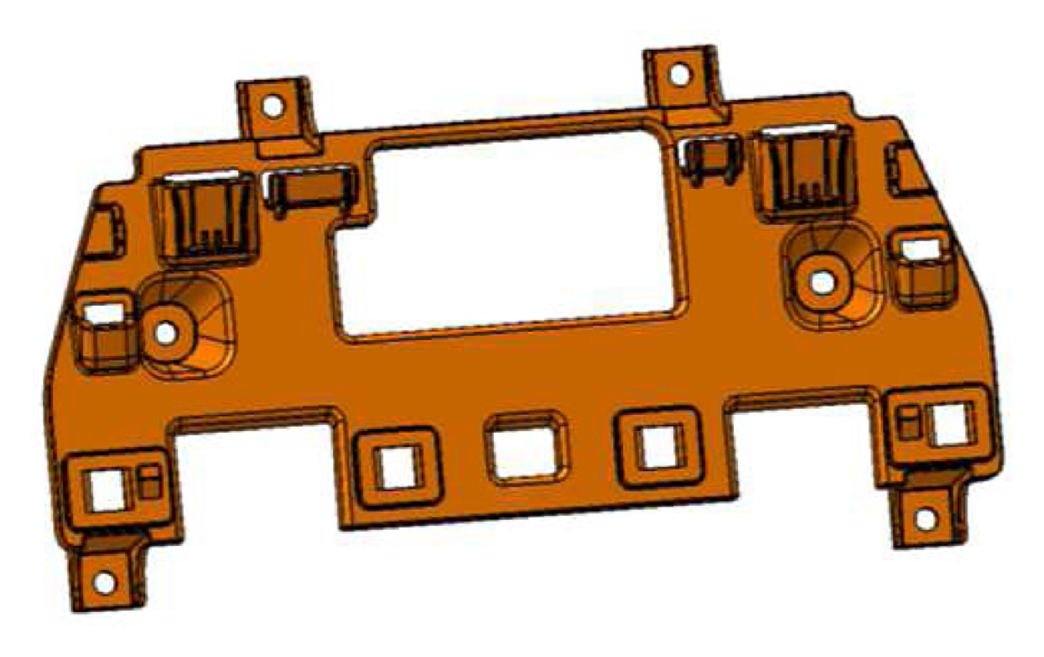
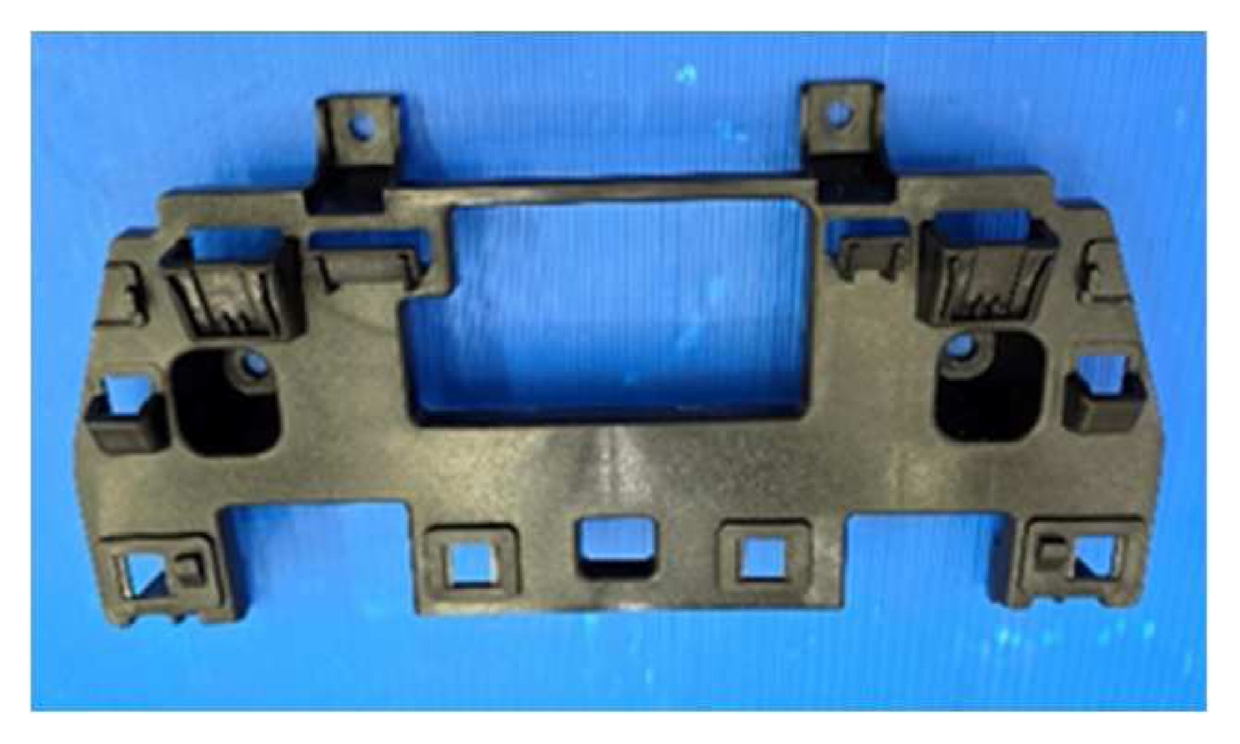
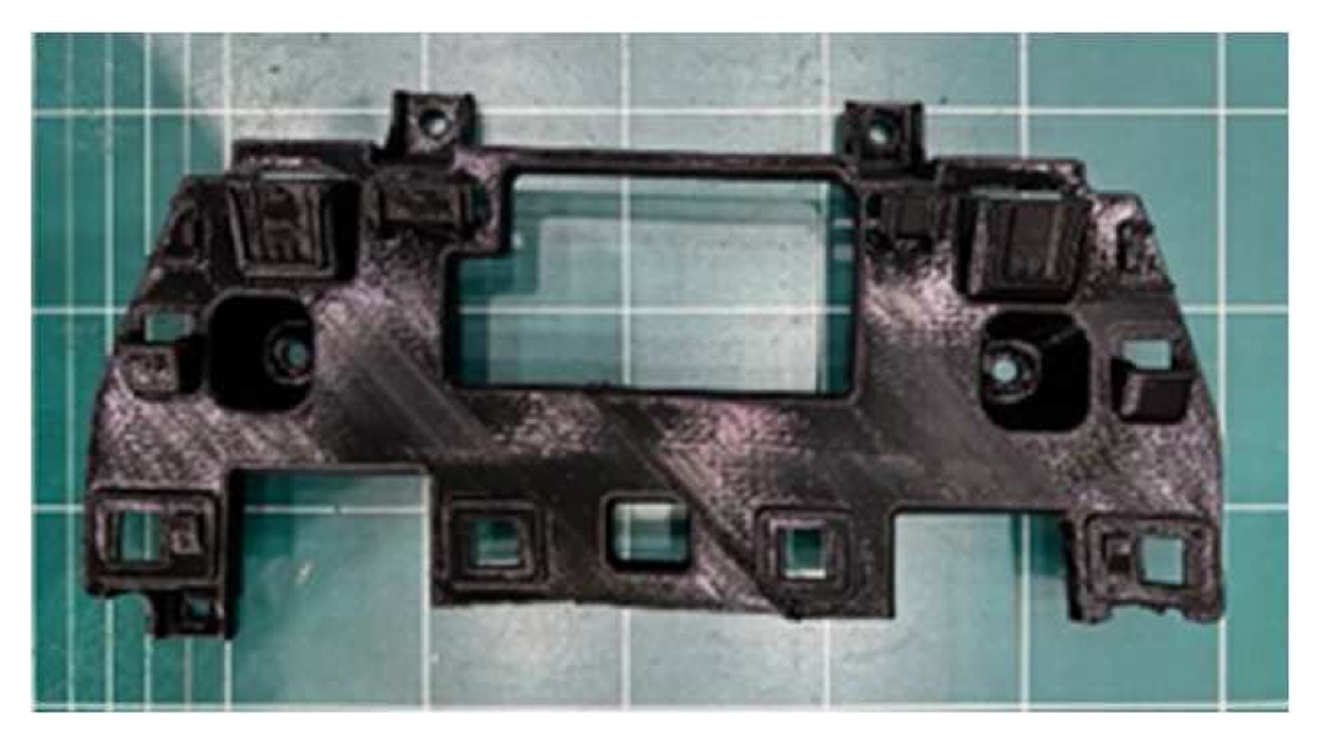
3D 프린팅과 사출의 탄소배출량 비교를 위해, 3D 프린팅 제작 용이성 및 실제 양산 가능성을 고려하여 선정하였다. 구체적인 선정 기준으로는 소량 생산차종의 부품 중 Bambu Lab 社 X1E 장비로 제작 가능한 사이즈인 것으로 하였다. 이러한 기준에 따라 2024년에 양산된 현대자동차의 일본향 시내버스의 오디오 브라켓을 비교 대상 부품으로 선정하였다. 해당 부품은 시작차량 제작 과정에서 3D 프린팅으로 대응한 이력이 있어 비교 검토에 의미가 있다고 판단하였다.
기본 모델링을 바탕으로 동일한 형상의 부품을 3D 프린팅(PC 소재, Bambu Lab 社X1E)과 사출 공법(PP-GF20)으로 직접 생산하여 소재 및 공정 데이터를 수집하였다. 부품 제작 전 사출과 3D 프린팅 공정흐름도를 작성하여 각 생산 과정을 세분화하였다. 작성된 공정 흐름도를 바탕으로 탄소배출량에 영향을 줄 수 있는 데이터 수집 범위를 설정하였다.
전과정평가를 위해 수집하는 데이터는 본래 원소재 채취부터 운송 부분 및 부품 사용 후 폐기처리 관련된 부분까지 부품의전 과정에 대해 진행되어야 한다. 하지만 본 연구는 부품의 전 과정평가에 집중한 것이 아닌 사출과 3D 프린팅 공정의 비교를 위한 것이므로 데이터 수집 범위를 부품의 생산 공정으로 한정하였다. 또한 수집 데이터의 내용도 계산의 편의성과 데이터 수집 한계로 인해 소재 투입량, 스크랩 중량과 소비 전력량으로 한정하였다.
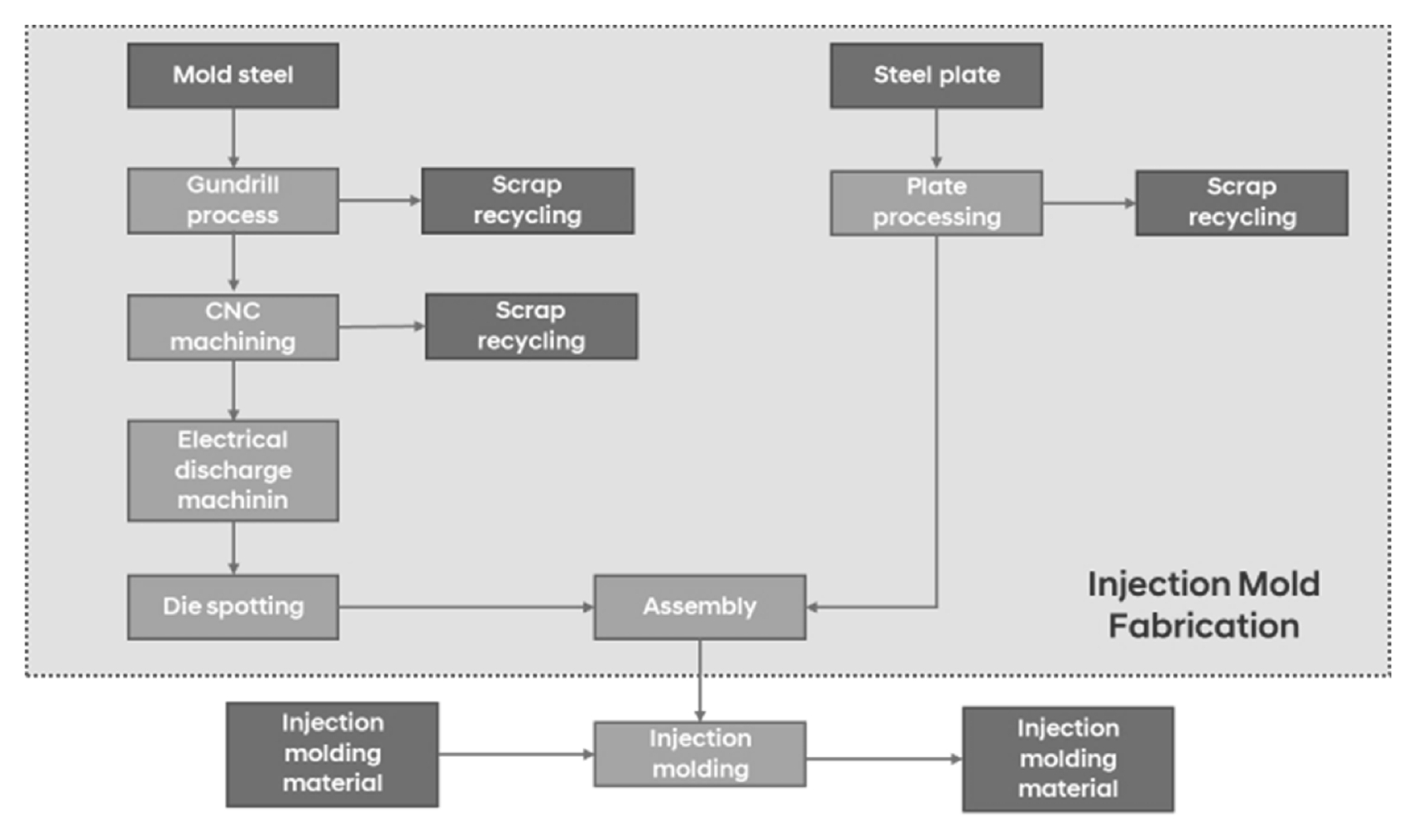
Fig. 2에서 사출공정의 부품제작 공정흐름도(Process Flow Diagram, PFD)를 나타내었다. 일반적인 양산 부품의 경우 생산 부품 수량이 높아 일반적으로 금형 생산의 탄소배출량은 고려하지 않는다. 다만 소량생산 차종일 경우 금형당 생산 부품의 수량이 적고, 3D 프린팅의 금형 삭제효과를 비교하기 위해 본 연구에서는 금형 생산 공정을 데이터 수집 범위에 포함하였다.
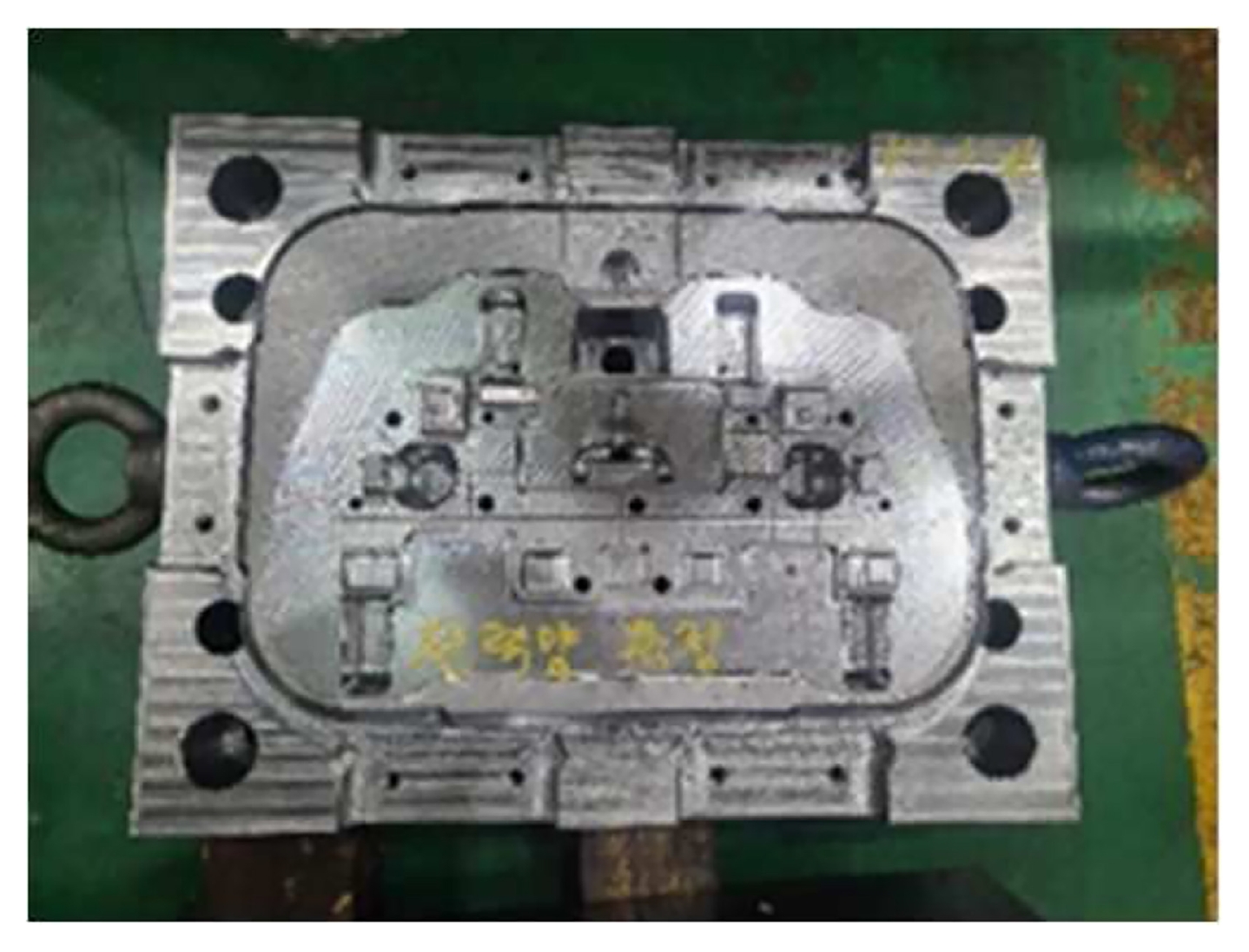
사출 공정은 크게 사출금형 제작과 부품 생산 과정으로 이루어진다. 사출 금형은 부품의 형상을 나타내는 코어 부분과 사출기와 연결된 베이스 부분으로 이루어져 있으며 각각 제작한 후 조립한다. 코어부분은 가공이 용이한 금형강(ZAS)를 이용해 정교한 형상을 나타낼 수 있도록 여러 단계의 가공 과정을 거친다. 베이스 부분은 탄소강 판재를 사용하며, 판재 가공을 통해 코어 부분과 연결할 수 있는 구조를 만든다. 이후 사출 공정은 크게 수지 건조와 사출 금형 및 사출기를 사용한 사출 공정으로 이루어진다.
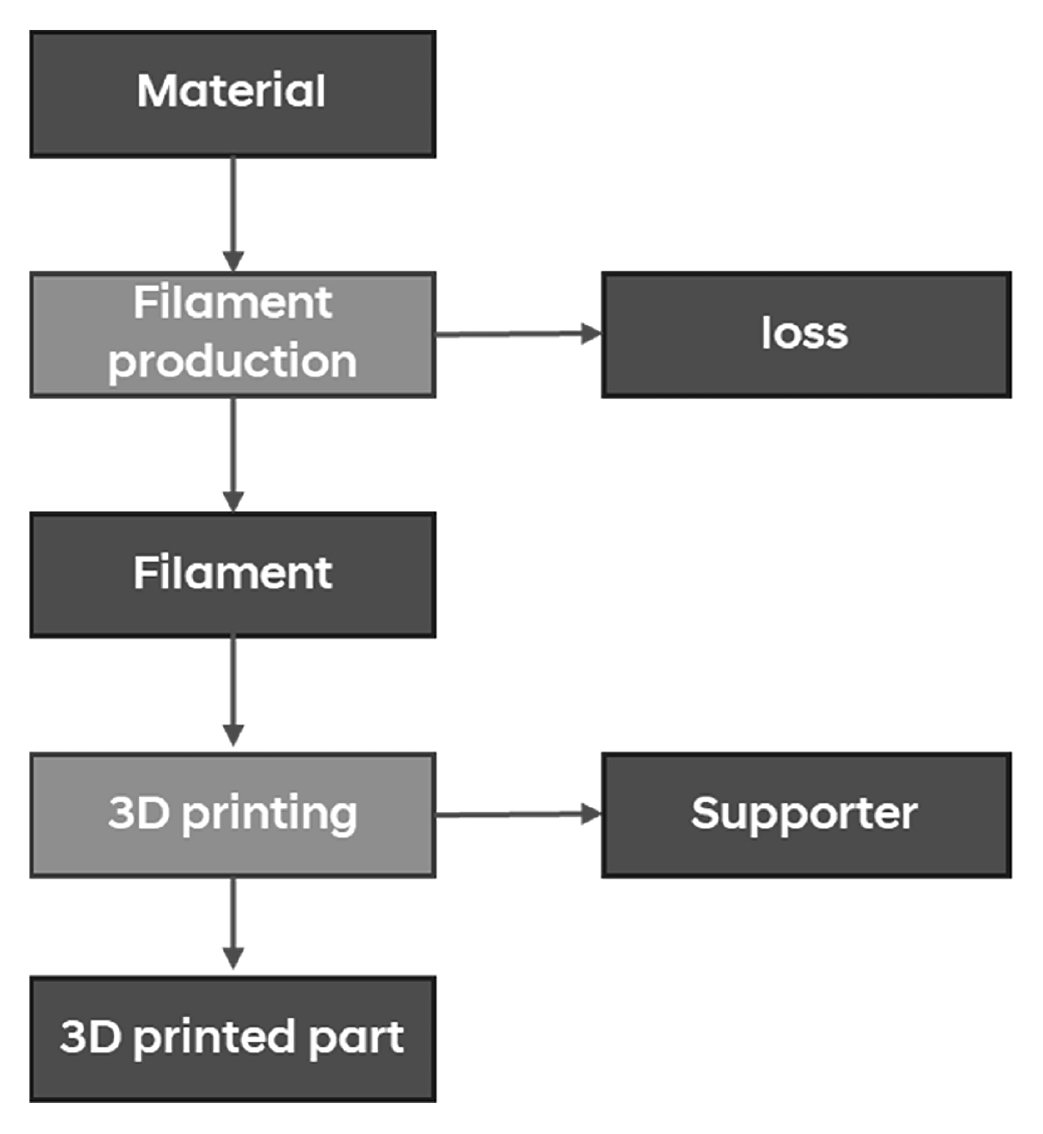
Fig. 3은 FDM 방식의 3D 프린팅 공정 흐름도를 나타내었다. FDM 방식의 경우 필라멘트 형태의 고분자 소재를 사용하므로 펠렛 형태의 열가소성 고분자 소재를 필라멘트로 가공하는 공정이 필요하다. 본 연구에서는 자체 개발한 3D 프린팅 소재를 사용하여 직접 소재 부분 탄소배출량을 계산하였다. 원소재 관련 데이터는 소재업체로부터 LCA 자료를 얻었으며 필라멘트 가공은 제작 업체의 가공 데이터를 계산하여 산출하였다. 3D 프린팅 공정데이터는 연구소 내에서 부품을 생산하며 공정 시간 및 원소재 소모량을 통해 탄소배출량을 계산하였다. 이때 전력 소비량은 BAMBU LAB에서 제공하는 장비 종류, 가동 모드 별 전력 소비량 DB를 활용하였다[
6].
3. 사출 공정 탄소배출량 계산
3.1 사출금형 생산 데이터 집계
양산 사출 금형의 경우 금형 수명을 최대 부품 10만벌 생산으로 본다. 본 연구에서 제작한 사출 금형의 경우 목표 생산차량이 10만 대 이하이므로 동일 금형으로 모든 부품을 생산하는 것으로 보고 추후 손익분기점(Break-even Point, BEP) 계산을 진행하였다.
금형 제작을 위한 전기에너지 소비량은 한국전력에서 제공한 1년 전력량 데이터와 생산 데이터를 수집한 뒤 본 금형 생산을 위한 에너지를 할당하여 계산하였다. 탄소배출량 계산을 위해 사용한 전력 탄소배출계수(Carbon Emission Factor, CEF)는 0.557 kgCO2eq/kWh이다. 금형 제작의 원소재 소비량과 스크랩 양은 금형 제작 업체의 소재 입고 데이터와 제작된 금형 중량을 통해 수집하였다.
3.2 사출금형 생산에 따른 탄소배출량 계산
사출 금형 생산에 소비한 전력량 할당에 대한 계산은 Tabl e 1에 나타내었다. 본 연구에서는 단일 품목의 생산 공정에 적용되는 전력소비량 할당을 위해 질량 기반 할당(Mass-based Allocation) 방법을 적용하였다. 이는 LCA 표준에서 인정하는 할당 방법으로, 기간별 전체 전력 소비량을 총 생산 중량으로 나누어 단위 중량당 전력 소비량을 산출하였다[
7]. 건드릴 공정이나 스포팅 공정 등 에너지 소비량은 높지만 공정 시간은 매우 짧은 공정이 포함되어 일반적으로 사용되는 공정시간 기반 할당이 적당하지 않다고 판단하였다.
Table 1에 따르면 2024년 1년간 업체의 총 금형 생산량은 1,895톤, 총 소비 전력량은 1,430,790 kWh이다. 따라서 질량 기반 할당을 통해 계산한 금형 단위 중량당 금형 생산에 소비한 전력량은 0.75 kWh/kg으로 구할 수 있다.
앞서 구한 단위 중량당 소비전력으로 제작에 필요한 전기 에너지를 계산할 수 있다.
Table 2는 금형 생산 시 소비된 에너지에 따른 탄소배출량을 계산한 내용이다 본 연구에서 제작한 금형 379.1 kg으로 앞서 구한 중량당 소비 전력량을 곱하면 총 284.3 kWh를 소비한 것으로 구할 수 있다. 이에 전기 생산의 탄소배출계수 0.557 kgCO
2eq/kWh을 곱하면 금형 생산 시 에너지 소비에 따른 탄소배출량은 총 154.8 kgCO
2eq이다.
금형의 베이스는 강한 압력을 견딜 수 있는 탄소강, 부품 형상 부분은 가공이 용이한 금형강으로 제작한다. 금형 원소재의 탄소배출계수는 Sphera DB를 통해 구하였다. 금형강의 경우 합금비(Zn 92.3%, Al 4.3%, Cu 3.4%)를 토대로 DB값을 조합하여 산출하였으며 탄소강의 경우 DB에서 제공하는 탄소배출계수를 사용하였다[
8].
Table 3을 통해 금형 소재 사용에서 기인한 탄소배출량 산출 과정을 확인할 수 있다. 금형 1벌 당 금형강 기인 탄소 배출량은 625.1 kgCO
2eq, 탄소강 기인 탄소 배출량은 412.8 kgCO
2eq 로 원소재 기인 탄소 배출량은 두 값의 합인 총 1,037.9 kgCO
2eq이다. 이에 금형 제작 공정의 전기 에너지에 따른 탄소배출량을 더하면 금형 제작에 의한 탄소배출량은 1,196.2 kgCO
2eq으로 구할 수 있다.
사출 부품의 부품당 탄소배출량은 금형의 탄소 배출량이 총 생산 부품 수에 따라 배분되므로, 생산 수량이 증가할수록 감소하는 경향을 보인다. 이를 계산하기 위해 금형의 탄소배출량을 총 생산 부품 수로 나누어 부품당 금형 기인 탄소배출량을 산출하였다. 본 연구에서는 총 555대의 부품을 생산하였으며, 부품당 금형의 탄소배출량은 1.77 kgCO2eq으로 계산된다. 그러나 BEP 계산 시에는 금형의 탄소배출량은 해당 결과 값이 아닌 생산수량에 따라 변화하는 변수로 고려해야 한다.
Table 4의 Raw Material 부분은 사출 부품의 원소재인 PPGF20 및 사출공정의 탄소배출량을 계산한 결과이다. 원소재의 탄소배출계수는 Sphera LCA DB [
8]의 PP소재와 유리섬유 및 압출 공정의 탄소배출 관련 DB를 참고하여 산정하였다. 그 결과 단위 소재 중량 당 탄소배출량은 0.34 kgCO
2eq/kg으로 계산되었다. 생산 부품의 최종 중량은 87 g이지만, 원소재 소비량은 스크랩을 포함한 총 수지 사용량인 75 kg을 부품 생산량 555개로 나눈 값인 135.14 g/pc로 계산하였다.
따라서 PP-GF20의 탄소배출계수와 소재 사용량을 계산하여
식(1)과 같이 탄소배출량을 0.439 kgCO
2eq로 구하였다.
사출 공정의 탄소배출량은 에너지 소비량을 기반으로 산정하였으며, 냉각수 사용량은 제외하였다. 상세한 내용은
Table 4의 Injection Molding으로 정리하였다. 수지 건조 및 사출 공정에서 소비된 전기에너지는 전력량계를 통해 직접 측정하였다. 수지의 건조는 90
oC의 온도에서 4시간을 진행하였으며 총 11.1 kWh의 전기에너지를 소비하였다. 사출 공정의 경우 280톤급 사출기를 사용하여 총 555대의 부품을 생산하는데 34.46 kWh의 전기에너지를 소비한 것으로 확인하였다. 두 공정의 전기에너지 소비량의 합은 45.56 kWh로 부품 생산량 555대로 나누면 부품 당 사출 공정에서의 전기 에너지 소비량은 0.08 kWh, 이에 따른 탄소배출량은 0.05 kgCO
2eq임을 확인할 수 있다.
사출 공법의 경우 금속으로 이루어진 금형을 생산하는 과정에서 매우 높은 탄소배출량을 가지는 반면 실제 사출 공정은 비교적 간단하여 탄소배출량이 크지 않은 것을 확인하였다.
4. 3D 프린팅 공정 탄소배출량 계산
4.1 3D 프린팅 생산 데이터 집계
3D 프린팅과 사출 공정은 동일 소재를 사용하더라도 공정 특성의 차이로 인해 고분자 사슬의 배열이 달라져 제작품의 물성이 현저히 다르다. 특히 3D 프린팅 부품의 적층 계면형성으로 인한 이방성 및 충격 물성 열세가 발생하여, 사출 부품 수준의 물성 요구사항을 충족하기 어렵다. 이러한 문제를 해결하기 위하여 본 연구에서는 충격성능을 개선하여 3D 프린팅 전용으로 개발한 PC 블렌드 소재를 사용하였으며 이를 FDM 장비에서 사용할 수 있도록 필라멘트 형태로 가공하였다. 또한 개발 소재의 기계적 물성을 평가하고, 제작 부품의 조립성 및 내구성을 검증하여 차량 적용이 가능한 수준의 품질을 확인하였다.
원소재의 탄소배출계수는 소재업체에서 제공한 원소재 생산 탄소배출계수와 필라멘트 제조 업체의 공정 데이터를 통해 산출하였다. 원소재 탄소배출량 계산 내용은
Table 5의 Raw Materials로 정리하였다.
필라멘트 가공 공정의 생산 수율은 92%이며, 필라멘트 1 kg을 생산하기 위해 1.087 kg의 소재가 필요하다. 필라멘트 가공 공정에서 소모된 전기에너지는 질량 기반 방법을 통해 계산하였다. 1개월 동안의 업체 필라멘트 생산량은 2,100 kg이며, 총 전력 소비량은 5,607 kWh이다. 따라서 필라멘트 가공 시 소비된 전기에너지의 양은 2.670 kWh/kg, 이로 인한 탄소배출량은 필라멘트 1 kg당 1.487 kgCO2eq이다. PC블렌드 소재 사용과 필라멘트 가공으로 인한 탄소배출량을 합산하여 계산한 PC 블렌드 필라멘트의 탄소배출계수는 5.178 kgCO2eq/kg이다.
3D 프린팅 공정은 모델의 배치, 온도 등의 출력 조건에 따라 최종 부품의 품질이 달라진다. 따라서 프린팅 조건 최적화를 위해 온도, 배치, 서포터 조건 등을 변경하며 최적 조건을 확보하였다. 3D 프린팅 원소재 투입량은 본품과 서포터를 포함한 전체 필라멘트 사용량을 기준으로 하며 최종 출력 모델의 경우 부품당 소재 205.7 g을 사용하였다. 이때 부품의 중량은 97.3 g, 서포터 및 스크랩은 총 108.4 g 사용되었으며 스크랩 폐기에 따른 탄소배출량은 절삭하였다.
3D 프린팅 부품 제조 과정에서 소비한 전기 에너지는 장비 제조사 Bambu Lab의 공개데이터(소재별, 출력 모드별 소비 전력 소비)를 기반으로 실제 출력 조건을 적용하여 계산하였다. 본 연구의 3D 프린팅 공정은 연구소 내에서 수행되어 질량 기반 할당을 위한 생산물이 없으며 3D 프린팅 장비의 소비 전력이 상대적으로 낮아 직접 측정 시에 편차가 크다고 판단되어 공개 DB를 활용하였다.
3D 프린팅 부품 제조과정의 에너지 소비량은 Tabl e 6에 정리하였다. 필라멘트 건조(4시간), 장비 출력 준비시간(베드, 챔버 가열 및 Auto Bed Leveling, 19분)과 출력 시간(9시간 14분)에 대한 전기 에너지 소비량을 산정한 결과 총 2.143kWh이다. 이에 전기에너지에 대한 탄소배출계수를 곱해 3D 프린팅 공정의 탄소배출량을 계산한 결과, 1.194kgCO2eq이다.
Table 7은 3D 프린팅 공정으로 얻은 부품의 원소재 투입과 공정에서 배출되는 탄소배출량을 계산한 값이다. 3D 프린팅 공정을 통해 해당 부품 1개를 제작하는데 총 2.259 kgCO
2eq의 탄소가 배출되는 것을 확인할 수 있다.
5. 공정별 비교평가
5.1 공법별 탄소배출량 비교 평가
앞선 과정을 통해 사출공법과 3D 프린팅 공법별 부품 제작에 따른 탄소배출량을 산출하였다. 3D 프린팅 공법은 부품 생산 수량에 관계없이 탄소배출량 총 2.259 kgCO
2eq의 일정한 값을 유지한다. 반면 사출공법의 경우 금형 제조의 환경 부하가 생산 수량에 따라 배분되므로, 생산 수량이 증가할수록 부품당 금형기인 탄소배출량이 감소한다. 사출공법의 부품당 탄소배출량은
식(2)와 같이 계산된다.
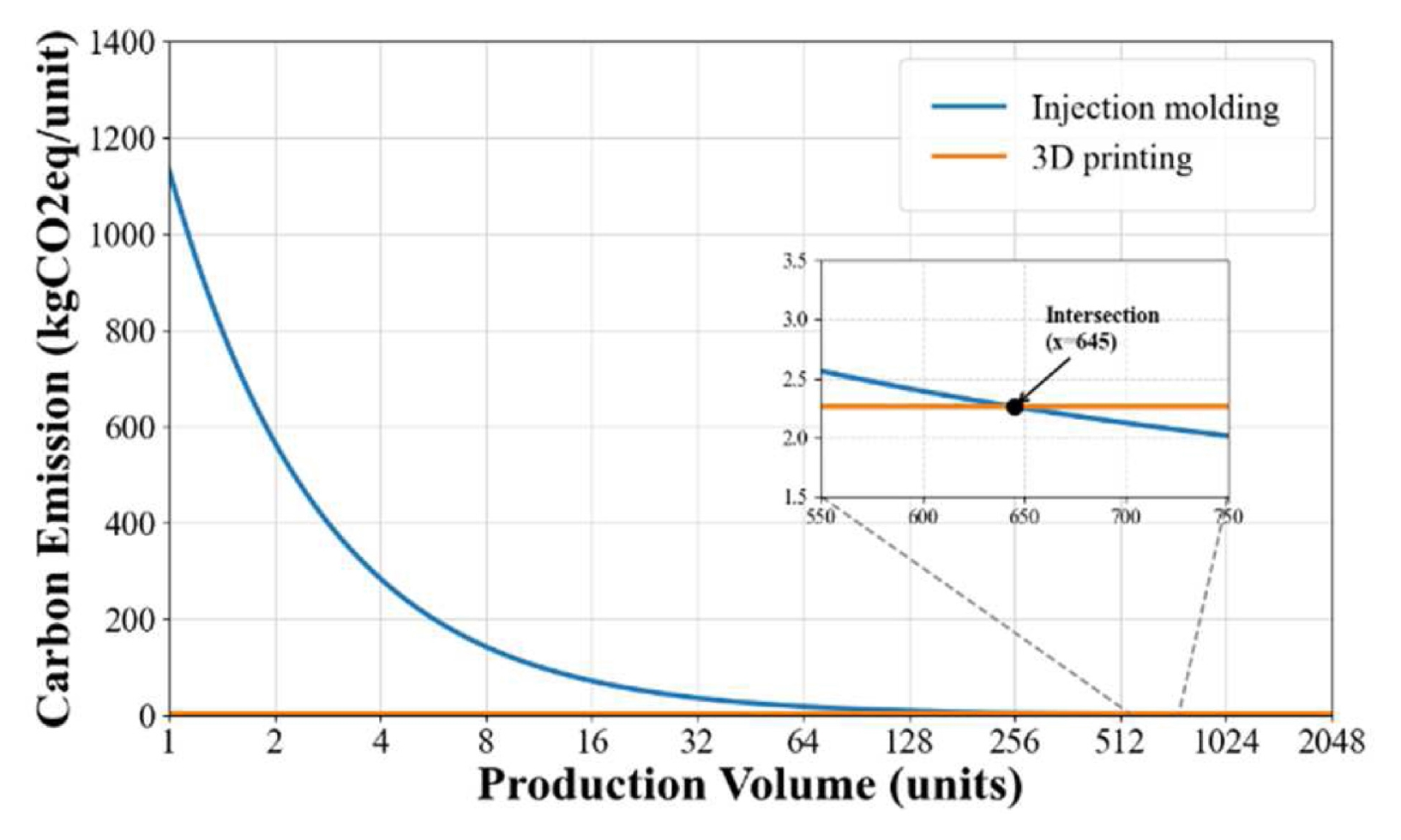
Fig. 7은 이 계산식을 기반으로 두 공정의 탄소배출량을 비교한 결과이다. 사출공정의 경우 생산 수량 증가에 따라 금형 기인의 환경 부하가 감소하여 탄소배출량이 점차 낮아진다.
사출공정과 3D 프린팅 공정의 탄소배출량이 동일한 지점은 그래프가 겹치는 부분은 부품 생산대수 645대일때로 이를 3D 프린팅의 탄소배출 BEP로 볼 수 있다. 따라서 생산수량 645대 이하에서는 3D 프린팅이 탄소배출 측면에서 유리하고, 645대 이상 제작할 경우 사출 공정의 금형 기인 환경부하가 낮아져 사출 공정이 유리한 것으로 볼 수 있다.
다만 위와 같은 분석은 동일한 형상의 부품을 두 공정으로 제작한 결과이며, 부품 재설계를 진행한다면 결과값이 변화할 수 있다. 위상 최적화(Topology Optimization) 또는 3D 프린팅 최적설계(Design for Additive Manufacturing, DfAM)를 통한 경량화 및 공정 최적화 설계를 진행하면 원소재 투입량과 공정 시간이 줄어든다. 3D 프린팅의 탄소배출량을 좀 더 낮출 수 있다. 하지만 본 연구에서는 공정 탄소배출량의 객관적인 비교를 위해 최적 설계는 진행하지 않았다
5.2 공법별 경제성 비교 평가
경제성 평가는 사출 공정의 금형 제작비 및 재료비, 3D 프린팅 가공비를 포함하여 부품당 제조비용을 산정하였다. 공정별 부품가 산정 기준은 다음과 같이 산정하였다.
사출공정: 양산 금형 제작 방식을 적용하였으며, 금형 제작비는 5,100만 원이다. 원재료 PP-GF20는 2,080원/kg의 소재비로 산정하여 부품당 단가는 2,080 원/kg × 135.14 g = 281 원으로 계산하였다.
3D 프린팅: 본 연구에서는 연구소 내부에서 시제품 제작을 진행하여 실제 제조 단가 산정이 어려웠다. 따라서 객관적인 부품 단가를 산정하기 위해 동일 사양, 동일 제작 조건에서의 3D 프린팅 전문 제작 업체의 견적을 참고하였다. 3D 프린팅 부품의 제작 단가는 재료비, 출력 공임비, 후처리 비용을 포함하여 개당 33,380원으로 산정되었다.
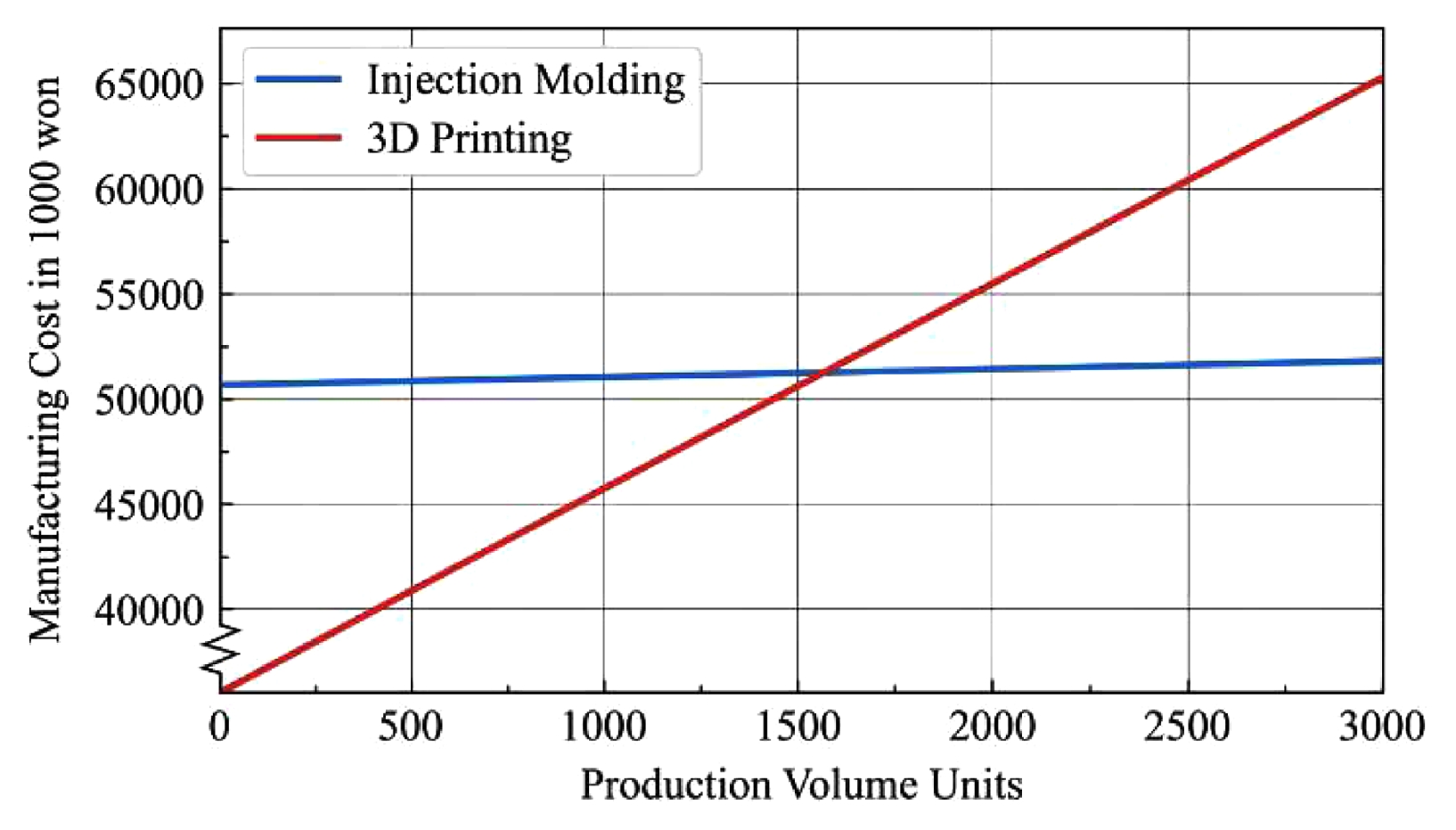
두 공정의 부품당 제작 단가를 비교하여 경제적 BEP를 산정한 결과를
Fig. 8에 나타내었다. 3D 프린팅 부품의 경제적 BEP는 생산 수량 1,540대로 산정되었다. 따라서 1,540대 이하에서는 3D 프린팅이, 이 유리하며, 1,541대 이상 생산할 경우 사출 공정이 경제적 측면에서 우월한 것으로 분석할 수 있다.
6. 결론
본 연구는 시내버스 차종에서 실제 3D 프린팅 제작 이력이 있는 오디오 브라켓을 기준 부품으로 설정하여, 사출 공정과 FDM 3D 프린팅 공정의 탄소배출량을 비교 평가하였다. 사출 공정의 경우 금형 제조 단계에서 1,196.2 kgCO2eq의 탄소가 배출되어 탄소배출량의 대부분을 차지한다. 그러나 생산 수량이 증가함에 따라 부품당 금형 기인 탄소배출량이 감소하는 구조이므로, 대량생산시 유리한 구조이다. 반면 FDM 3D 프린팅의 부품당 탄소배출량은 2.259 kgCO2eq으로 수량과 무관하게 일정하며, 총 탄소배출량은 생산 수량에 정비례하여 증가한다.
본 연구의 기준 부품을 사출과 FDM 3D 프린팅 공법으로 제작할 경우 645대 이하에서는 3D 프린팅이, 그 이상에서는 사출 공정이 탄소배출 측면에서 우월하다. 또한 경제적인 측면에서는 1,540대 이하에서 3D 프린팅 공정의 경우 금형 제작 비용 절감을 통한 투자비 절감 효과를 확인하였다.
본 연구의 의의는 소량 생산 부품의 공정 선택에 있어 정량적인 환경영향평가를 기반으로 의사결정의 기준을 제시한 데에 있다. 특히 기존 부품 LCA 평가에서는 금형과 같은 간접부품의 탄소배출량이 충분히 반영되지 않아, 소량 생산 시 최적 공정 선택이 어려웠던 한계를 개선할 수 있을 것으로 기대된다.
다만 본 연구의 결과는 3D 프린팅 최적설계가 적용되지 않은 제작 결과이다. 설계 최적화(위상최적화, 경량화)를 통해 소재 투입량과 출력시간이 감소한다면, 3D 프린팅 부품의 탄소배출 손익분기점은 더욱 증가할 것으로 예상된다. 아울러 3D 프린팅 장비의 빌드 플레이트(Build Plate) 사이즈 확대 및 탄소저감 소재의 개발·적용을 통해 3D 프린
Fig. 1Selected part (Audio bracket for commercial vehicle)
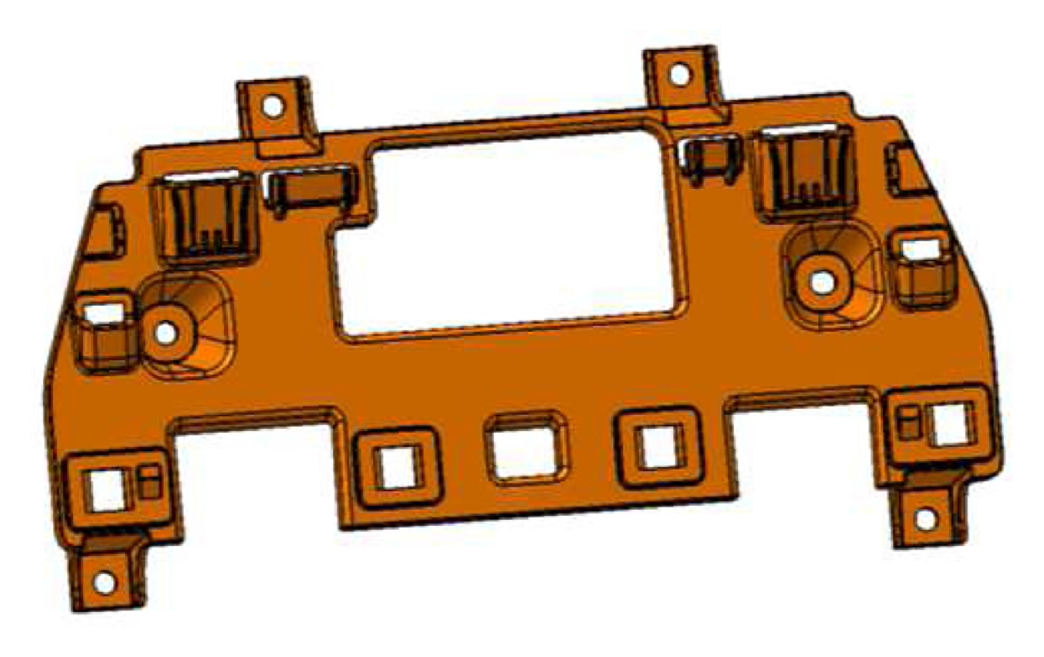
Fig. 2Process flow diagram for injection-molded component production
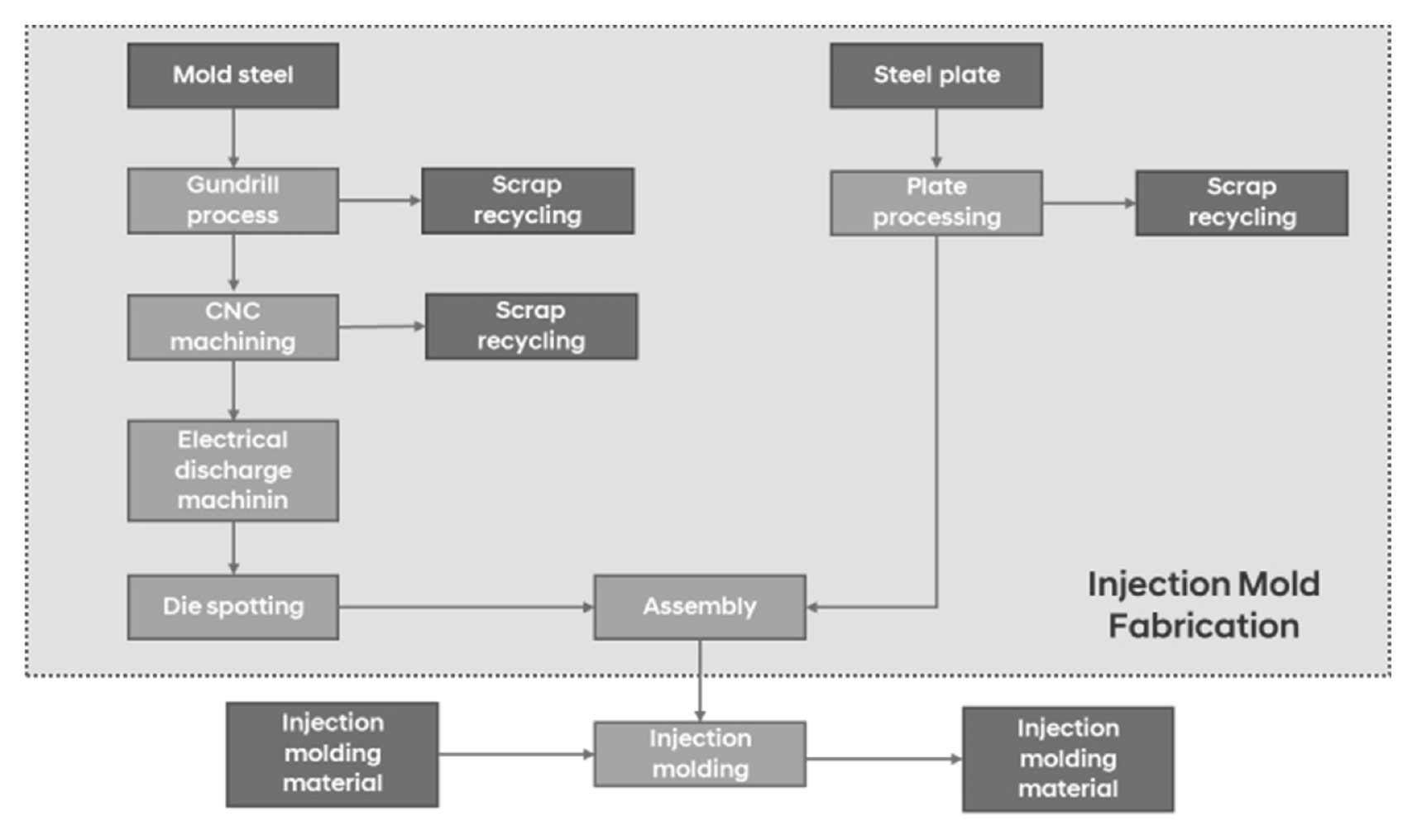
Fig. 3Process flow diagram for FDM 3D printed part
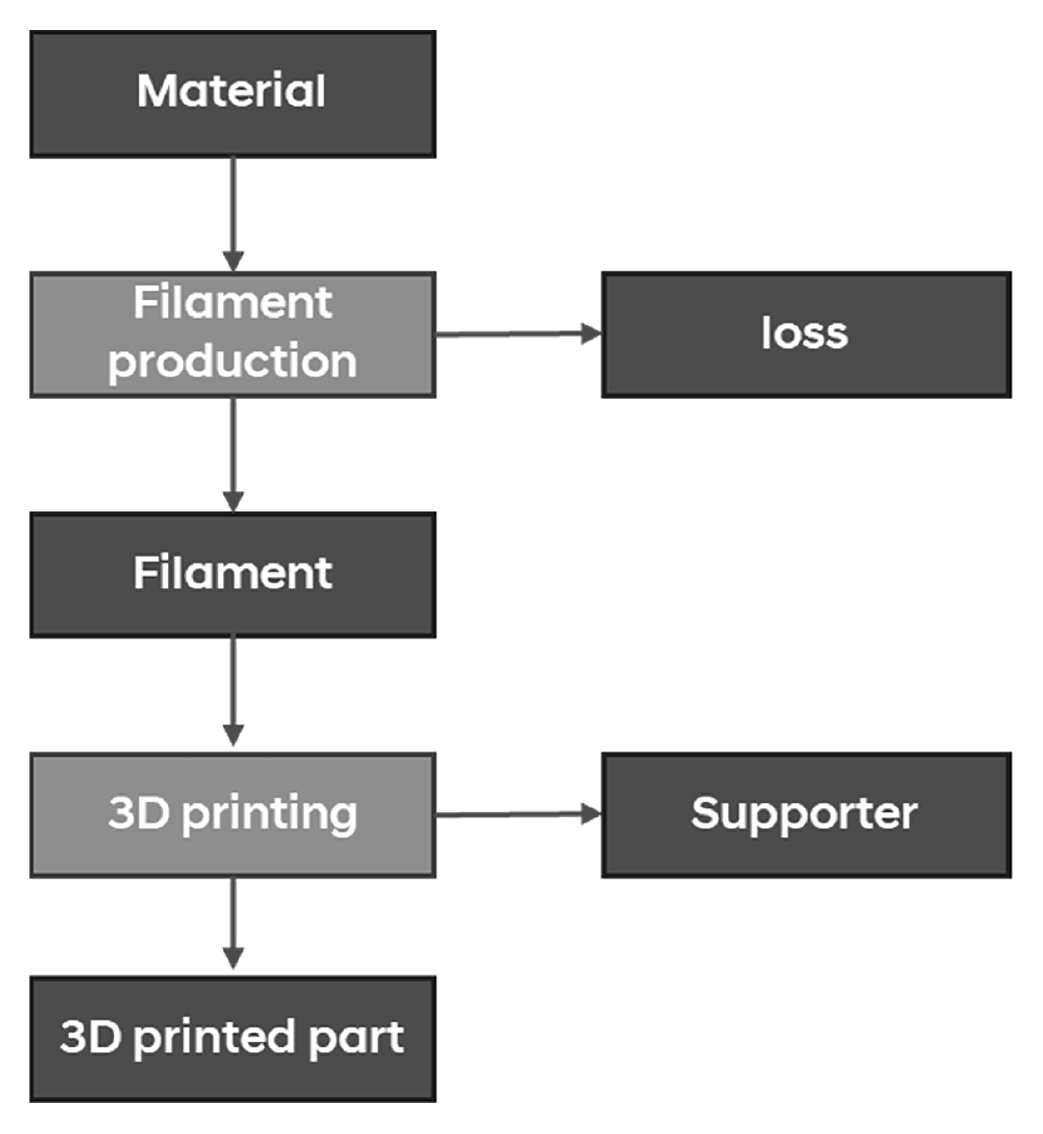
Fig. 4Injection mold (Upper plate)
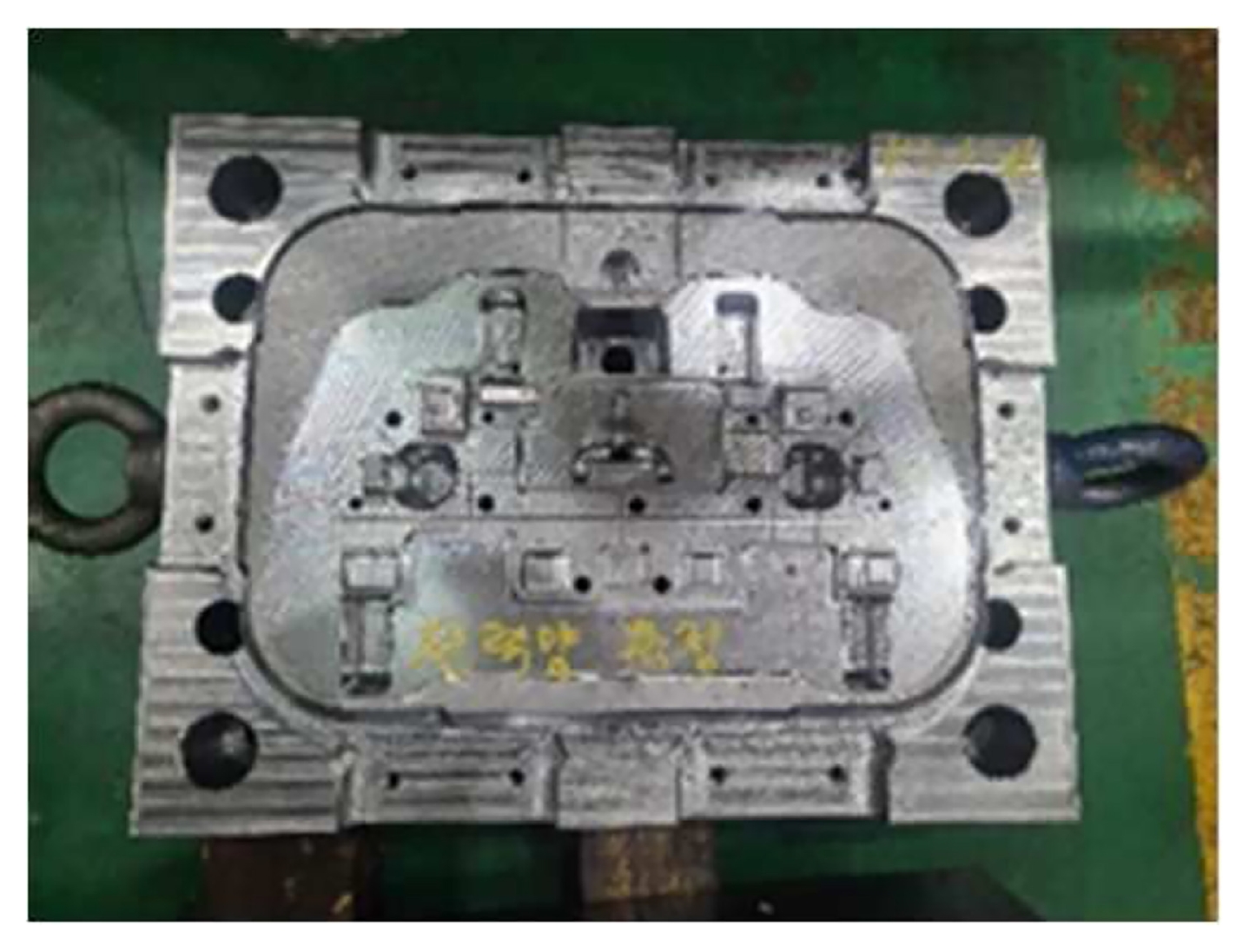
Fig. 5
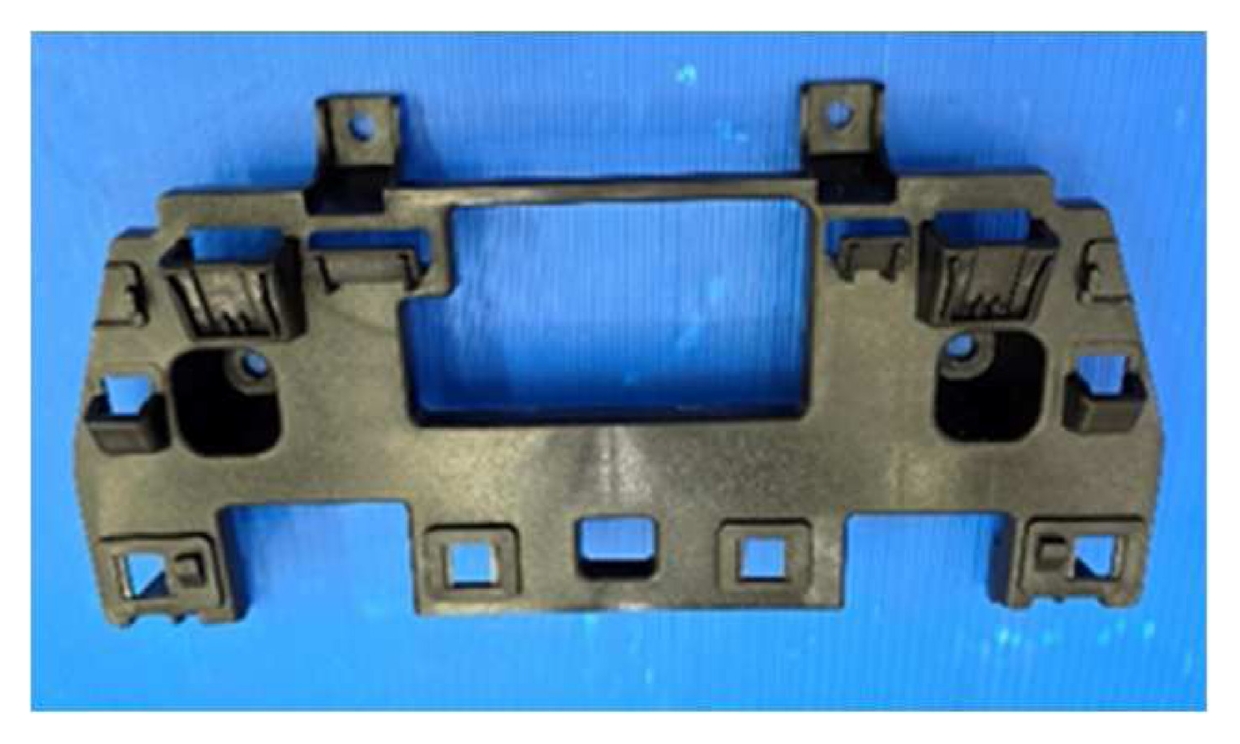
Fig. 6
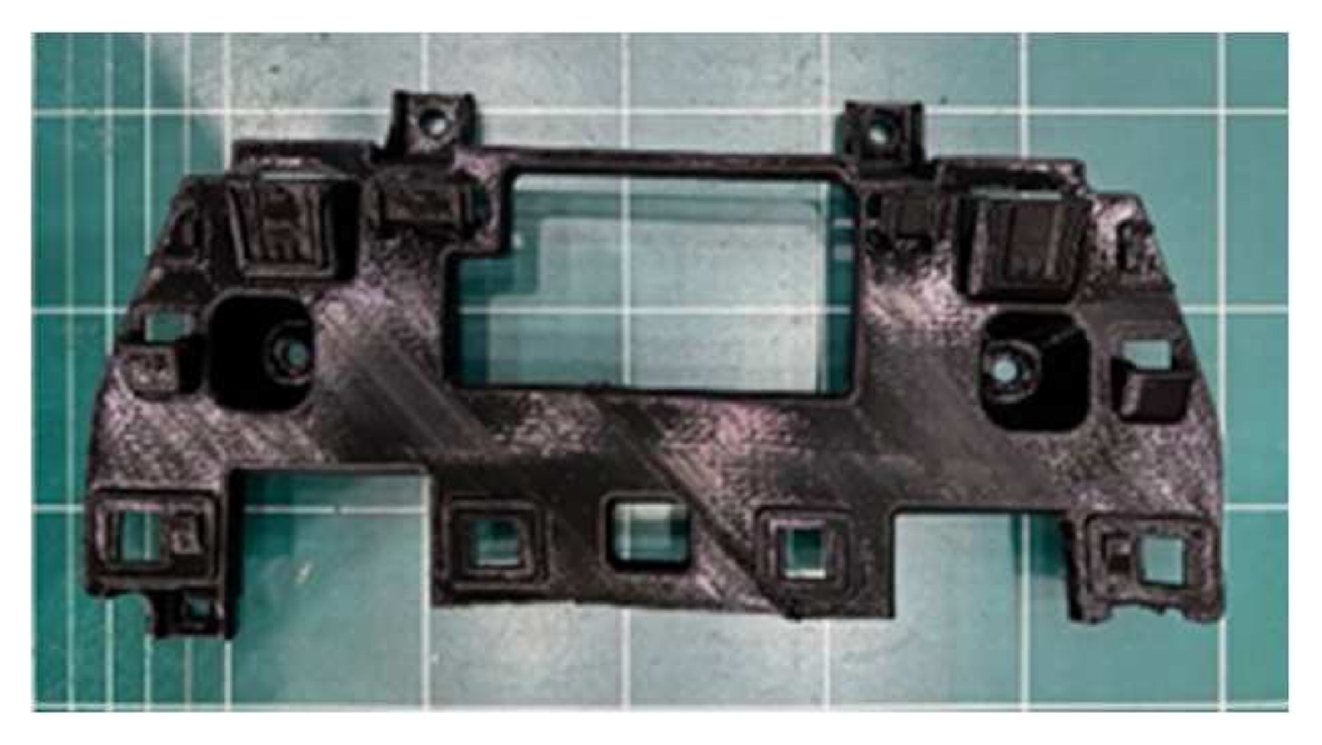
Fig. 7Break-even point (BEP) carbon emission analysis graph
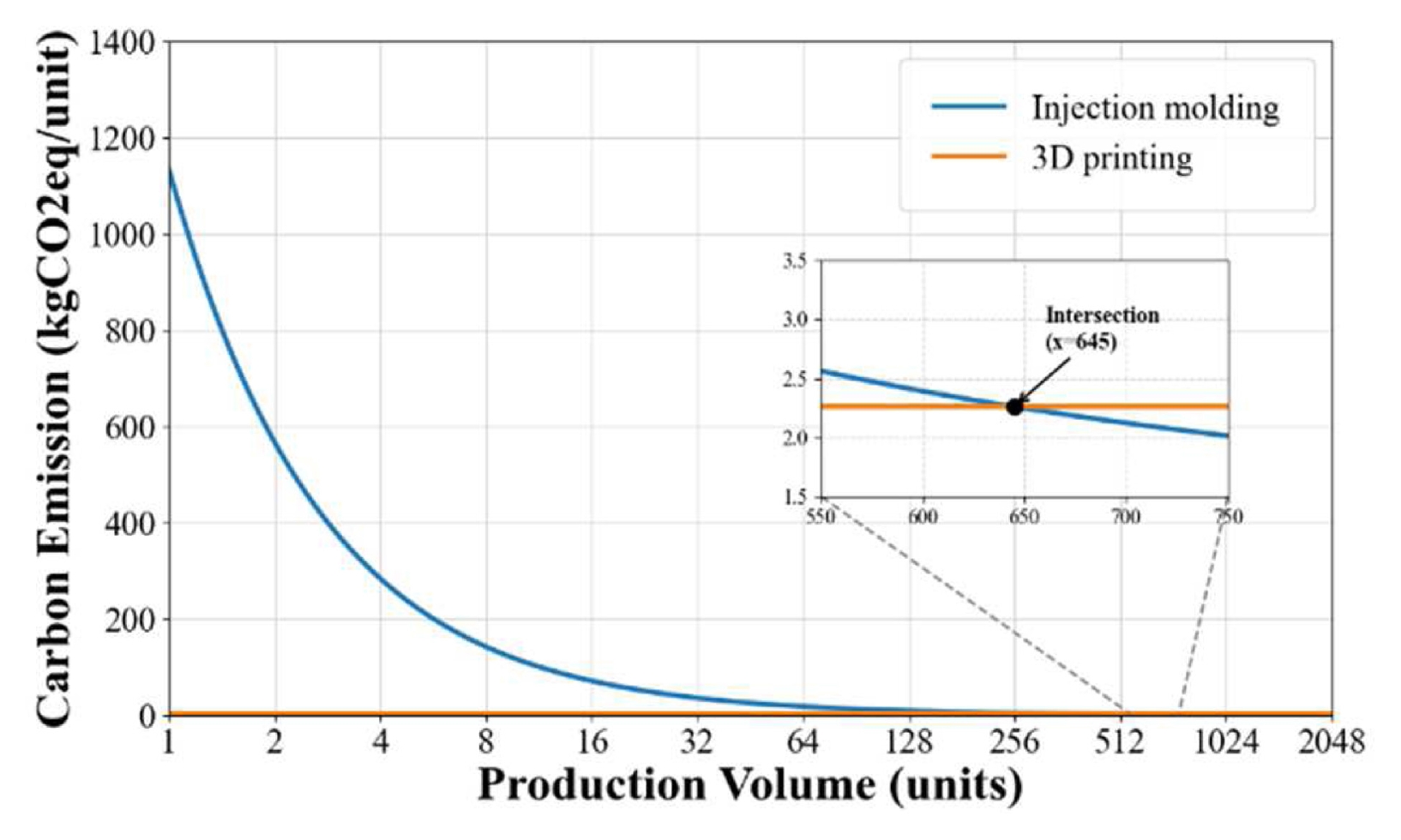
Fig. 8Economic comparison of injection molding and 3D printing processes
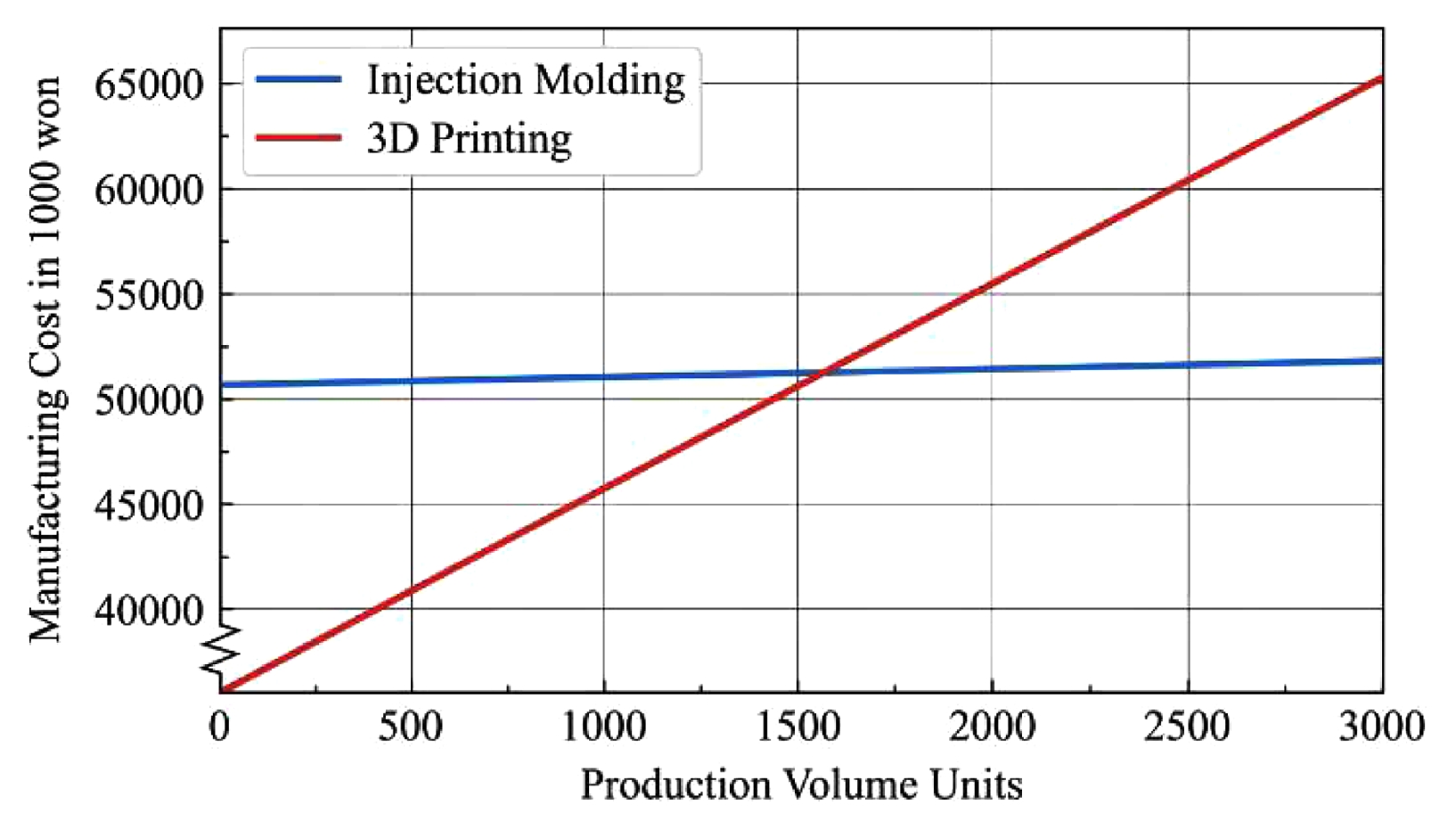
Table 1Power consumption allocation table for mold production
Table 1
|
Category |
Value |
Unit |
|
Quantity |
457 |
ea |
|
Total weight |
1,895,832 |
Kg |
|
Total power consumption |
1,430,790 |
kWh |
|
Power per kg |
0.75 |
kWh/kg |
Table 2Energy consumption and carbon emissions from injection mold production
Table 2
|
Description |
Value |
Unit |
|
Energy consumption per kg of mold |
0.75 |
kWh/kg |
|
Mold weight |
379.1 |
kg |
|
Mold production power consumption |
284.3 |
kWh |
|
CEF of electricity |
0.557 |
kgCO2eq/kWh |
|
Carbon emissions from mold processing |
158.4 |
kgCO2eq |
Table 3Material based carbon emissions from injection mold production
Table 3
|
Description |
Calculated value |
Unit |
|
CEF of ZAS material |
2.15 |
kgCO2eq/kg |
|
CEF of S45C material |
2.40 |
kgCO2eq/kg |
|
ZAS input quantity |
291.4 |
kg |
|
S45C input quantity |
172.0 |
kg |
|
Carbon emissions from ZAS |
625.1 |
kgCO2eq/mold |
|
Carbon emissions from S45C |
412.8 |
kgCO2eq/mold |
Table 4Calculation of the carbon emission from injection molded parts
Table 4
|
Catetory Description |
Value |
Unit |
|
Raw material |
CEF |
3.252 |
kgCO2eq/kg |
|
Input |
135.14 |
g/pc |
|
① Material carbon emission |
0.439 |
kgCO2eq/pc |
|
Injection molding |
Material drying |
11.10 |
kWh (555 pcs, 75 kg) |
|
Injection molding |
34.46 |
kWh (555 pcs, 75 kg) |
|
Energy for molding (per pcs) |
0.08 |
kWh/unit |
|
② Energy based carbon emisssion |
0.046 |
kgCO2eq/pc |
|
Subtotal (①+ ②) |
0.485 |
kgCO2eq/pc |
Table 5Calculation of the carbon emission factor for 3D printing filament
Table 5
|
Catetory |
Description |
Value |
Unit |
|
Raw materials |
CEF of PC material |
3.396 |
kgCO2eq/kg |
|
Filament production material input |
1.087 |
kg material/kg filament |
|
Carbon emissions from raw material use |
3.691 |
kgCO2eq/kg filament |
|
Energy |
Filament production energy (per 2100 kg of filament) |
5,607 |
kWh/2100 kg filament |
|
Energy per 1 kg of filament |
2.670 |
kWh/kg filament |
|
Carbon emissions from filament production (per 1 kg) |
1.487 |
kgCO2eq/kg filament |
|
Raw material CEF |
|
5.178 |
kgCO2eq/kg filament |
Table 6Calculation of carbon emissions from the 3D printing process
Table 6
|
Process |
Required time |
Power consumption |
Calculated value |
Unit |
|
Material drying |
4 hr |
3.59 W |
0.014 |
kWh/pc |
|
Printing preparation |
19 min |
15.3 W |
0.005 |
kWh/pc |
|
Printing process |
9 hr 14 min |
230 W |
2.124 |
kWh/pc |
|
Total printing energy |
|
|
2.143 |
kWh/pc |
|
Process carbon emissions |
|
|
1.194 |
kgCO2/pc |
Table 7Carbon emission calculation results for 3D printed parts
Table 7
|
Category |
Description |
Value |
Unit |
|
① Material input |
Carbon emissions from filament usage |
1.065 |
kgCO2eq/pc |
|
② Process energy |
Carbon emissions from 3D printing |
1.194 |
kgCO2eq/pc |
|
① + ② |
Carbon emissions per piece (97.3 g) |
2.259 |
kgCO2eq/pc |
REFERENCES
- 1. Shuabib, M., Haleem, A., Kumar, S., Javaid, M., (2021), Impact of 3D printing on the environment: A literature-based study, Sustainable Operations and Computers, 2, 57-63.
- 2. Kwon, J., Kim, N., Ma, J., (2019), Case study of different additive manufacturing (AM) processes from environmental impact assessment, Journal of the Korean Society for Precision Engineering, 36(4), 431-439.
- 3. Gebler, M., Uiterkamp, A. J. S., Visser, C., (2014), A global sustainability perspective on 3D printing technologies, Energy Policy, 74, 158-167.
- 4. Wang, D., Zhang, T., Guo, X., Ling, D., Hu, L., Jiang, G., (2023), The potential of 3D printing in facilitating carbon neutrality, Journal of Environmental Sciences, 130, 85-91.
- 5. Yavuzdeğer, A., Esenboğa, B., Tümay Ateş, K., Demirdelen, Ö, Yüksel, M., (2024), Assessing the carbon footprint of plastic bottle blow mold based on product life cycle for managing the mold industry’s carbon emission, Sustainability, 16(5), 2149.
- 6. Bambu Lab Wiki, Bambu lab printer and AMS power parameters. https://wiki.bambulab.com/en/general/power-consumption
- 7. ISO 14044, (2006), Environmental management - Life cycle assessment - Requirements and guidelines.
- 8. Sphera . SpheraCloud LCA database server. https://www.sphera.com/solutions/lca-database.
Biography
- Na Kyong Yun
Senior Research engineer in Materials Processing Technology Development Team, Hyundai Motor Co., Ltd. Her research interests are polymer 3D printing process and materials.
- Sung Won Choi
Head of project Group in Carbon Neutrality Technology Innovation Team, Hyundai Motor Co., Ltd. His research interest is LCA assessment of the automotive industry.
- Gyung Bok Kim
Senior research engineer in Materials Processing Technology Development Team, Hyundai Motor Co., Ltd. His research interests are polymer 3D printing process and materials.
- Hyo Jae Kong
Senior research engineer in Materials Processing Technology Development Team, Hyundai Motor Co., Ltd. His research interests are 3D printing process and optimized design.