ABSTRACT
The development of high-performance lithium-ion battery electrodes necessitates reducing the content of conductive additives while preserving excellent electrochemical properties. In this study, multi-walled carbon nanotubes (CNTs) with approximately 3 to 7 walls were synthesized and characterized using transmission electron microscopy (TEM), scanning electron microscopy (SEM), and thermogravimetric analysis (TGA) to confirm their morphology and purity. Electrical conductivity was assessed through powder resistivity measurements. CNT dispersions were prepared by ultrasonic treatment using N-methyl-2-pyrrolidone (NMP, 95 wt%), a dispersant (2 wt%), and CNTs (3 wt%). Thin films coated on glass slides showed surface resistances of 36 Ω/sq, indicating superior electronic conductivity compared to conventional carbon black. The optimized CNT dispersion was then mixed with NCM613 cathode active material and a binder to create electrodes containing only 1 wt% conductive additive. For comparison, reference electrodes were also prepared using conventional carbon black at a loading of 2.2 wt%. Electrochemical testing revealed that the CNT-based electrodes achieved comparable cycling stability, rate capability, and capacity retention, despite having a lower conductive additive content. These results demonstrate the feasibility of reducing conductive additive loading to 1 wt% by utilizing highly conductive CNTs, thereby increasing the proportion of active material and enhancing overall energy density.
-
KEYWORDS: Carbon nanotube, Conductive additive, Lithium-ion battery, Electrode performance
-
KEYWORDS: 탄소나노튜브, 도전재, 리튬이온 배터리, 전지 성능
NOMENCLATURE
LIB = Lithium-ion Battery
EV = Electric Vehicle
ESS = Energy Storage System
1. 서론
글로벌 에너지 수요의 증가와 환경 규제 강화로 인해 리튬이 온배터리(LIB)는 전기차(EV) 및 에너지 저장 시스템(ESS)의 핵심 동력원으로 자리 잡았다[
1,
2]. 최근 리튬이온배터리 기술은 높은 에너지 밀도와 더불어 장수명 및 열적 안정성을 동시에 확보하는 방향으로 진화하고 있다. 특히, 기존 다결정 양극재의 충·방전 중 발생하는 입자 깨짐과 이로 인한 가스 발생 문제를 해결하기 위해, 단결정 LiNi
0.6Co
0.1Mn
0.3O
2 (NCM 613)와 같은 단입자 형태의 양극재 채택이 가속화되고 있다[
3,
4]. 이러한 단결정 양극재를 활용하여 셀의 에너지 밀도를 극대화하기 위해서는 전극 내 활물질의 충진 밀도를 높이는 것이 중요하며, 이는 상대적으로 부피를 차지하는 비활성 물질인 도전재와 바인더의 함량을 최소화해야 함을 의미한다[
5,
6].
전통적으로 사용되어 온 카본 블랙은 저렴한 비용과 우수한 공정성을 제공하지만, 입자 형태(0D)의 구조적 특성상 전극 전체에 효율적인 전도성 네트워크를 형성하기 위해서는 약 2-5 wt% 이상의 높은 함량이 요구된다[
7,
8]. 반면, 탄소나노튜브(CNT)는 1차원(1D) 나노구조를 바탕으로 높은 종횡비와 우수한 전기 전도성을 보유하고 있어, 매우 적은 함량으로도 전극 내 침투 임계값에 도달할 수 있다[
9-
11].
특히 다중벽 탄소나노튜브(MWCNT)는 단일벽 탄소나노튜브(SWCNT) 대비 경제성이 뛰어나고 물리적 강도가 높아 상용화에 유리하다[
12,
13]. 하지만 CNT는 강한 반데르발스 힘으로 인해 응집되기 쉬워, 슬러리 제조 시 균일한 분산을 확보하는 것이 전기화학적 성능 구현의 핵심적인 전제 조건이다[
14-
16]. 최근 연구들에 따르면, 최적화된 분산 기술을 적용한 CNT는 활물질 표면뿐만 아니라 입자 사이의 장거리 전자 이동 통로를 효과적으로 구축하여 내부 저항을 획기적으로 낮출 수 있음이 보고되었다[
17-
19].
본 연구에서는 화학 기상 증착법(CVD)으로 합성된 3-7 walls 기반의 고전도성 MWCNT를 활용하여, NCM613 양극 내 도전재 함량을 1 wt%까지 저감하면서도 기존 카본 블랙(2.2 wt%) 기반 전극 대비 동등 이상의 성능을 확보하고자 하였다. 이를 통해 비활성 물질 저감이 전극의 에너지 밀도 및 출력 특성에 미치는 영향을 분석하고, 차세대 고에너지 밀도 배터리 설계를 위한 최적의 도전재 구성을 제안하고자 한다.
2. 시료 제작 및 실험 방법
2.1 촉매 준비
구형의 다공성 Fe-free 촉매는 고상 혼합법을 통해 제조되었다. 전이금속 전구체로는 코발트 질산염을 사용하였으며, 지지체로는 열적 안정성이 우수한 세라믹계 금속산화물을 사용하였다. 균일한 활성점 분포를 유도하기 위해 전이금속과 지지체의 질량비는 20-30 : 70-80 범위로 제어하였다. 원료는 기계적 혼합기를 이용하여 4시간 동안 균일하게 혼합되었다. 이후, 혼합된 원료는 튜브 전기로에 장입되어 공기 분위기 하에서 700°C로 6시간 동안 소성하여 최종적으로 구형의 다공성 촉매를 확보하였다.
2.2 탄소나노튜브 합성
탄소나노튜브는 열화학 기상 증착법을 이용하여 합성되었다. 준비된 촉매 분말을 석영 보트에 담아 반응기 중앙에 위치시킨 후, 불활성 기체(N2) 분위기에서 승온하였다. 합성 온도는 600, 700, 750°C의 세 가지 조건으로 설정하여 온도 의존성을 평가하였으며, 목표 온도 도달 시 에틸렌(C2H4) 가스를 주입하여 반응을 개시하였다. 합성 시간은 결정성 및 수율 최적화를 위해 60-90분 동안 유지되었다. 반응 종료 후에는 불활성 기체를 흘려주며 상온까지 자연 냉각하였다.
2.3 탄소나노튜브 분산액 제조
합성된 탄소나노튜브의 번들 구조를 효과적으로 해리하기 위해 고출력 초음파 분산법을 적용하였다. 용매인 N-메틸-2-피롤리돈(NMP, Sigma-Aldrich)에 합성된 CNT 분말(3.0 wt%)과 분산제(2.0 wt%)를 혼합하였다. 이 혼합물은 1.5 kW의 고출력 초음파 발진기를 사용하여 120분 동안 처리되었다. 이때 과도한 발열로 인한 용매 증발 및 분산제 변성을 방지하기 위해 냉각 시스템을 가동하여 슬러리 온도를 일정하게 유지하였다.
2.4 재료 특성 분석
합성된 CNT의 미세 구조 및 형상은 주사 전자 현미경(SEM, Hitachi SU6600)과 투과 전자 현미경(TEM, JEOL JEMARM200F)을 이용하여 관찰하였다. 탄소 순도 및 열적 안정성 은 열중량 분석기(TGA, TA Discovery TGA 550)를 사용하여 공기 분위기에서 10°C/min의 승온 속도로 950°C까지 측정하였으며, 이는 ASTM E1131 표준 시험법에 준하여 수행되었다[
20]. CNT 분말의 비표면적 진공 200°C에서 8시간 전처리 후 분석하였으며 질소 흡착/탈착 등온선을 이용하여 ASTM D6556 규격에 따라 분석하였다[
21]. 전기적 특성 평가를 위해 CNT 분말의 분체 저항은 분체 저항 측정기(한테크 HPRM-FA2-L)를 사용하여 4-probe 방식으로 압력에 따른 저항 변화를 측정하였다. 또한, 제조된 CNT 분산액의 전도성을 평가하기 위해 유리 기판 위에 바 코팅 후 건조하여 박막을 형성하였고, 표면 저항은 저저항미터(Mitsubishi MCP-T610)를 사용하여 측정하였으며, 이는 ASTM D991 표준 시험법에 준하여 수행되었다[
22].
전기화학적 성능 평가를 위해 단결정(Single-crystal) LiNi
0.6Co
0.1Mn
0.3O
2 (NCM 613)를 양극 활물질로 사용하였다. 비교군 전극은 활물질, 도전재(Carbon Black, Super P), 바인더(PVDF)를 95.0 : 2.2 : 2.8의 질량비로 혼합하여 제조하였다. 이러한 조성은 실제 배터리 산업계에서 단결정 NCM 613 양극재의 요구 출력 특성과 전극 양산 공정성을 안정적으로 확보하기 위해 최적화된 상용 기준 비율을 준용한 것이다. 반면, 본 연구의 실험군 전극은 고전도성 CNT 분산액을 적용하여 활물질, CNT, 바인더를 96.2 : 1.0 : 2.8의 질량비로 설계해, 도전재 함량을 1.0 wt%로 조절하였다. 준비된 슬러리는 알루미늄 박(두께: 15 μm) 위에 닥터 블레이드를 이용하여 균일하게 도포되었으며, 120°C 진공 오븐에서 12시간 동안 건조되었다. 건조된 전극은 롤프레스를 이용하여 합제 밀도 3 .4 g /cm ³ 수준으로 압연하였다. 코인 셀 조립은 아르곤(Ar) 가스가 충전된 글로브 박스 내에서 수행되었으며, 제조 절차는 Marks et al.이 제시한 가이드라인을 엄격히 준수하였다[
23]. 리튬 금속(Li metal)을 음극으로, 폴리프로필렌(PP) 분리막(Celgard 2400)을 사용하였으며, 전해질로는 1.0 M LiPF
6가 용해된 EC/EMC (3 : 7 v/v) 용액을 사용하였다.
제조된 코인 셀의 전기화학적 성능은 충방전기(Maccor Series 4000)를 이용하여 25°C 항온 조건에서 평가되었다. 작동 전압 범위는 2.5-4.45 V (vs. Li/Li⁺)로 설정하였다. 초기 화성 과정은 0.1 C의 전류 밀도로 진행하였으며, 이후 율속 특성은 0.33, 1.0, 2.0 C 등으로 단계적으로 전류 밀도를 증가시키며 용량 유지율을 분석하였다.
3. 결과 및 토의
3.1 촉매 및 탄소나노튜브의 합성 거동 및 구조적 특성
고상 혼합법 및 700°C 소성 공정을 통해 제조된 Co-based 촉매는
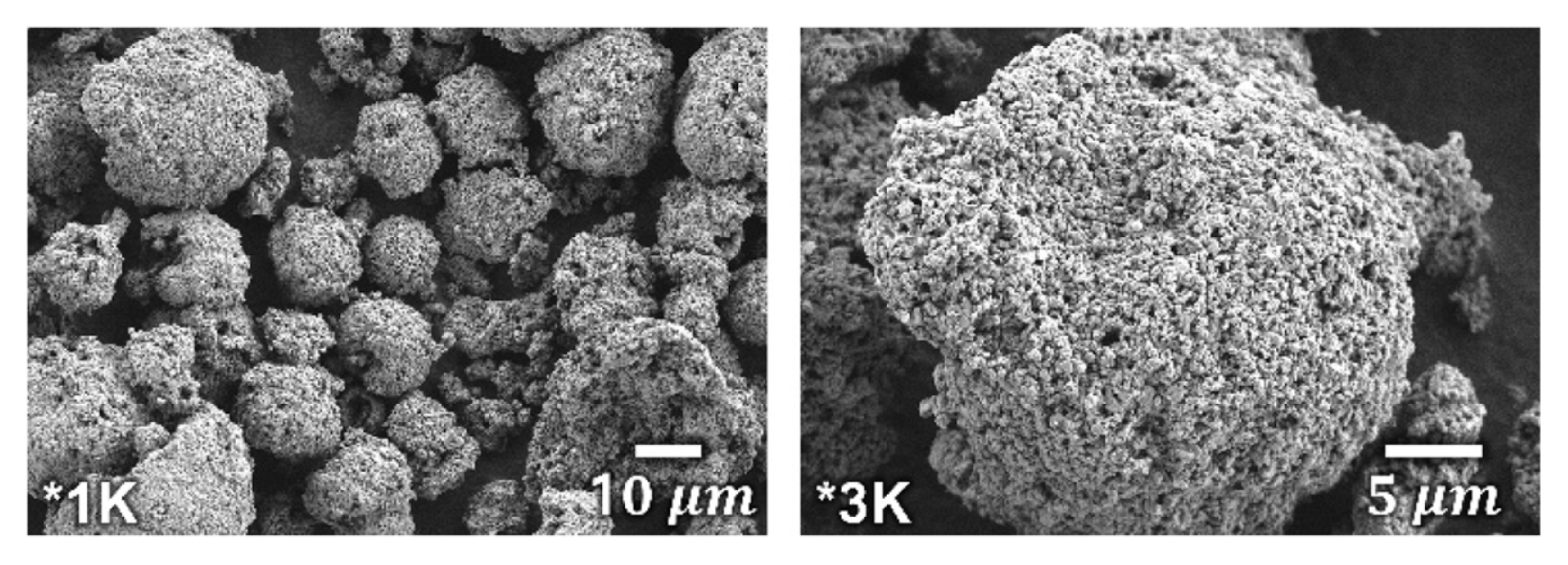
Fig. 1에서 확인할 수 있듯이 균일한 구형 형상을 나타내었으며, 평균 입경은 약 20 μm로 제어되었다. 이러한 촉매의 미세 구조는 에틸렌 가스의 원활한 확산을 유도하여 균일한 CNT 성장을 가능케 했다. 다양한 합성 온도 중 750°C 조건에서 합성된 CNT는 가장 우수한 결정성과 순도를 보였다.
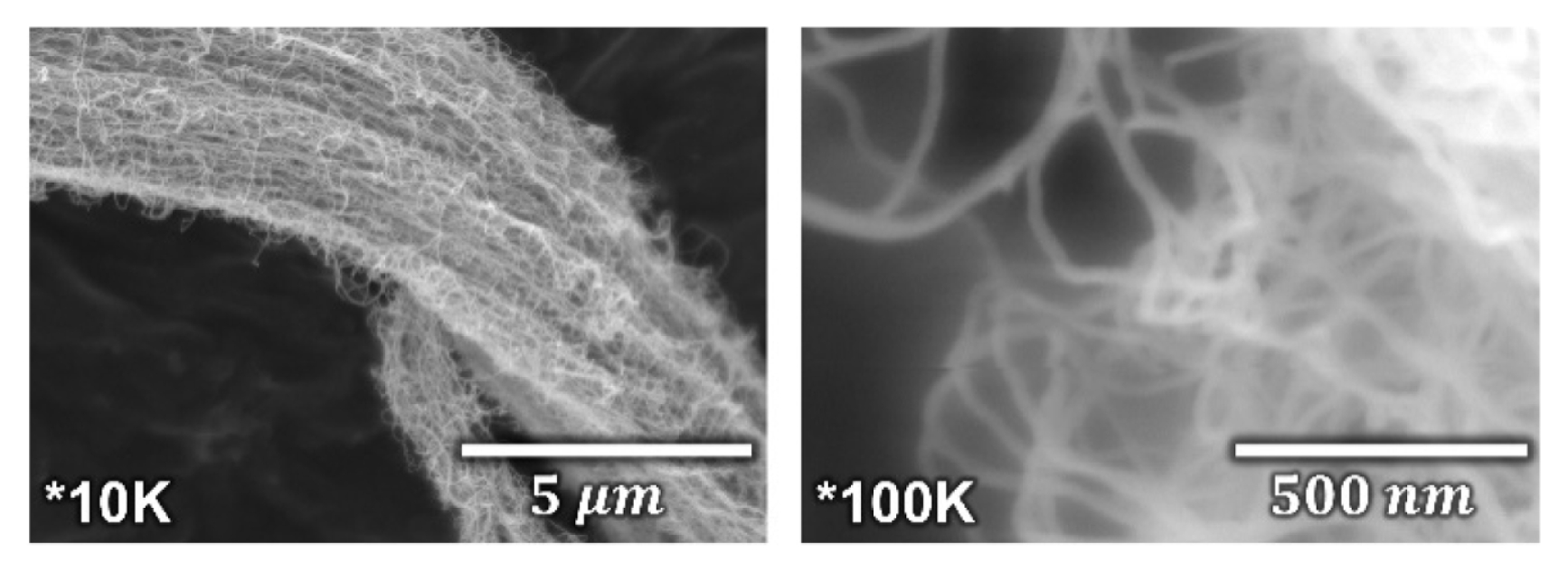
Fig. 2 SEM 이미지를 보면, 합성된 탄소나노튜브는 불순물이 거의 없는 고순도의 섬유상 구조를 보이며, 평균 직경은 10 nm, 길이는 1 μm 이상으로 높은 종횡비를 확보하였음을 확인하였다.
특히,
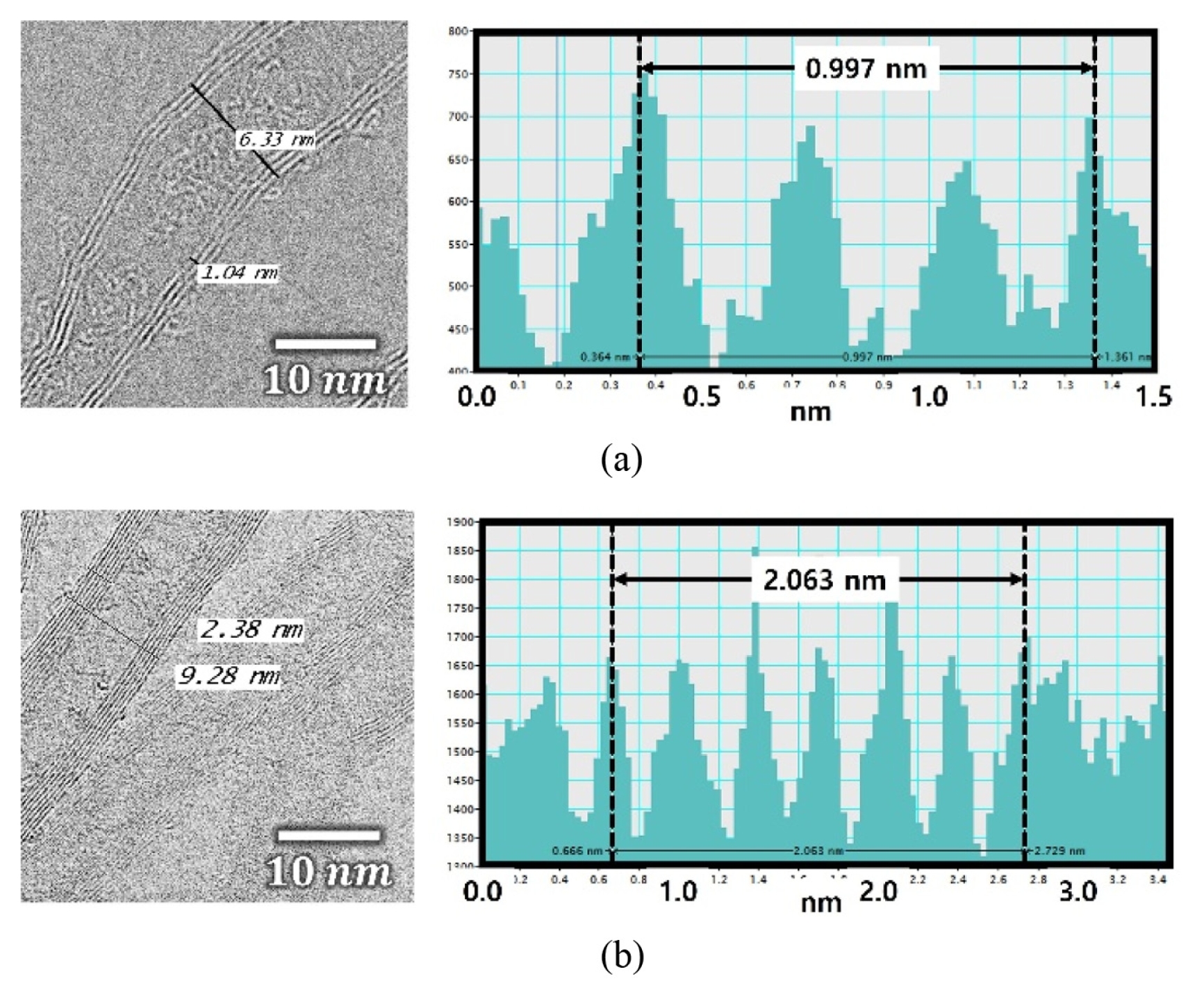
Fig. 3의 TEM 분석 결과, 합성된 탄소나노튜브의 벽개수는 의도한 대로 약 3-7개 수준으로 제어되었음이 관찰되었다. 이는 일반적인 다중벽 탄소나노튜브 대비 얇은 벽 구조를 가져 상대적으로 높은 구조적 유연성을 기대할 수 있으며, 이를 통해 활물질 입자 사이의 빈 공간을 효과적으로 가로질러 견고한 전도성 네트워크를 구축하는 데 유리할 것으로 사료된다.
TGA 분석 결과, 열분해 시작 온도는 496°C로 300-400°C 범위에서 산화되는 무정형 탄소 함량이 매우 낮음을 알수 있었다. 또한 미분 열중량 곡선의 피크가 509°C 부근에서 하나로 날카롭게 나타나는 것은 CNT의 직경이나 벽의 개수가 균일하다는 뜻이며, 약 550°C 근처에서 완만하게 보이는 숄더 부분은 일부 다중벽 탄소나노튜브의 존재 가능성을 시사한다. 최종 잔류 질량은 3.27 wt%로 이는 CNT 합성에 사용된 촉매가 산화물 형태로 남은 것으로 추정되므로 약 96.8% 수준의 고순도 CNT임이 입증되었다. BET 분석 결과 비표면적 239 m2/g, 총 기공 부피 0.87 cm3/g, 평균 기공 직경 14.6 nm로 측정되었다. 이는 리튬이온 배터리용 고성능 도전재로 사용되기에 우수한 물리적 조건이며 평균 기공 직경 또한 전해액 이온의 이동이 원활하면서도 응집을 제어할 수 있는 크기이다.
3.2 분산 안정성 및 전기적 특성 평가
전극 제조 공정에서 도전재의 균일한 분산은 전지 성능을 결정짓는 중요한 요소이다. NMP 용매 기반으로 제조된 3.0 wt% CNT 분산액은 고출력 초음파 처리 후 180일 이상이 경과하여도 침전 현상 없이 우수한 분산 안정성을 유지하였다. 이는 분산제가 CNT 간의 재응집을 효과적으로 억제했음을 시사한다.
전기적 특성 분석 결과, 합성된 CNT 분말의 체적저항률은 약 0.05 Ω·cm로 측정되었으며(
Table 1), 이는 SWCNT와 상용 MWCNT의 중간 저항값으로 CNT 생산 단가를 낮추면서도 전극 내 요구되는 우수한 전기 전도도를 확보할 수 있는 핵심 지표이다. 또한 기존 도전재로 사용하는 Carbon Black의 경우 0.1-1 Ω·cm 수준으로 본 논문에서 제시하는 CNT가 높은 전도성을 확보했음을 보여준다.
분산액 코팅 필름의 표면 저항 측정 결과 또한 우수한 전도성을 보여준다. CNT 1.0 wt% 조성 필름의 표면 저항은 36 Ω/sq로, 분체 저항과 마찬가지로 SWCNT와 상용 MWCNT의 중간 저항값을 가지는 것을 확인했다.
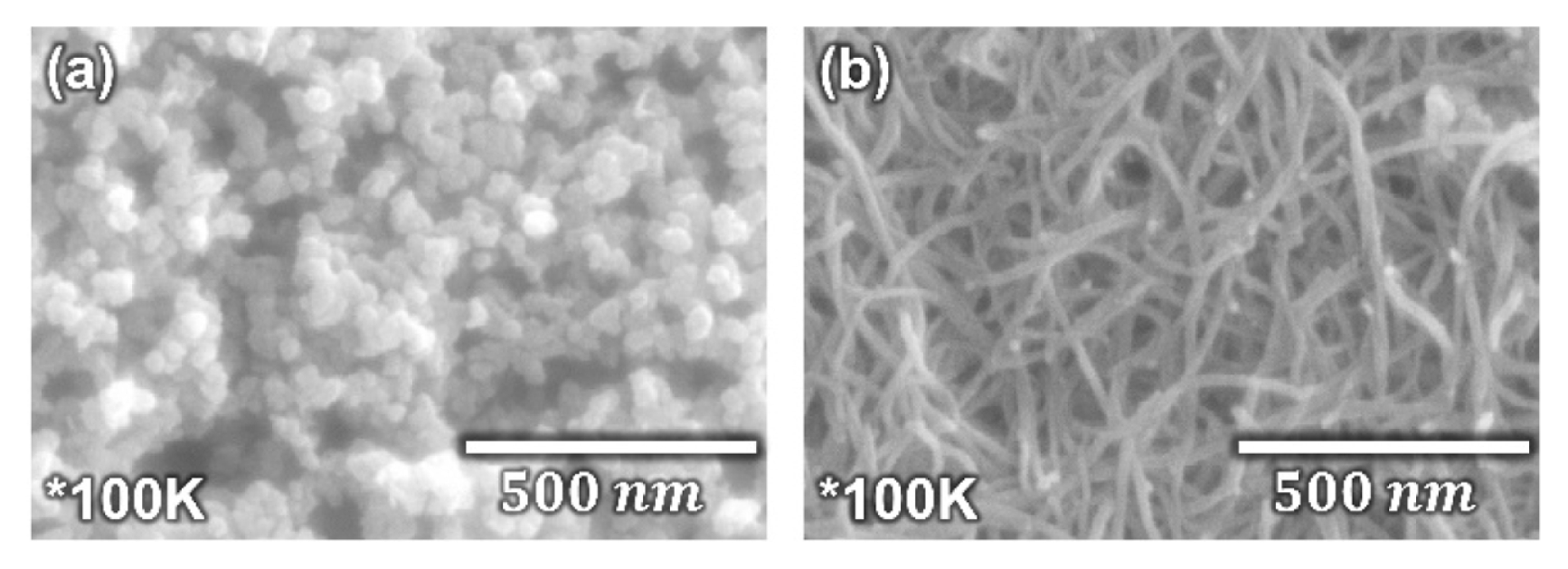
Fig. 4의 Carbon Black 분산액 코팅 표면과 CNT 분산액 코팅 표면의 SEM 이미지를 통해 분석해 보았을 때 1D 구조의 CNT가 0D 구조의 Carbon Black보다 적은 양으로도 효과적인 전도성 네트워크를 형성하여 전자의 이동 경로를 단축시켰기 때문에 우수한 전도성을 가진 것으로 해석 할 수 있다.
제조된 전극의 전기화학적 성능을 평가하기 위해 코인 셀 테스트를 진행하였다.
Table 2는 0.1 C에서의 초기 충방전 평가 결과를 나타낸다. CNT 1.0 wt% 적용 전극은 초기 방전 용량 200.8 mAh/g, 초기 쿨롱 효율(ICE) 90.6%를 나타내었으며, 이는 Reference (CB 2.2 wt%) 전극의 용량(201.9 mAh/g) 및 효율 (90.7%)과 유사한 수준이다. 이는 도전재 함량을 절반 이하로 줄였음에도 불구하고, CNT의 우수한 전도성이 활물질의 리튬이온 탈리/삽입 반응을 충분히 지원하고 있음을 의미한다.
Table 3는 율속 특성 평가 결과를 나타낸다. 저전류(0.33 C) 및 고전류(2.0 C) 조건 모두에서 초기 방전 용량(0.1 C) 조건과 비교하였을 때 CNT 적용 전극(91.7%, 88.2%)과 Reference 전극(91.8%, 88.2%)은 유사한 성능 지표를 나타냄을 확인하였다. 이는 1D 구조의 CNT가 활물질 입자 간에 장거리 전도성 네트워크를 형성하여, 충방전 시 NCM 613 단결정 입자의 부피 변화가 발생하더라도 전극 구조 붕괴를 억제하고 안정적인 전기적 접촉을 유지했기 때문으로 해석된다.
4. 결론
본 연구에서는 고전도성 MWCNT를 합성하고, 이를 NCM 613 단결정 양극재에 적용하여 도전재 함량을 최소화한 전극 제조 공정 및 전기화학적 특성을 고찰하였다. 주요 연구 결과는 다음과 같다.
(1) Fe-free Co-based 촉매와 700°C의 최적화된 열화학 기상 증착(TCVD) 공정을 통해, 직경 10 nm 및 3-7개의 벽(Wall) 구조를 갖는 고결정성 MWCNT를 합성하였다. 합성된 MWCNT는 3.27 wt%의 잔류 불순물과 약 0.05Ω·cm의 우수한 체적 저항률을 나타내어 전극 내 효율적인 전자 이동 경로 형성에 적합함을 확인하였다.
(2) 고출력 초음파 처리를 통해 재응집 없이 균일하게 분산된 MWCNT 슬러리를 제조하였으며, 이를 통해 기존 카본 블랙(2.2 wt%) 대비 도전재 함량을 1.0 wt%로 50% 이상 저감한 전극을 성공적으로 구현하였다. 1.0 wt% MWCNT 전극의 표면 저항은 36 Ω/sq로 측정되어, 우수한 전도성 네트워크가 형성됨을 입증하였다.
(3) 전기화학적 성능 평가 결과, 1.0 wt%의 MWCNT를 적용한 전극은 0.1 C 초기 충방전에서 방전 용량 200.8 mAh/g 및 쿨롱 효율 90.6%를 기록하여 기존 2.2 wt% 카본 블랙 전극(201.9 mAh/g, 90.7%)과 동등한 수준의 가역성을 확보하였다. 또한, 2.0 C의 고율 방전 조건에서도 초기 용량 대비 88.2% (177.0 mAh/g)의 우수한 방전 용량 유지율을 달성하여, 극소량의 도전재 적용에도 불구하고 1D 구조의 MWCNT 네트워크를 통해 단결정 양극재 입자 간의 전기적 접촉이 견고하게 유지됨을 입증하였다.
(4) 결론적으로, 고전도성 MWCNT의 적용은 도전재 사용량을 최소화하면서도 활물질의 충진 비율을 95.0에서 96.2 wt%로 증대시킬 수 있는 효과적인 방안임을 확인하였다.
이러한 전극 설계 기술은 향후 고에너지 밀도가 요구되는 차세대 리튬이온배터리의 전극 공정 최적화에 기여할 것으로 판단된다.
본 연구에서 제안한 고전도성 CNT 기반의 최소 함량 전극 제조 기술은 기존 전극 대비 에너지 밀도 향상뿐만 아니라, 고가의 도전재 사용량 저감을 통한 생산 비용 절감 측면에서도 큰 장점이 있다. 향후 전기차용 대면적 파우치 셀 적용을 위한 전극의 장기 내구성 확보 및 대량 슬러리 공급을 위한 공정 안정화에 대한 후속 연구를 수행하여 기술의 상용화 완성도를 높일 전망이다.
FOOTNOTES
-
ACKNOWLEDGEMENT
이 연구는 2024년도 산업통상자원부 및 산업기술기획평가원(KEIT) 연구비 지원에 의한 연구임(No. RS-2024-00459033,고전도성 도전재 함량 극최소화 전극기술 개발).
Fig. 1FE-SEM images of the fabricated co-based catalyst
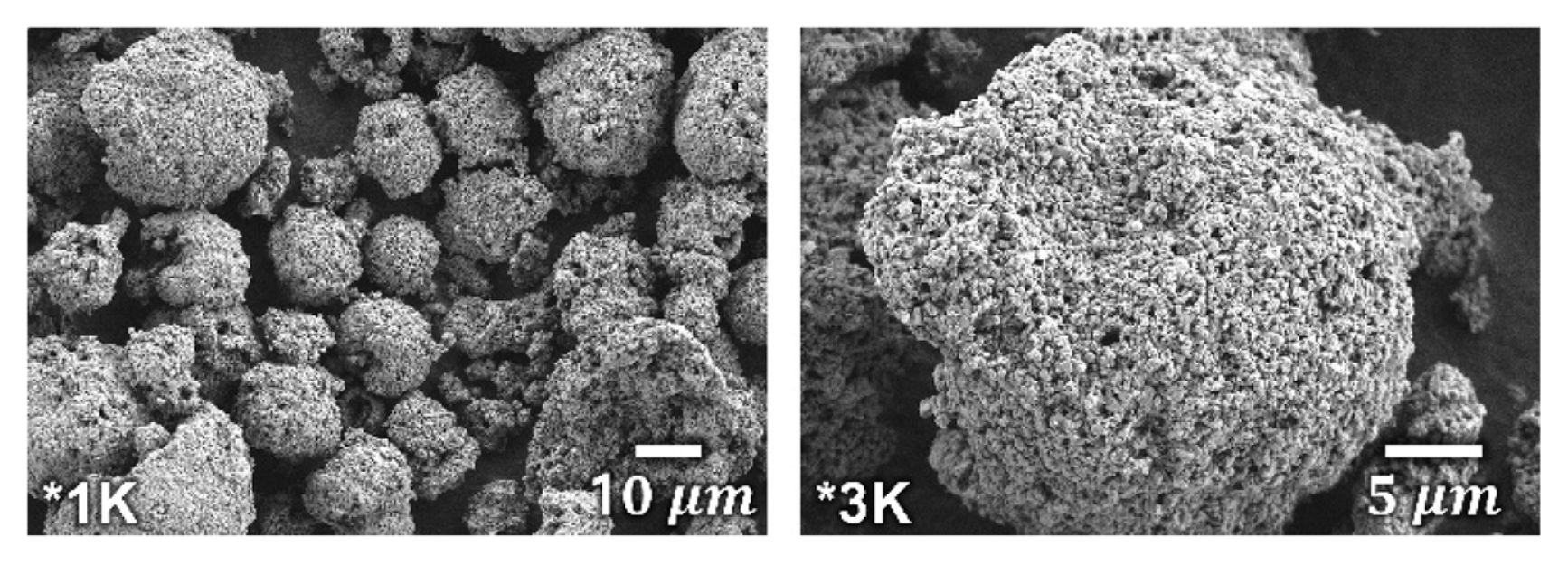
Fig. 2FE-SEM images of the synthesized CNT bundles
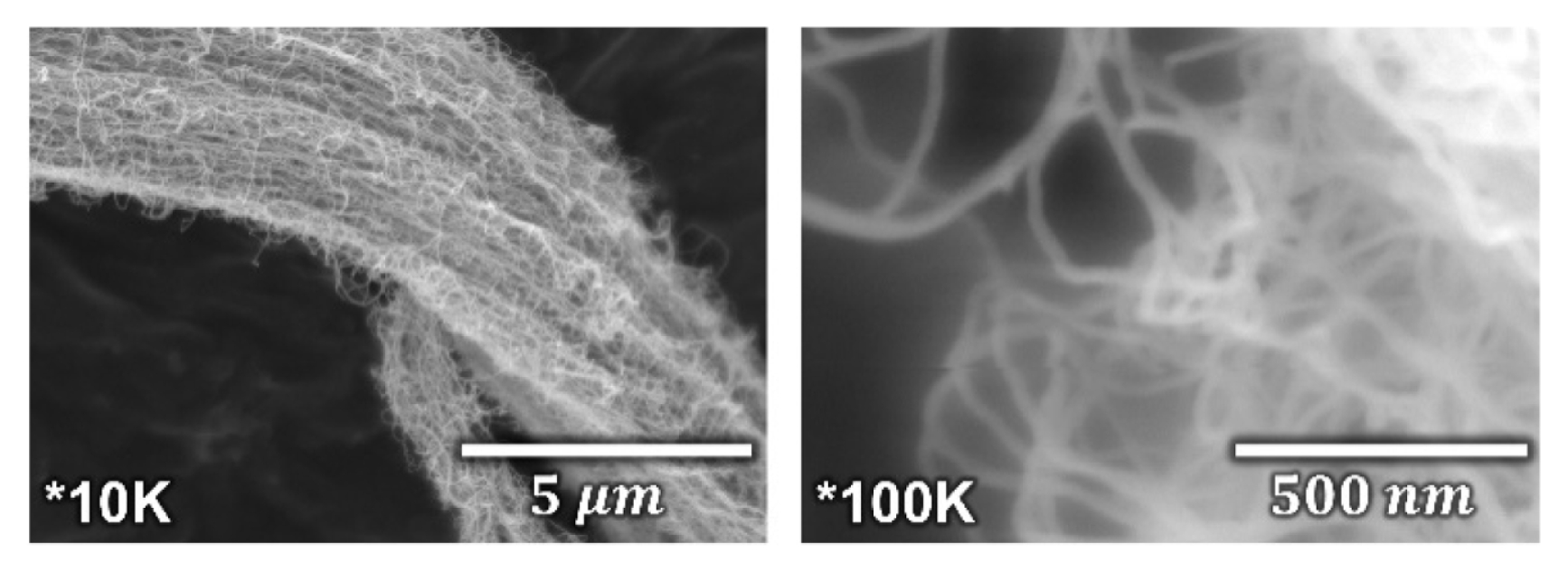
Fig. 3TEM images of a single strand of synthesized CNT. (a) Outer diameter and wall thickness of triple-walled CNT, (b) Outer diameter and wall thickness of seven-walled CNT
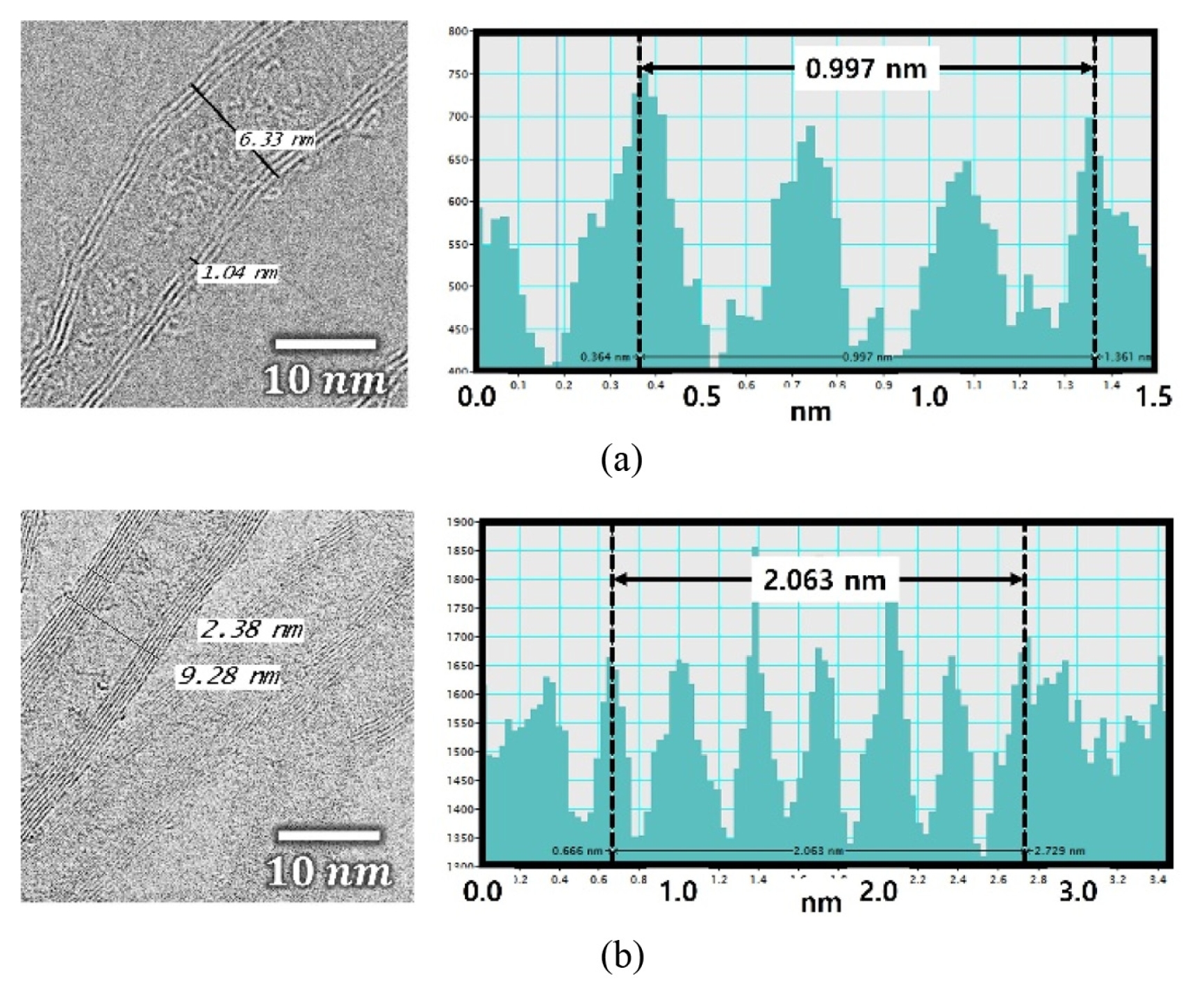
Fig. 4SEM images of (a) the carbon black dispersion-coated surface and (b) the CNT dispersion-coated surface
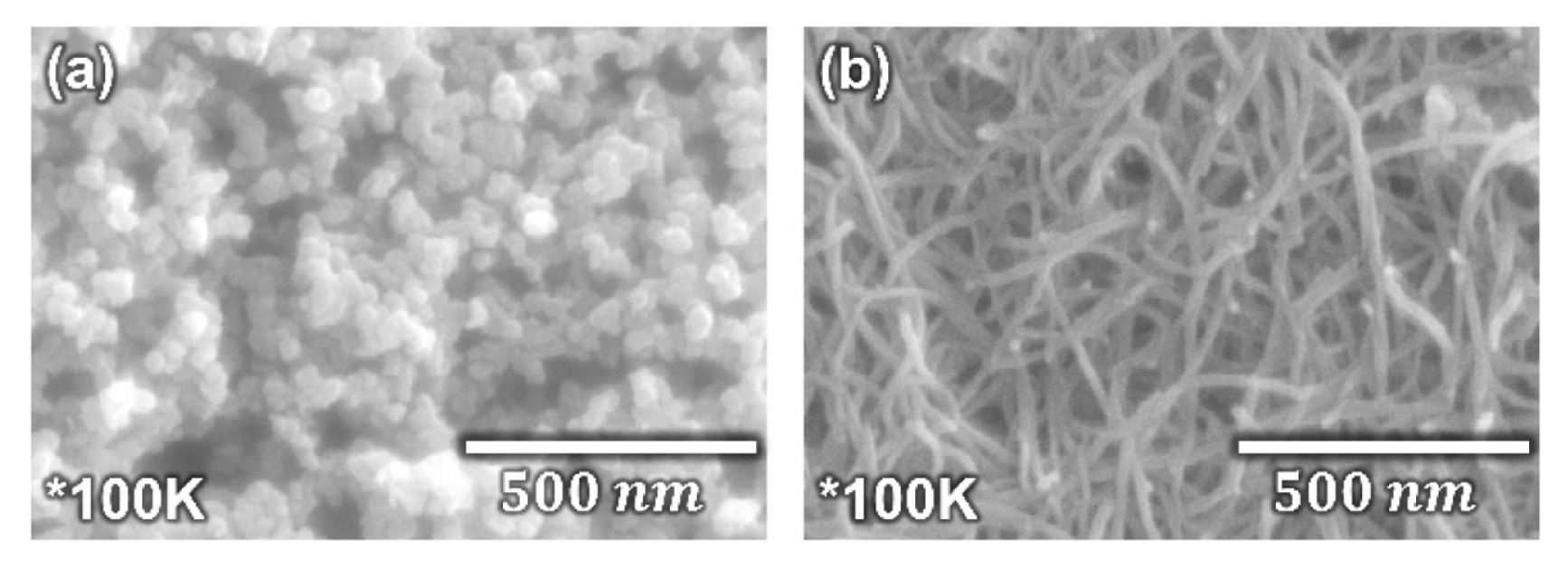
Table 1Results of powder resistance measurement of CNT
Table 1
|
Load [kgf] |
Packing density [g/cc] |
Resistance [Ω] |
Sheet resistance [Ω/sq] |
Volume resistivity [Ω·cm] |
Electrical conductivity [S/cm] |
|
101.5 |
1.189 |
0.0973 |
0.441 |
0.0524 |
19.1 |
|
500.0 |
0.711 |
0.0767 |
0.348 |
0.0247 |
40.4 |
|
998.0 |
0.562 |
0.0699 |
0.317 |
0.0178 |
56.2 |
|
1498.0 |
0.470 |
0.0663 |
0.301 |
0.0141 |
70.8 |
|
1999.5 |
0.397 |
0.0641 |
0.290 |
0.0115 |
86.8 |
Table 2Initial charge-discharge evaluation results for the control and experimental group
Table 2
|
Lot. |
0.1C/0.1C Initial cycle |
|
Charge [mAh/g] |
Discharge [mAh/g] |
Efficiency [%] |
|
Control |
222.5 |
201.9 |
90.7 |
|
Experiment |
221.7 |
200.8 |
90.6 |
Table 3Rate capability evaluation results for the control and experimental group
Table 3
|
Lot. |
Discharge 0.1C [mAh/g] |
Discharge 0.33C [mAh/g] |
Discharge 2.0C [mAh/g] |
Efficiency 0.1C [%] |
Efficiency 0.33C [%] |
|
Control |
201.9 |
194.0 |
178.1 |
88.2 |
91.8 |
|
Experiment |
200.8 |
193.0 |
177.0 |
88.2 |
91.7 |
REFERENCES
- 1. Tarascon, J. M., Armand, M., (2001), Issues and challenges facing rechargeable lithium batteries, Nature, 414(6861), 359-367.
- 2. Armand, M., Tarascon, J. M., (2008), Building better batteries, Nature, 451(7179), 652-657.
- 3. Langdon, J., Manthiram, A., (2021), A perspective on singlecrystal layered oxide cathodes for lithium-ion batteries, Energy Storage Materials, 37, 143-160.
- 4. Bi, Y., Tao, J., Wu, Y., Li, L., Xu, Y., Hu, E., Wu, B., Hu, J., Wang, C., Zhang, J.-G., (2020), Reversible planar gliding and microcracking in a single-crystalline Ni-rich cathode, Science, 370(6522), 1313-1317.
- 5. Zhao, S., Guo, Z., Yan, K., Wan, S., He, F., Sun, B., Wang, G., (2021), Towards high-energy-density lithium-ion batteries: Strategies for developing high-capacity lithium-rich cathode materials, Energy Storage Materials, 34, 716-734.
- 6. Hawley, W. B., Li, J., (2019), Electrode manufacturing for lithium-ion batteries—Analysis of current and next generation processing, Journal of Energy Storage, 25, 100862.
- 7. Li, W., Liu, X., Celio, H., Smith, P., Dolocan, A., Chi, M., Mullins, C. B., (2018), Mn versus Al in layered oxide cathodes in lithium-ion batteries: A comprehensive evaluation on longterm cyclability, Advanced Energy Materials, 8(11), 1703154.
- 8. Park, M., Zhang, X., Chung, M., Less, G. B., Sastry, A. M., (2010), A review of conduction phenomena in Li-ion batteries, Journal of Power Sources, 195(24), 7904-7929.
- 9. Iijima, S., (1991), Helical microtubules of graphitic carbon, Nature, 354(6348), 56-58.
- 10. de Volder, M. F., Tawfick, S. H., Baughman, R. H., Hart, A. J., (2013), Carbon nanotubes: present and future commercial applications, Science, 339(6119), 535-539.
- 11. Sheem, K., Lee, Y. H., Lim, H. S., (2006), High-density positive electrodes containing carbon nanotubes for use in Li-ion cells, Journal of Power Sources, 158(2), 1425-1430.
- 12. Landi, B. J., Ganter, M. J., Cress, C. D., DiLeo, R. A., Raffaelle, R. P., (2009), Carbon nanotubes for lithium ion batteries, Energy Environmental Science, 2(6), 638-654.
- 13. Welna, D. T., Qu, L., Taylor, B. E., Dai, L., Durstock, M. F., (2011), Vertically aligned carbon nanotube electrodes for lithiumion batteries, Journal of Power Sources, 196(3), 1455-1460.
- 14. Thess, A., Lee, R., Nikolaev, P., Dai, H., Petit, P., Robert, J., Xu, C., Lee, Y. H., Kim, S. G., Rinzler, A. G., (1996), Crystalline ropes of metallic carbon nanotubes, Science, 273(5274), 483-487.
- 15. Ausman, K. D., Piner, R., Lourie, O., Ruoff, R. S., Korobov, M., (2000), Organic solvent dispersions of single-walled carbon nanotubes, Journal of Physical Chemistry B, 104(38), 8911-8915.
- 16. Tong, Z., Lv, C., Bai, G. D., Yin, Z. W., Zhou, Y., Li, J. T., (2025), A review on applications and challenges of carbon nanotubes in lithium-ion battery, Carbon Energy, 7(2), e643.
- 17. Tsai, S. H., Chen, Y. R., Tsou, Y. L., Chang, T. L., Lai, H. Z., Lee, C. Y., (2020), Applications of long-length carbon nano-tube (L-CNT) as conductive materials in high energy density pouch type lithium ion batteries, Polymers, 12(7), 1471.
- 18. Sun, H., Mei, L., Liang, J., Zhao, Z., Lee, C., Fei, H., Ding, M., Lau, J., Li, M., Wang, C., (2017), Three-dimensional holeygraphene/ niobia composite architectures for ultrahigh-rate energy storage, Science, 356(6338), 599-604.
- 19. Choi, J., Lee, C., Park, S., Embleton, T. J., Ko, K., Jo, M., Saqib, K. S., Yun, J., Jo, M., Son, Y., Oh, P., (2022), Analysis of electrochemical performance with dispersion degree of CNTs in electrode according to ultrasonication process and slurry viscosity for lithium-ion battery, Nanomaterials, 12(23), 4271.
- 20. ASTM E1131-08. 2014;Standard test method for compositional analysis by thermogravimetry.
- 21. ASTM D6556-19. 2020;Standard test method for carbon black—total and external surface area by nitrogen adsorption.
- 22. ASTM D991-89. 2020;Standard test method for rubber property—volume resistivity of electrically conductive and antistatic products.
- 23. Marks, T., Trussler, S., Smith, A., Xiong, D., Dahn, J., (2011), A guide to li-ion coin-cell electrode making for academic researchers, Journal of The Electrochemical Society, 158(1), A51-A57.
Biography
- Kihwan Kim
Senior Researcher in the Engineering Solution Research Group, Research Institute of Industrial Science & Technology. His research interest is smart manufacturing technology.
- Sang In Lee
Senior Researcher in the R&D team, TwoDM Co., Ltd. His research interest is production technology of conductive material such as carbon nanotube and graphene.
- Heungrak Kim
Research Fellow in the Engineering Solution Research Group, Research Institute of Industrial Science & Technology. His research interest is chemical vapor deposition.
- Young Deog Kim
Professor in the Department of Graduate Institute of Ferrous & Eco Materials Technology, POSTECH. His research interest is eco-friendly energy material.