ABSTRACT
This study quantitatively investigates the deviation between the ideal and effective amplification ratios of a bridge-type displacement amplification mechanism used in ultra-precision positioning systems. It proposes region-specific optimal design strategies to mitigate this deviation. A Leave-One-Out sensitivity analysis reveals that the dominant factor influencing amplification ratio deviation shifts at an ideal amplification ratio of approximately 10. In the high-amplification region (R > 10), displacement loss due to bending of the input link is identified as the primary cause of deviation. Reinforcing the input link's thickness and incorporating a pocket structure reduces the deviation to within 12.4% while minimizing resonance frequency degradation. Conversely, in the low-amplification region (R < 7), the main issue is dynamic performance deterioration caused by oversized intermediate links. Implementing a hexagonal mass-reduction design enhances the first resonance frequency by up to 28% without compromising the amplification ratio. These findings establish differentiated design guidelines based on the target amplification ratio, enabling simultaneous improvements in precision and dynamic performance for bridge-type displacement amplification mechanisms in positioning systems.
-
KEYWORDS: Flexure, Compliant mechanism, Bridge-type displacement amplification mechanism, Amplification ratio, Displacement loss, Resonance frequency
-
KEYWORDS: 유연체, 유연 기구, 브리지형 변위증폭기구, 증폭비, 변위 손실, 고유 진동수
1. 서론
초정밀 위치결정 시스템의 구동 요소로 널리 사용되고 있는 압전구동기는 빠른 응답속도와 고해상도의 장점과 함께 짧은 행정거리라는 한계를 갖고 있다. 압전구동기는 인가되는 전기포텐셜에 따라 탄성변형으로 변위 및 힘이 발생하는 압전 물질을 사용하여 수 kHz 이상의 높은 고유진동수와 이론적으로 무한히 미세한 변형 해상도를 구현한다[
1]. 이러한 장점은 정밀 제어에 유리하여 원자힘 현미경(AFM), 반도체 리소그래피, 정밀 광학시스템 등 다양한 분야의 초정밀 위치결정 시스템에서의 활용을 촉진하였다[
2]. 하지만 행정거리가 압전구동기 길이의 0.1-0.15% 수준인 최대 수십 마이크로미터에 불과하여[
3] 대부분의 활용에 있어서 변위증폭기구가 반드시 필요하다[
4,
5].
무한히 미세한 압전구동기의 변형 해상도를 활용하기 위해서는 변위증폭기구 또한 조립에 의한 마찰이나 백래시가 없는 일체형 유연체 구조를 사용하는 것이 바람직하다[
6]. 유연 변위증폭기구의 대표적인 형태로는 레버(Lever), 스콧-러셀(Scott-Russell), 마름모(Rhombus), 브리지(Bridge) 등이 있다. 레버형은 구조가 단순하고 다단 구성으로 큰 증폭비 구현이 가능하지만, 고증폭비를 위해 단의 수 또는 레버 암의 길이를 증가시킬수록 전체 기구가 대형화하고 횡방향 기생 변위가 발생하는 한계가 있다[
7,
8]. 스콧-러셀 타입은 삼각형 링크 구조를 이용한 증폭 원리에 기반하여 우수한 직진 운동성을 제공하지만, 제작 오차 및 구속 조건에 의한 선형성 저하와 증폭비 변동이 발생하기 쉽다[
9,
10]. 마름모형은 콤팩트한 구조에서 큰 증폭비를 제공한다는 장점[
11]이 있으나, 기구 전체가 판스프링 구조에 기반하여 낮은 횡방향 강성으로 인한 기생 운동이 발생하기 쉽다[
12]. 브리지형 변위증폭기구(BDAM, Bridge-type Displacement Amplification Mechanism)는 큰 증폭비를 콤팩트한 구조에서 구현할 수 있으며, 대칭 구조로 인해 구조적 안정성이 우수하다는 장점을 가진다[
13].
BDAM과 관련한 종전 연구들에서 증폭비가 이상적 설계치와 다른 점이 가장 큰 문제점으로 지적되었다. 증폭비는 압전구 동기로부터 BDAM에 입력되는 변위와 BDAM의 최종 출력 변위의 비율을 뜻하며, BDAM을 구성하는 링크와 유연힌지의 기하학적 치수에 따라 결정되는 값이 이상적 설계치다. 그러나 Ling 등[
14]은 다단 유연 증폭 기구의 실험에서 변위가 이상적 설계치 대비 10% 수준까지 감소하는 사례를 문제로 제기하며, 이상적 설계치가 실제 성능을 과대평가할 수 있음을 강조하였다. Ma 등[
13]은 BDAM의 유한요소해석 결과에서 증폭비가 감소하는 현상을 보였으며, 이에 대한 원인으로 많은 연구 사례들이 변위 증폭 과정에서 링크 및 유연힌지의 의도치 않은 탄성 변형을 지적하였다. 특히 입력단에서의 링크 탄성 변형으로 입력 변위의 일부가 출력 변위로 전달되지 못하고 소실되는 입력 변위 손실은 실효 증폭비 저하를 유발하는 대표적 원인으로 제시되어 왔다. Qi 등[
15]은 강체링크 기반 모델이 실제 증폭비 대비 오차가 큰 것을 지적하며, 탄성 빔 이론을 적용하여 링크의 굽힘과 인장을 고려한 개선된 증폭비 모델을 제안하였다. Li 등[
16]은 기존 모델들이 간과했던 입력 변위 손실 개념을 명시적으로 도입한 엄밀한 증폭비 모델을 제시하고, 입력 링크 길이 및 두께 등 설계 변수 변화에 따른 증폭비 감소 현상을 분석하였다. 최근 Lim 등[
17]은 기존 강체링크 기반 유연기구 설계가 변위 및 동특성 예측에 오차를 유발할 수 있음을 지적하고, 강체로 가정되던 링크를 다수의 강체와 힌지로 분할하여 링크 자체의 탄성변형을 고려하는 방법을 제안하여 유한요소해석 결과와 가장 근접한 증폭비를 예측함을 보였다.
이처럼 선행연구들은 증폭비 편차의 주요 원인이 변위증폭기구 구성 요소의 탄성 변형, 특히 입력 링크의 변위 손실에 있음을 제시하고 실효 증폭비를 예측할 수 있는 모델을 제시해 왔다. 그러나 이러한 선행연구들은 주로 실효 증폭비 예측 모델의 정확도 향상에 초점을 두었으며, 증폭비 영역에 따라 링크 및 유연힌지의 각 탄성변형 요인이 증폭비 편차에 기여하는 정도가 어떻게 달라지는지는 충분히 분석하지 않았다. 또한 고증폭비 영역에서만 분석하였다는 한계를 가진다.
증폭비 감소의 원인 분석에서 나아가 변위 손실을 저감하고자 하는 연구 또한 시도되었다. Chen 등[
18]은 BDAM에서 링크의 탄성변형이 변위 손실을 유발할 수 있음을 지적하였고, 유한요소해석 결과에서 강체로 가정된 링크에 유의미한 변형이 발생함을 보였다. 변위 손실 저감을 위해 링크 두께 증가 혹은 더 높은 탄성계수 소재의 보강 빔을 링크 외부에 추가해 링크 변형을 억제하는 방안을 제시하였다. 이러한 접근법은 변위 손실 저감 설계를 위한 유효한 방법 중 하나로서 의미를 보였으나, 이종 재료의 보강 요소로 인해 일체형 유연체 구성이 불가하고, 링크의 부피와 질량 증가로 인한 부작용에 대한 논의가 제공되지 않았다는 한계를 보인다.
본 연구에서는 종전 연구 결과에서 더 나아가 BDAM의 증폭비에 대해 이상적 설계치와 실효치 사이에 편차가 발생하는 원인을 다양한 증폭비 범위 및 탄성 변형 요인을 대상으로 폭넓게 분석하고 그 해결책을 제시하였다. 링크 및 유연힌지의 탄성 변형을 비롯하여 입력 변위 손실을 포함하는 유한요소해석 모델과 수학적 모델에 기반하여 증폭비에 따른 설계치와 실효치 편차 발생의 경향과 주요 원인들을 정량적 기여도에 기반하여 분석하고, 그 결과를 처음으로 제시하였다. 또한 변위 손실을 저감하면서도 동적 강성 저감을 최소화하는 BDAM의 링크 설계 방법을 처음으로 제시하고 검증하여, 기존의 BDAM 대비 변위증폭기구로서 성능 및 활용도를 높일 수 있는 결과를 도출하였다.
2. 본론
2.1 BDAM
BDAM의 가장 일반적인 구조는
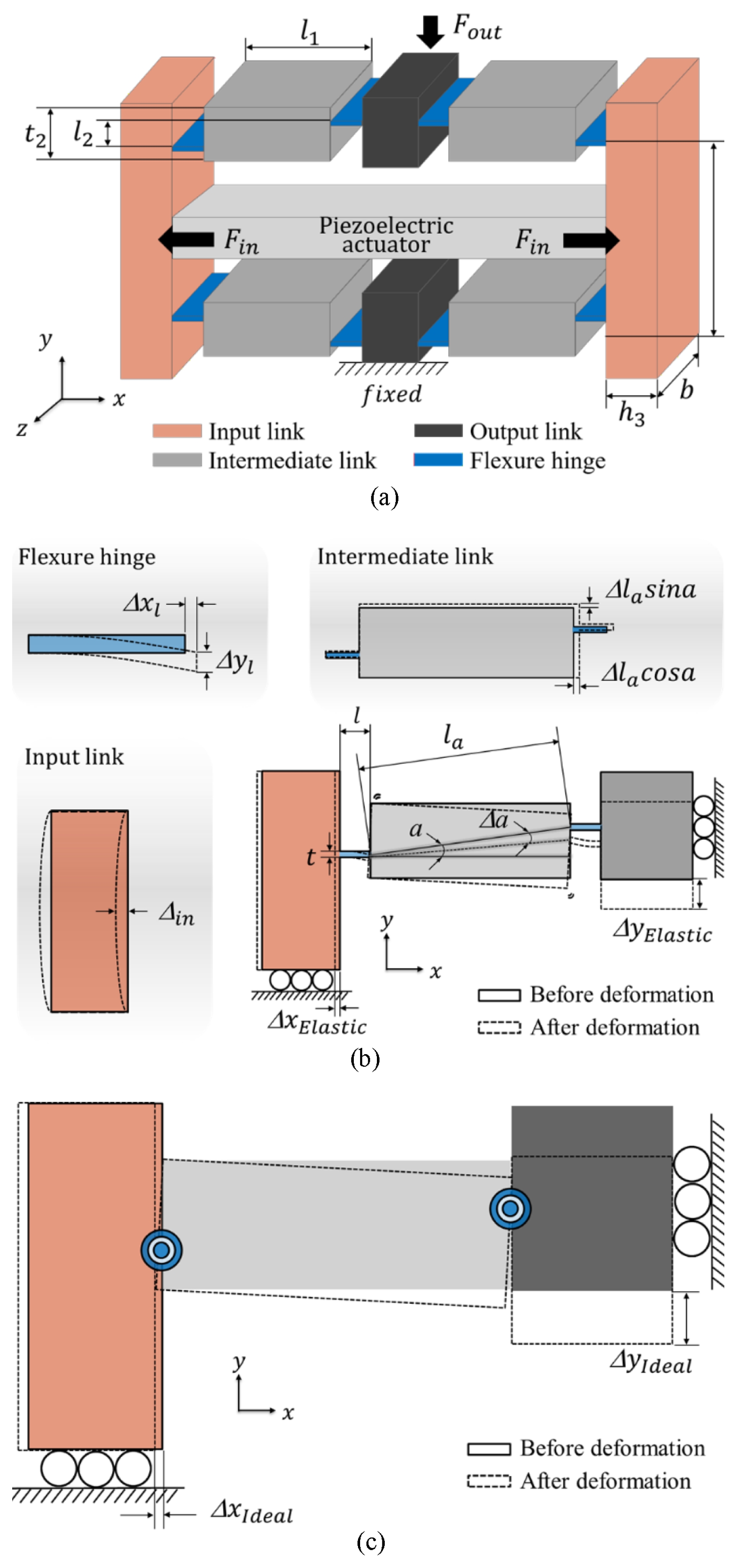
Fig. 1(a)와 같이 상하, 좌우 대칭이며 입력링크, 중간링크, 출력링크 및 이들을 연결하는 유연힌지로 구성된다. 압전구동기에 인가하는 전압에 따라 입력링크에 x 방향으로 입력 변위가 발생하면 힌지들과 중간링크를 거쳐 출력링크의 y 방향 출력 변위로 나타난다. 이때, x에서 y로의 변위 방향 변환과 변위의 크기 증폭은 입력링크와 출력링크 사이에 비스듬히 연결된 중간링크가 회전하기 때문에 발생하며, 링크들 사이에 위치한 유연힌지의 탄성 변형에 의해 중간 링크가 회전하는 원리를
Fig. 1(b)의 1/4 모델에서 확인할 수 있다. 모든 링크와 유연힌지에서 변위와 변형이 대칭적으로 발생해 두 출력링크 중 하나를
Fig. 1(a)와 같이 고정시키면 남은 출력 링크의 y 방향 변위가 두 배로 발생한다. 유연힌지는 형상에 따라 판스프링(Leaf Spring), V형(V Shape), 원형(Circular Shape) 등이 있으며, 본 연구에서는 원형 대비 굽힘 유연성이 크고 응력 집중이 낮아 더 큰 회전 허용 범위를 갖는 판스프링 유연힌지[
19]를 적용하였다. BDAM의 주요 기하학적 설계변수는
Figs. 1(a) 및
1(b),
Table 1에 나타내었으며, 적용 소재인 AL7075-T6의 물성치 정보는
Table 2에 나타내었다.
l1은 유연힌지 간 수평 거리,
l2는 유연힌지 간 수직 거리,
t2는 중간링크 두께,
h3는 입력링크 두께,
l3는 입력링크 길이,
b는 BDAM의 폭,
l은 유연힌지 길이,
t는 유연힌지 두께,
la는 유연힌지 간 거리,
a는 유연힌지 간 각도를 각각 나타낸다.
2.2.1 수학적 모델
변위 증폭을 위한 BDAM의 가장 이상적인 거동은 모든 링크가 변형이 없는 강체와 같이 운동하고 모든 유연힌지가 탄성변형과 마찰 없이 순수 회전 운동만 안내하는 조인트로 작용할 때 나타난다. 즉, 링크와 유연힌지로 구성된 탄성체(
Fig. 1(b))를 강체 링크와 회전힌지로 구성된 링크기구(Linkage) (
Fig. 1(c))로 변환하여 이상적 거동을 나타낼 수 있으며, 이때의 기구학적 증폭비가 이상적 증폭비
RIdeal가 된다. 이 값은 중간링크 양단에 위치한 두 힌지 사이의 상대위치를 정의하는 값인 각도
a에 의해 결정되며
식(1)과 같이 설계변수
l1과
l2로도 표현될 수 있다. ∆
xIdeal과 ∆
yIdeal은 각각 이상적인 입력 변위와 출력 변위를 나타내고, ∆
a는 중간링크가 회전하는 각도를 의미한다. 대부분의 BDAM 설계 단계에서는 이상적 증폭비를 사용한다.
반면 링크와 유연힌지의 탄성 변형을 고려하여 실제에 더 가까운 탄성체 모델을 구성하면 실효치에 더 근접하는 탄성체 증폭비
RElastic을
식(2)와 같이 구할 수 있다[
16]. 입력 변위인 ∆
xElastic 은 중간링크의 회전에 따른 기구학적 변위 성분 외에
Fig. 1(b)에 나타낸 링크와 유연힌지의 탄성 변형에 의한 기여 성분인 유연힌지의 x 방향 인장 변형(∆
xl), 중간링크의 x 방향 인장 변형(
lasin
a∆
a'), 입력링크의 x 방향 굽힘 변형(∆
in)이 포함된다. 출력 변위인 ∆
yElastic 역시 중간링크 회전에 따른 기구학적 변위 성분 외에 유연힌지의 y 방향 굽힘 변형(∆
yl), 중간링크의 y 방향 인장 변형(
lacos
a∆
a')이 고려되었다. 링크와 유연힌지의 탄성 변형은 인장압축력 및 굽힘 모멘트에 대한 변형으로 오일러-베르누이(Euler-Bernoulli) 빔 이론을 적용하여 도출하였으며 상세한 내용은
Appendix A1을 참조할 수 있다. ∆
a'은 링크와 유연힌지의 탄성 변형으로 인해 감소한 중간링크의 회전 각도이다.
각 탄성변형 요인별로 증폭비 편차에 대한 정량적 기여도 분석을 위해
식(2)에서 각 요인에 해당하는 특정 항을 하나씩 제외했을 때의 증폭비 변화량을 산출하고 그 상대 크기를 비교하는 LOO (Leave-one-out) 민감도 분석 기법을 활용하였다.
식(3)-
식(5)를 사용하여 특정 요인의 영향을 제외한 증폭비를 구하고
식(6)으로 증폭비 편차,
식(7)로 특정 요인의 증폭비 변화에 대한 기여도를 산출한다. 기여도 값이 음이면 증폭비의 감소, 양이 면 증폭비의 증가를 의미한다. 수식에서
i와
j는 입력링크의 x 방향 변위와 출력 링크의 y 방향 변위를 유발하는 각각의 탄성변형 요인을 나타낸다.
2.2.2 유한요소해석 모델
수학적 모델보다 높은 정확도의 BDAM 거동 모델을 확보하기 위해 유한요소해석(FEA, Finite Element Analysis)을 이용하였다(Ansys Workbench 2024 R2, US).
Table 1의 치수를 적용한 기하학적 모델을 이용하여 증폭비를 도출할 수 있는 구조변형 해석 모델과 더불어 동적 강성을 확인할 수 있는 구조모드 해석 모델을 수립하였다. 구조변형 해석 모델에서는
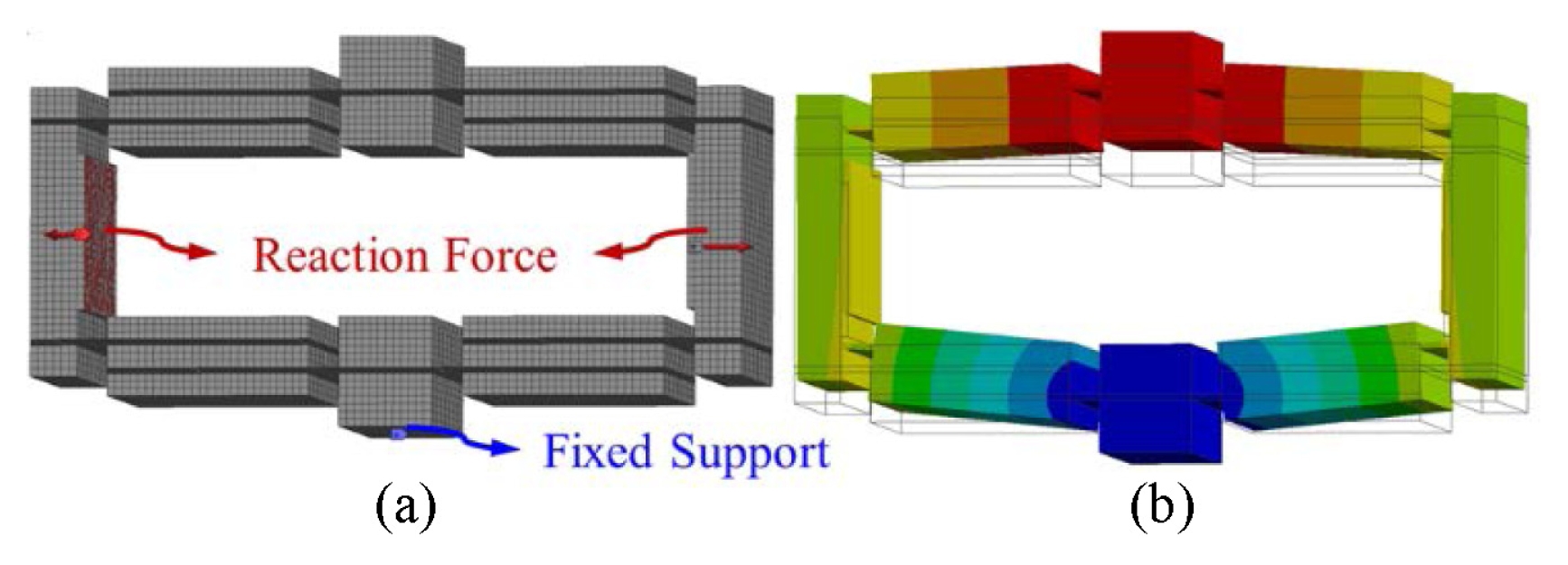
Fig. 2(a)와 같이 출력링크 중 하나를 고정 구속하고, 10 μm의 입력 변위가 발생하는 등가 반력을 산출하여 압전구동기가 입력 링크에 인가하는 힘을 모사하였다. 해석 결과로는 주요 링크 및 유연힌지의 변형을 확인하고 출력링크의 출력 변위를 측정해 실효치에 가장 가까운 해석 증폭비
RFEA를 도출한다. 이상적 증폭비와 해석 증폭비의 편차 ∆
RFEA와 이상적 증폭비 대비 편차의 크기를 나타내는 편차율
TFEA은 각각
식(8) 및
식(9)와 같이 정의한다. 구조모드 해석에서는 구조변형 해석과 동일한 경계조건에서 구조모드 형상과 고유진동수를 도출한다. 본 연구에서 수행한 구조모드 해석은 압전구동기와 부하 시스템을 포함한 전체 위치결정 시스템의 절대 고유진동수를 예측하기 위한 것이 아니라, 동일한 경계조건에서 BDAM의 형상 변화가 구조적 동특성에 미치는 상대적 영향을 비교하기 위한 것이다. 실제 시스템의 고유진동수는 압전구동기의 강성 및 질량, 예압 및 체결 조건, 구동 대상 시스템의 질량과 강성, 그리고 전체 조립 구조의 경계조건에 따라 달라질 수 있다. 따라서 본 연구에서 제시하는 고유진동수는 BDAM 단독 구조의 형상별 동적 강성 및 관성 특성을 비교하기 위한 구조적 공진주파수로 해석되었다.
2.3.1 증폭비에 따른 편차 발생
이상적인 링크기구와 달리 링크와 유연힌지의 탄성을 고려하면 의도치 않은 변형으로 변위 손실이 발생하므로 탄성체 증폭비가 이상적 증폭비보다 감소할 것이 직관적으로 예상되었으나, 이와 달리 유한요소해석에 기반한 정량적 분석에 따르면 BDAM의 이상적 증폭비에 따라 증폭비 편차가 상이하게 나타난다.
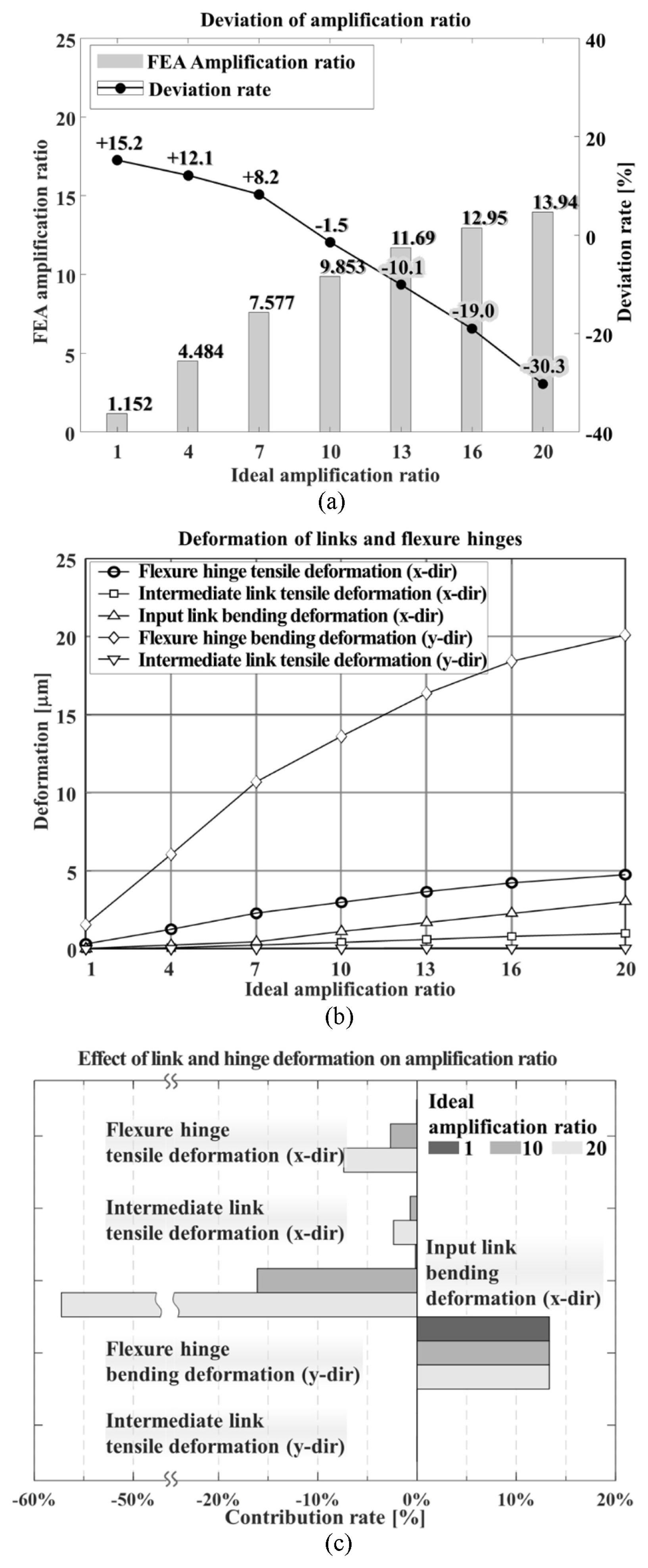
Fig. 3(a)에서 확인할 수 있는 바와 같이 증폭비 약 10에서 편차가 가장 작게 발생하며, 증폭비가 증가 또는 감소함에 따라 편차의 크기와 편차율 또한 크게 증가한다. 일례로 이상적 증폭비가 20일 때 해석 증폭비는 13.94에 불과하다. 주목할 점은 증폭비가 큰 경우에는 이상적 증폭비보다 해석 증폭비가 작은 반면, 증폭비가 작은 경우에는 이상적 증폭비보다 해석 증폭비가 크다는 점이다. 이러한 경향은 링크 또는 유연힌지의 탄성 변형이 증폭비에 따라 다르게 발생하기 때문인 것으로 추측할 수 있다.
그러나 유한요소해석으로 구한 증폭비에 따른 링크와 유연힌지의 탄성 변형을 살펴보면 증폭비 편차의 변화 원인이 확연히 드러나지 않는다. 변위 증폭을 위한 BDAM의 거동 시에 링크와 유연힌지의 변형을 나타낸
Fig. 3(b)에 따르면, 다른 요인들에 비해 유연힌지의 y 방향 굽힘 변형, 유연힌지의 x 방향 인장 변형, 그리고 입력링크의 x 방향 굽힘 변형의 크기가 상대적으로 큰 것을 확인할 수 있다. 이상적 증폭비가 증가함에 따라 입력링크의 굽힘 변형과 유연힌지의 인장 변형은 크기가 증가하며 증폭비 감소(변위 손실)를 유발한다.
식(2)를 통해 살펴보면 압전구동기를 이용하여 동일한 입력 변위를 인가하더라도, 즉
식 (1)과
식(2)에서 분모의 크기가 동일하더라도,
식(2)에서는 입력 링크의 굽힘 변형의 기여분인 ∆
in 또는 유연힌지의 인장 방향 기여분인 ∆
xl 때문에 중간링크의 회전 각도가 감소하여 ∆
a'이 ∆
a보다 작은 값을 갖는다. 이는
식(2)의 분자에서 중간링크의 회전에 의한 기구학적 출력 변위 성분을 감소시켜 결과적으로 증폭비를 감소시킨다. 반면 유연힌지의 굽힘 변형은 이상적 증폭비와 함께 증가하며 증폭비 증가에 기여한다. 즉,
식(2)에서 분자의 크기를 증가시켜 증폭비 증가로 이어진다. 증폭비에 대한 증가 요인인 유연힌지의 굽힘 변형과 감소 요인인 입력링크의 굽힘 변형과 유연힌지의 인장 변형이 증폭비에 따라 모두 증가하므로, 이 분석만으로는 증폭비에 따라 서로 상반되어 나타나는 증폭비 편차를 설명하지 못한다. 여기서 유연힌지의 굽힘 변형은 중간링크의 회전을 가능하게 하며, BDAM의 변위 증폭 동작을 구현하기 위한 필수 자유도이다. 이상적 강체 링크 모델에서는 유연힌지가 순수 회전 조인트로 작용한다고 가정하며, 이 회전 자유도에 의해 중간링크가 회전하고 이상적 출력 변위 및 이상적 증폭비가 결정된다. 반면 실제 유연힌지에서는 순수 회전 운동뿐만 아니라, 출력변위 방향의 추가적인 굽힘 변위 성분이 함께 발생한다. 이 성분은 이상적 기구학 모델에서 예측되는 출력 변위에 더해져 실효 출력 변위를 증가시키므로, 특정 증폭비 영역에서는 실효 증폭비가 이상적 증폭비보다 크게 나타나는 원인으로 작용한다.
2.3.2 증폭비 편차의 주요 원인
증폭비에 따라 상이하게 나타나는 편차의 원인을 규명하기 위해서 각 요인에 따른 변형의 절대량이 아닌, 각 요인의 증폭비 편차에 대한 기여도를 수학적 모델에 기반하여 정량적으로 평가하였다. 1, 10, 20 세 개의 이상적 증폭비 조건에 대해 분석한 결과 변형의 절대량과는 달리 입력링크 굽힘 변형과 유연힌지 굽힘 변형의 기여도가 크게 나타나는 것을
Fig. 3(c)와 같이 확인할 수 있었다. 주목할 점은 이상적 증폭비 증가에 따라 입력링크 굽힘 변형의 절대값과 탄성체 증폭비 감소에 대한 기여도가 같이 증가하는 반면, 유연힌지 굽힘 변형의 탄성체 증폭비 증가에 대한 기여도는 증폭비와 무관하게 일정한 수준을 가진다는 점이다. 따라서 이상적 증폭비가 작은 영역에서는 유연힌지의 굽힘 변형이 입력링크의 굽힘 변형보다 영향도가 더 크게 나타나며, 그 결과 탄성체 증폭비가 이상적 증폭비보다 큰 값을 가진다. 예를 들어, 이상적 증폭비가 1일 때 입력링크 굽힘 변형의 증폭비 편차에 대한 기여도는 0.167%인 반면, 유연힌지 굽힘 변위의 기여도는 13.3%로 나타난다. 반면 이상적 증폭비가 20일 때 입력링크 굽힘 변형의 기여도는 57.3%까지 증가하지만, 유연힌지 굽힘 변위의 기여도는 13.3%로 동일하게 유지되며 변위손실로 인한 증폭비 감소가 크게 발생한다. 수학적 모델에 기반한 이 분석 결과는 유한요소해석 분석 결과 인
Fig. 3(a)와 일치한다. 증폭비 편차의 주원인인 입력링크의 굽힘 변형과 유연힌지의 굽힘 변형이 기여도에서 차이가 발생하는 점은
식(2)를 통해서도 설명이 가능하다. 유연힌지의 굽힘 변형은
식(2)의 분자에 포함되어 있는 반면 입력링크의 굽힘 변형은
식(2)의 분모에 포함되어 있다. 동일한 입력 변위가 인가될 때 이상적 증폭비가 1인 경우에 입력링크 굽힘 변형의 크기는 매우 작으므로
식(2)는
식(10)과 같이 근사할 수 있다. 반면 이상적 증폭비가 20인 경우에는
식(11)과 같이 근사할 수 있다.
식(10)에서는 유연힌지 굽힘 변형의 영향이 증폭비 증가에 고스란히 반영되지만
식(11)에서는 증폭비인 20으로 나뉘어 반영된다. 반면에 입력링크 변형은 그 영향이 증폭비 감소에 그대로 반영된다.
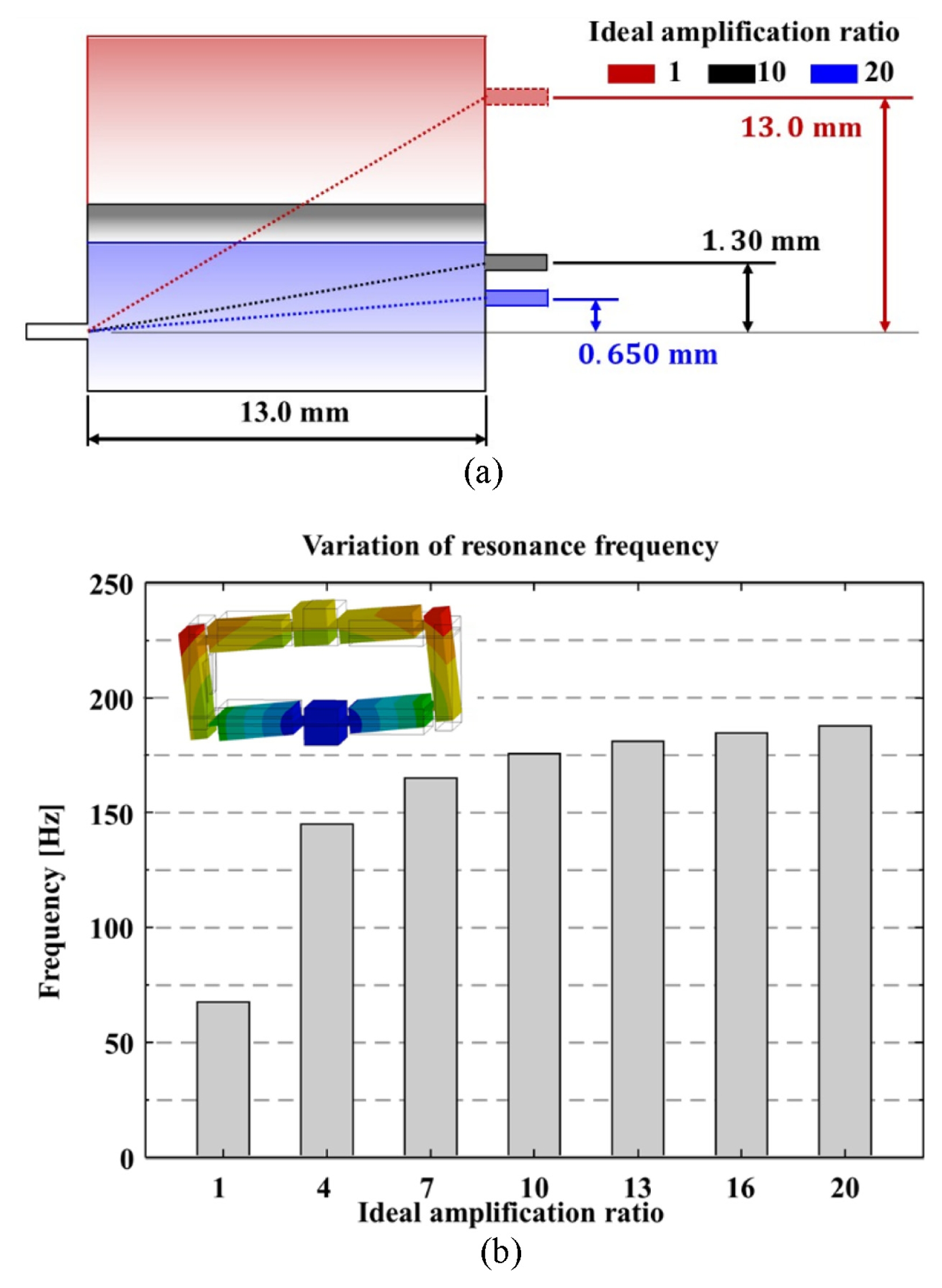
분석 결과에 따라 고증폭 영역에서는 변위 손실이 증가하여 이상적 증폭비 대비 실효 증폭비가 감소하므로 입력링크 굽힘 변형을 저감하여 증폭비 편차 발생을 완화하는 설계가 요구된다. 반면, 저증폭 영역에서는 유연힌지의 굽힘 변형이 지배적으로 작용하여, 이상적 증폭비보다 실효 증폭비가 증가하므로 설계 관점에서 변위 손실은 크게 중요치 않다. 그러나 저증폭비를 구현하기 위한 BDAM의 형상은
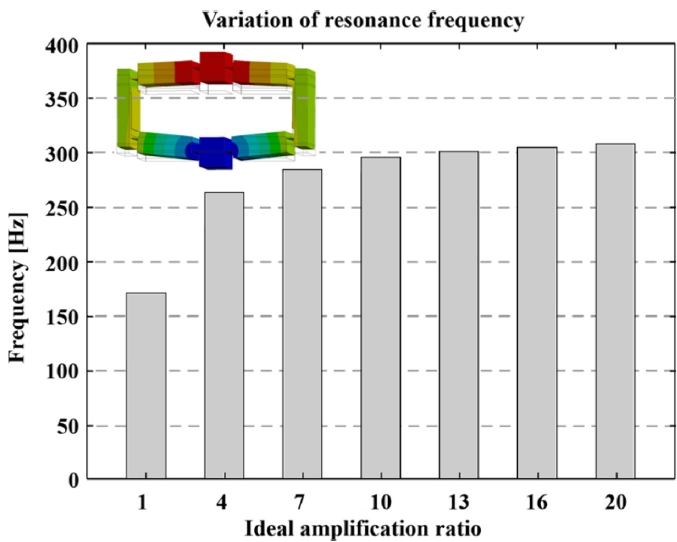
Fig. 4(a)와 같이 링크의 부피 및 질량 증가를 유발하여 고유진동수 감소에 따른 느린 응답과 외란에 대한 취약성 등 동적 성능의 악화를 야기할 수 있다. 구조 모드 해석 결과 1차 고유 모드는 모든 증폭비에서 고정된 출력 링크를 중심으로 회전하는 형상으로 나타났다.
Fig. 4(b)에 따르면 증폭비가 낮은 경우에 기준 모델인 증폭비 10에 비해서 최대 61.6% 낮은 고유진동수를 나타낸다. 따라서, 저증폭 영역에서는 변위 손실보다 고유진동수 향상을 위한 설계 보완이 요구된다. 결과적으로 BDAM의 증폭비 영역에 따라 지배 인자 및 설계 요구사항이 상이하므로, 목표 증폭비 영역을 구분하여 설계 전략을 분리하는 접근이 필요하다. 본 연구에서는 이상적 증폭비 약 10 부근에서 실효 증폭비 편차의 지배 요인이 전환되는 경향을
Fig. 3(a)와 같이 확인하였으며, 이를 기준으로 BDAM의 성능을 향상할 수 있는 새로운 형상 설계안을 제시한다.
이상적 증폭비가 클 때 증폭비 감소의 원인이 입력 링크의 굽힘으로 인한 입력 변위 손실인 것으로 밝혀졌으므로, 입력 링크의 두께를 증가시켜 증폭비 편차를 줄이고자 하였다.
식(A3)에서도 확인할 수 있듯이 입력 링크 굽힘 변형은 설계 변수 중 두께에 대해 가장 민감하다. 입력링크의 두께를
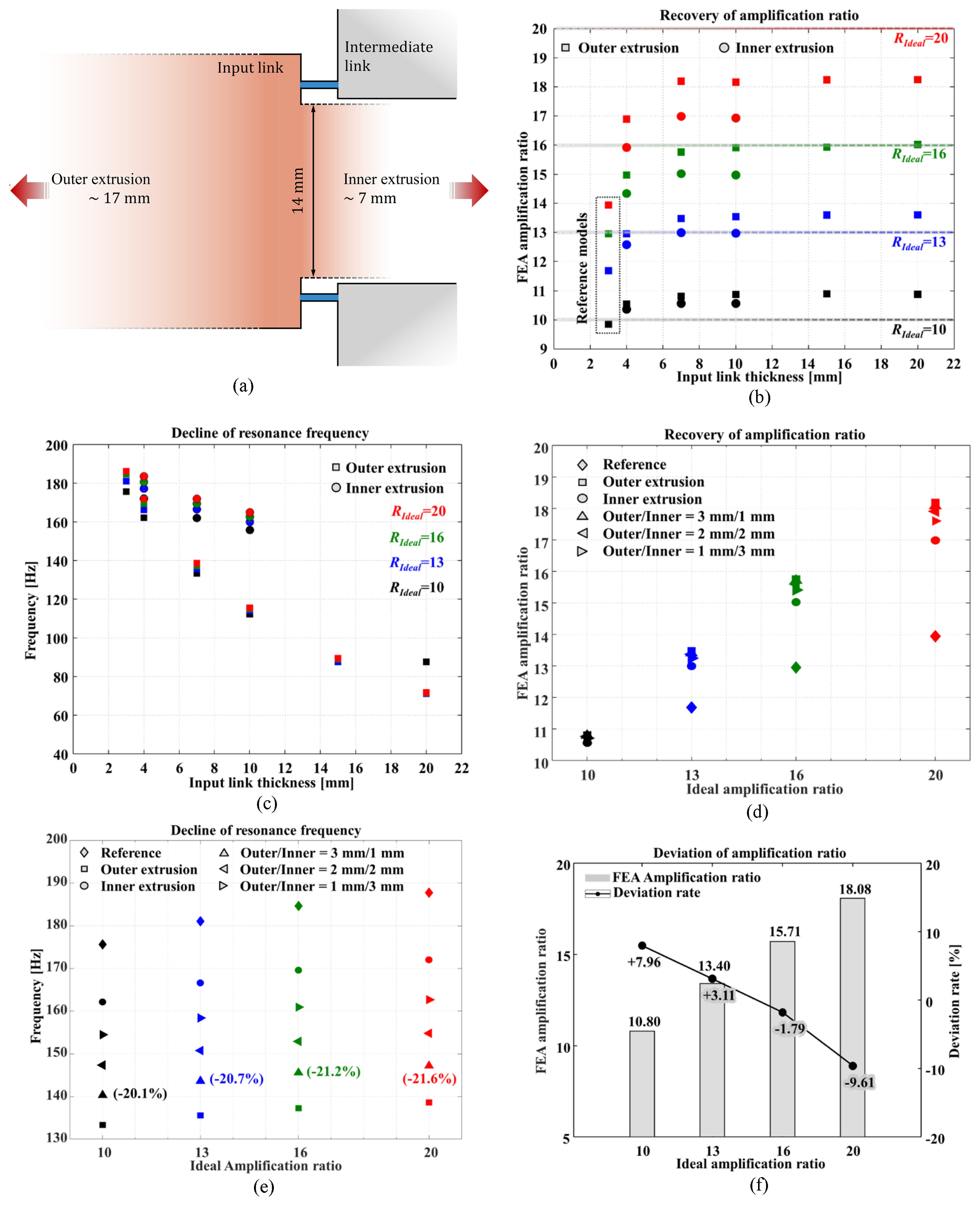
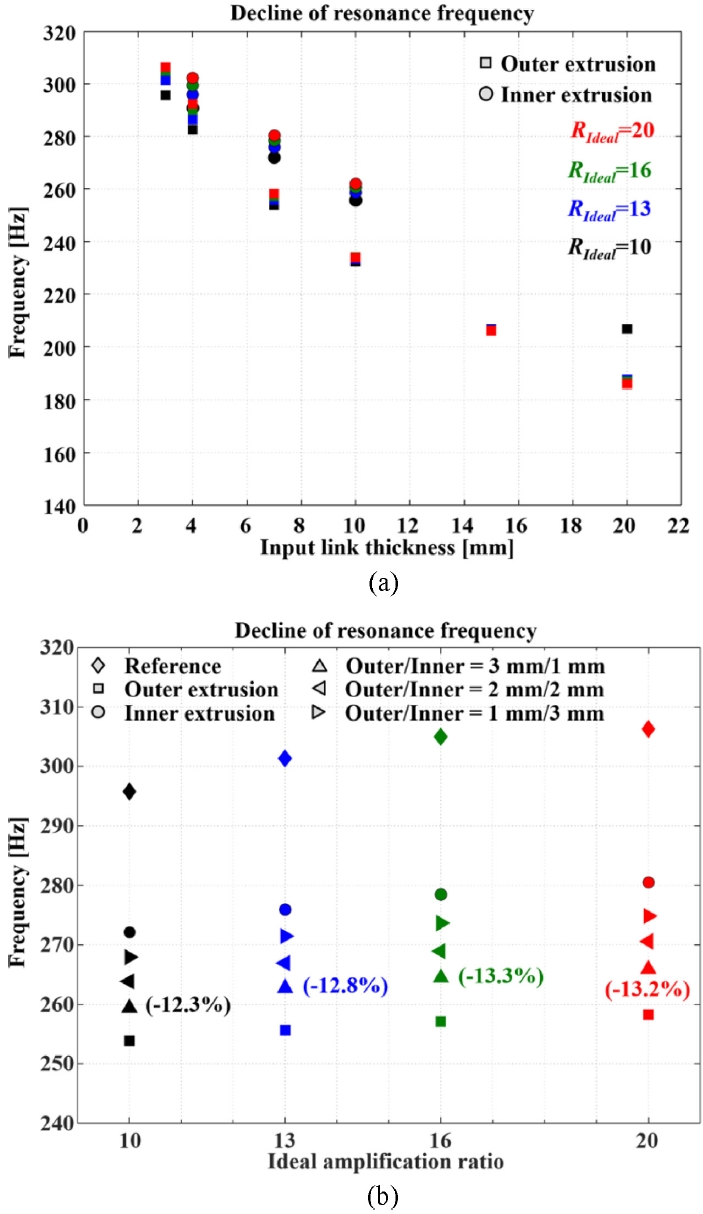
Fig. 5(a)와 같이 기준 모델 대비 바깥쪽, 안쪽, 또는 안팎으로 돌출시키는 세 가지 방식으로 증가시키고 그 효과를 유한요소해석을 통해 비교하였다. 바깥쪽으로는 입력링크 전체를 최대 17 mm까지 돌출시켰고, 안쪽으로는 중간링크와 닿지 않는 부분(14 mm)을 최대 7 mm까지 돌출시켰다. 이보다 더 많은 돌출은 압전구동기 설치 공간을 보장하지 못한다. 이때, 입력링크의 폭, 즉 BDAM의 폭은 기준 모델 값을 유지하였다.
해석 결과 입력링크 두께 증가에 따라 증폭비 또한 점점 증가하다 일정한 값으로 수렴하는 경향을
Fig. 5(b)와 같이 보인다. 이는 안쪽 또는 바깥쪽의 돌출 방향 및 증폭비와 무관하게 나타나는 경향이다. 그러나 증폭비의 증가량은 안쪽 돌출보다 바깥 쪽 돌출이 더 큰 효과를 보인다. 또한 이상적 증폭비가 작은 경우에 입력링크 두께 증가에 따른 증폭비 회복 정도가 큰 것을 볼 수 있다. 이상적 증폭비 10과 13의 경우에는 단 1 mm의 입력링크 두께 증가(4 mm 두께) 에도 이상적 증폭비를 회복하는 것을 확인할 수 있다. 반면 이상적 증폭비 16의 경우에는 17 mm의 두께가 증가(20 mm 두께)해야 이상적 증폭비를 회복한다. 하지만 증폭비의 회복을 위해 증가시킨 입력링크의 두께는
Fig. 5(c)에서와 같이 고유진동수의 극적인 감소를 유발한다. 특히 바깥쪽 돌출이 안쪽 돌출보다 더 큰 감소폭을 보이며, 이는 고정된 출력링크를 중심으로 회전하는 공진 모드 형상에서 바깥쪽 돌출이 회전관성을 더 많이 증가시키기 때문이다. 증폭비 16의 경우 이상적 증폭비를 회복하는 20 mm 두께의 입력링 크일 때 약 61.3%의 고유진동수 감소를, 증폭비 13의 경우 이상적 증폭비를 회복하는 4 mm 두께의 입력링크일 때 약 8.19%의 고유진동수 감소를 나타내며 입력링크 두께 증가 방식의 한계를 보인다.
증폭비가 크게 회복되는 바깥쪽 돌출과 고유진동수가 덜 감소하는 안쪽 돌출을 조합하여 입력링크를 안팎으로 돌출하여 증폭비 회복을 분석한 결과
Figs. 5(d) 및
5(e)와 같이 돌출 방향에 따라 증폭비와 고유진동수 사이의 상충관계를 다시 확인할 수 있다.
Figs. 5(b) 및
5(c)의 결과에 근거하여 증폭비가 회복되면서도 고유진동수 감소가 과도하지 않은 4 mm의 두께 증가 (7 mm 두께)를 기준으로 하였으며, 돌출 두께는 안팎으로 1 mm 단위로 조합하였다. 안팎 돌출 시 안쪽으로만 돌출한 모델 대비 입력링크 굽힘 변위가 작아 증폭비 회복 효과가 크지만, 1차 고유진동수는 소폭 감소하는 경향을 보인다. 반대로 바깥쪽으로만 돌출한 모델에 비해서는 증폭비 회복 정도가 작지만, 1차 고유 진동수는 더 크게 유지된다.
이상적 증폭비가 10 이상으로 큰 경우 입력링크의 두께 증가를 통해 증폭비를 회복시켜 높은 증폭비를 구현할 수 있음과 동시에 반대급부로 고유진동수가 감소하는 것을 확인할 수 있었다. 실제 BDAM의 설계 시에 증폭비와 고유진동수 중 우선시하는 성능에 따라 입력링크의 돌출 방향과 그 정도를 조정할 수 있을 것이다. 바깥쪽으로 3 mm, 안쪽으로 1 mm 돌출한 입력링크에 대해 증폭비 및 편차를
Fig. 5(f)에 나타내었다.
Fig. 3(a)에서 최대 -30.3%에 달하던 증폭비 편차율을 약 -10% 이하로 저감한 결과를 나타낸다. 이때 고유진동수는
Fig. 5(e)에서와 같이 180 Hz 근처에서 145 Hz 근처로 약 20-21% 수준으로 감소하였다.
입력링크 두께 증가를 통해 증폭비가 대폭 향상되지만 20% 가량의 고유진동수 감소는 작은 값이 아니며, 외란에 대한 강건성 측면에서 증폭비보다 더 우선시하여 설계 과정에 반영해야 할 수도 있다. 증폭비를 증대하면서 동시에 고유진동수 감소를 최소화하기 위한 방안으로
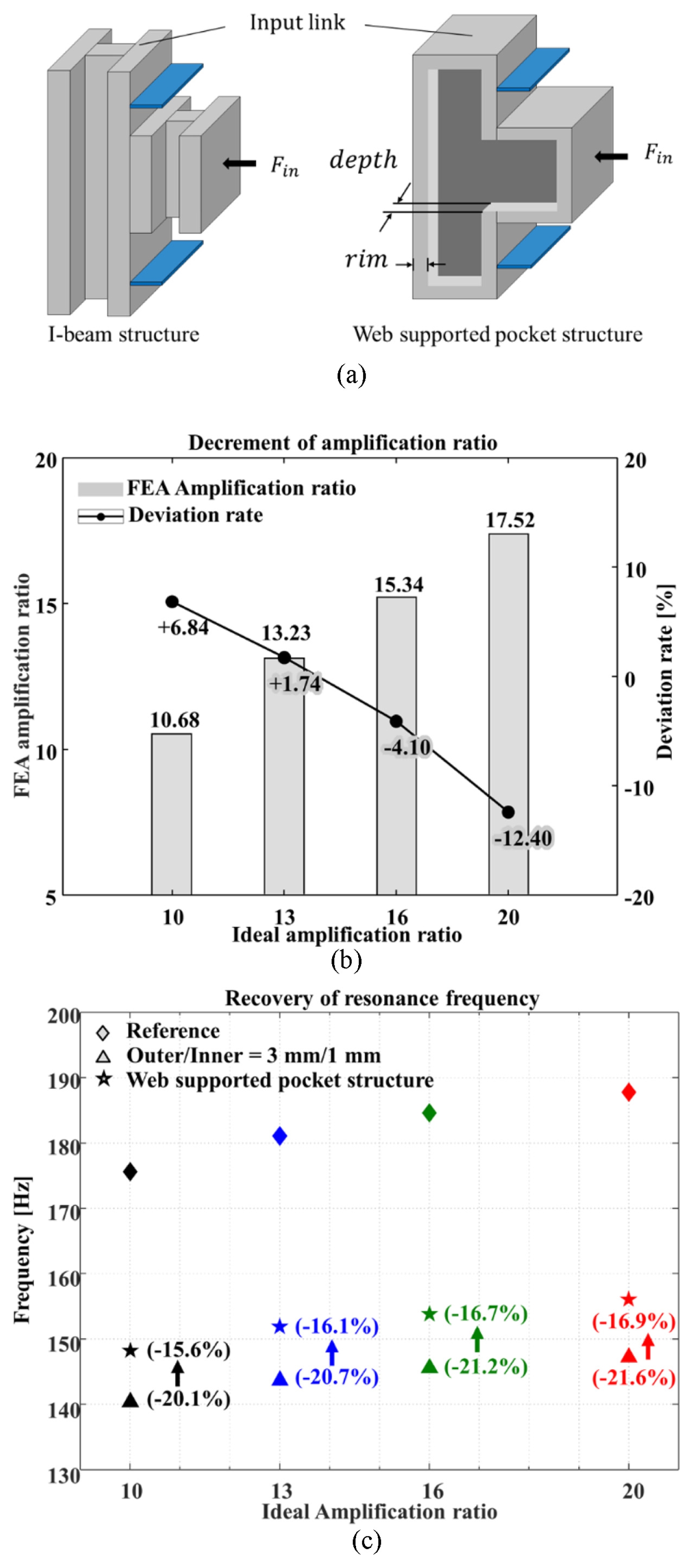
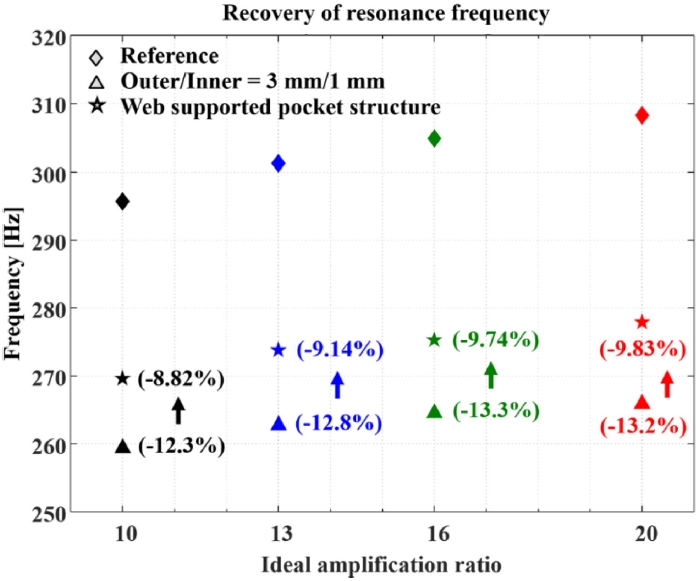
Fig. 6(a)와 같은 I-beam과 Pocket 형상의 입력링크의 구조를 제안하고 유한요소해석 수행을 통해 효과를 분석하였다. 두 구조 모두 굽힘모멘트에 대한 변형에는 상대적으로 강하면서 질량 및 회전관성을 최소화할 수 있는 구조이다. 형상의 변경은 바깥쪽으로 3 mm, 안쪽으로 1 mm돌출 한 입력 링크를 대상으로 하였으며, 바깥쪽 돌출부만 I-beam 형상 적용, 안쪽 돌출부만 I-beam 형상 적용, 안팎 돌출부 모두를 각각 I-beam 형상 적용하는 3가지 방법을 시도하였다. 먼저 바깥쪽 돌출부에 I-beam을 적용하면 의도와 달리 굽힘 변형이 크게 발생한다. 이는 입력링크의 두께가 증가하면서 빔의 두께에 대한 길이의 비가 상대적으로 감소하여, 굽힘 변형뿐만 아니라 전단 변형 또한 주요해졌기 때문으로 보인다. I-beam 형상의 얇은 웹 두께는 전단 변형에 취약하다. 안쪽 돌출부에 I-beam을 적용하면 입력 힘에 의해 플랜지가 변형하며 입력 변위 손실을 크게 유발한다. 따라서 굽힘 변위는 작음에도 증폭비가 매우 감소한다. 웹 지지가 있는 Pocket 형상으로 입력링크를 변경하면 I-beam 형상에서 발생하는 문제점들을 완화하며 다소나마 개선된 고유진동수 결과를 보인다.
Fig. 6(b)에 따르면 증폭비 편차율이 1.12-2.79%p 감소하며 증폭비가 소폭 감소하지만,
Fig. 6(c)에서 고유진동수 감소율이 4.5-4.7%p 감소하며 고유진동수가 형상 변경 전 대비 7.88-8.86 Hz 증가한다. 이때, Pocket 형상의 깊이(Depth)와 두께(Rim)는 각각 2와 1 mm이며, 형상 적용 전 대비 증폭비가 많이 감소하지 않으면서 고유진동수가 높게 상승하는 조건으로 도출하였다.
2.3절의 기여도 분석 결과에 따르면, 이상적 증폭비가 작은 영역에서는 입력링크의 굽힘에 의한 변위 손실이 미미하여 실효 증폭비가 설계치와 유사하게 유지된다. 그러나
Fig. 4(a)에서 확인한 바와 같이, 저증폭비를 구현하기 위한 기하학적 형상은 필연적으로 중간링크의 부피 및 질량 증가를 수반하며, 이는 고유진동수의 급격한 저하로 이어지는 한계를 가진다. 본 절에서는 저증폭 영역에서의 동적 성능 향상을 위해, 증폭 원리에 영향을 주지 않으면서 중간링크의 불필요한 질량을 제거하는 설계 전략을 제시한다.
중간링크의 질량 저감을 위해
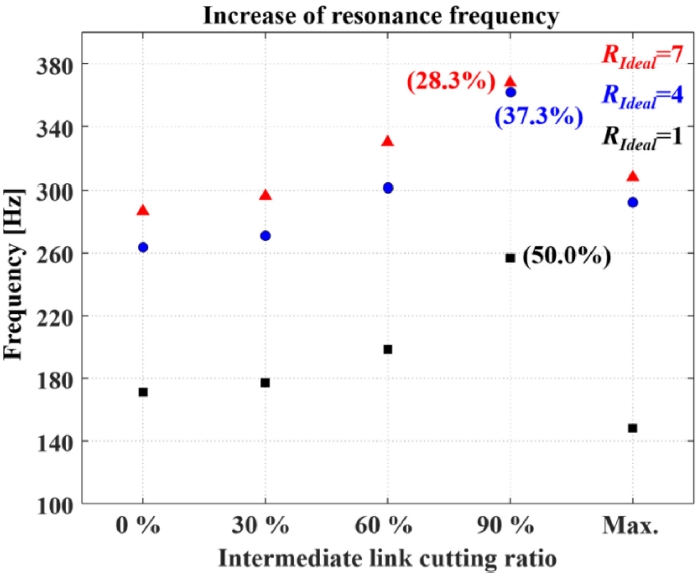
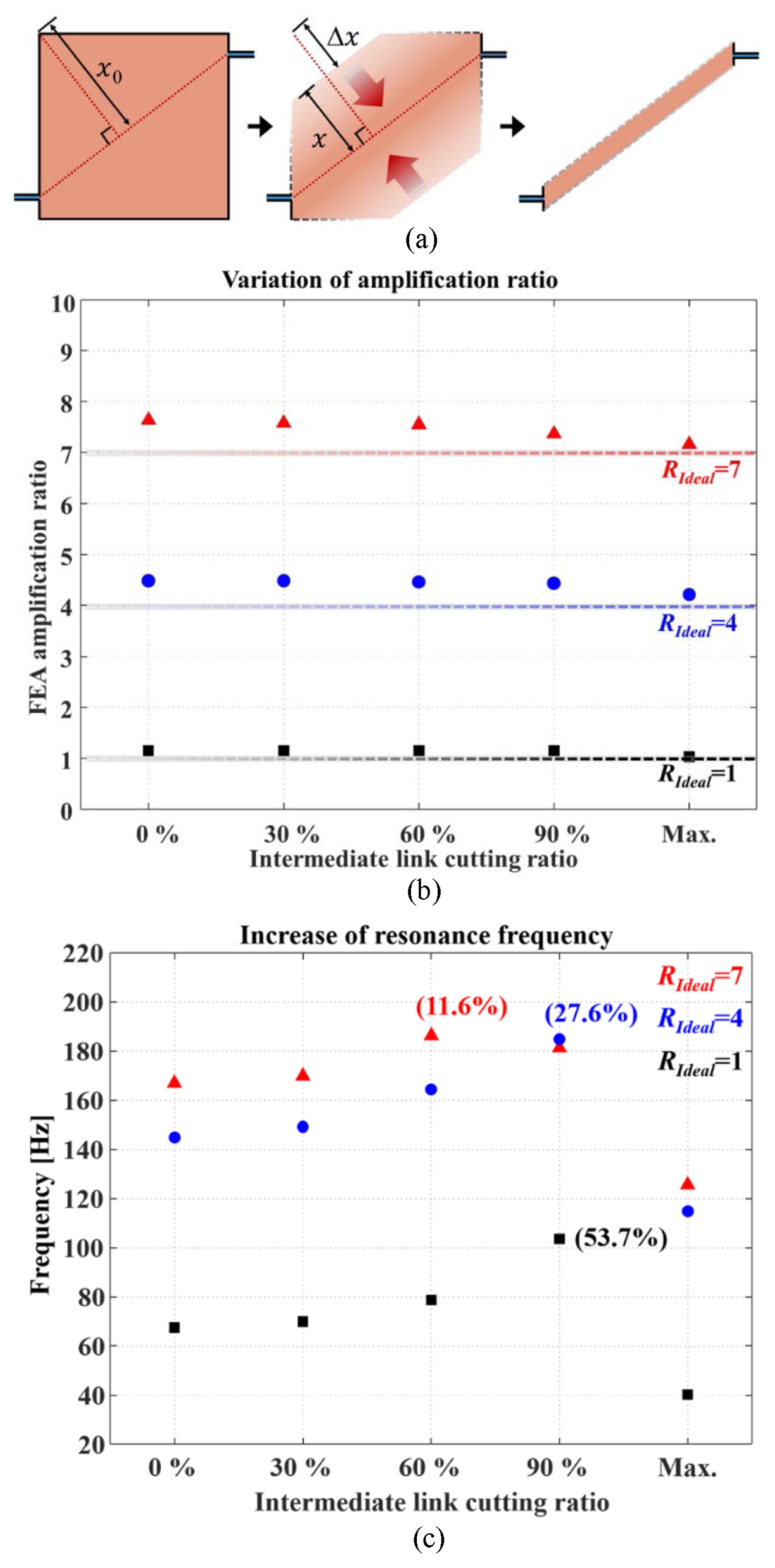
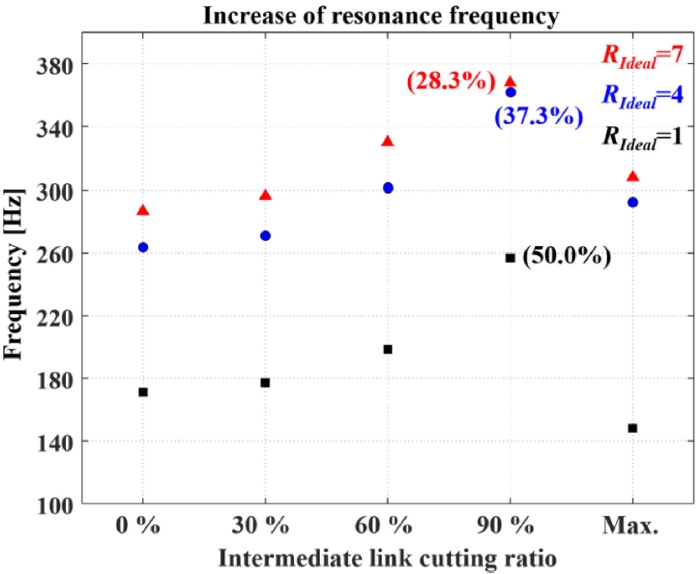
Fig. 7(a)와 같이 링크 중앙부를 육각형 형태로 가공하는 방식을 적용하였다. 이는 BDAM의 증폭비가 주로 유연힌지 간의 상대적 위치 관계에 의해 결정되며, 중간링크 자체의 형상 변화와는 독립적이라는 점에 착안한 것이다. 육각형 형상의 절삭 비율(Cutting Ratio)을 증폭비 1, 4, 7 모델에 대해 각각 변화시키며 성능 변화를 분석하였다. 절삭 비율 값은
식(12)와 같이 정의하였으며 절삭비율의 최대값은 중간링크의 너비
x가 유연힌지의 두께
t와 같아지는 때이다.
x0는 중간링크의 최초 너비, ∆
x는 중간링크를 절삭한 부분의 너비를 나타낸다.
유한요소해석 결과,
Fig. 7(b)와 같이 모든 저증폭 영역 모델에서 중간링크의 질량을 60% 제거하더라도 실효 증폭비의 변화는 약 1% 이내로 미미함을 확인하였다. 이는 저증폭 영역에서 중간링크의 강성 확보보다 질량 최적화가 변위 출력 특성에 영향을 주지 않으면서도 동적 성능을 개선할 수 있는 유효한 변수임을 입증한다.
반면, 1차 고유진동수는
Fig. 7(c)와 같이 질량 저감에 따라 유의미하게 향상되었다. 최적의 질량 저감 조건(Optimal Reduction) 을 적용했을 때, 기존 모델 대비 고유진동수는 증폭비 1에서 16.6%, 증폭비 4에서 27.6%, 증폭비 7에서 8.69% 향상되는 결과를 얻었다. 주목할 점은 고유진동수가 향상되는 최적점이 존재한다는 것이다. 특정 임계점(R = 7에서 60%, R = 1 및 4에서 90%)을 초과하여 질량을 제거할 경우, 중간링크의 구조적 강성이 급격히 저하되어 오히려 1차 고유진동수가 하락하거나 비정상적인 모드 역전 현상이 발생하여 시스템 안정성이 저해될 수 있음을 확인하였다. 결과적으로 저증폭 영역의 BDAM 설계 시, 제안된 질량 저감 방식을 통해 증폭비의 손실 없이 효과적으로 고유진동수를 향상시켜 시스템의 응답 속도 및 외란 강건성을 확보할 수 있다.
3. 고찰
변위 증폭 기구 설계의 궁극적인 목표는 높은 증폭비를 확보하면서도 빠른 응답 속도와 외란 강건성을 위해 고유진동수를 극대화하는 것이다. 그러나 굽힘에 의한 변위 손실을 막기 위한 링크 구조체의 정적 강성 확보는 필연적으로 질량 및 회전관성의 증가를 수반하며, 이는 유연힌지를 포함한 메커니즘 전체의 동적 강성 저하, 즉 고유진동수의 하락으로 이어진다. 이러한 상충 관계는 일체형 유연 기구 설계에서 극복하기 어려운 원론적인 한계점으로 작용해 왔다. 본 연구의 핵심적인 의미는 BDAM의 전 영역을 하나의 통합된 모델로 해석하려 했던 종전의 접근법에서 벗어나, 증폭비 영역별로 시스템의 지배적인 성능 저하 요인을 분리하여 대응하는 방법론을 제공했다는 점에 있다. 변위 손실이 지배적인 고증폭 영역에서는 극적으로 증가하는 증폭비 편차를 만회하기 위해 입력링크의 굽힘 강성을 높이는 것이 최우선시되며, 이때 단순히 두께를 늘리는 방식은 고유진동수의 과도한 감소를 유발하지만 본 연구에서 제안한 Pocket 구조는 재료를 효율적으로 배치함으로써 강성 증대와 질량 증가 억제 사이의 균형을 효과적으로 달성하는 방안이 될 수 있다. 실효 증폭비가 이상적 증폭비보다 오히려 증가하는 저증폭 영역에서는 증폭 기구의 기구학적 원리에 영향을 주지 않는 범위 내에서 불필요한 질량을 제거하는 전략이 유효하다. 특히 이 과정에서 중간링크의 질량 제거가 특정 임계점을 넘어서면 시스템의 안정성이 급격히 저해될 수 있음을 보이고 최적치를 제안한 것은 유효한 설계 방법론의 제시로 볼 수 있을 것이다. 모든 설계 변수를 모든 성능이 동시에 향상되도록 결정하기 어려운 조건에서 본 연구가 제시한 영역별 설계 전략은 설계자가 목표 성능(증폭비 또는 응답 속도)에 따라 우선순위를 결정하고 최적의 구조적 해법을 찾을 수 있는 체계적인 설계 가이드라인 제시의 의미를 갖는다.
한편 본 연구에서 제시한 고유진동수는 BDAM 자체 형상 변화에 따른 구조적 동특성 비교 지표이며, 압전구동기와 부하 시스템을 포함한 전체 위치결정 시스템의 절대 공진주파수를 의미하지 않는다. 특히 BDAM에서 나타나는 저차 회전 모드는 압전 구동기 삽입 및 부하 연결에 의해 억제되거나 다른 모드와 결합될 수 있다. 특히 압전구동기가 삽입될 경우
Fig. 4에서와 같은 회전 운동 모드는 나타나지 않고, 2차 모드인 병진 운동 모드가 가장 낮은 공진주파수로 나타난다(
Appendix A2). 그럼에도 불구하고 입력링크 보강에 따른 질량 및 회전관성 증가, 중간링크 질량 저감에 따른 관성 감소와 구조 강성 저하의 상충관계는 BDAM 형상 설계에서 여전히 중요한 동적 성능 지표이다. 따라서 본 연구의 고유진동수 분석 결과는 최종 시스템의 절대 동특성 예측값이 아니라, BDAM 형상 설계 단계에서 동적 성능 저하 가능성을 판단하기 위한 상대 비교 기준으로 활용될 수 있다.
4. 결론
본 연구에서는 브리지 타입 변위 증폭 기구(BDAM)의 이상적 설계치와 실효 증폭비 사이의 편차 발생 원인을 정량적으로 규명하고, 증폭비와 동적 강성 사이의 상충 관계를 극복하기 위한 증폭비 영역별 분리 설계 전략을 제시하였다. 기여도 분석을 통해 이상적 증폭비 약 10을 기점으로 변위 손실의 지배 인자가 유연힌지의 굽힘에서 입력링크의 굽힘 변형으로 전환됨을 확인하였으며, 이를 바탕으로 고증폭 영역(10-20)에서는 입력링크의 두께 보강 및 웹 지지 기반 포켓 구조 적용을 통해 증폭비 편차율을 저감할 수 있음을 보였다. 또한, 변위 손실의 영향이 적은 저증폭 영역(1-7)에서는 중간링크의 질량 저감을 통해 실효 증폭비의 저하 없이 1차 고유진동수를 최대 27.6% 향상시켰다. 결과적으로 본 연구를 통해 과도한 경량화가 유발할 수 있는 시스템 불안정성 임계점을 도출하고 목표 성능에 따른 최적의 구조적 해법을 제공함으로써, 초정밀 변위 증폭 메커니즘 설계 시 구동기 변위의 최대 활용과 고속 및 고정밀 응답성을 동시에 달성할 수 있는 방법론을 제시하였다.
본 연구는 이상적 강체 링크 모델, 탄성 변형을 고려한 수학적 모델, 유한요소해석 모델을 상호 비교함으로써 BDAM의 증폭비 편차 발생 원인과 설계 변수의 영향을 정량적으로 분석하였다. 다만 본 연구의 검증은 해석 및 이론 모델에 기반하므로, 실제 제작 과정에서 발생할 수 있는 가공 공차, 체결 조건, 압전 구동기와 기구 사이의 접촉 조건, 재료 물성 편차 등이 실효 성능에 미치는 영향은 포함하지 못한다. 따라서 제안된 설계 지침의 실제 적용성을 보다 명확히 입증하기 위해서는 후속 연구에서 대표 형상의 BDAM을 제작하고, 변위 증폭비 및 고유진동수 측정 실험을 통해 해석 결과와 비교 검증할 필요가 있다.
FOOTNOTES
-
ACKNOWLEDGEMENT
이 연구는 서울과학기술대학교 교내 일반과제 연구비 지원으로 수행되었습니다.
Fig. 1Bridge-type displacement amplification mechanism: (a) A typical configuration, (b) Elastic deformation before and after loading, and (c) Ideal rigid linkage model
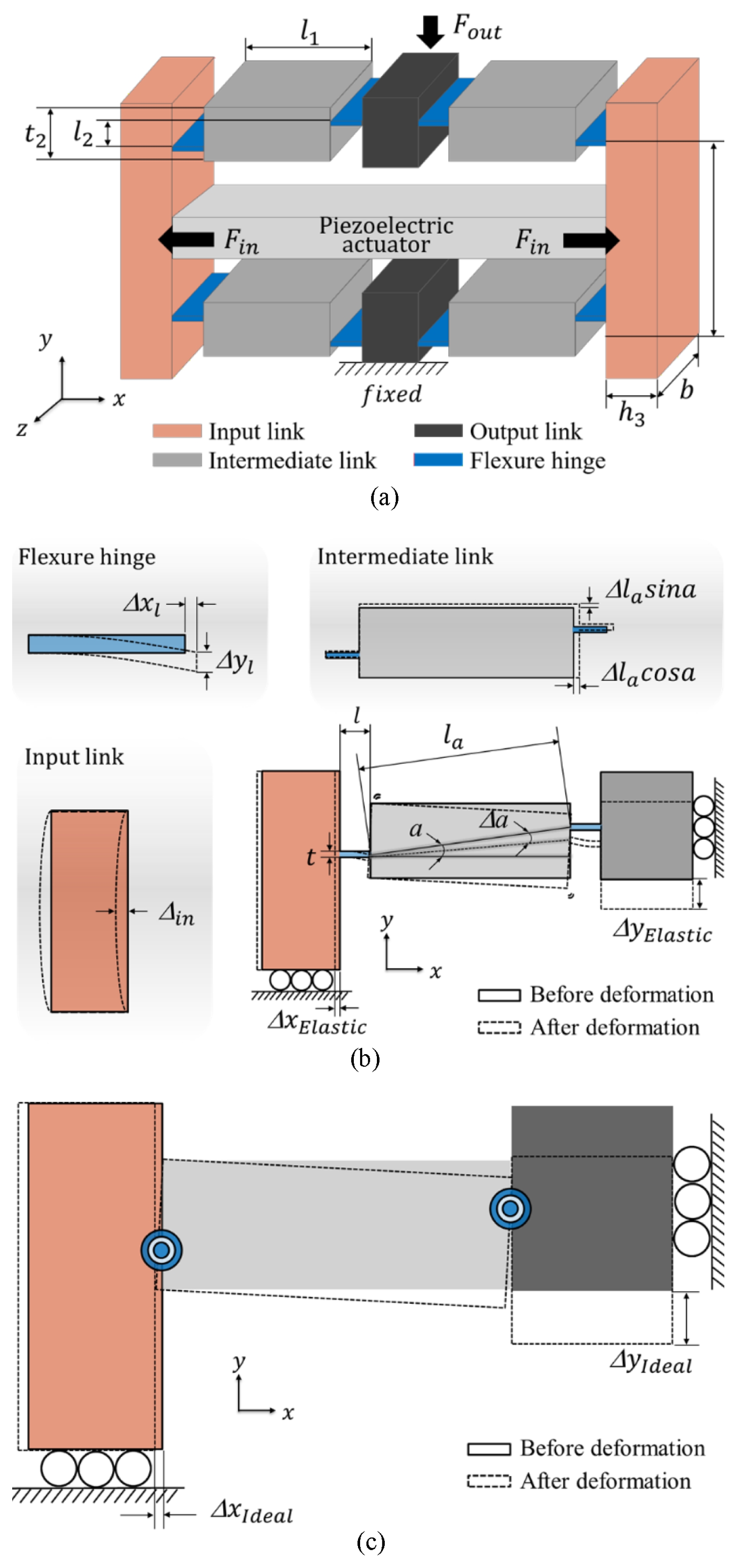
Fig. 2FEA models for structural analysis: (a) A mesh model with applied load and constraint, (b) A visualized mode shape
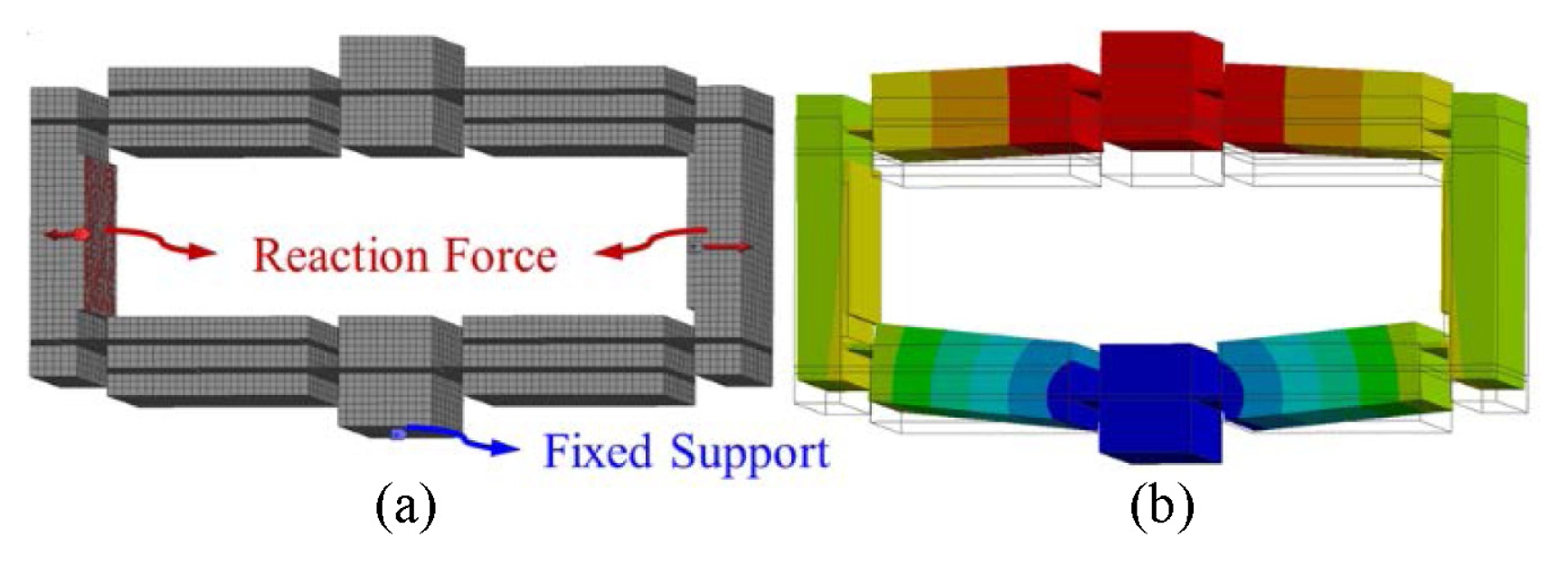
Fig. 3Investigation of BDAM amplification ratio: (a) Deviation of amplification ratio, (b) Deformation of links and flexure hinges, and (c) Contribution of each deformation
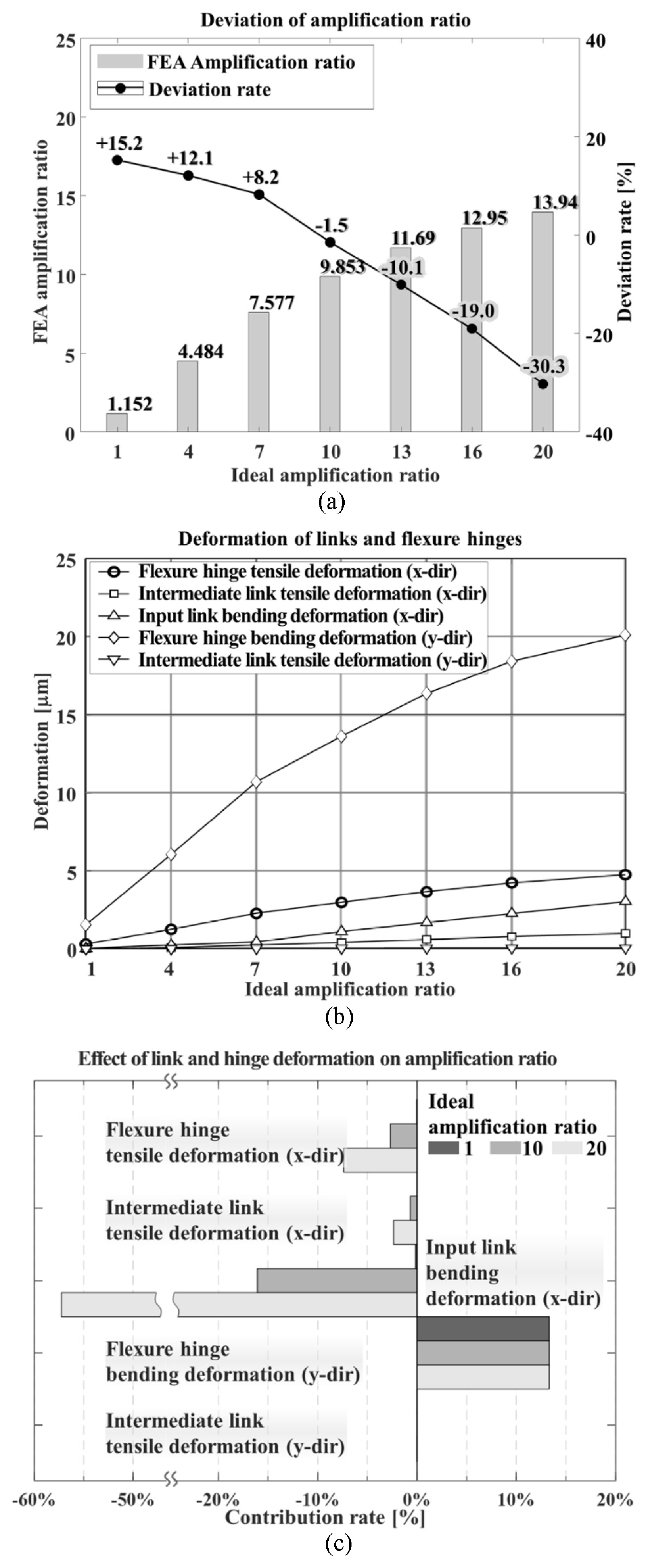
Fig. 4Underlying issue with small amplification ratio: (a) Geometrical change of intermediate link, (b) Decline of resonance frequency
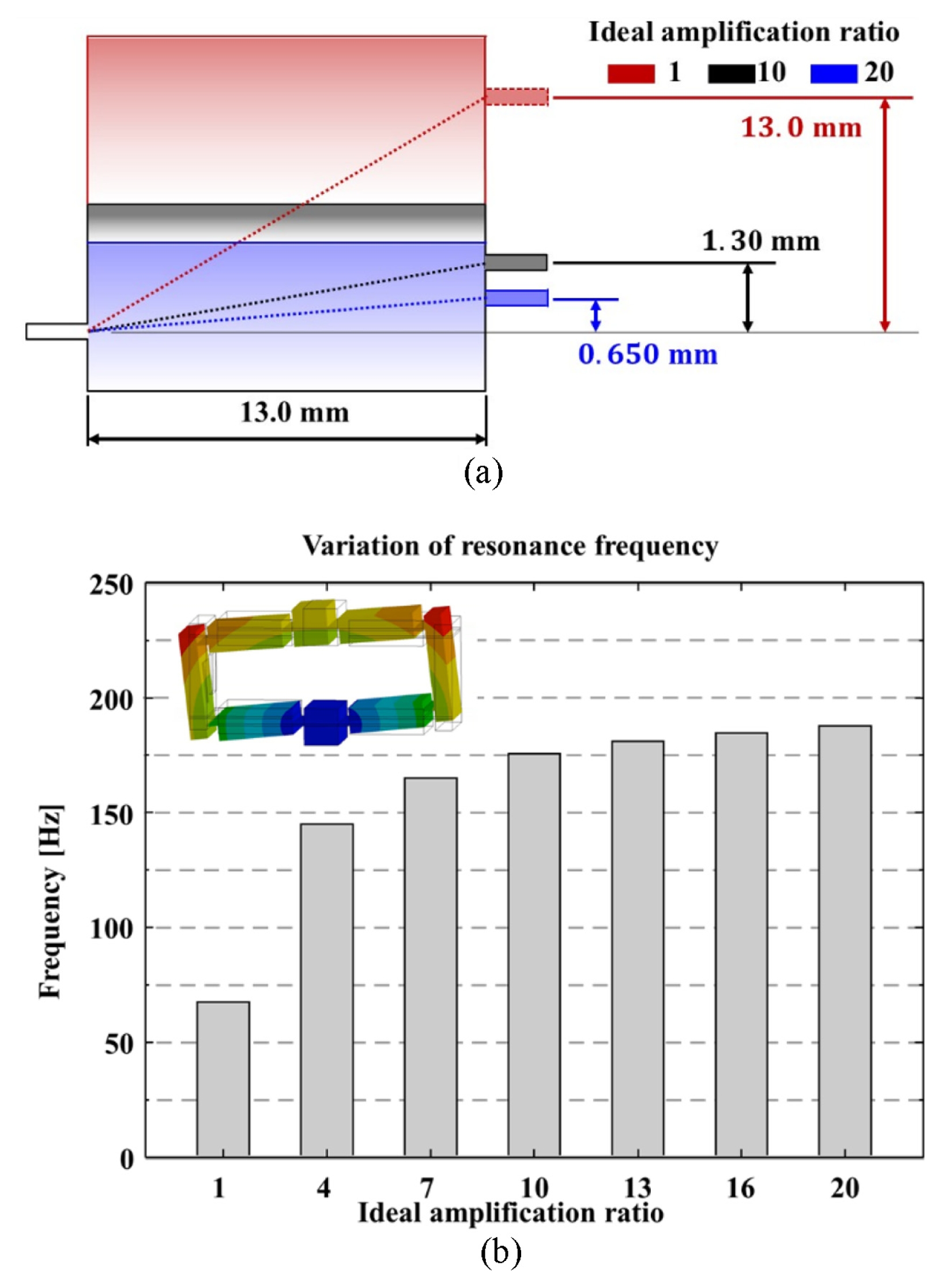
Fig. 5Extrusion of input link for reduction of displacement loss: (a) Method of input link extrusion, (b) Recovery of amplification ratio by outer or inner extrusion, (c) Decline of resonance frequency by outer or inner extrusion, (d) Recovery of amplification ratio by simultaneous extrusion, (e) Decline of resonance frequency by simultaneous extrusion, and (f) Deviation of amplification ratio using 3 mm outer and 1 mm inner extrusion
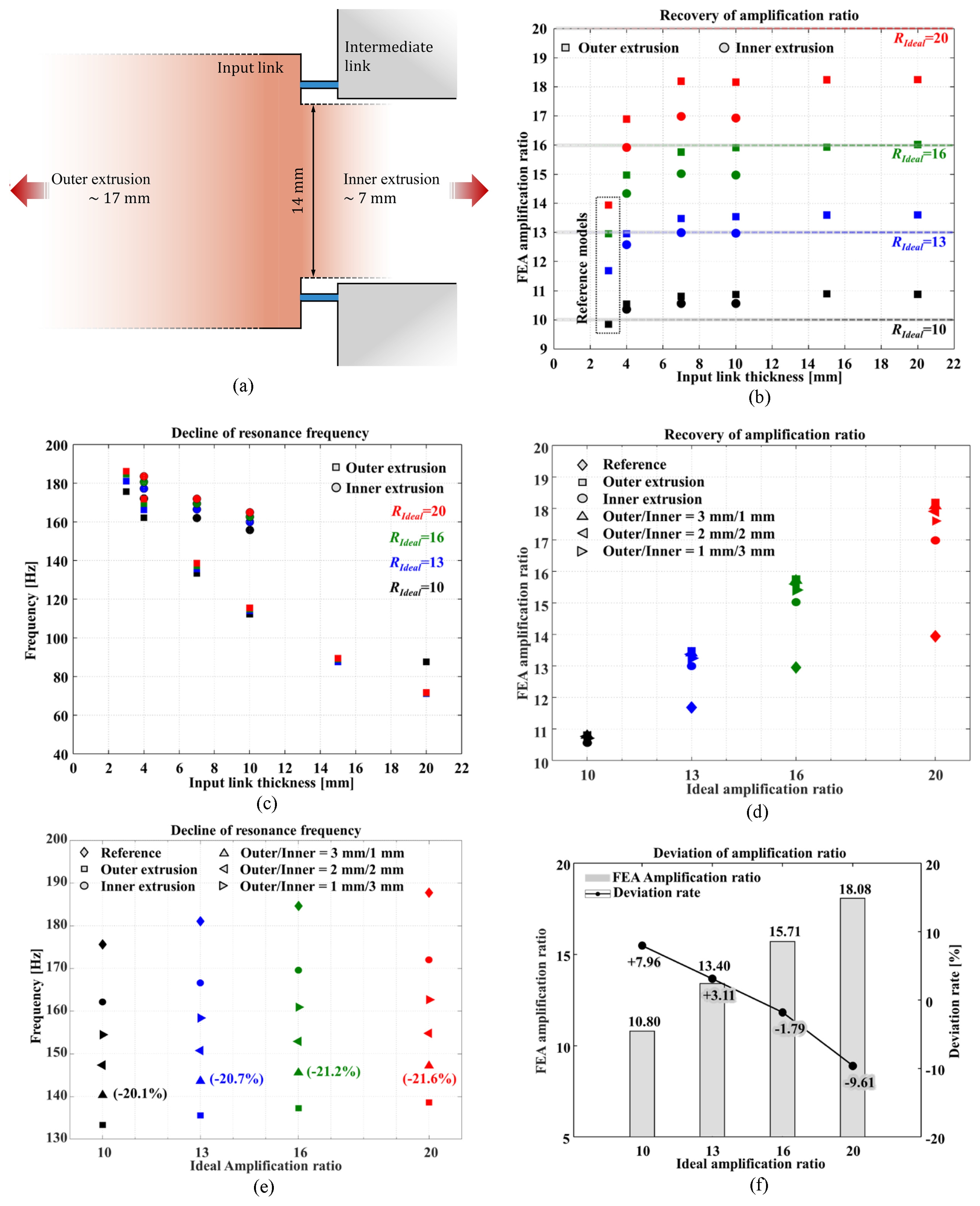
Fig. 6Mass reduction of input link: (a) I-beam and web supported pocket structure of input link with extrusion, (b) Slight decrease of amplification ratio, and (c) Recovery of resonance frequency
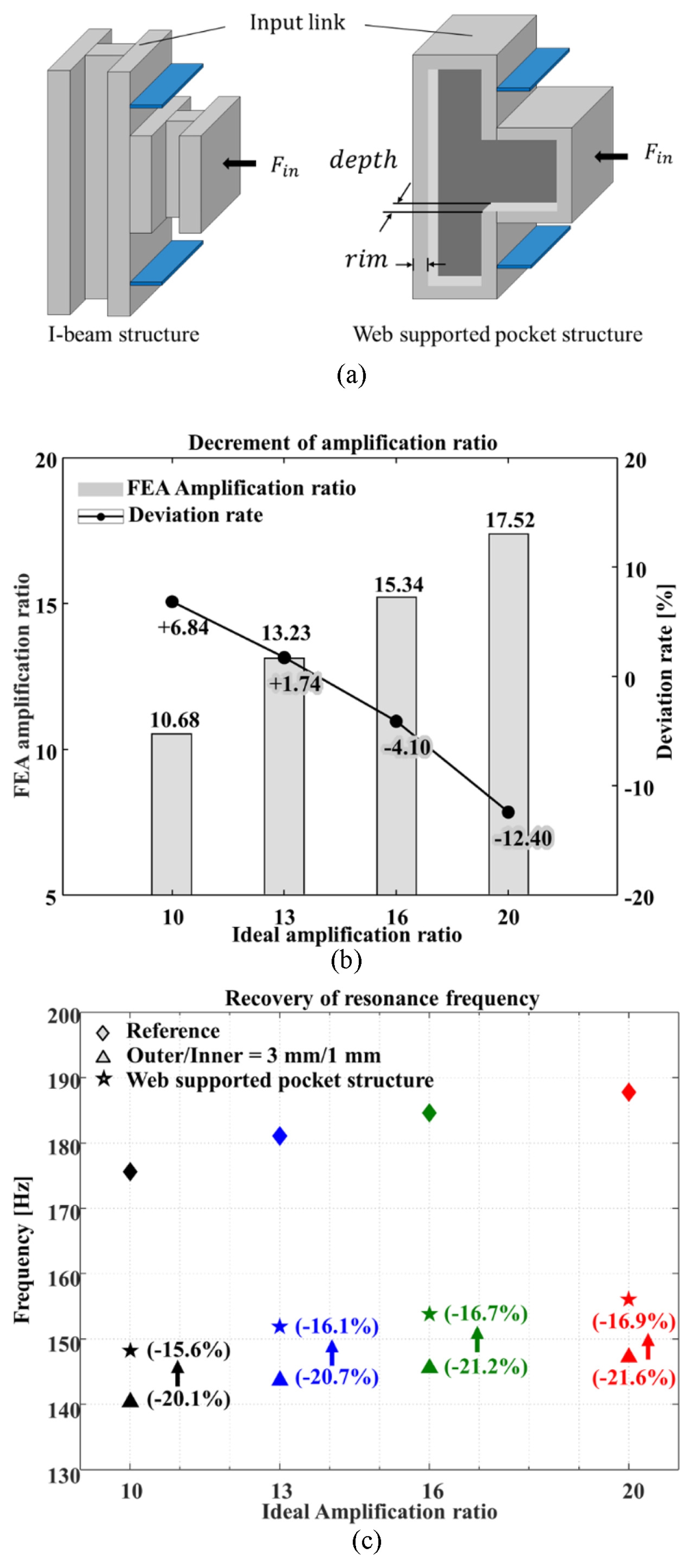
Fig. 7Mass reduction of intermediate link: (a) Structure of the intermediate link with inertia reduction, (b) Variation of amplification ratio, and (c) Increase of resonance frequency
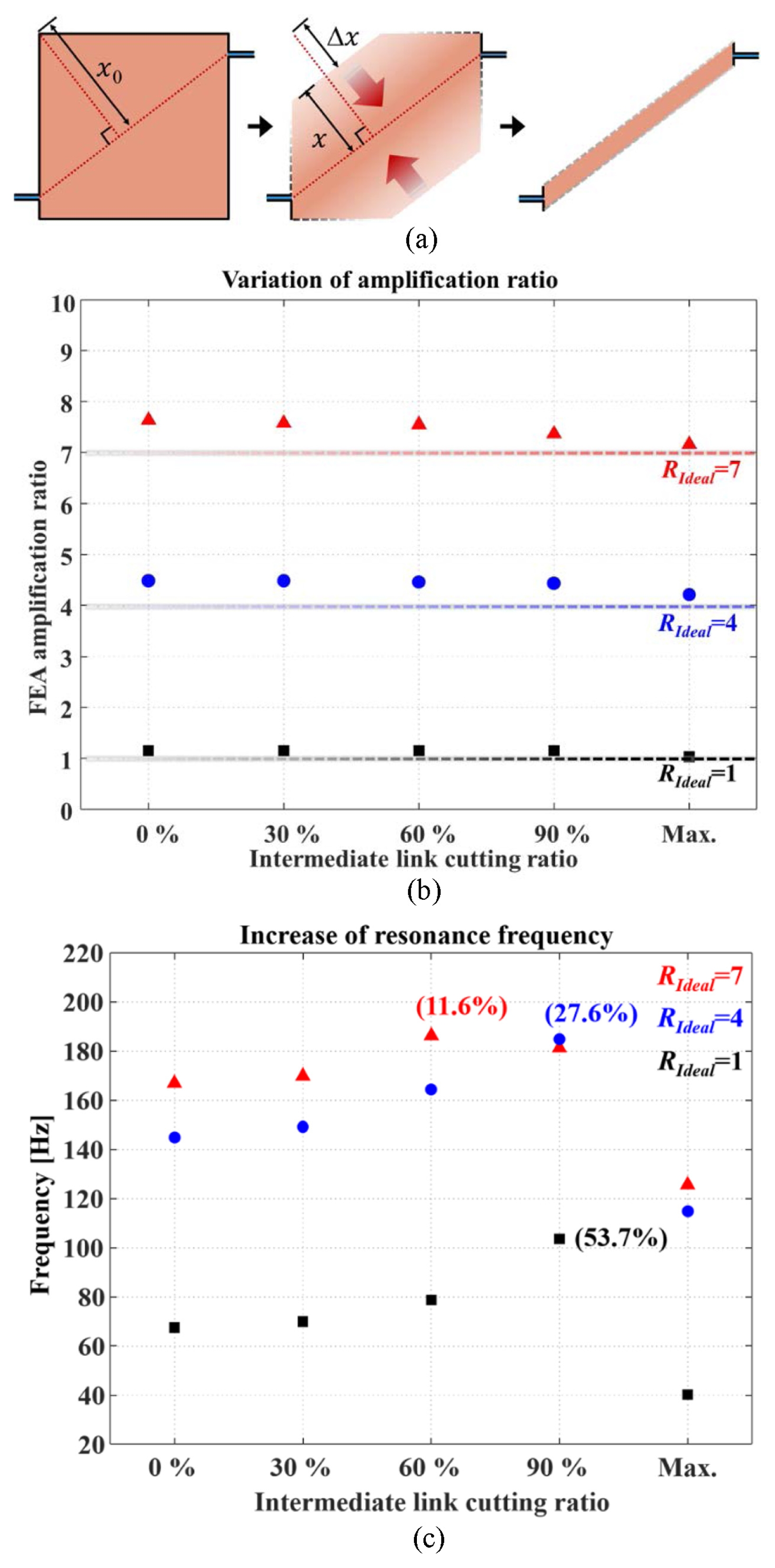
Table 1Design parameters of BDAM
Table 1
|
Design parameters |
Symbol |
Value [mm] |
|
Fixed parameters |
Horizontal distance between hinges |
l1
|
13.0 |
|
Length of input link |
l3
|
14.2 |
|
Width of BDAM |
b
|
14.5 |
|
Length of flexure hinge |
l
|
2.00 |
|
Thickness of flexure hinge |
t
|
0.400 |
|
Design parameters |
varied for displacement loss reduction |
Thickness of input link |
h3
|
3.00 |
|
varied by amplification ratio (RIdeal = 10) |
Vertical distance between hinges |
l2
|
1.30 |
|
Thickness of intermediate link |
t2 = l2 + 3.20 |
4.50 |
|
Distance between hinges |
la
|
13.1 |
|
Inclination angle between hinges |
a
|
5.71 |
Table 2Material properties of AL7075-T6
Table 2
|
Density [kg/m3] |
Elastic modulus (E) [GPa] |
Poisson’s ratio |
|
2.81 × 10³
|
71.7 |
0.330 |
REFERENCES
- 1. Minase, J., Lu, T.-F., Cazzolato, B., Grainger, S., (2010), A review, supported by experimental results, of voltage, charge and capacitor insertion method for driving piezoelectric actuators, Precision Engineering, 34(4), 692-700.
- 2. Bhagat, U., Shirinzadeh, B., Clark, L., Chea, P., Qin, Y., Tian, Y., Zhang, D., (2014), Design and analysis of a novel flexure-based 3-dof mechanism, Mechanism and Machine Theory, 74, 173-187.
- 3. Wang, S., Rong, W., Wang, L., Xie, H., Sun, L., Mills, J. K., (2019), A survey of piezoelectric actuators with long working stroke in recent years: Classifications, principles, connections and distinctions, Journal of Mechanical Systems and Signal Processing, 123, 591-605.
- 4. Ling, M., Zhang, C., Chen, L., (2022), Optimized design of a compact multi-stage displacement amplification mechanism with enhanced efficiency, Precision Engineering, 77, 77-89.
- 5. Kim, J.-J., Choi, Y.-M., Ahn, D., Hwang, B., Gweon, D.-G., Jeong, J., (2012), A millimeter-range flexure-based nano-positioning stage using a self-guided displacement amplification mechanism, Mechanism and Machine Theory, 50, 109-120.
- 6. Wu, Z., Wu, Z., Chen, I.-M., Xu, Q., (2024), Recent advances in piezoelectric compliant devices for ultrahigh-precision engineering, Micromachines, 15(12), 1456.
- 7. Jouaneh, M., Yang, R., (2003), Modeling of flexure-hinge type lever mechanisms, Precision Engineering, 27(4), 407-418.
- 8. Zhang, T., Xiong, L., Pan, Z., Zhang, C., Qu, W., Wang, Y., Yang, C., (2023), Design and analysis of XY large travel micro stage based on secondary symmetric lever amplification, Micromachines, 14(9), 1805.
- 9. Ha, J., Kung, Y., Hu, S., Fung, R., (2006), Optimal design of a micro-positioning Scott-Russell mechanism by Taguchi method, Sensors and Actuators A: Physical, 125(2), 565-572.
- 10. Chen, C.-M., Hsu, Y.-C., Fung, R.-F., (2012), System identification of a Scott–Russell amplifying mechanism with offset driven by a piezoelectric actuator, Applied Mathematical Modelling, 36(6), 2788-2802.
- 11. Chen, J., Zhang, C., Xu, M., Zi, Y., Zhang, X., (2015), Rhombic micro-displacement amplifier for piezoelectric actuator and its linear and hybrid model, Mechanical Systems and Signal Processing, 50–51, 580-593.
- 12. Li, Y., Bi, S., Zhao, C., (2019), Analytical modeling and analysis of rhombus-type amplifier based on beam flexures, Mechanism and Machine Theory, 139, 195-211.
- 13. Ma, H., Yao, S., Wang, L., Zhong, Z., (2006), Analysis of the displacement amplification ratio of bridge-type flexure hinge, Sensors and Actuators A: Physical, 132(2), 730-736.
- 14. Ling, M., Cao, J., Jiang, Z., Lin, J., (2016), Theoretical modeling of attenuated displacement amplification for multistage compliant mechanism and its application, Sensors and Actuators A: Physical, 249, 15-22.
- 15. Qi, K.-Q., Xiang, Y., Fang, C., Zhang, Y., Yu, C.-S., (2015), Analysis of the displacement amplification ratio of bridge-type mechanism, Mechanism and Machine Theory, 87, 45-56.
- 16. Li, J., Yan, P., Li, J., (2019), Displacement amplification ratio modeling of bridge-type nano-positioners with input displacement loss, Journal of Mechanical Sciences, 10(1), 299-307.
- 17. Lim, H., Choi, Y., (2022), Enhanced generalized modeling method for compliant mechanisms: Multi-Compliant-Body matrix method, Structural Engineering and Mechanics: An International Journal, 82(4), 503-515.
- 18. Chen, F., Du, Z.-J., Yang, M., Gao, F., Dong, W., Zhang, D., (2018), Design and analysis of a three-dimensional bridge-type mechanism based on the stiffness distribution, Precision Engineering, 51, 48-58.
- 19. Lobontiu, N., Paine, J. S. N., Garcia, E., Goldfarb, M., (2001), Corner-filleted flexure hinges, Journal of Mechanical Design, 123(3), 346-352.
Biography
- Do Young Song
B.S. degree in the Department of Mechanical System Design Engineering, Seoul National University of Science and Technology. His research interest is Multi degree of freedom compliance mechanism.
- Dahoon Ahn
Ph.D. Associate professor of the School of Mechanical System Engineering, Seoul National University of Science and Technology. His research interest is precision motion mechanism.
Appendix
- A1. 탄성체 증폭비의 수학적 모델
A1.1 입력 변위
유연힌지의 x축 방향 인장 변형은 축하중을 받는 부재의 축 방향 변형으로
식(A1)과 같이 표현되며, 여기서
l, t, b는 각각 유연힌지 길이, 두께, 폭이다.
증폭 과정에서 힘을 받은 중간링크는 x 방향으로 인장 한다. 유연힌지 인장과 동일한 방식으로
식(A2)와 같이 표현되며,
t2,
la,
a는 각각 중간링크 높이, 힌지 사이 거리, 힌지 사이 각도이다.
압전구동기에서 인가된 힘에 의한 입력링크의 x 방향 변형은 단순 지지보에서 점하중이 가해졌을 때 처짐량으로
식(A3)와 같이 표현되며,
h3와
l3는 입력링크의 두께와 길이이다.
중간링크의 회전으로 발생하는 x 방향 변위는 각도 변화량 ∆
a에 유연힌지 간 거리를 곱하여
식(A4)와 같이 구할 수 있으며 이상적 증폭비의 성분을 나타낸다.
이들 변형 및 변위 성분을 모두 중첩하면 전체 입력 변위는
식(A5)와 같이 정리할 수 있다.
A1.2 출력변위
유연힌지의 y축 방향 굽힘 변형은
식(A6)과 같이 모멘트에대한 변형으로 표현된다.
비스듬히 놓여 있는 중간링크의 인장은 입력변위와 마찬가지로 y 방향 변형을
식(A7)과 같이 만든다.
중간링크의 회전 또한 y 방향 변위를 만들며 입력변위와 유사하게
식(A8)과 같이 구할 수 있으며 이상적 증폭비의 성분을 나타낸다.
이들 변형 및 변위 성분을 모두 중첩하면 전체 출력 변위는
식(A9)와 같이 정리할 수 있다.
A1.3 증폭비
최종적으로 BDAM의 탄성체 증폭비는
식(A10)과 같이 나타나며,
식(A11)은 이를 설계 변수 중심으로 정리한 표현이다.
- A2. 병진운동 모드의 고유진동수 변화
Fig. A1Underlying issue with small amplification ratio: decline of resonance frequency
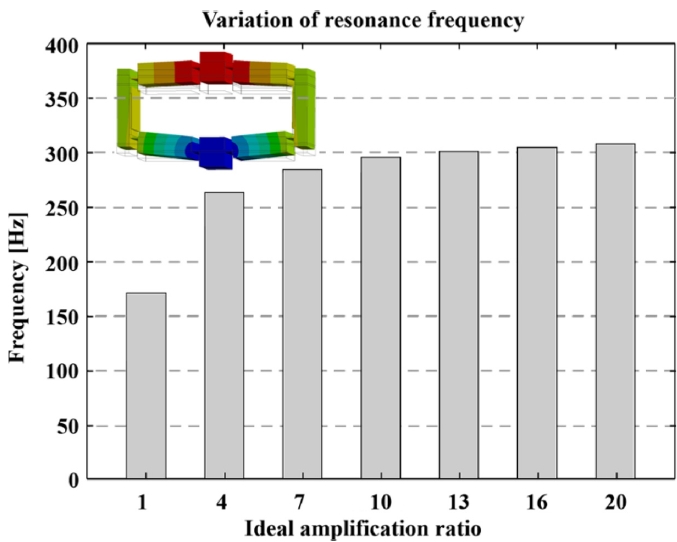
Fig. A2Extrusion of input link for reduction of displacement loss: (a) Decline of resonance frequency by outer or inner extrusion, (b) Decline of resonance frequency by simultaneous extrusion
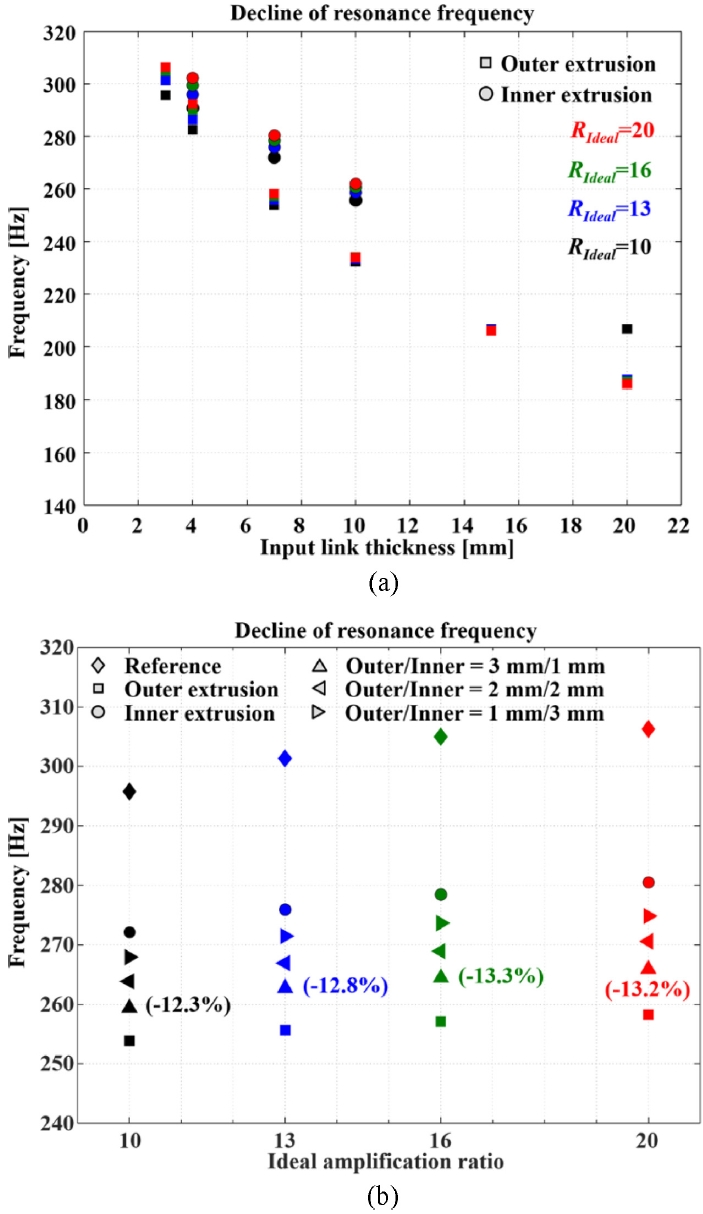
Fig. A3Mass reduction of input link: recovery of resonance frequency
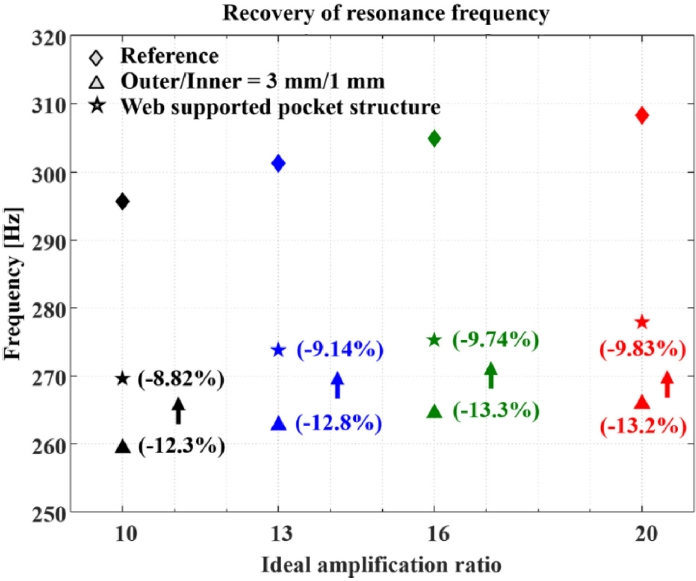
Fig. A4Mass reduction of intermediate link shape: Increase of resonance frequency