ABSTRACT
Cable chains are essential for guiding and protecting cables in repetitive linear-motion equipment. However, during highspeed operations, inertial effects and structural deformation can lead to position overshoot beyond the intended stroke, resulting in off-path motion and increased stress concentrations in links and joints. This study assesses the structural stability of a U-shaped cable carrier under conditions of position overshoot and suggests an optimized geometry. To analyze this, a nonlinear finite element model is employed, constraining one end of the carrier while applying a prescribed overshoot displacement to the other end. Structural stability is measured using a stability index, which is defined as the maximum reaction force at the point of yielding, when the equivalent (von Mises) stress reaches the material's yield stress. A sensitivity analysis identifies the key geometric design variables, and response surface methodology is applied to find an optimal shape that maximizes the reaction force at yielding. The proposed simulation-driven workflow offers practical design guidance for enhancing the stability of cable carriers during non-ideal overshoot events.
-
KEYWORDS: Cable chain, Finite element analysis, Response surface methodology, Shape-optimization
-
KEYWORDS: 케이블 체인, 유한요소해석, 반응표면법, 형상 최적화
1. 서론
케이블 체인은 반복적인 직선 운동 환경에서 전력 케이블 등을 일정한 궤도로 유도, 보호하기 위한 장치이다[
1].
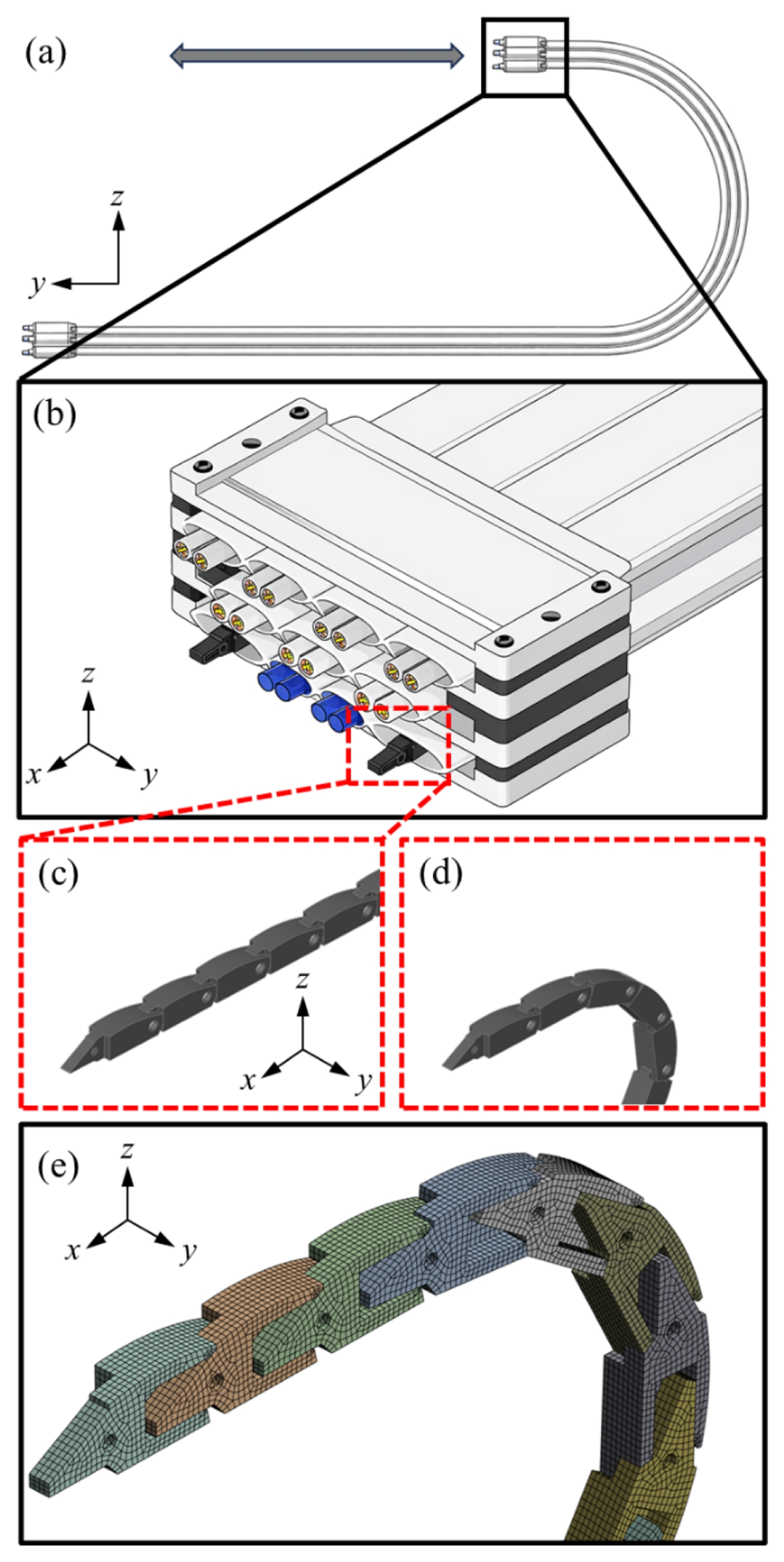
Fig. 1(a)와 같이 일직선 스트로크 운동을 유도해주는 역할을 한다.
Fig. 1(b)의 그림처럼 여러 케이블과 묶여,
Figs. 1(c) 및
1(d)와 같이 제한된 곡률 반경을 가져 이송 중 케이블들의 간섭과 과도한 꺾임을 방지한다.
이러한 시스템은 반도체 제조 장비, 자동화 생산 라인, 산업용 로봇, 공작기계 등 정밀성을 요구하는 산업 분야 전반에 적용되고 있다. 최근 산업 자동화 장비는 고속 반복 운전을 전제로 설계되고 있으며, 이에 따라 케이블 체인에는 수십만 회 이상의 반복 스트로크 조건에서도 구조적 안정성과 내구성이 동시에 요구되고 있다[
2].
기존 케이블 체인 연구에서는 소음, 분진과 같은 운용 적합성 지표의 시험 평가[
3], 형상에 따른 동특성 분석[
1,
4], 가이드와의 충돌 상황을 고려한 유한요소 기반 구조 안정성 검증[
5] 등이 이루어져 왔다. 그러나 이러한 평가들은 주로 이상적인 직선 구동 조건을 가정하고 있어, 구동 중 발생 가능한 궤도이탈 상황과 그에 따른 구조적 안정성에 대한 분석은 고려되지 않았다.
고속 구동과정에서는 이송 가속도 한계와 내부 동특성으로 인해 설계된 궤도 대비 실제 구동되는 궤도가 달라질 수 있으며, 특히 방향 변화가 큰 구간에서 궤적 오차가 증가할 수 있다[
6]. 또한 케이블 체인은 링크 기반의 유연 구조물로서 구동 중 접촉, 간극, 변형이 동반되므로, 고속 반복 구동에서 목표 범위를 초과하여 스트로크 되는 오버슈트(Overshoot)가 발생할 수 있다.
본 논문에서는 이러한 이탈 상황에서의 구조적 안정성을 평가하기 위해, U자 형상으로 구부린 케이블 체인의 한쪽 끝을 구속하고 반대쪽 끝을 이동시키는 방식으로 모사하였다. 오버슈트 조건에서 구조적 안정성을 평가하기 위해 항복응력에 도달할 때의 최대 반력을 정량적 지표로 설정하였다. 최적화 방법 으로는 시뮬레이션 기반 반응표면법(Response Surface Methodology)을 적용하여 해당 목적함수에 대한 최적치를 달성하는 설계방안을 제안한다.
먼저 케이블 체인의 궤도이탈 과정을 비선형 구조 해석(Nonlinear FEA)으로 구현하였다. 다음으로 민감도 분석(Sensitivity Analysis)으로 각 변수의 영향도를 정량화하고 주요 변수를 선별하였다. 선정된 설계 변수들을 바탕으로 반응표면법을 진행하였으며, 항복응력에 도달하였을때의 반력을 최대화하는 최적형상을 도출하였다.
2. 케이블 체인 오버슈트 프로세스 예측
2.1 유한요소해석 해석
모델은 무빙케이블 포드(Pod) 내부에 있는 상용 일체형 케이블 체인을 대상으로 구축하였다. 포드는 반도체 생산시설 등 클린룸 환경에서 분진 유입을 차단하기 위하여
Fig. 1(b)와 같이 케이블 체인을 보호 피복하는 장치이다.
모델링은 3차원 CAD 프로그램인 CATIA V5를 이용하여
Fig. 1(c)와 같이 구축하였다. 구축한 케이블 체인의 형상이 xz 평면을 기준으로 대칭이므로, 선행논문과 같은 방식으로 전체 모델의 절반인 1/2 모델을 적용하여 계산 효율을 높였다[
8].
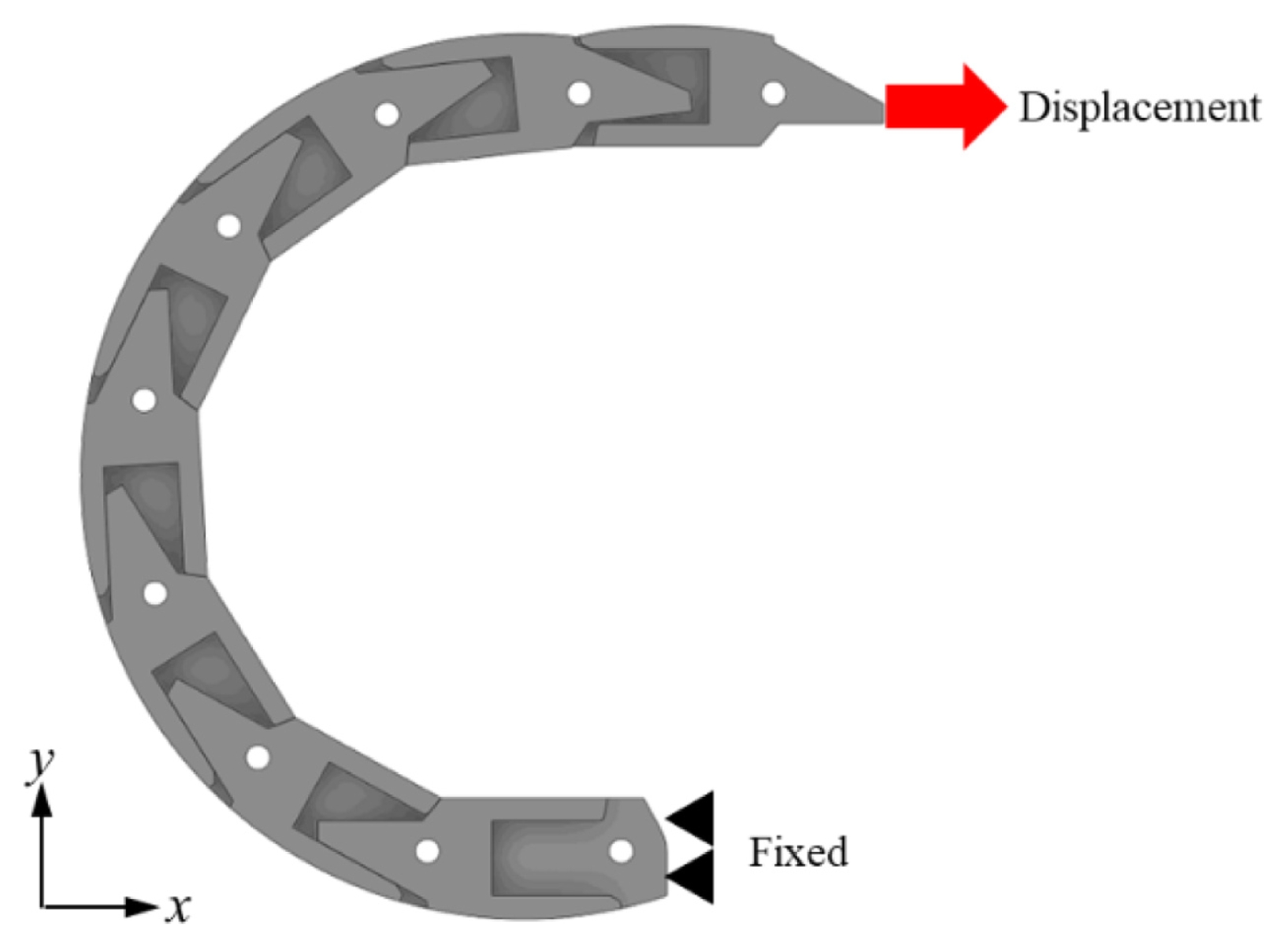
모델은
Fig. 2와 같이 양 끝 링크 모델 사이의 각도가 180°를 이루도록 곡률 반경을 따라 여러 개의 링크 모델을 연결하였다. 케이블 체인의 궤도이탈 과정을 시뮬레이션 하기 위해 해석 조건은 한쪽 끝단에는 고정 경계조건을 적용하며, 반대쪽 끝단에 x축 방향으로 20 mm의 변위를 부여하였다. 체인 링크 모델의 소재는 Plastic, PA66이며, 링크와 링크 사이를 체결해주는 핀은 해석의 단순화를 위하여 회전(Revolute) 조인트 구속으로 대체하였다. 사용된 물성 데이터는 Ansys Database을 참고하여 설정하였으며, 사용된 데이터는
Table 1에 작성하였다[
8].
상용 일체형 케이블 체인을 대상으로 기본 FEA 모델을 바탕으로 궤도이탈 조건에서 구조 응답을 해석하였다.
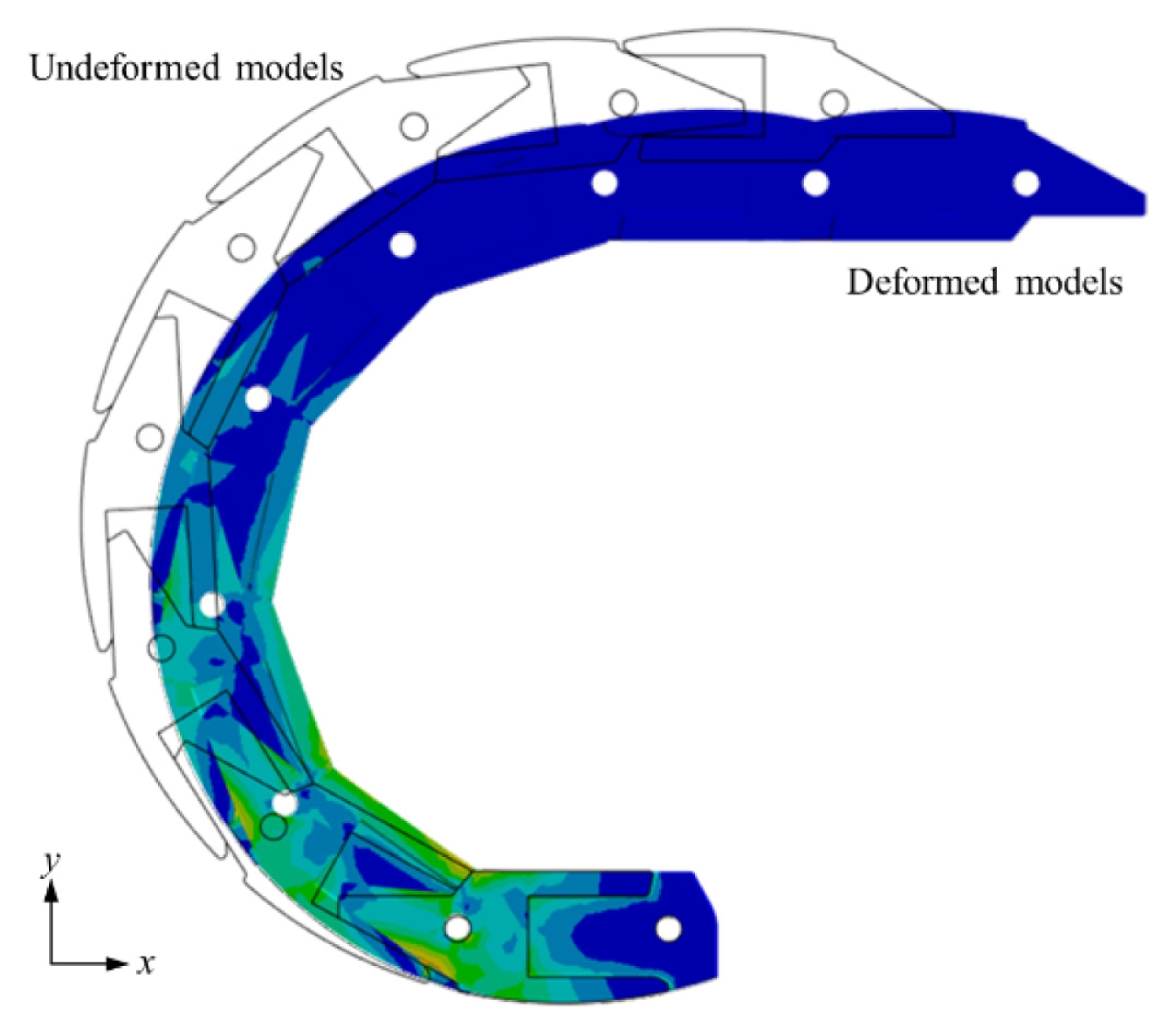
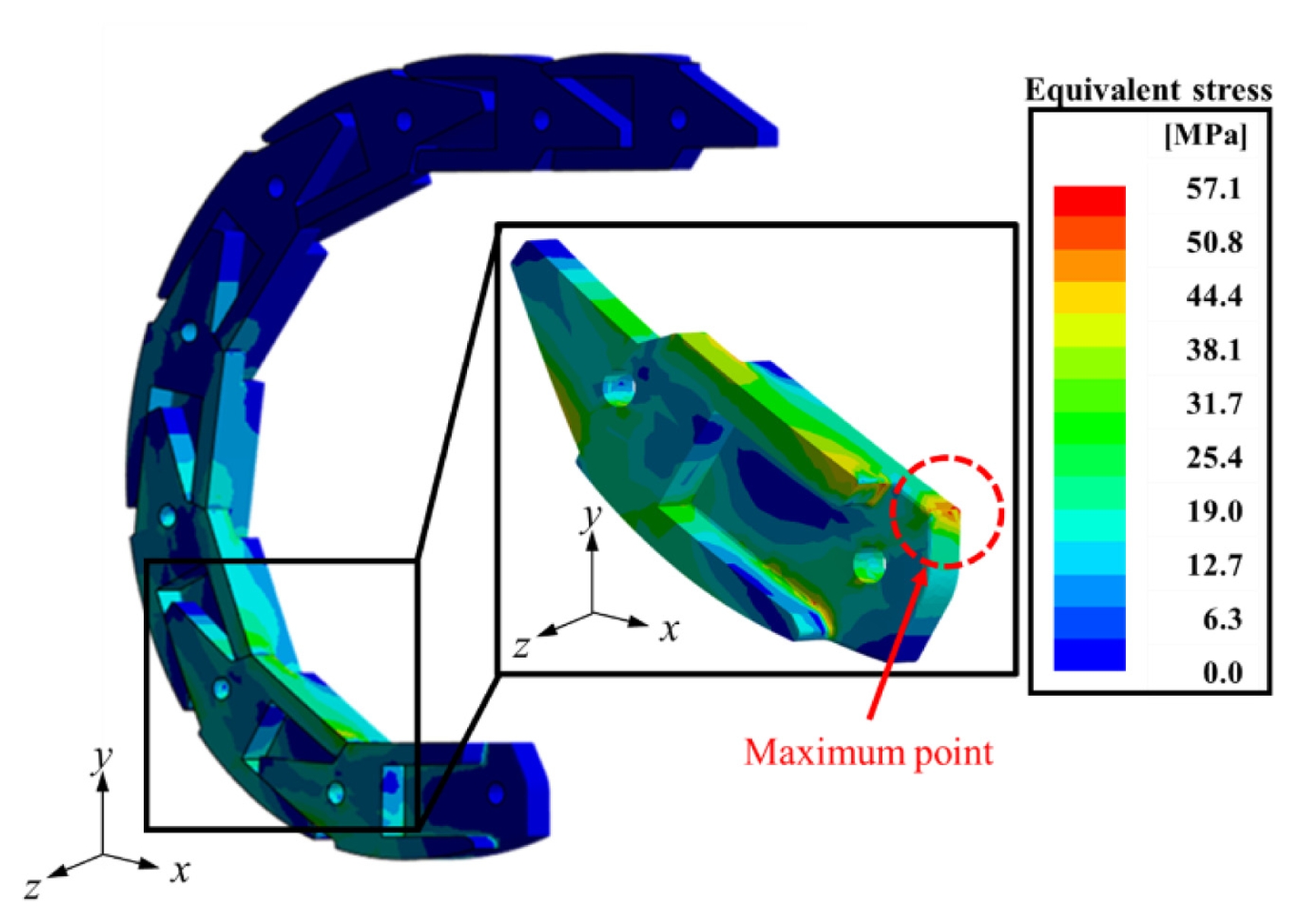
Fig. 3은 구조해석으로 도출된 응력 분포를 나타낸다. 모델 끝단에 변위가 적용됨에 따라 유기적으로 연결된 링크들 간 접촉 상호작용이 증가하며, 그 결과 고정부 인근 링크를 중심으로 응력이 집중되는 것이 확인된다.
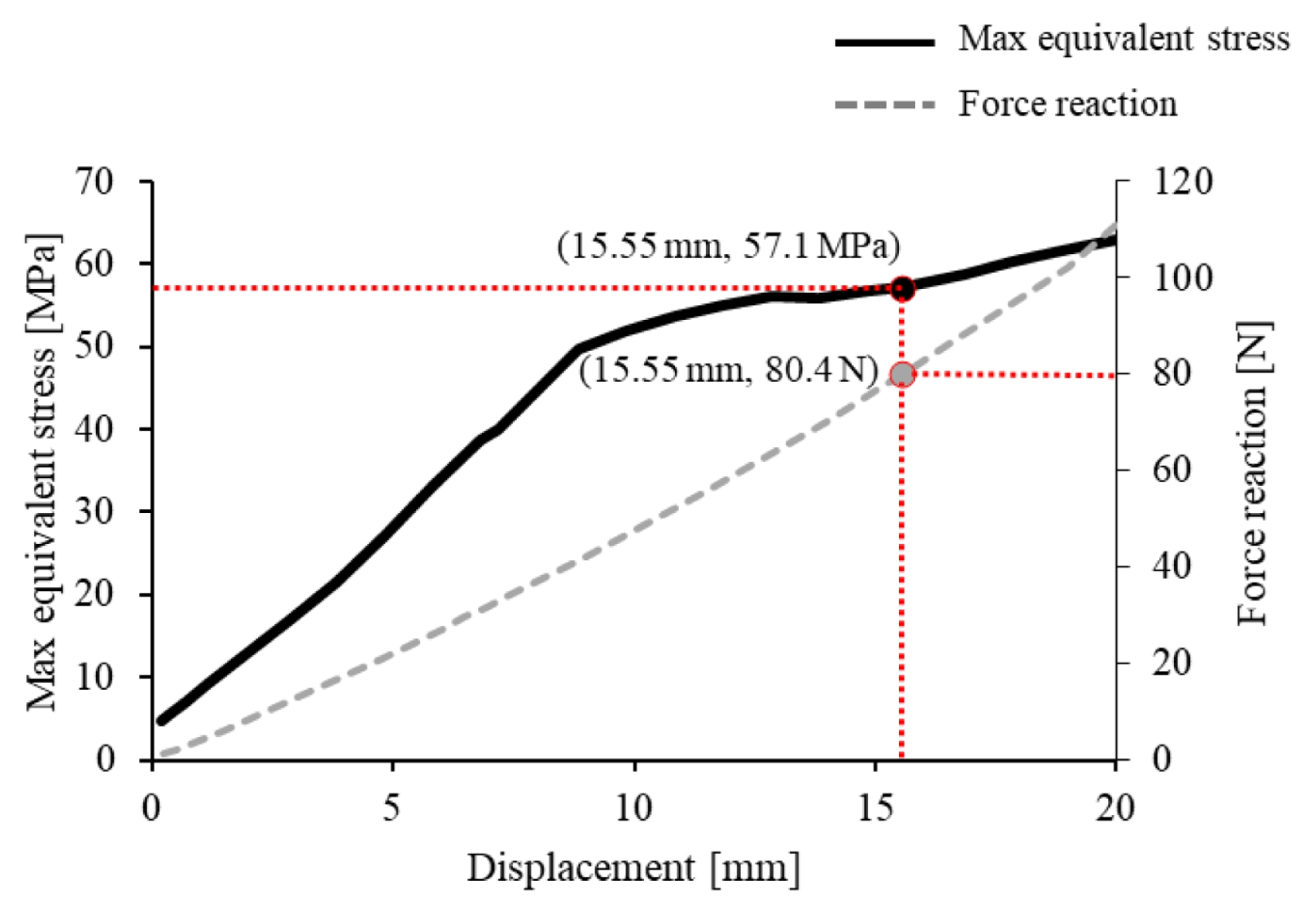
Fig. 4는 변위조건을 부여한 끝단의 변위에 따른 최대 등가응력과 반력을 나타낸 그래프이다. 변위가 증가함에 따라 최대 등가응력과 반력은 모두 점진적으로 증가하는 경향을 보인다. 최대 등가응력이 재료의 항복응력인 57.1 MPa에 도달하는 시점의 변위는 15.55 mm이며, 이때의 반력은 40.2 N으로 산출되었다. 본 해석은 대칭 조건을 적용한 1/2 모델을 기반으로 수행되었으므로, 실제 구조물에 작용하는 반력은 해당 값의 2배인 80.4 N으로 환산된다. 이에 따라
Fig. 4에 제시된 반력 그래프는 Raw Data에 2배를 적용하여 나타내었다.
Fig. 5는 항복응력 도달 시점의 응력분포를 나타낸 결과이며 링크 간의 접촉면에 응력이 집중됨을 확인할 수 있다. 해당 부위의 응력을 감소시키기 위해선 접촉면의 크기, 구조, 각도 등의 형상 변화를 통해 접촉면의 응력 집중을 완화할 필요가 있다.
해석 결과로 기본 모델은 링크 접촉면에서의 응력 집중으로 인해 변위 15.55 mm에서 항복응력에 도달하여 구조적 여유가 제한적임을 확인하였다. 따라서 항복 이전에 더 큰 이송거리를 확보하고 하중 증가 구간에서도 항복 위험을 낮추기 위해, 응력 집중을 완화할 수 있는 형상 최적화가 요구된다.
2.3 해석 모델 타당성 확인
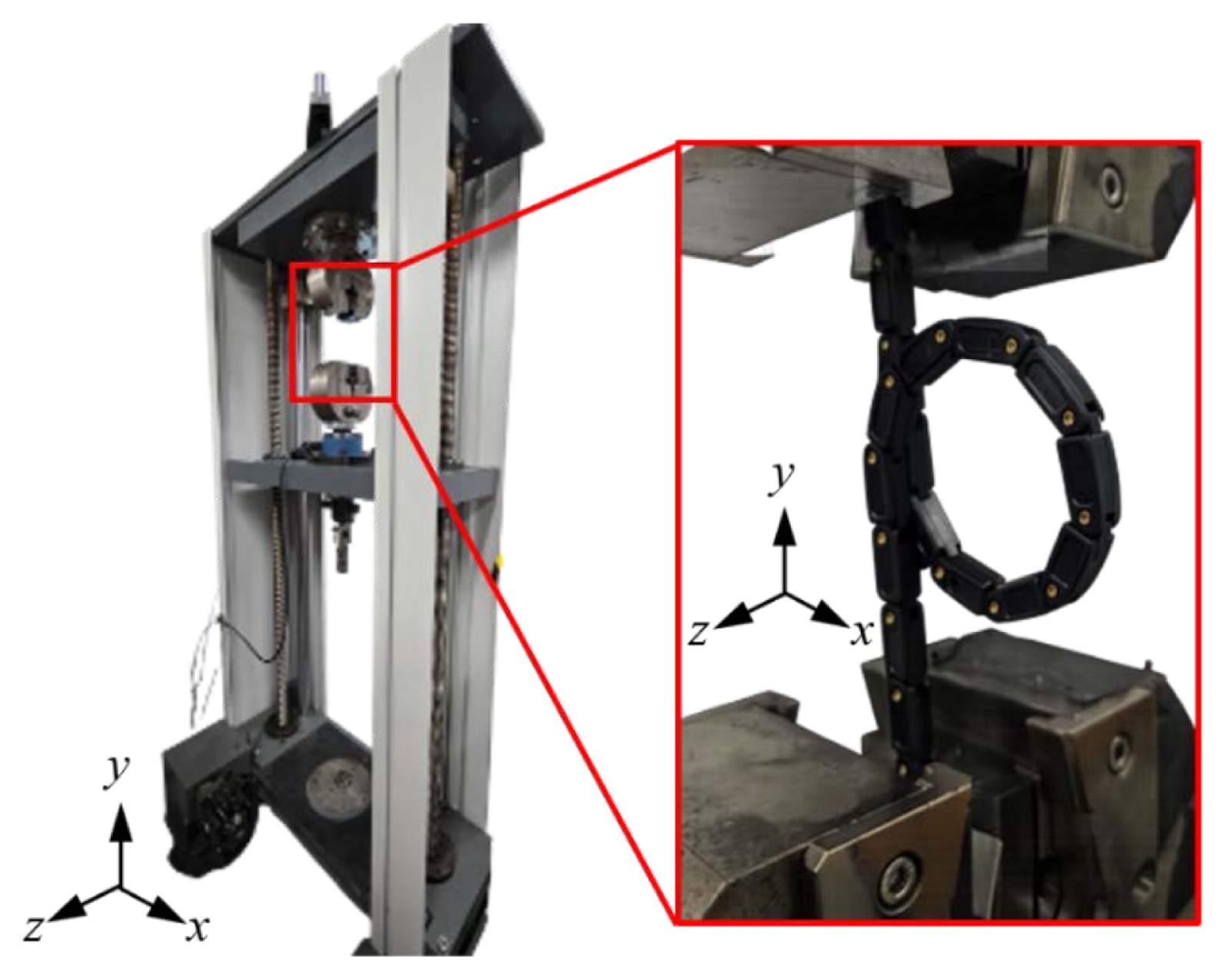
해석 결과의 타당성을 확인하기 위해 최대 인장력을 실험적으로 측정하였다. 실험은 ZwickRoell Z100 시험기를 이용하여 단축인장시험을 진행하였으며, 해석조건이 정지방향과 인장방향이 동일하여 실제 실험조건으로 동일하게 설정하는 것이 어렵기 때문에 유사한 조건으로 설정하였다. 실험조건은
Fig. 6의 오른쪽 사진과 같이 시험편은 곡률 반경만큼 총 360° 각도로 구부린 상태로 양 끝검을 지그에 고정하여 FEA 해석조건을 모사하였다. 체결된 케이블 체인 시편에 대해 x 방향으로 인장 하중을 가하였고, 파단에 이를 때까지 하중–변위 데이터를 측정하였다.
플라스틱 재료의 변형률 속도 의존성이 큰 점을 고려하여, 인장 속도는 인장시험기의 최저 속도인 5 mm/min으로 준정적 조건에서 시험을 수행하였다[
9].
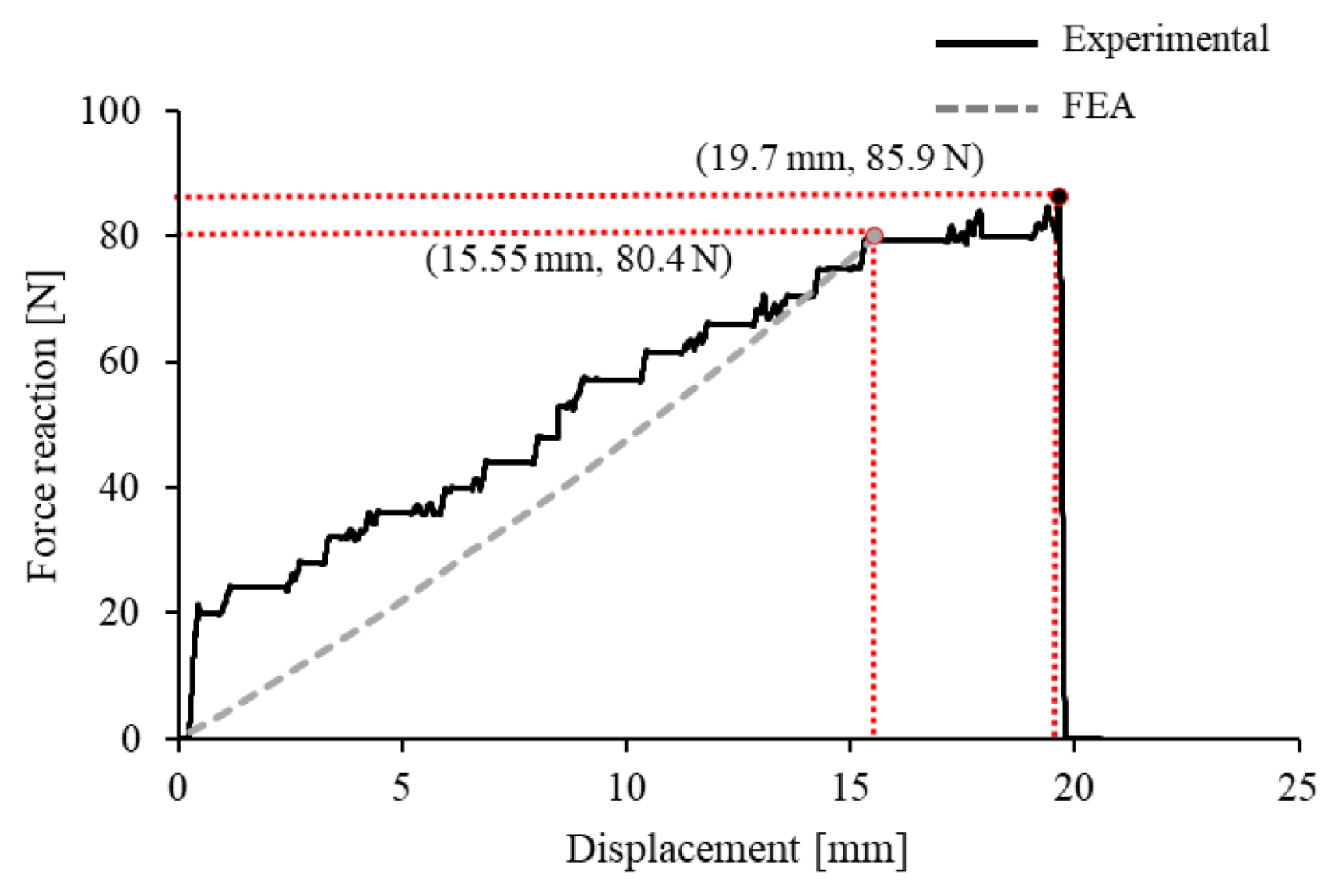
Fig. 7은 실험 중 측정된 하중–변위 곡선과 유한요소해석(Finite Element Analysis, FEA) 시뮬레이션 결과를 비교한 그래프이며, 최대하중은 두 값이 유사한 것을 확인할 수 있다. 하지만 초기부터 약 0.58 mm 구간까지는 변위 증가에 따라 하중이 급격히 상승하는 해석 결과와 상이한 응답을 보였다. 이러한 차이는 해석조건과 동일한 실험조건을 구성하지 못한 이유가 첫번째이며,
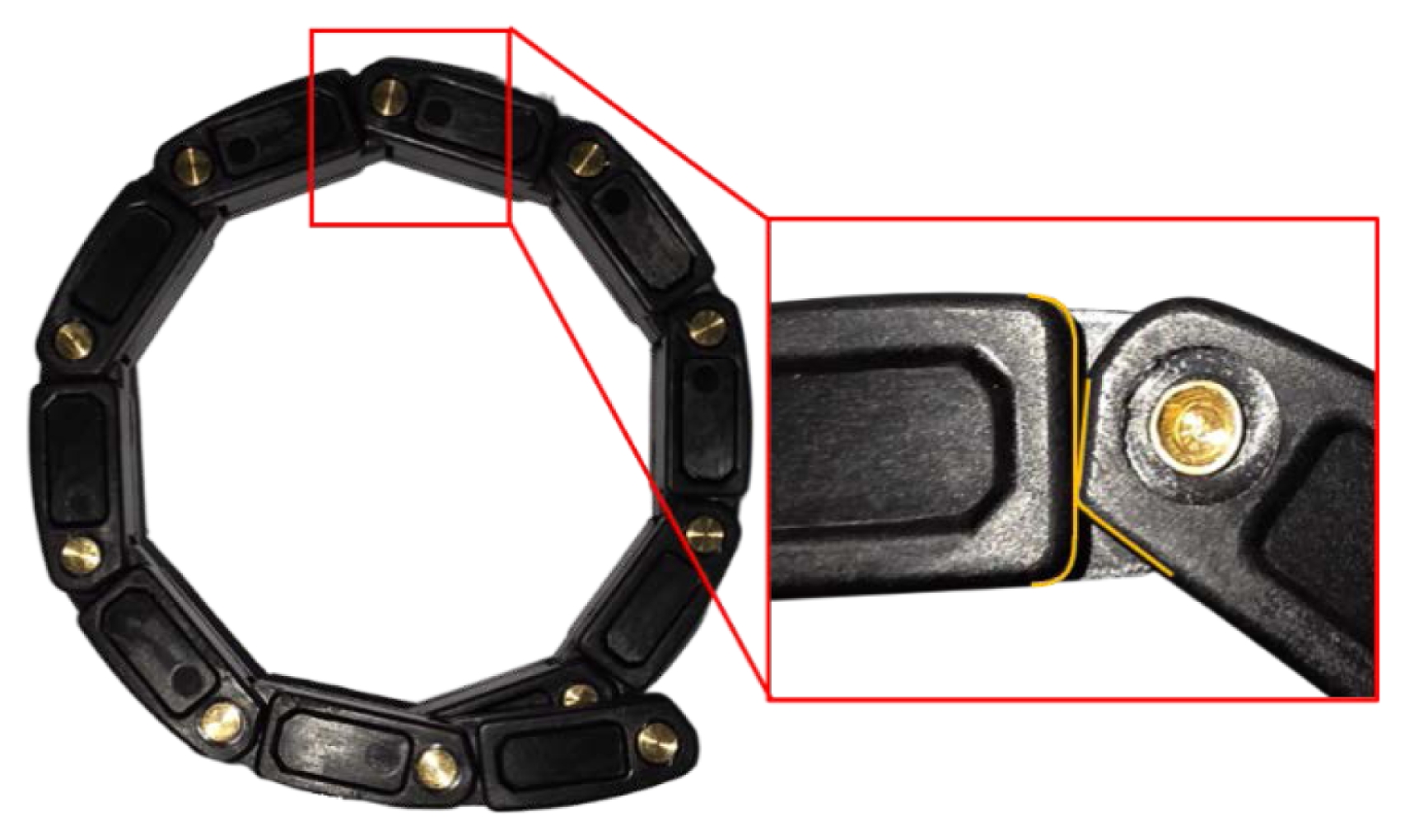
Fig. 8과 같이 실제 제품의 제조과정에서 발생하는 가공 오차 및 형상 편차로 인해 링크 간 접촉 면적이 해석 모델에서 설정한 이상 조건에 비해 협소하게 형성되었기 때문으로 판단된다. 접촉 면적이 제한되면 초기 하중 전달 과정에서 국부적인 압축을 유발하며, 결과적으로 해석 결과보다 높은 초기 반력 응답을 보이게 된다. 또한 파단 시점까지의 변위는 해석 결과보다 실험에서 더 크게 측정되었으며, 이는 실제 제품의 조립 공차에 따른 체결부 간극이 존재하기 때문에 인장 하중에 대한 전체 변형이 해석보다 크게 발생한 것으로 판단된다.
3. 케이블 체인 형상 최적화
3.1 파라미터 설정
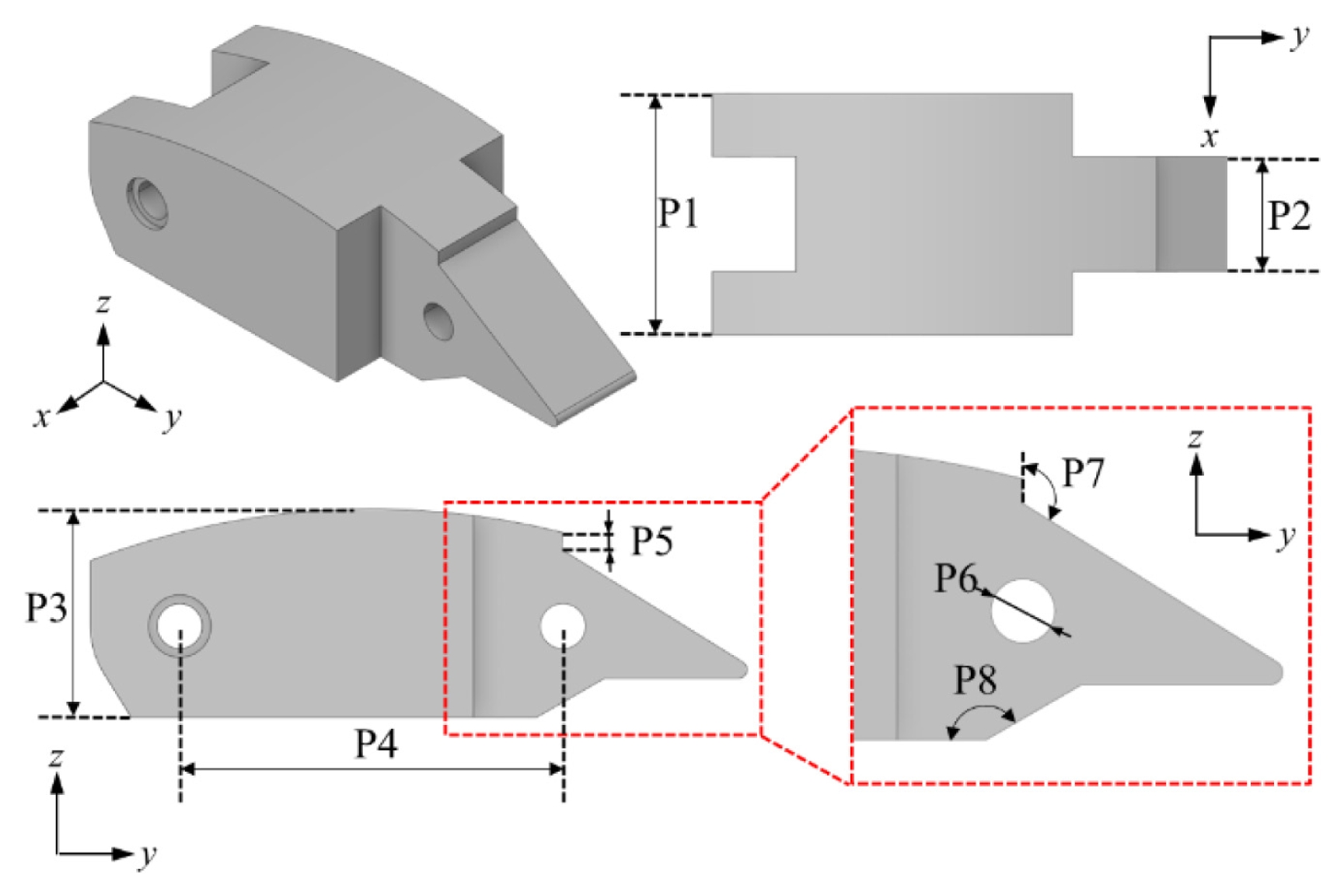
본 논문에서 설계변수는 케이블 체인의 궤도이탈 과정을 유한요소해석으로 구현한 결과를 바탕으로 선정하였다. 해석 결과 변위로 인한 하중은 케이블 체인이 맞닿는 접촉면 부근에 상대적으로 높은 하중이 발생하여 해당 형상 및 접촉각과 관련 있는 7가지로 선정하였다. 각 설계변수는 접촉면의 너비와 관련 된 외측 너비(P1) 와 내측 너비(P2)의 비
P2P1, 높이(P3), 체결부 간의 길이(P4), 상단 접촉면 너비(P5), 체결부 직경(P6), 상단 접촉면 각도(P7) 그리고 하단 접촉면 각도(P8)이며,
Fig. 9에 도시하였다. 기준이 되는 모델의 변수는 상용 일체형 케이블을 바탕으로 삼았으며 항복응력에 도달하는 시점의 변위량(Displacement)과 그에 따른 반력(Reaction Force)을 최대화하는 형상을 목표로 설계하였다. 초기 모델에 대한 각 변수를 변수범위의 중앙값으로 설정하였다.
케이블체인은 분진 유출을 방지하기 위한 포드가 장착되어야 하므로, 직경 20.5 mm인 원에 내접하도록 형상 구속조건을 설정하였다. 이에 따라 케이블체인의 높이가 변화하면 외측 너비는 해당 내접 조건을 만족하도록 자동으로 결정되도록 하였다. 체결부 간의 길이는 응력 민감도가 높다고 판단하여 범위를 넓게 설정하되, 음의 방향으로의 꺾임 방지 기능이 확보되도록 상한을 25 mm로 제한하였다. 목적함수 정의 및 각 설계변수의 범위는
Table 2에 나타내었다.
민감도 분석(Sensitivity Analysis)이란 설정한 설계 변수들의 변화가 목적함수에 미치는 영향을 정량적으로 파악할 때 사용된다[
10]. 설계변수의 영향도는 수치로 표현 가능하며, 시각화 방법으로는 주효과도(Main Effects Plot)가 활용된다. 이는 각 변수의 수치가 클수록 목적함수에 끼치는 영향이 크다는 것을 의미한다[
11].
각 설계변수들이 두 목적함수인 한계 변위와 최대 반력에 미치는 영향도를 분석하기 위해 7 요소 2 수준 1/4 Factorial으로 총 32번의 요인분석법을 각각 수행하였으며
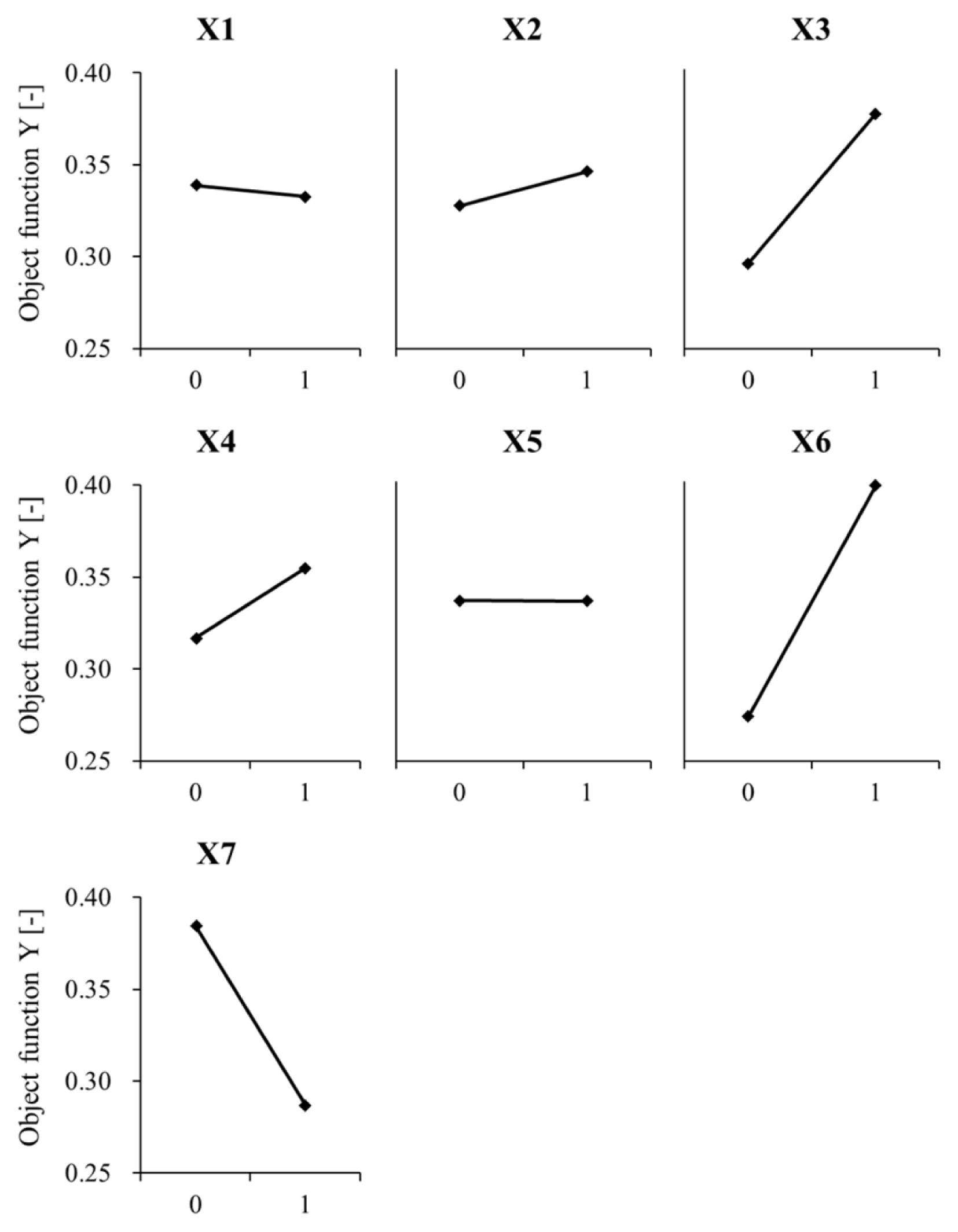
Table 3에 그 결과 를 정리하였다. 두 목적함수를 단일목적함수로 치환하기 위해 각각 동일한 가중치를 곱하여 더해 새로운 목적함수 Y값에 대해 민감도분석을 진행하였다. 이를 통해 얻은 목적함수 Y에 대한 각 변수들의 주효과도를
Fig. 10에 나타내었으며, 이를 표로 정리한 것은
Table 4와 같다.
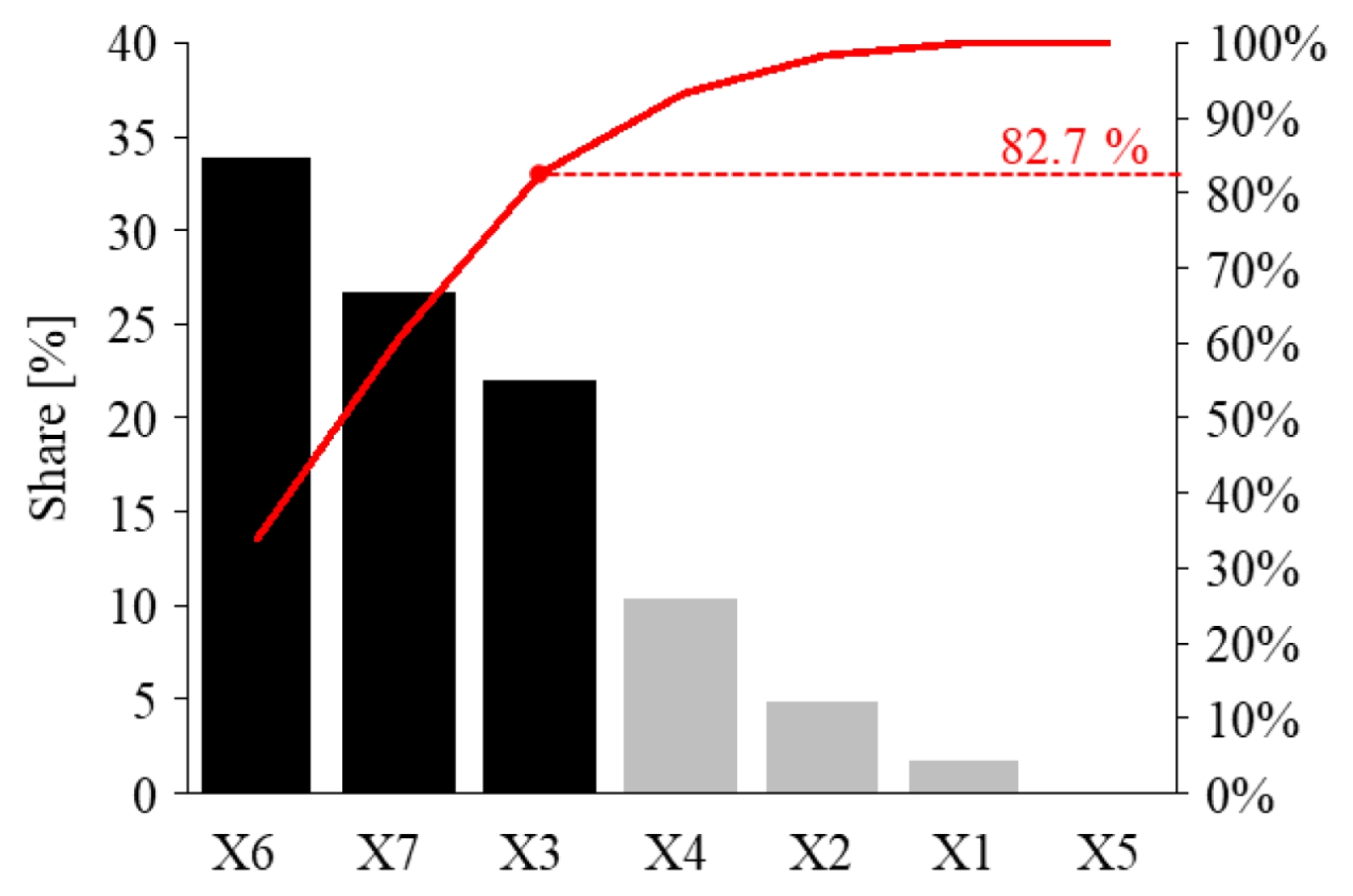
각 설계변수에 대해 반응 값의 최대치와 최소치의 차이를 Delta로 정의하였으며, 이는 해당 변수가 목적함수에 미치는 변동 폭을 나타내는 지표이다. 또한 전체 설계변수의 Delta 총합 대비 각 변수의 Delta 비율을 Share로 정의하여, 변수 간 상대적인 영향도를 정량적으로 비교하였다.
Table 4의 결과로 Delta 값이 큰 상위 세 개의 설계변수인 X6, X7, X3의 Share 총합이 전체의 80%를 초과하는 것으로 나타났으며, 이는 반응 특성이 세 변수에 의해 주로 결정됨을 의미한다. 이에 따라 본 연구에서는 상위 세 변수를 제외한 나머지 요인은 스크리닝(Screening)을 통해 제거 후 반응표면법을 진행하였다[
12,
13].
본 절에서는 목적함수와 설계변수 간의 비선형 응답 특성을 분석하기 위해 회귀분석 방법 중 반응표면법(Response Surface Methodology)을 적용하였다. 반응표면법이란 일반적인 선형 회귀모델보다 복잡한 반응 곡면을 구성하여 더 정확한 근사 모델을 제공할 수 있는 회귀 분석 기법이다[
14]. 설계변수의 범위를 벗어나면 물리적으로 비현실적이거나 구조적으로 불안정이 발생할 수 있으므로 반응표면법의 여러 모델 중 박스-벤켄법(Box-Behnken Design)을 사용했다. 본 연구에 적용된 모델은 3인자, 중심점 3회 반복 실험으로 구성되어 총 15회의 구조해석 시뮬레이션을 수행하였으며, 이에 따른 구체적인 실험계획 및 해석 결과를
Table 5에 나타내었다. 각 설계변수의 교호작용을 고려하여 2차항 예측 모델인
식(1)을 사용하였다.
Y는 목적함수,
X는 설계 변수이며
b는 회귀계수,
b0는
Y절편이다.
이를 통해 얻은 반응표면법 회귀 모델
식(2)를 나타내었다. 해당 회귀식의 신뢰성을 검토하고자 결정계수(R²)를 고려하였다. 결정계수란 회귀모델에서 설계변수가 목적함수의 변동을 얼마나 잘 설명하는지 나타내는 척도다. 이는 0-100%의 값을 가지며, 100%에 가까워질수록 회귀모델이 유효함을 뜻한다. 본 연구에서 구축된 모델의 결정계수(R²)는 약 90.0%로 나타났다. 일반적으로 반응표면법을 활용한 공학적 최적화 및 경향성 분석에서는 결정계수가 80% 이상일 경우 최적 설계 영역을 도출하기 위한 예측 신뢰성이 충분히 확보된 것으로 간주된다[
15]. 따라서 본 모델은 데이터 전체 변동성의 90.0%를 성공적으로 설명하고 있으며, 과적합 위험 없이 최적화 프로세스를 수행하기에 충분한 정확도와 신뢰성을 확보하였음을 확인하였다.
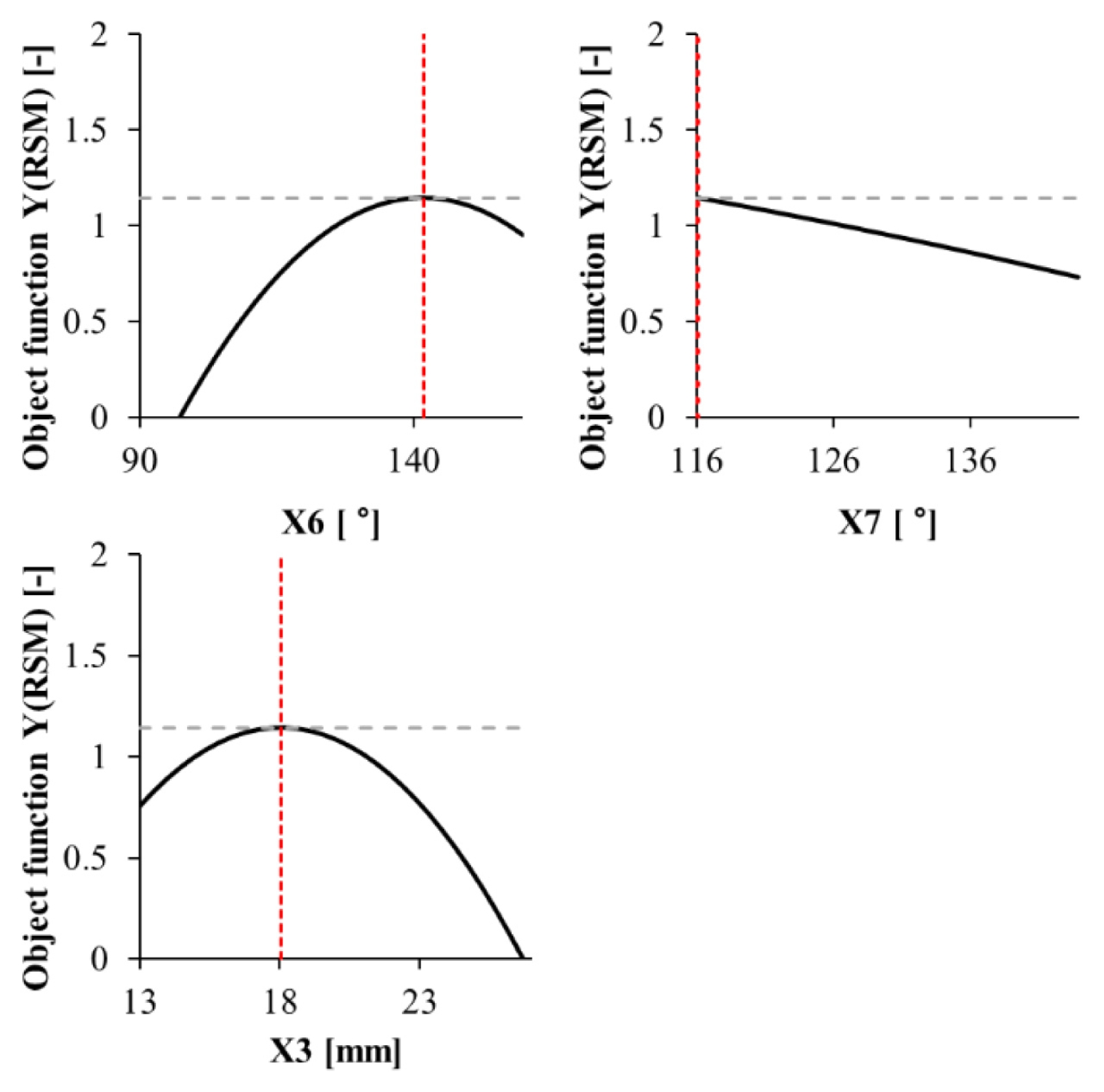
앞선 결과들을 통해 각 변수들의 목적함수에 대한 반응을 2D 그래프로 작성하여
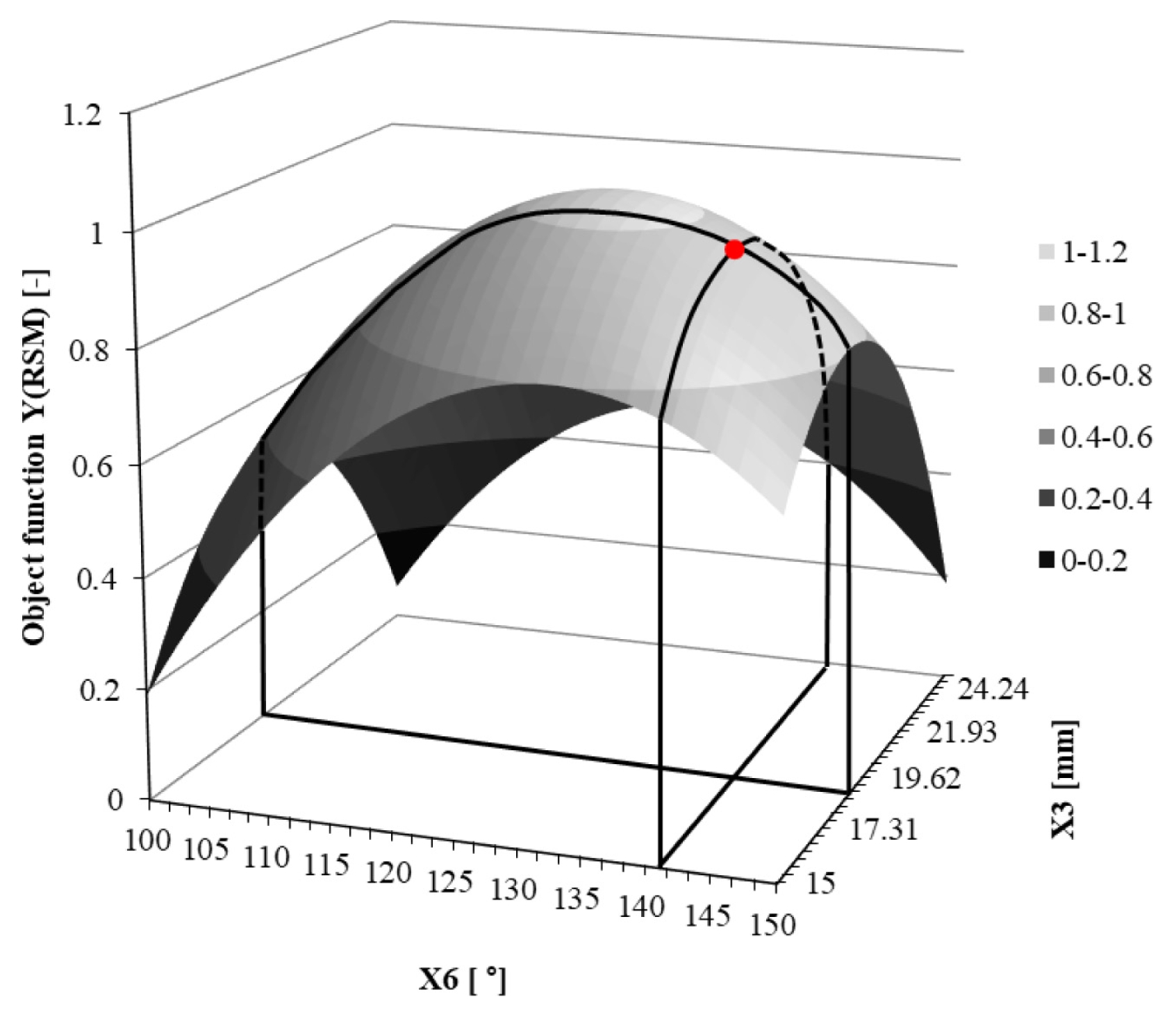
Fig. 12에 나타내었다. 변수들과 목적함수 사이의 관계를 3 차원 그래프로 작성하여
Fig. 12에 나타내었다. 목적함수와 각 변수의 관계를 통해 목표에 부합하는 최적 설계 변수를
Table 6에 정리하였다. X6 와 X3는 특정 값에서 극 값을 가지며 X7은 증가함에 따라 목적함수 값은 감소하는 선형적인 관계를 확인하였다. 앞선 결과를 통해 변수들과 목적함수 간의 관계를 3차원 그래프로 작성하여
Fig. 13에 나타내었고 목적 함수에 부합하는 최적 설계변수를
Table 6에 정리하였다.
Table 6에서 도출된 최적 설계 변수를 기반으로 초기 형상과 최적 형상에 대해 유한요소해석을 수행하였으며, 그 결과는
Figs. 14 및
15, 그리고
Table 7에 정리되어 있다.
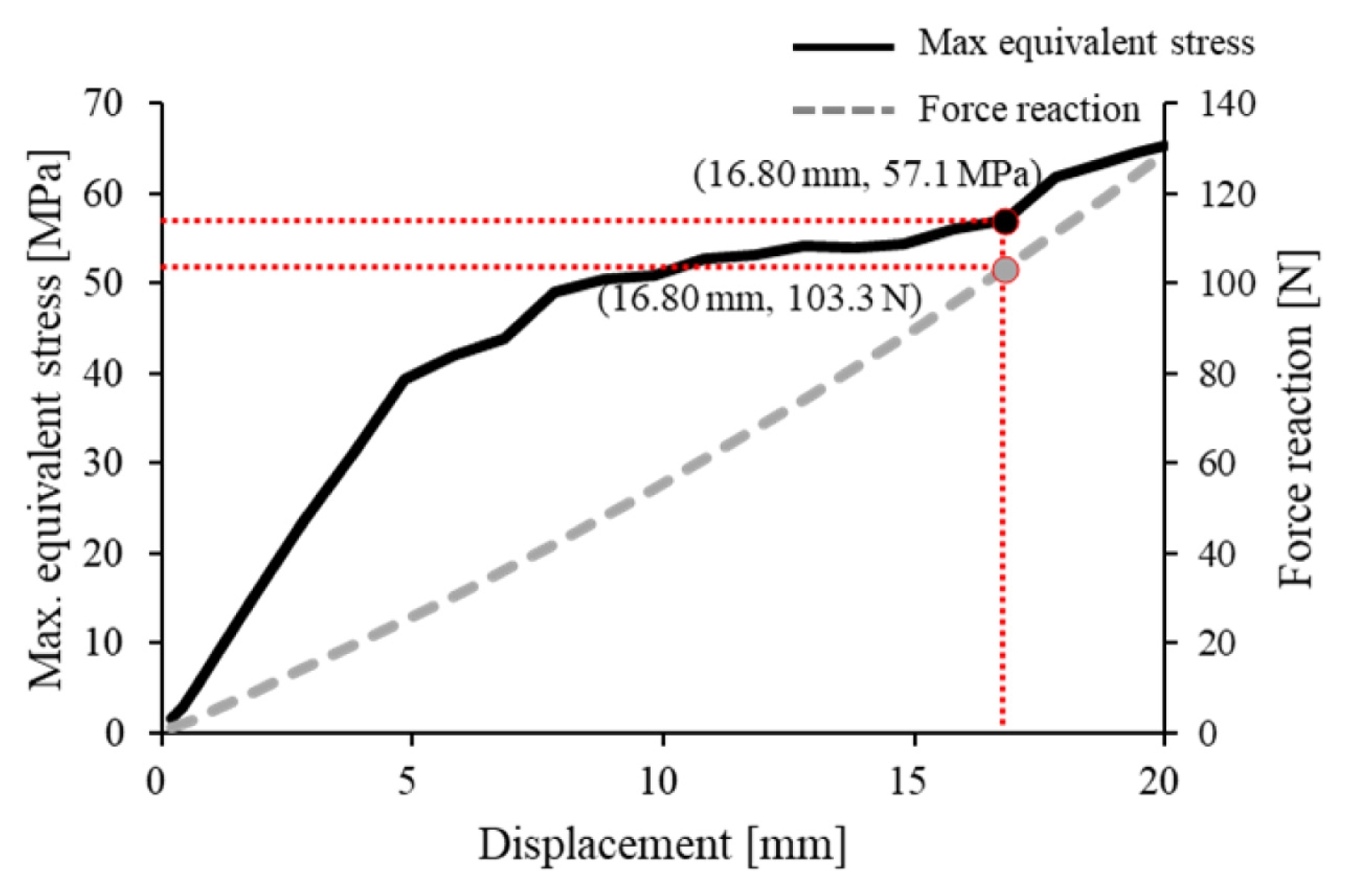
Fig. 13과 같이 최적 형상의 변위에 따른 최대 등가응력과 반력을 나타낸 그래프로 변위가 증가함에 따라 최대 등가응력이 증가하는 양상을 보이며 변위 16.8 mm에서 최대 등가응력이 항복응력 57.1 MPa에 도달하였으며, 이 때의 반력은 103.3 N이다.
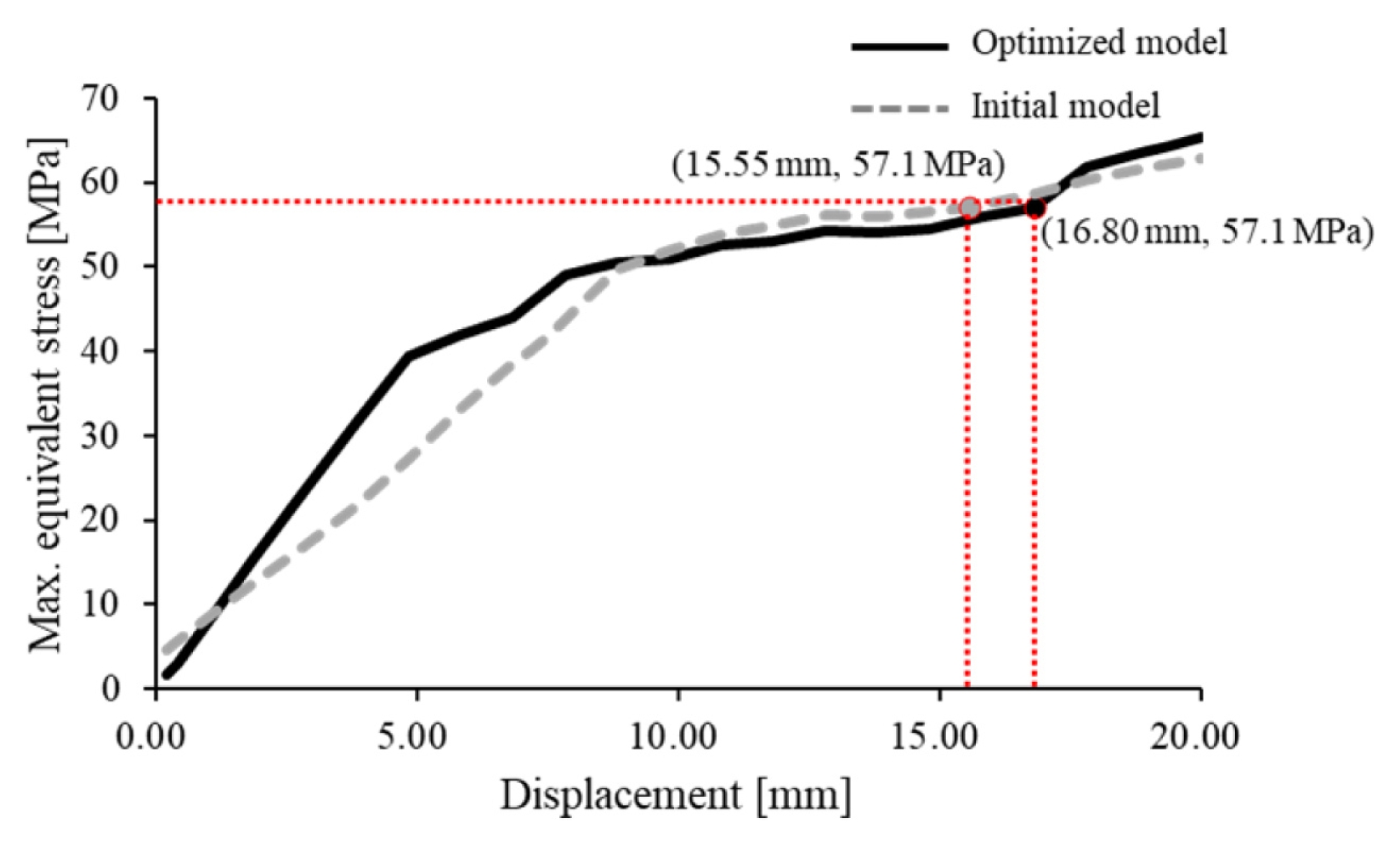
Fig. 14는 변위에 따른 초기 형상과 최적 형상의 최대 등가응력을 비교한 그래프이다. 두 그래프 모두 변위가 증가함에 따라 최대 등가응력도 높아지지만, 최적 형상은 비교적 더 가파른 기울기로 최대 등가응력이 높아지며 항복응력에 도달하기 직전에는 완만한 기울기로 높아지는 것을 확인할 수 있다. 항복응력에 도달하는 시점의 변위를 살펴보면, 최적 형상은 15.55에서 16.80 mm 로 초기 형상 대비 약 7.7%의 변위 증가 효과를 나타냈다.
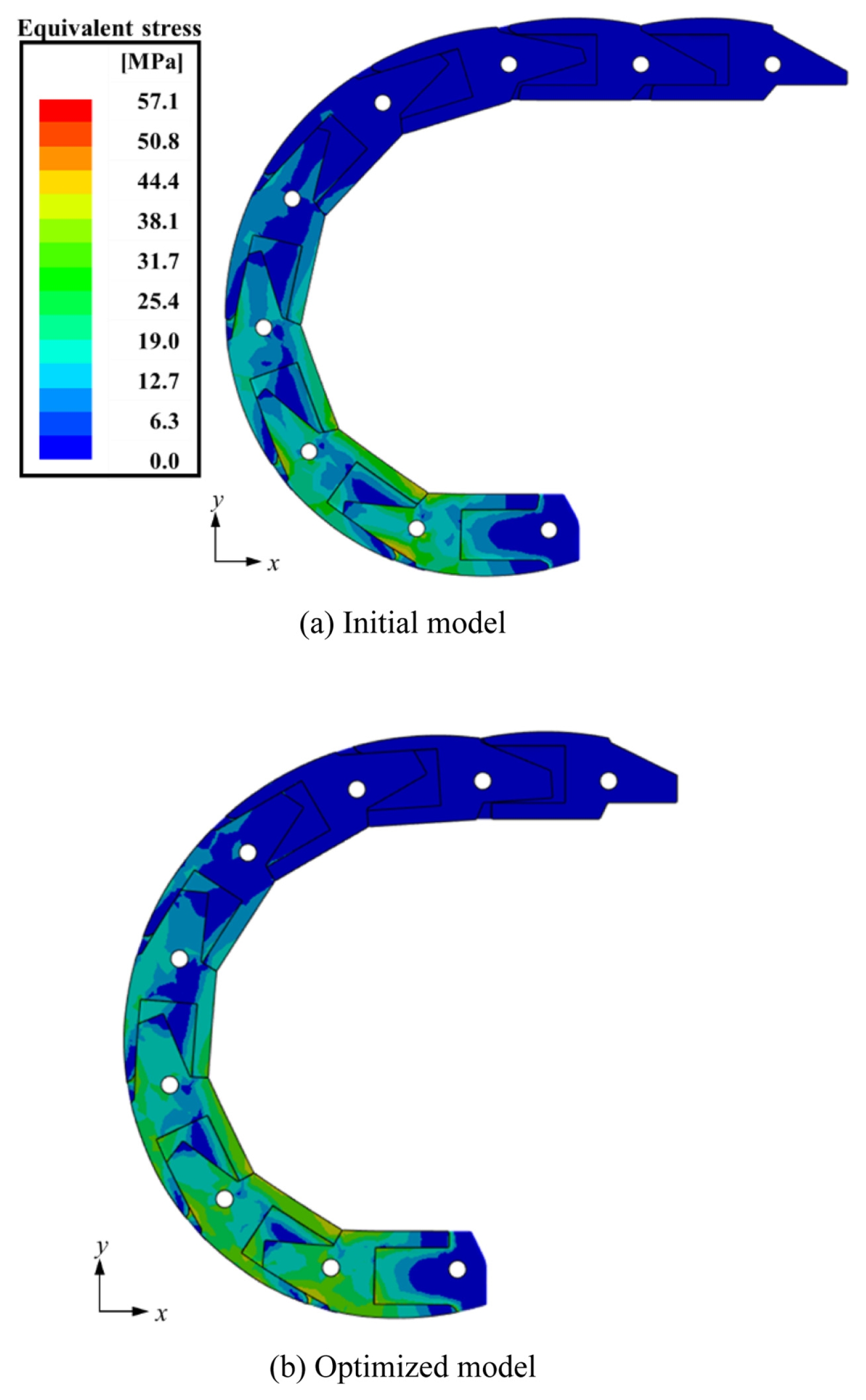
Fig. 16에서는 변위 15.55 mm에서 초기 형상과 최적 형상의 응력분포를 비교한 결과로, 최적 형상에서 비교적 넓은 범위로 응력이 분산되어 최대 등가응력이 낮은 것을 확인할 수 있다.
Table 7은 초기 모델과 최적화 모델의 해석결과를 비교하여 나타낸 표로, 이를 통해 궤도 이탈 상황에서도 비교적 긴 변위에서도 항복응력을 넘지 않아 구조적 신뢰성을 향상시킬 수 있음을 확인할 수 있다.
4. 결론
본 연구에서는 케이블 체인의 궤도이탈 거동에서 항복응력에 도달하는 변위와 그에 따른 반력을 목적함수로 설정하였다. 각각의 목적함수를 동일한 가중치로 부여하는 가중치 합산법을 통해 단일 목적함수로 설정하였으며 이를 최대화하는 최적 형상 설계를 목표로 하였다. 우선 유한요소 해석을 통해 케이블 체인의 궤도이탈 과정을 구현하였으며 반응표면법을 적용하여 조립 응력을 최소화할 수 있는 형상을 도출하고자 하였다. 이를 통해 최적 형상은 기존 설계 대비 응력분포 균일화 하여 약 7.7%의 변위 증가와 28.5%의 반력 증가 효과를 보였다. 본 연구 결과를 통해 클린룸 환경에서 사용되는 무빙 케이블 체인의 성능 향상이 기대된다.
본 연구는 단일 방향의 단순 스트로크 조건에서 발생하는 궤도 이탈 상황만을 고려하여 최적화를 수행하였다. 다만 실제 제품의 복합 구동 및 운용 환경에서의 거동과는 차이가 있음을 확인하였다. 향후 연구에서는 실제 운용 환경에서 발생 가능한 비틀림 하중을 포함하여, 궤도 이탈 조건의 구조 응답을 보다 현실적으로 고려하여 진행할 예정이다.
Fig. 1
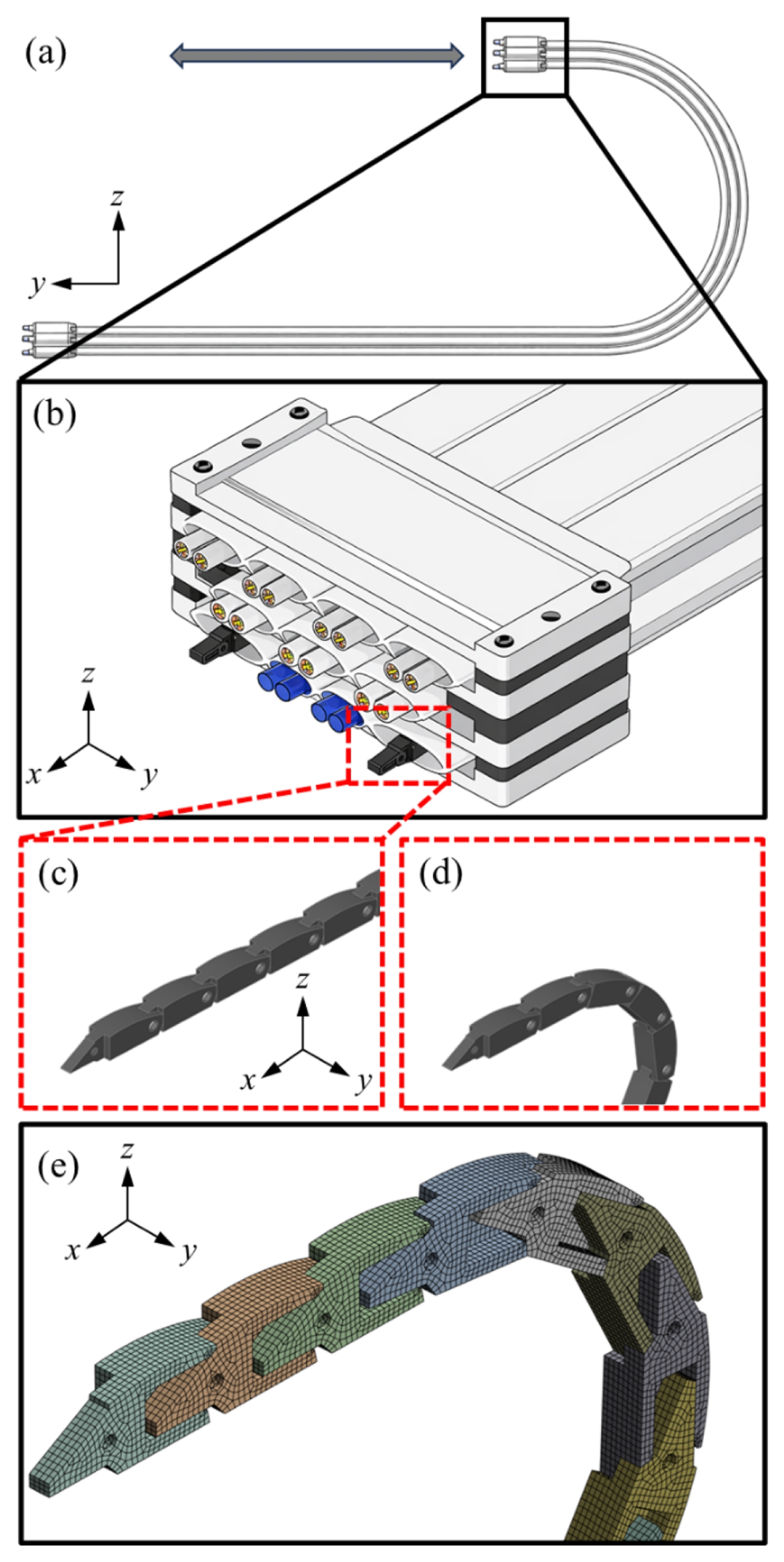
Fig. 2FEA contact and boundary conditions
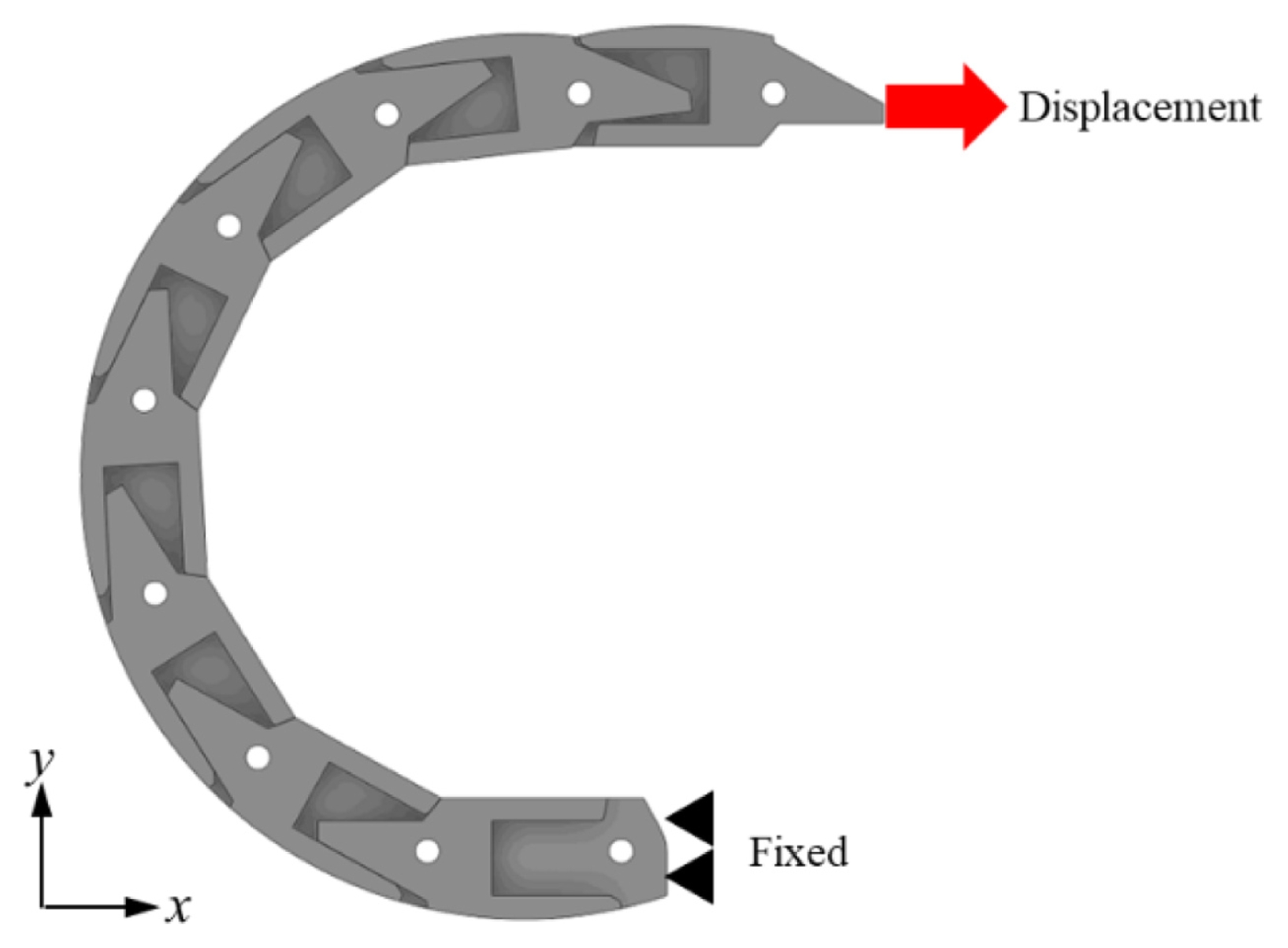
Fig. 3Comparison of undeformed and deformed models
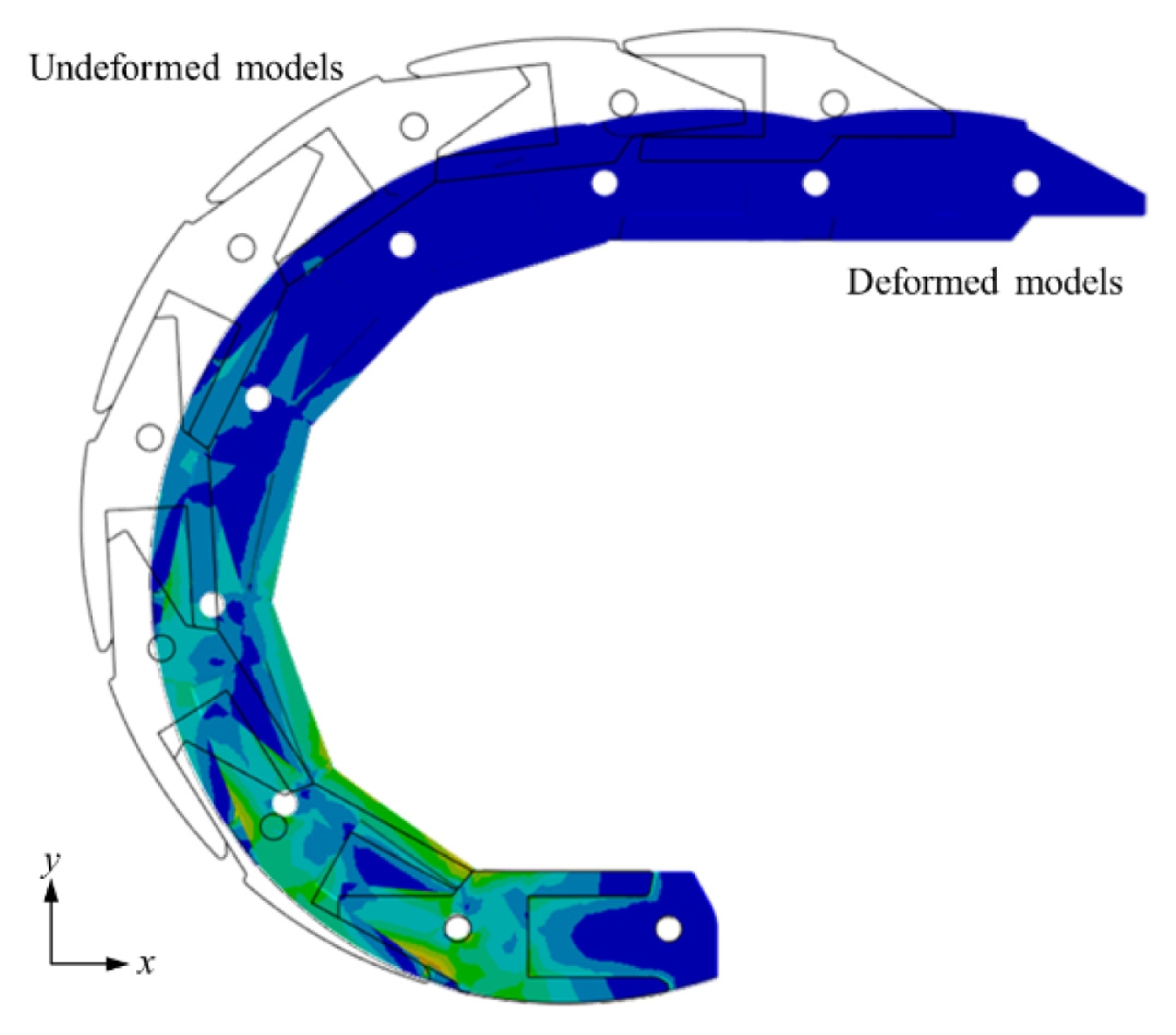
Fig. 4Reaction force corresponding to the yield stress of initial model
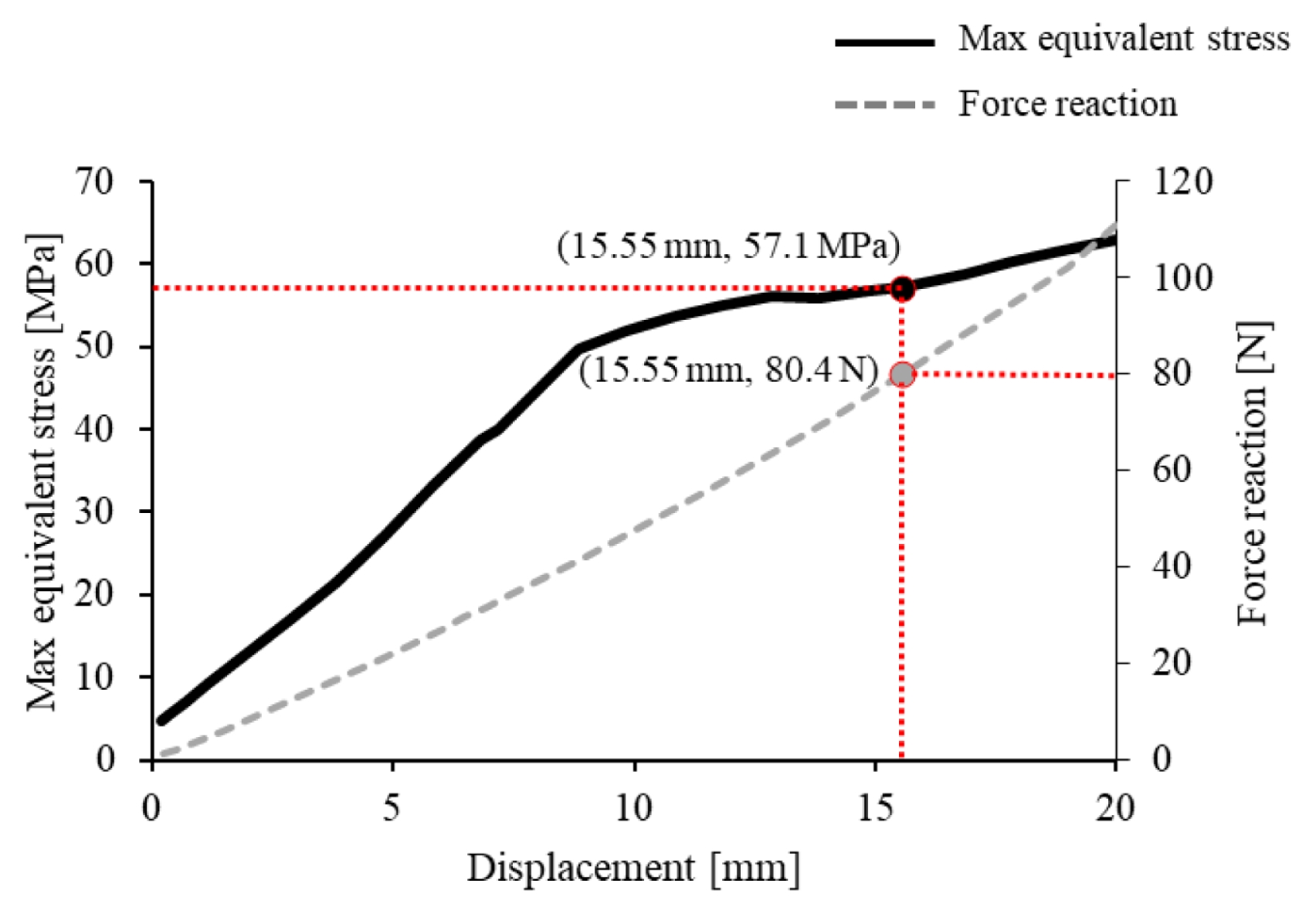
Fig. 5Equivalent stress distribution at peak stress
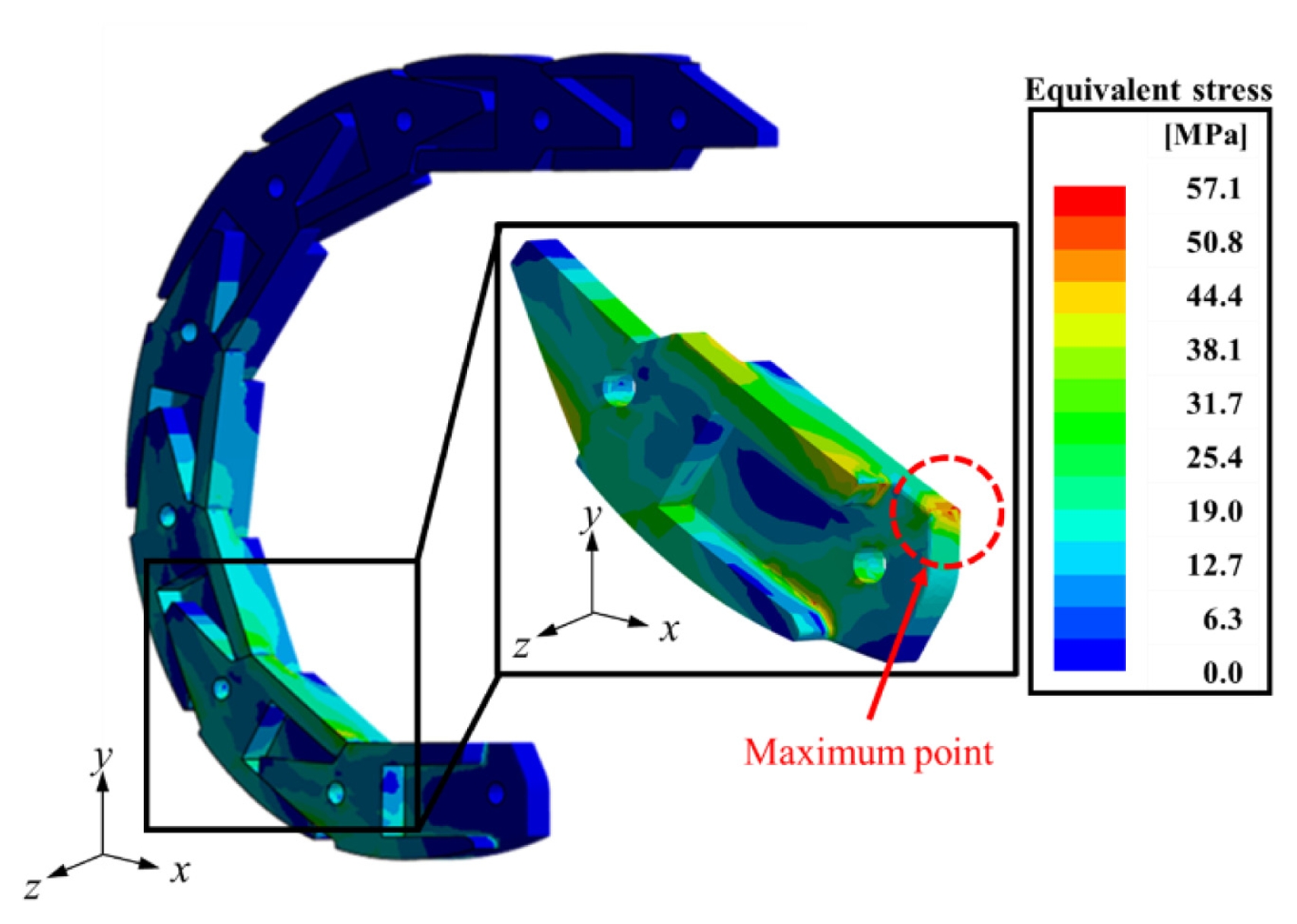
Fig. 6
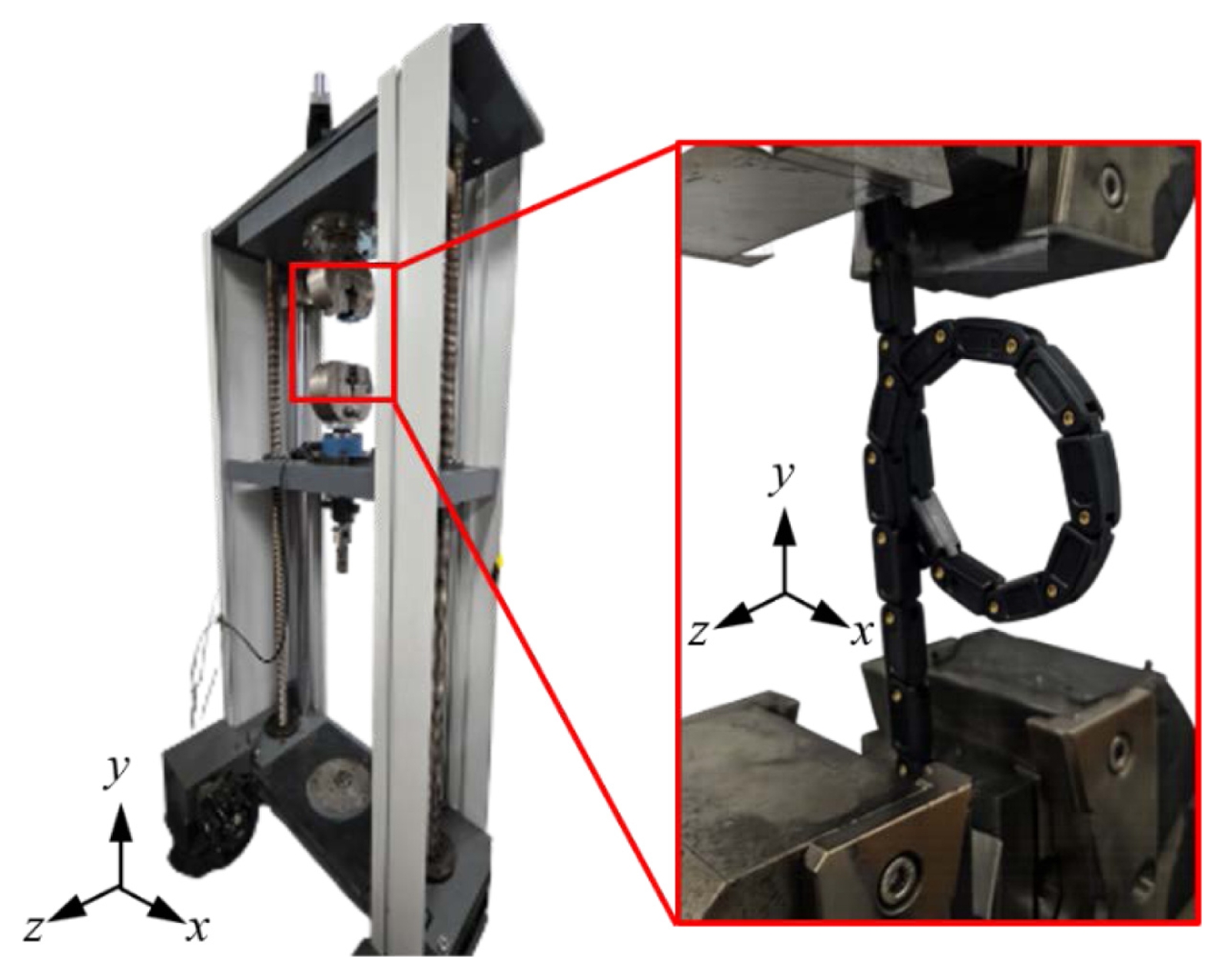
Fig. 7Tensile test result: load-displacement curve of the cable chain
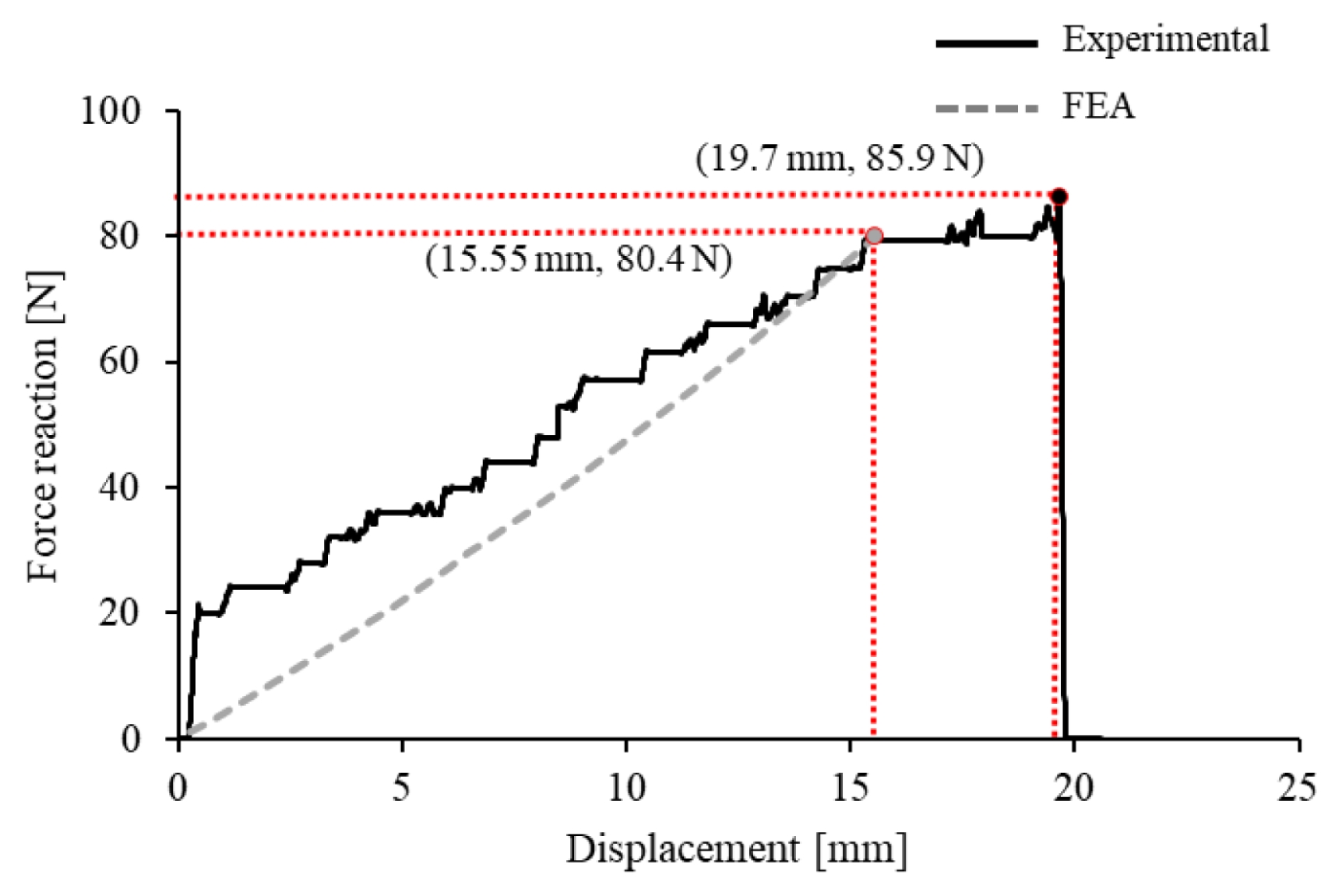
Fig. 8Clearance at the contact interface
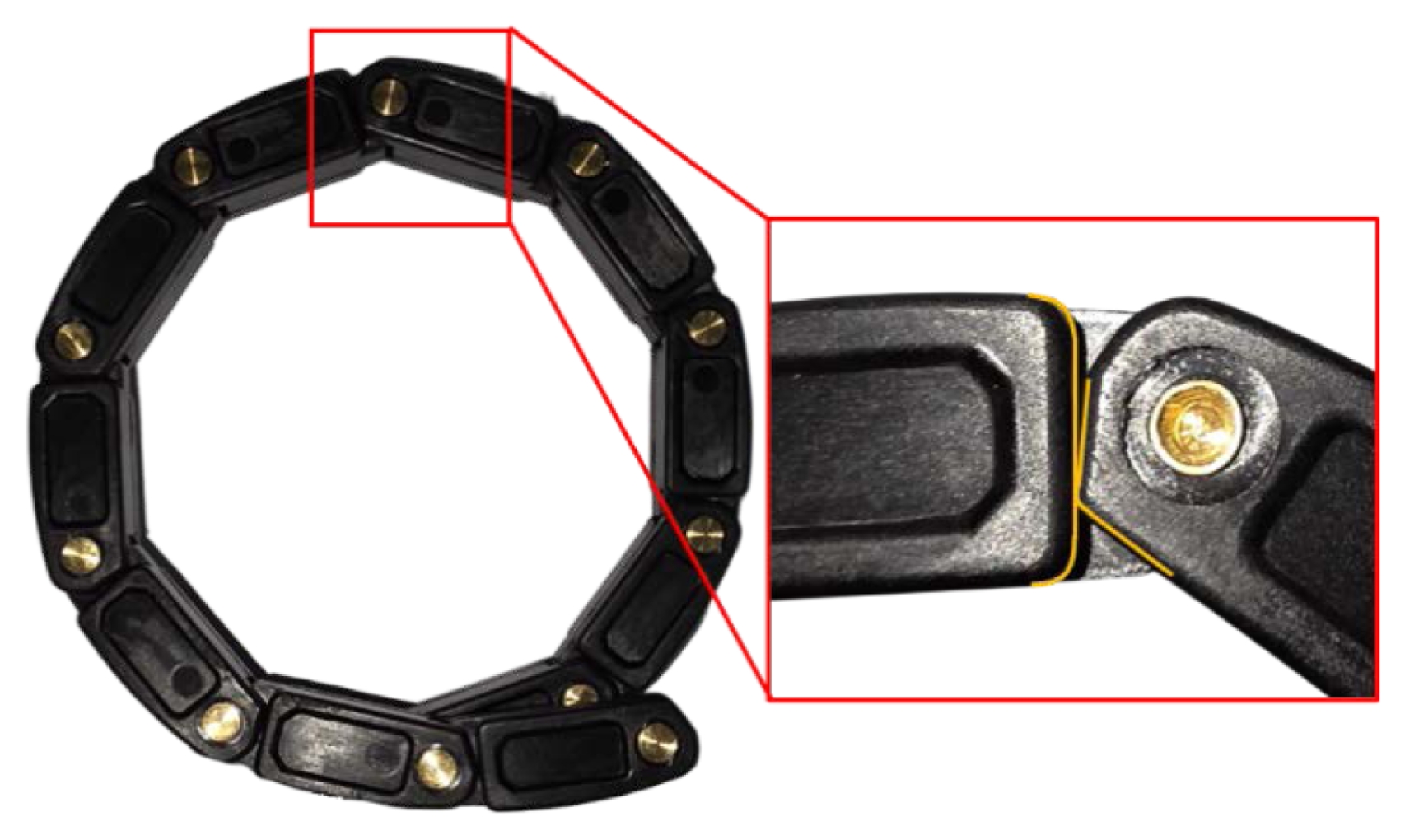
Fig. 9Geometric model with defined parameters
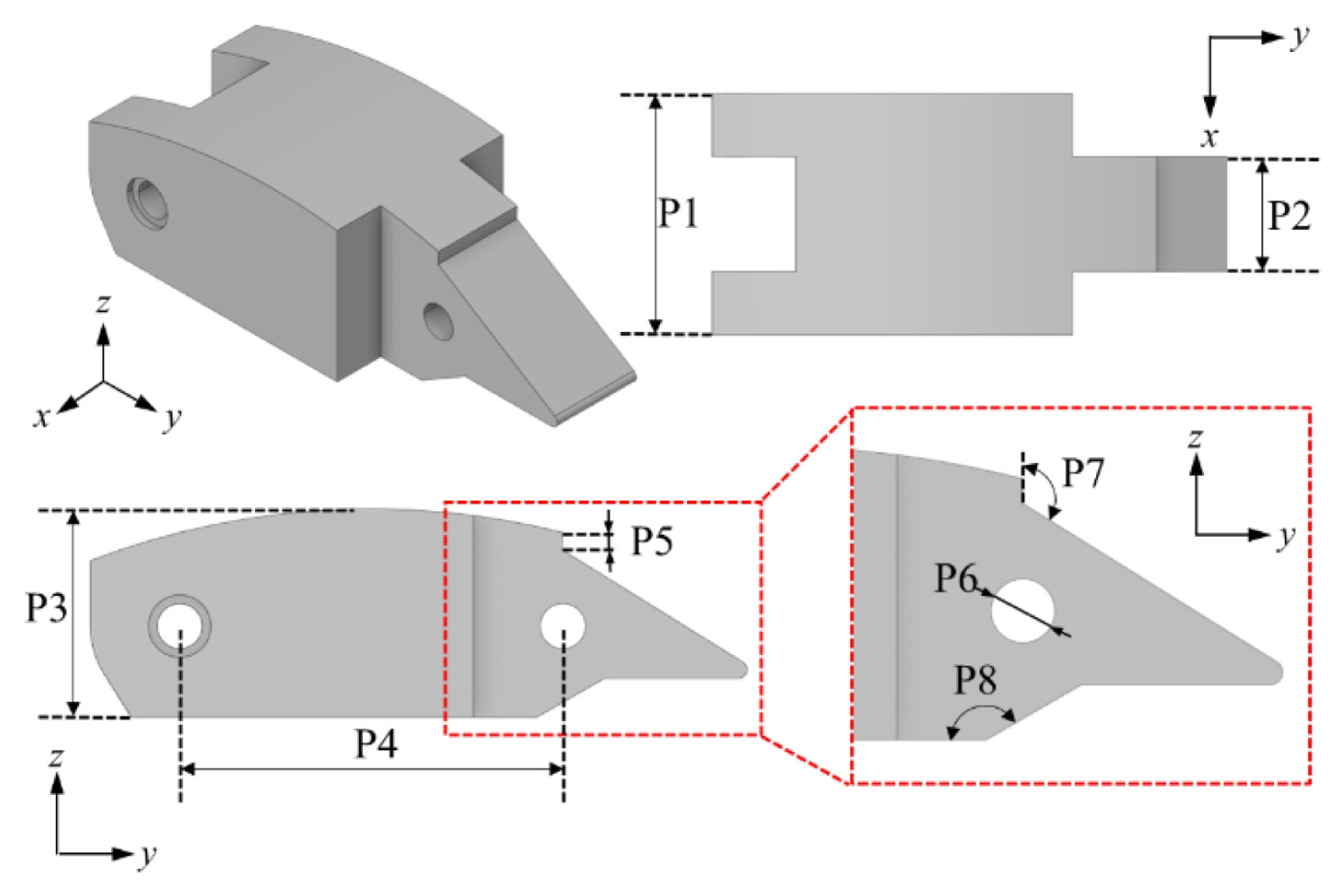
Fig. 10
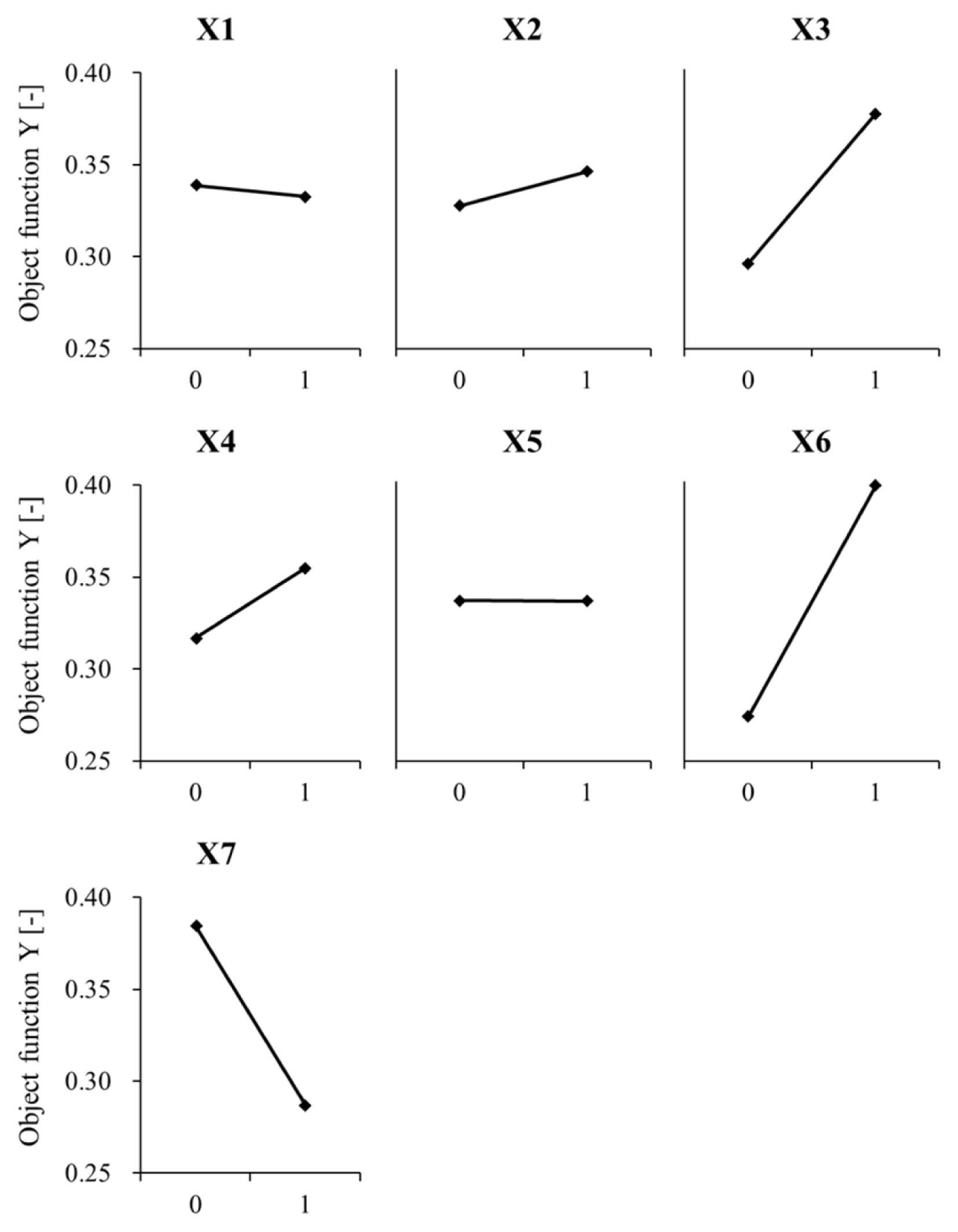
Fig. 11Sensitivity analysis - pareto chart
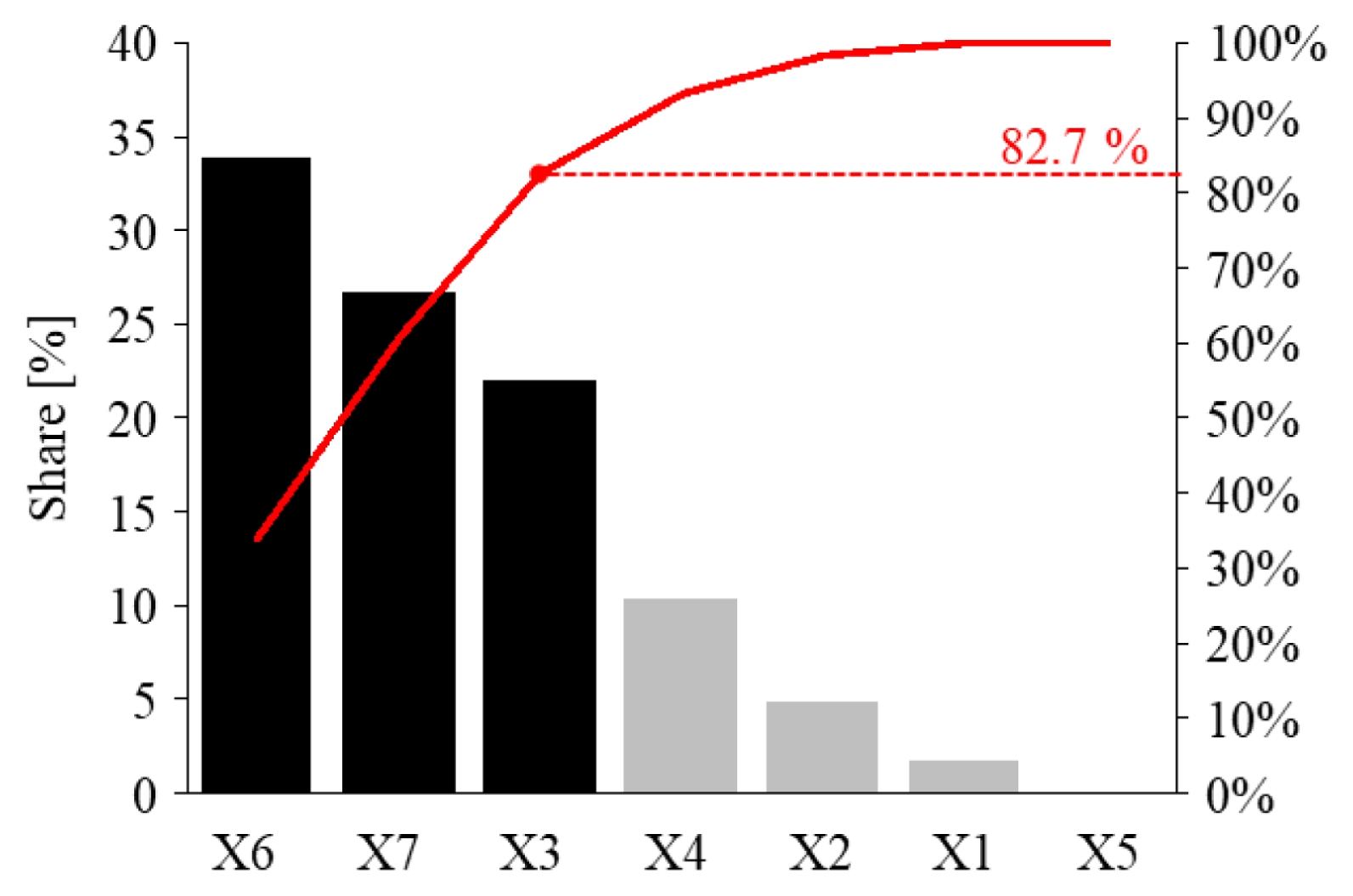
Fig. 12Relationship between object function and design variable
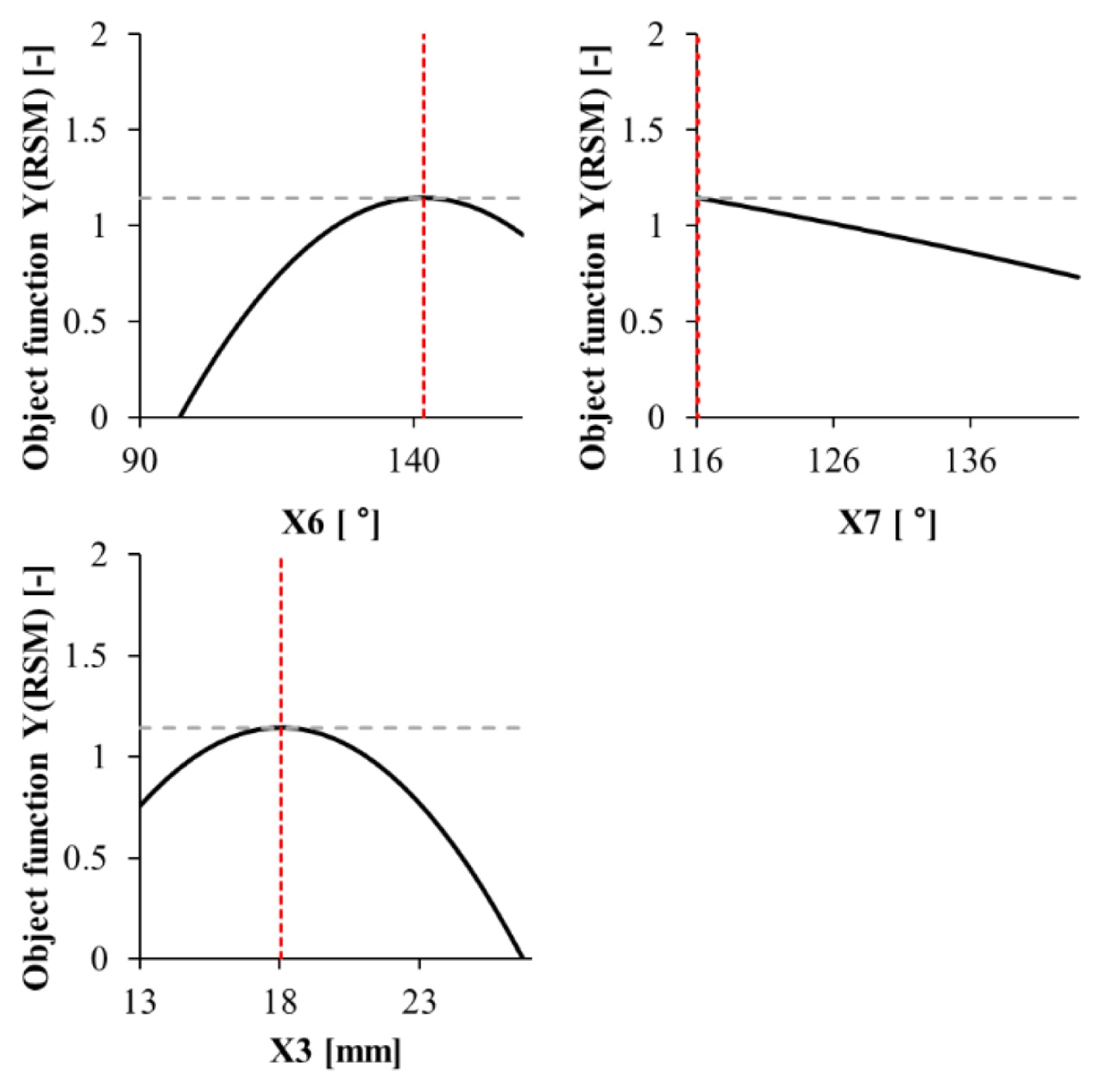
Fig. 13Relationship between X3 and X6
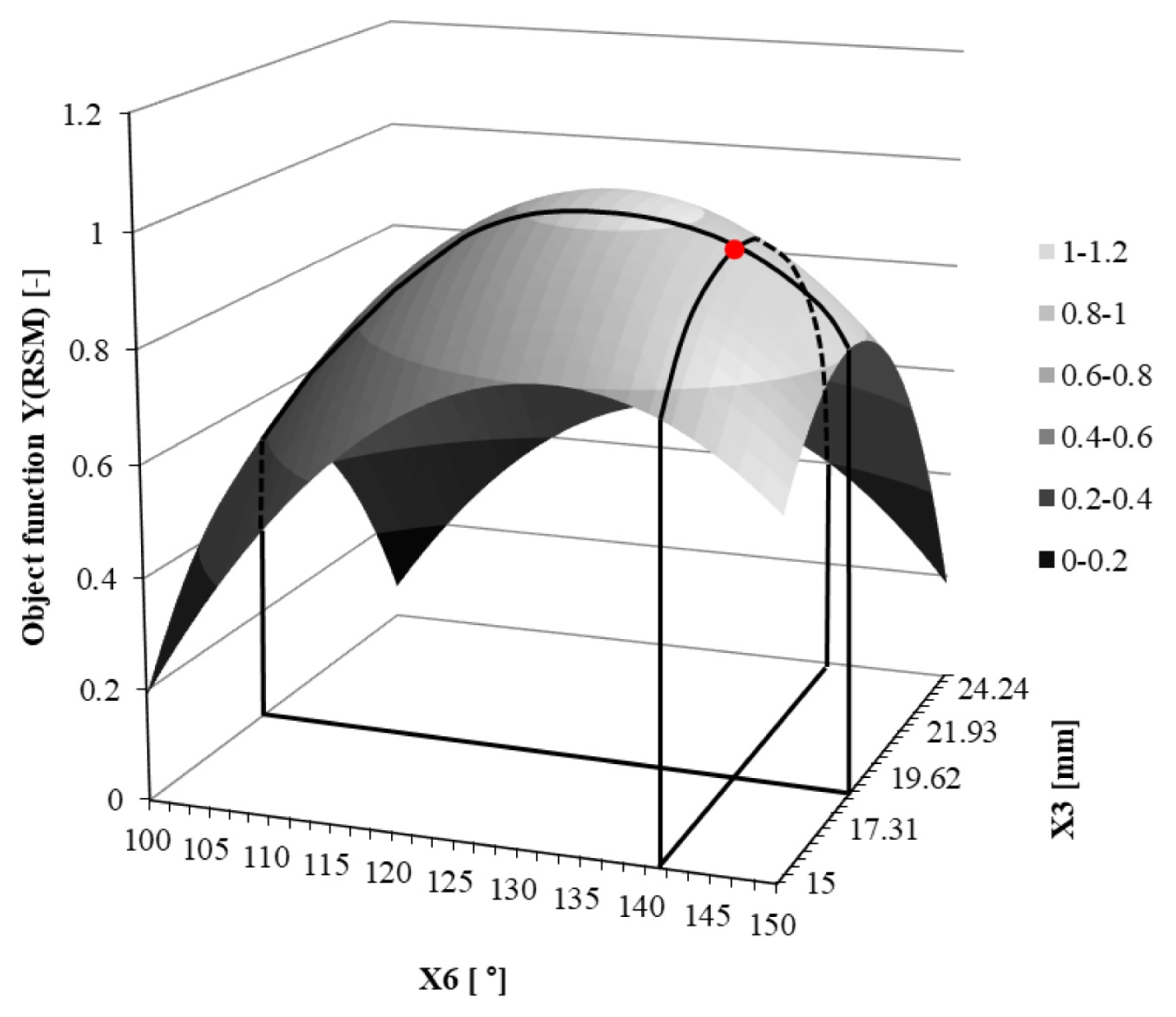
Fig. 14Reaction force corresponding to the yield stress of optimized model
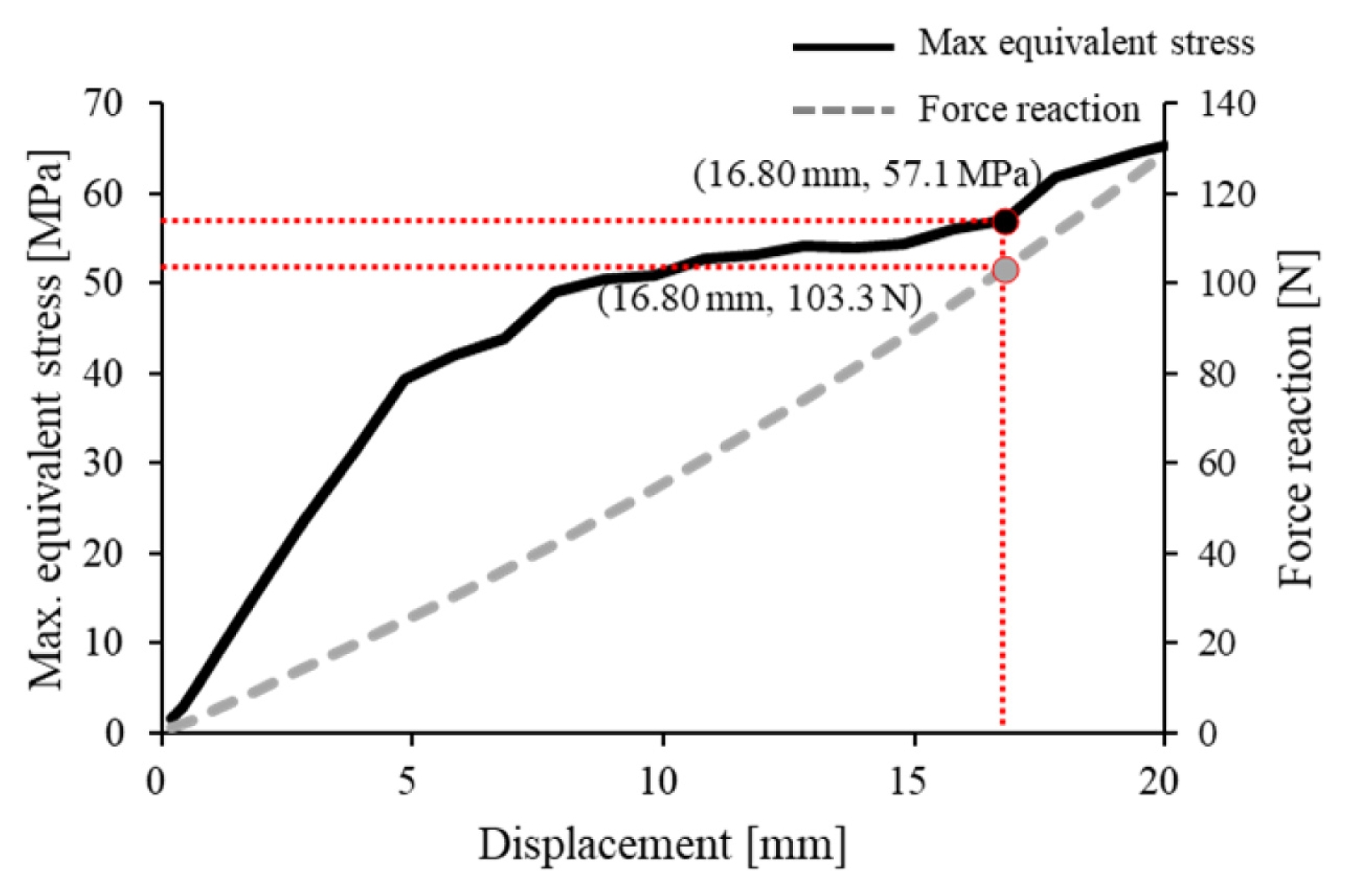
Fig. 15Comparison of maximum equivalent stress between initial and optimized model
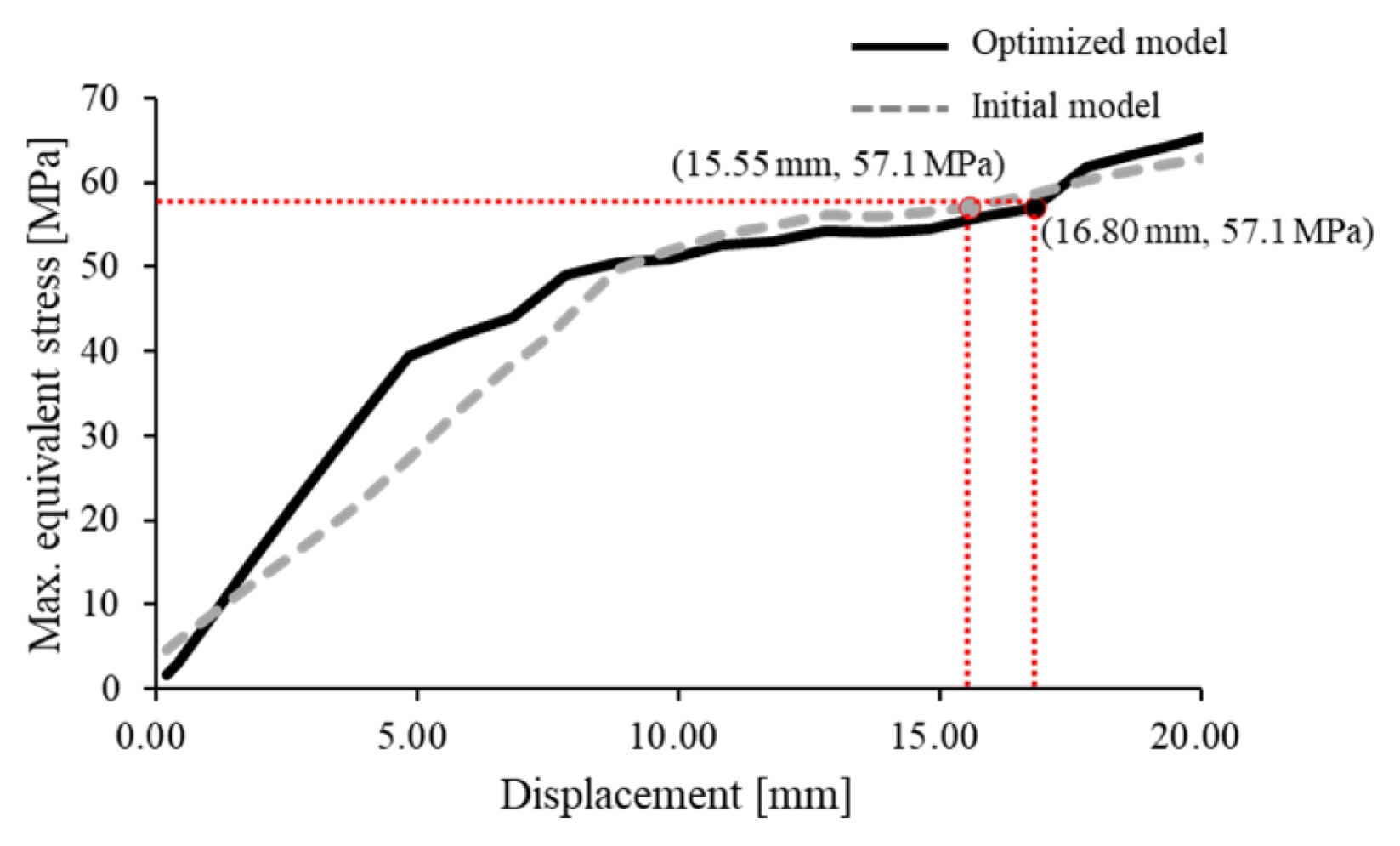
Fig. 16Comparison of responses between initial and optimized cable chains
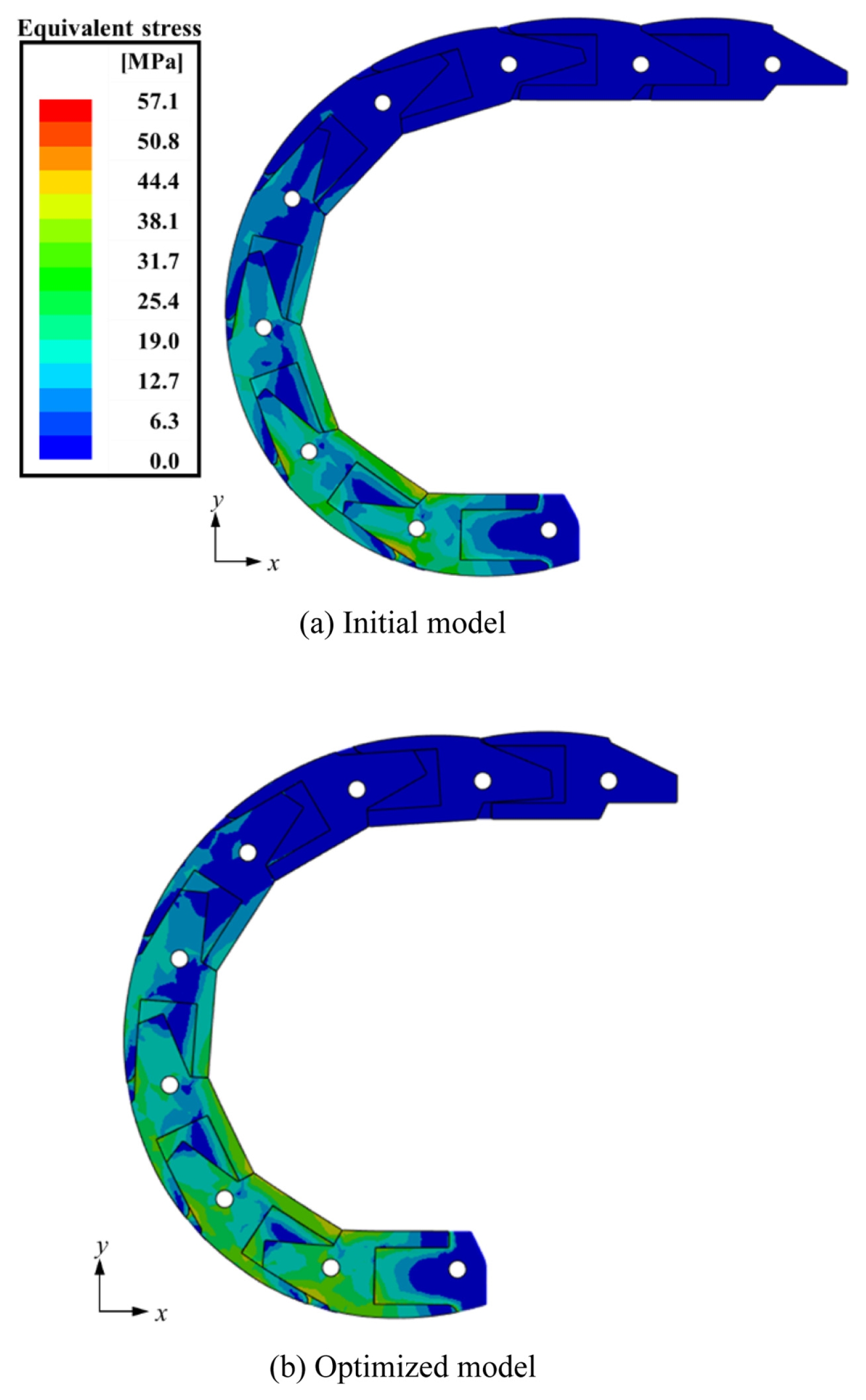
Table 1
Table 1
|
Properties |
Plastic, PA66 |
|
Density [kg/m3] |
1,140 |
|
Young’s modulus [MPa] |
1,433 |
|
Poisson’s ratio [−] |
0.41 |
|
Tensile yield strength [MPa] |
57.1 |
Table 2Mathematical formulation and parameters of the objective fuinctions
Table 2
|
Physical definition |
Quality charactieristic |
Goal |
|
f1 (x) |
Displacement |
Larger-the-better |
- |
|
f2 (x) |
Reaction force |
Larger-the-better |
- |
|
F(x) |
Aggregated function |
- |
Maximize |
|
Design variables |
[-]=P2P1
|
0.3≤P2P1≤0.7
|
|
Height [mm] = P3 |
10 ≤ P3 ≤ 15 |
|
Length [mm] = P4 |
15 ≤ P4 ≤ 25 |
|
Upper height [mm] = P5 |
0.5 ≤ P5 ≤ 1.0 |
|
Hole diameter [mm] = P6 |
1.5 ≤ P6 ≤ 3.5 |
|
Upper angle [°] = P7 |
100 ≤ P7 ≤ 150 |
|
Lower angle 2 [°] = P8 |
120 ≤ P8 ≤ 140 |
Table 3Design of experiment (DOE)
Table 3
|
Design variable = X1, X2, X3, X4, X5, X6, X7 |
Object function = Y1, Y2 |
|
X1 |
X2 |
X3 |
X4 |
X5 |
X6 |
X7 |
Y1 |
Y2 |
|
Normalized |
|
No. |
P2P1 [−] |
P3 [−] |
P4 [−] |
P5 [−] |
P6 [−] |
P7 [−] |
P8 [−] |
Displacement [−] |
Force reaction [−] |
|
1 |
1 |
0 |
0 |
1 |
0 |
0 |
0 |
0.596 |
0.378 |
|
2 |
0 |
0 |
1 |
0 |
0 |
0 |
0 |
0.623 |
0.190 |
|
3 |
0 |
1 |
0 |
0 |
0 |
0 |
0 |
0.347 |
0.447 |
|
4 |
1 |
1 |
1 |
1 |
0 |
0 |
0 |
0.245 |
0.718 |
|
5 |
1 |
0 |
0 |
0 |
1 |
0 |
0 |
0.296 |
0.143 |
|
⋮ |
|
30 |
0 |
0 |
1 |
0 |
1 |
1 |
1 |
0.450 |
0.101 |
|
31 |
0 |
1 |
0 |
0 |
1 |
1 |
1 |
0.296 |
0.399 |
|
32 |
1 |
1 |
1 |
1 |
1 |
1 |
1 |
0.337 |
0.972 |
Table 4Sensitivity analysis results
Table 4
|
Level |
X1 |
X2 |
X3 |
X4 |
X5 |
X6 |
X7 |
|
1 [−] |
0.34 |
0.33 |
0.30 |
0.32 |
0.34 |
0.27 |
0.38 |
|
2 [−] |
0.33 |
0.34 |
0.38 |
0.35 |
0.34 |
0.40 |
0.29 |
|
Delta [−] |
0.01 |
0.02 |
0.08 |
0.04 |
0.00 |
0.12 |
0.10 |
|
share [%] |
1.8 |
5.0 |
22.0 |
10.5 |
0.1 |
33.9 |
26.7 |
|
Rank [−] |
6 |
5 |
3 |
4 |
7 |
1 |
2 |
Table 5Comparison of simulation and RSM
Table 5
|
Design variable = X3, X6, X7 |
Object function = Y1, Y2 |
|
X3 |
X6 |
X7 |
Y1 |
Y2 |
|
Normalized |
|
|
|
No. |
X3 [−] |
X6 [−] |
X7 [−] |
Displacement [mm] |
Force reaction [N] |
|
1 |
0.5 |
0 |
0 |
7.6 |
41.8 |
|
2 |
0.5 |
1 |
0 |
15.2 |
93.8 |
|
3 |
0.5 |
0 |
1 |
13.8 |
77.7 |
|
4 |
0.5 |
1 |
1 |
13.8 |
79.2 |
|
5 |
0 |
0 |
0.5 |
11.2 |
51.6 |
|
6 |
0 |
1 |
0.5 |
13.6 |
63.9 |
|
7 |
1 |
0 |
0.5 |
7.8 |
40.7 |
|
8 |
1 |
1 |
0.5 |
7.2 |
38.0 |
|
9 |
0 |
0.5 |
0 |
15.2 |
76.5 |
|
10 |
0 |
0.5 |
1 |
10.2 |
43.5 |
|
11 |
1 |
0.5 |
0 |
14.7 |
85.0 |
|
12 |
1 |
0.5 |
1 |
12.3 |
65.7 |
|
13 |
0.5 |
0.5 |
0.5 |
15.7 |
94.9 |
|
14 |
0.5 |
0.5 |
0.5 |
15.1 |
94.1 |
|
15 |
0.5 |
0.5 |
0.5 |
15.2 |
91.7 |
Table 6Optimized design variables
Table 6
|
Design variable |
Value |
|
A1 [°] |
141.6 |
|
A2 [°] |
116.0 |
|
L [mm] |
18.0 |
Table 7Comparison between initial and optimized cable chain
Table 7
|
Displacement [mm] |
Force reaction [N] |
|
Initial model |
15.6 |
80.4 |
|
Optimized model |
16.8 |
103.3 |
|
Improvement rate [%] |
7.7 |
28.5 |
REFERENCES
- 1. Shin, E., Kim, K., (2018), Influence of the operating conditions of a cable carrier on the dynamic characteristics, Journal of the Korean Society of Manufacturing Technology Engineers, 27(6), 570-576.
- 2. Ramalho, P. M. S., Campilho, R. D. S. G, Silva, F. J. G., Pedroso, A. F. V., Sales-Contini, R. C. M., (2024), Productivity improvement of control cable manufacturing machine for the automotive industry, Mechanics Based Design of Structures and Machines, 52(12), 9717-9740.
- 3. Kim, D.-J., Hyun, D.-H., Kim, Y.-I., (2009), The development of cable carrier chain system with low noise and dust for moving stages in cleanrooms using TRIZ, Journal of the Semiconductor & Display Technology, 8(4), 83-88.
- 4. Kim, K.-S., Shin, E.-S., (2017), Modeling and dynamic characteristic analysis of a cleanroom cable carrier, Proceedings of Joint Conference by KSNVE ASK and KSME, 295.
- 5. Lee, J.-Y., Kim, K.-M., Kwak, J.-H., Bae, W.-J., Lee, J.-H., Kwak, J.-S., (2025), Novel design and structural stability evaluation of cable chain guide for automation system, Journal of Power System Engineering, 29(1), 17-22.
- 6. Paksoy, E., Dede, M. I. C., Kiper, G., (2025), Enhancing trajectory-tracking accuracy of high-acceleration parallel robots by predicting compliant displacements, Robotica, 43(6), 2003-2029.
- 7. Žák, S., Lassnig, A., Cordill, M. J., Pippan, R., (2021), Finite element-based analysis of buckling-induced plastic deformation, Journal of the Mechanics and Physics of Solids, 157, 104631.
- 8. Ansys, Ansys Granta materials data. https://www.ansys.com/products/materials/materials-data-library#tab1-1
- 9. Finazzi, D., Sinchuk, Y., Sevenois, R.D.B., Daelemans, L., De Clerck, K., Robert, G., Van Paepegem, W., (2024), Study of self-heating and local strain rate in polyamide-6 and short fibre glass/polyamide-6 under tension through synchronised full-field strain and temperature measurements, Polymer Testing, 132, 108361.
- 10. Lee, H. T., Park, S. H., Choi, B. H., Kim, B. G., Kim, H. S., Hong, S. M., (2023), Light weight of the leg rest module using the response surface method, Journal of the Korea Academia-Industrial Cooperation Society, 24(2), 568-575.
- 11. Lee, C., Hong, S., (2018), Curvature area prediction for the deep drawing-ironing process of a cylindrical cup using finite element method and regression analysis, Journal of Mechanical Science and Technology, 32, 5913-5918.
- 12. Hwang, S., Lee, C., Hong, S., Optimal design technique for the shape of induction heating electric range coil using response surface method, Journal of the Korean Society for Precision Engineering, 41(5), 407-413.
- 13. Oh, M.-S., Yi, S.-R., Choi, J.-M., Hong, S.-M., (2024), Development of M10 hex head bolt multi-stage die design and forging analysis automation program, Transactions of Materials Processing, 33(5), 341-347.
- 14. Gu, B., Hong, S., (2019), Numerical approach to optimize piercing punch and die shape in hub clutch product, Journal of the Korea Academia-Industrial Cooperation Society, 20(9), 517-524.
- 15. Myers, R. H., Montgomery, D. C., Anderson-Cook, C., (2016), Response surface methodology: process and product optimization using designed experiments. John Wiley & Sons.
Biography
- Min Je Kim
M.S. student in the Department of Smart Mobility Engineering, Kongju National University. His research interest is FEA.
- Min Seong Oh
M. S. candidate in the Department of Future Convergence Engineering, Kongju National University. His research interest is FEA.
- Hojoon Sung
He received M.B.A. degree from Yonsei University. His research interests focus on cable-driven systems, particularly load-bearing limits, tension distribution, and the stability analysis of flexible structural systems.
- Do Hyoung Kim
He received M. Eng. Degree in the Department of Electronic Engineering, Cheongju University. His research interest is the material analysis of ePTFE.
- Seok Moo Hong
Professor in the Department of Future Automotive Engineering, Kongju National University. His interest are Metal Sheet Forming and Forging, FEA, Optimizing.